
VAPE FAQs
How Much Is A Vape Near Me?
Jul
Sometimes a simple question reveals just how much the everyday market has changed. “How much is a vape near me?” sounds like a price request, but it’s really three different questions folded into one: What does a reliable device cost? Can I trust the place selling it? And is local availability actually a shortcut to a better deal? This article won’t just hand you a number. It will explain what you’re paying for, why prices differ so dramatically from one shopfront to the next, and how to think about value instead of only the sticker price. By the time you finish, you’ll have a practical framework that works whether you’re standing in a convenience store or browsing a platform like OZVAPE Shop, where specification sheets and sourcing transparency replace guesswork.
Understanding What Truly Determines Cost
Vape pricing looks arbitrary from the outside, but underneath it follows a clear engineering and supply‑chain logic. A “$25 device” and a “$60 device” are rarely comparable products sold at different markups; they represent distinct architecture choices, and recognising those differences protects you from buying something that fails sooner than you expect.
Internal Architecture and Output Consistency
The components you cannot see — the heating element, the power regulation, the airflow path — have more influence on price than any visible detail. Entry‑level disposables often use a single‑wire heating assembly that lacks active temperature management. They start strong, but output degrades noticeably as the energy cell drains. Higher‑cost devices, particularly in the ALIBARBAR range, employ refined coil geometries and tightly calibrated airflow paths to maintain consistent performance from the first use to the last. That engineering absorbs cost in the bill of materials, but it directly addresses the user frustration of getting a device that feels “flat” halfway through its rated life.
Why this matters: If you base your comparison solely on puff‑count numbers, you overlook the reality that two devices claiming “5000 puffs” can deliver wildly different satisfaction levels if one loses physical sensation after 2000 cycles while the other remains steady. OZVAPE Shop’s product descriptions standardise these specifications so you can compare like‑with‑like rather than marketing claims.
Power Management and Status Transparency
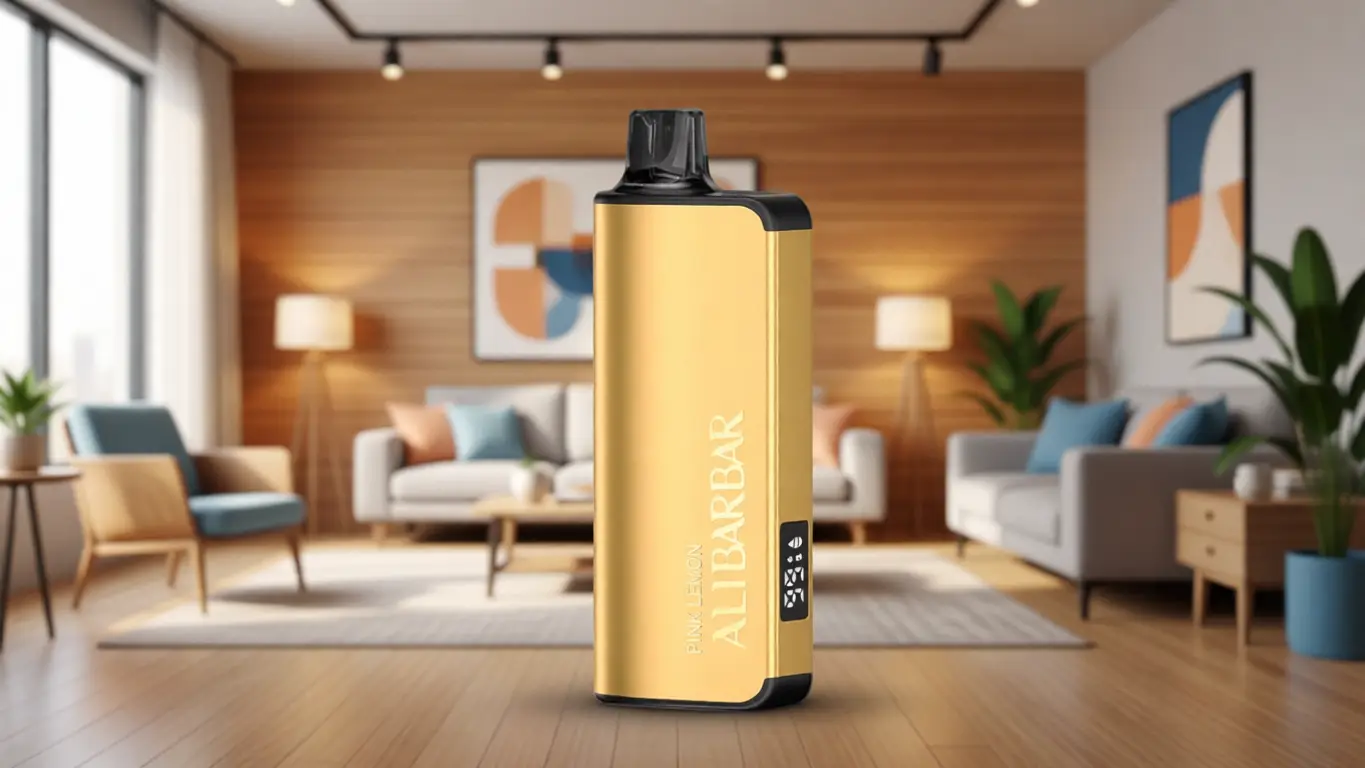
A device that dies without warning creates inconvenience far beyond its price tag. Sophisticated power management circuits monitor cell voltage and indicate remaining capacity with meaningful granularity. The ALIBARBAR Ice Adjust 12000, for example, provides visible stage indicators so you know the device is still operating and roughly how much functional life remains. This kind of status transparency isn’t a luxury feature; it eliminates the need to carry a backup device defensively, which is a silent cost most users absorb without calculation.
On the other hand, generic units with a single LED that flashes only during charging give you no operational intelligence. You become a reactive user, not an informed one. The difference between a product that offers a few dollars’ savings on the shelf and one that saves you the daily friction of uncertainty becomes clear once you frame it this way.
Physical Design and Material Durability
Price also reflects surface treatments and structural choices. ALIBARBAR’s family avoids glossy, friction‑prone coatings in favour of matte‑finished aluminium alloys and grippable polymers that resist the abrasion of being carried in a pocket alongside keys or a phone. A cheaper device wrapped in peel‑able vinyl may look comparable on day one, but by day ten it will tell a different story. Mouthpiece contour is another overlooked cost driver — a precisely shaped aperture that stays comfortable during prolonged use requires tooling investment that a simple circular cut‑out does not.
Modularity and Lifecycle Flexibility
Broadly, vape devices fall into three categories: fully sealed single‑use units, rechargeable‑but‑sealed units, and replaceable‑component systems. The sealed category carries the lowest upfront price per unit, but its cost per hour of use is often higher and waste is consolidated at the user level. Rechargeable sealed devices like the ALIBARBAR INGOT 9000 and INGOT 15000 strike a middle ground — they use a larger liquid reservoir and a rechargeable cell, significantly extending operational life without demanding that the user handle separate consumables. Full modular systems offer ultimate flexibility but add complexity. The amount you will pay today depends on which of these models aligns with your actual daily routine, not just the ticket price.
Applying These Criteria to Real‑World Options
Once you internalise the factors above, walking into a store asking “how much?” feels too narrow. You begin to ask “what architecture, what capacity, and what feedback does this device give me?” That is the right conversation. To give this framework some concrete grounding, let’s look at how the ALIBARBAR range — a collection deliberately structured around these principles — maps onto different user need‑states, not brand rankings.
For the person who wants a straightforward, no‑maintenance unit that lasts long enough to forget about constantly replacing it, the INGOT 9000 represents a deliberate design choice: a generous pre‑filled reservoir, a reliable power cell, and a form factor that disappears in a closed hand. Its pricing sits where you would expect for a device that sacrifices flash for endurance. Upscaling from there, the INGOT 15000 increases both capacity and battery headroom, trading some pocket‑friendliness for multi‑day independence. The Ice Adjust 12000 adds a control dimension — adjustable airflow characteristics — that changes the user experience in a way that only a hands‑on test can verify, but which users who prioritise customisation appreciate.
A local retailer might offer one of these devices at a price several dollars higher than a nationally visible online platform; that difference isn’t always greed — it often reflects the cost of commercial lease, staff, and lower sales velocity. OZVAPE Shop, operating from a centralised but locally accountable structure, can maintain tighter margins without sacrificing authenticity. Both channels exist because different users value immediacy versus value differently, and acknowledging that trade‑off honestly is part of evaluating “near me” pricing.
A Practical Framework for Cost‑Conscious Evaluation
Instead of memorising price lists, arm yourself with a set of diagnostic questions. Next time you compare options, run through these:
What is the device’s stated capacity and power specification? Normalise cost per stated unit of liquid or per‑hour runtime, not per device. A unit that costs $10 more may deliver 50% more operational life.
What does the indicator system tell me? If the device provides no meaningful status feedback, you will almost certainly compensate by carrying a spare — factor that backup cost in.
Is the seller providing factory‑certified inventory? A product that undercuts the market by 30% often isn’t a bargain; it is a parallel‑imported or undocumented unit with no traceable warranty.
What is the total cost of ownership over one month? For a heavy user, a rechargeable high‑capacity device might actually be cheaper per week than two smaller sealed units.
At OZVAPE Shop, the product pages are built to make that kind of standardised comparison possible. Specifications are listed in a common format, and each device’s measurements, operational life, and design materials are disclosed upfront. It turns a nerve‑racking “how much?” into a calm “what am I really buying?”
Common Selection Errors and Industry Observations
Watching how adults buy vapes over time reveals a handful of predictable missteps that inflate real cost. These are not isolated anecdotes; they show up consistently across surveys, support logs, and service records.
Overweighting puff count while ignoring consistency. Puff count is the easiest number to advertise, but without temperature stability, a high count means nothing. A device that produces unsatisfactory output for the last third of its life is not a value — it’s a frustration you paid for. The engineering investment behind the ALIBARBAR line expressly addresses this, yet the broader market still treats the puff number as a standalone metric.
Assuming visual similarity means internal equivalence. Two devices with cylindrical aluminium bodies may look alike, but one may have an integrated battery management system while the other simply connects a cell to a coil via a basic switch. Paying for a look‑alike without the internals undermines satisfaction.
Undervaluing modularity in long‑term cost calculations. A rechargeable device with a sealed tank (like the INGOT 15000) spreads its cost over a far longer useful window than a disposable of similar initial quality. Yet many users, seduced by a lower single‑unit price, choose short‑life products repeatedly, incurring more cost and more disposal over a given month. This is especially common when “near me” convenience stores carry only low‑cost disposables and the user never sees the alternative in‑person.
Confusing category terminology with technical evidence. Terms like “adjustable” or “mesh” are thrown around without meaningful specification. A device’s airflow adjustability may be a binary open/closed toggle rather than a graduated change. Trained users learn to look for concrete descriptions — e.g., a rotary dial versus a fixed setting — to judge whether the feature is real engineering or a marketing label.
The industry itself is fragmented: manufacturing clusters supply dozens of brands from common component pools, and only those brands that invest in custom tooling and tighter quality‑control achieve the measurable consistency that experienced users can detect. ALIBARBAR, manufactured under controlled conditions and distributed through authorised channels, exists in that tier. The additional cost, modest as it sometimes is, funds the audit trails and tolerance standards that are invisible at point of sale but obvious after two weeks of daily use.
Frequently Asked Questions
Q: How much should I expect to pay for a quality vape in Australia?
A: For a rechargeable sealed device from a brand with verified supply‑chain integrity, the typical price range falls between $35 and $65 AUD, depending on capacity and feature set. Sealed disposables cost less per unit but more per time interval of use.
Q: Why is the same ALIBARBAR device cheaper online than in my local shop?
A: Physical stores have higher overhead (rent, staffing, low volume turnover) and must compensate with a higher per‑unit margin. OZVAPE Shop and similar authorised online retailers avoid those costs. The trade‑off is shipping time versus instant pickup.
Q: Can I trust a vape that is significantly cheaper than the average market price?
A: Usually not. A price well below the authorised retail range often indicates a parallel‑imported unit, a refurbished device sold as new, or a counterfeit. Authentic ALIBARBAR devices arrive with traceable batch information and factory seals; if these are missing, walk away.
Q: What factors cause the biggest price differences between vape models?
A: Battery management circuitry, heating element design, liquid capacity, body material, and factory quality‑control protocols. A modest price increase often buys two to three times the operational reliability.
Q: Does “near me” guarantee I’ll get a better deal?
A: No. Proximity might save you time, but physical convenience stores frequently carry a limited selection of lower‑tier products because those turn over faster. A dedicated online platform almost always offers a wider range and more detailed information.
Q: How can I verify that an ALIBARBAR device I buy online is genuine?
A: Purchase from an authorised partner that explicitly states its sourcing. At OZVAPE Shop, every unit comes from factory‑certified inventory, and the packaging includes verification information that connects back to the manufacturer’s quality records.
Q: What’s more important: upfront price or cost per use?
A: Cost per use. A $40 device that delivers consistent satisfaction for a week is less expensive per hour than a $20 device that fails after two days. Always calculate over the timeframe you actually need.
Q: Are there hidden costs when buying from the cheapest seller?
A: Frequently. Hidden costs include failed units with no recourse, counterfeit products that operate unsafely, and the personal cost of carrying a backup to compensate for unpredictability. A transparent retailer’s price may look higher on the screen but lower in real‑world consequence.
Q: Can I get support after purchase if something goes wrong?
A: Yes, if you buy from a retailer with documented post‑purchase accountability. OZVAPE Shop maintains local response channels and handles issues with direct human communication, not automated scripts.
Q: Does capacity always mean a better value is achieved?
A: Not necessarily. Higher capacity only delivers value if the device’s output remains consistent throughout the life of the liquid. A high‑capacity unit with poor thermal control will feel disappointing early on, eroding any theoretical savings.
Conclusion
“How much is a vape near me?” stops being a loaded question once you understand that price is a trailing indicator, not a leading one. The real cost is shaped by architecture, power management, material integrity, and the credibility of the channel through which you acquire the device. When you prioritise those factors — and treat sticker price as just one data point — the value proposition clarifies quickly. Platforms like OZVAPE Shop exist to make that clarity available anywhere in Australia, with standardised information and authorised stock that take the guesswork out of the transaction. The right choice isn’t the one that shows up as the lowest number on a shelf; it’s the one that quietly performs, day after day, without forcing you to think about it at all.