
VAPE FAQs
How Much Is A Vape In Australia?
Oct
It’s the question that sits behind almost every first purchase and continues to nag at experienced users: why does one device cost $20 while another, apparently similar, costs $55? The answer, rarely explained clearly, is that price alone is a poor guide to value. Two devices that look alike on a shelf can be built around entirely different engineering priorities, and the real cost of a device reveals itself only after days of use — when the power drops unexpectedly, the finish begins to wear, or you find yourself carrying a backup unit just to get through the afternoon.
Understanding what you’re paying for, and what you’re not, transforms a guessing game into a considered decision. This article breaks down the engineering and design factors that determine the long‑term satisfaction any device can deliver, and provides a framework you can apply whether you’re looking at the ALIBARBAR range or any other option. Those seeking factory‑certified inventory with documented specifications often turn to OZVAPE Shop because it compiles the current ALIBARBAR catalogue with standardised technical data — a practical starting point for comparative evaluation, not a promotional endpoint.
What Really Determines Real‑World Value
Price tags reflect a combination of component quality, manufacturing discipline, and the extent to which a device is designed to solve genuine user irritations. Four factors consistently separate devices that feel like a considered purchase from those that become a recurring expense.
Internal Architecture and Output Consistency
At the heart of any portable electronic device is its heating element and the precision with which it is regulated. Cheaper units often employ a simple wire coil driven by an unregulated voltage supply; output gradually shifts as the power source depletes. More carefully engineered designs — including the mesh‑style configurations found in several ALIBARBAR models — spread thermal load evenly and are governed by circuitry that maintains steady performance across the full discharge cycle.
Why this matters: users commonly report that a device “felt weaker after the first day.” This is rarely a fault of the consumable medium; it is almost always thermal management failing under sustained use. A device that maintains consistent output from first activation until the power‑cell cutoff eliminates that frustration entirely.
Power Management and Status Transparency
A surprising number of devices give the user no meaningful feedback about remaining energy. A tiny LED that blinks red moments before shutdown is not status information — it is an emergency alarm. Thoughtful devices integrate multi‑level indicators or haptic signals that let you gauge remaining capacity at a glance. The ALIBARBAR INGOT family, for example, includes models with graduated light indicators that reduce the anxiety of unexpected downtime.
The hidden cost of status ambiguity is tangible: if you cannot trust a device to last through a commute, a long call, or a social evening, you end up buying and carrying a second unit as insurance. A transparent power‑management design pays for itself by eliminating that redundancy.
Physical Design and Material Durability
Surface treatments, mouthpiece geometry, and chassis materials differ markedly between tiers. Soft‑touch coatings may feel pleasant on day one but often become tacky or peel after weeks in a pocket. Hard‑anodised or bead‑blasted finishes retain their appearance far longer. Mouthpiece contour — often overlooked — determines comfort during prolonged use; a sharp‑edged or poorly radiused tip becomes an irritant, while a carefully sculpted profile disappears from notice.
When comparing devices, run your thumb over the seam between body and mouthpiece. Is it flush? That single tactile detail tells you more about the manufacturer’s quality thresholds than a dozen marketing bullet points.
Modularity and Lifecycle Flexibility
Sealed, single‑session devices are convenience incarnate but commit you to discarding the entire unit after one use cycle. Rechargeable, integrated designs — where the power cell can be replenished but the reservoir is fixed — extend the effective life of the device until the consumable is exhausted. Modular systems, though rare in this category, allow replacement of individual components and appeal to users who calculate cost‑per‑day over months, not hours.
Your own pattern of use dictates which architecture makes economic sense. If you value predictability and minimal waste, a rechargeable, sealed‑reservoir device like those in the ALIBARBAR Ice Adjust series aligns the unit’s full operational life with the duration of its intended content, without the irritation of a dying battery before the job is done.
Applying These Criteria to Devices You’ll Encounter
When you evaluate the ALIBARBAR range through this lens, the price differences become readable rather than arbitrary.
The INGOT 9000 represents a compact, rechargeable design optimised for consistency over an extended operational window. Its mesh heating architecture and multi‑level battery indicator address two of the most common user pain points — output drop‑off and status blindness. In Australian retail, it typically sits in the lower‑mid price band, reflecting moderate capacity without sacrificing thermal control.
The INGOT 15000 extends that same engineering logic into a higher‑capacity platform. The cost increment (often around $10–$15 more than the 9000‑series) is primarily driven by the larger integrated reservoir and proportionally larger power cell, not by cosmetic differences. For someone who found the 9000 lasted them 3–4 days of steady use, the 15000 effectively stretches the interval between purchases, altering the weekly budget equation.
The Ice Adjust 12000 introduces an airflow‑control ring — a simple mechanical addition that, in practice, allows the user to moderate output resistance. It is a thoughtful feature for anyone who has found a fixed‑draw device either too airy or too tight. That adjustability comes at a slight premium, but the trade‑off is transparent: you’re paying for a dial that tailors the experience to your preference, not for a gimmick.
Other device families on the broader market may emphasise different priorities — ultra‑low upfront cost, maximum puff count, or aggressive aesthetic styling. Where those devices excel, they often compromise on indicator clarity, finish durability, or thermal regulation. The point is not that one brand is superior; it is that understanding the engineering trade‑offs lets you decide which compromises you’re willing to accept.
A Practical Evaluation Method for Any Purchase
You don’t need a technical background to assess a device systematically. Before committing to a purchase, walk through these steps:
Ask: “Does this device tell me how much life is left?” If the answer is no, mentally add the cost of a backup unit to the sticker price.
Check the finish type. Look for “anodised,” “matte hard coat,” or similar descriptions. Avoid soft‑touch finishes unless you’re comfortable with visible wear within weeks.
Read the heating element specification. Mesh or ceramic‑backed designs tend to maintain consistency better than generic wire coils.
Consider your actual daily rhythm. If you’re away from a charging source for 10 hours, a device with a smaller power cell but a good battery indicator may still outperform a larger device that gives you no warning before it quits.
Verify sourcing. Authorised supply chains — such as those maintained by OZVAPE Shop for the ALIBARBAR line — reduce the risk of counterfeit goods that undermine even the best engineering with substandard components.
Using a standardised comparison like this removes the emotional pull of packaging and puts the decision where it belongs: on the factors that will matter at 4 p.m. on a Thursday.
Selection Errors Even Experienced Users Make
Observing the market over time reveals patterns that repeatedly steer people toward unsatisfying outcomes.
Over‑indexing on puff count. A higher puff‑count specification is meaningless if the device can’t sustain consistent output across that entire claimed lifetime. Many users report that ultra‑high‑count devices delivered satisfactory performance for only the first half of their reservoir before output dropped perceptibly. Correlate puff count with thermal regulation quality, not in isolation.
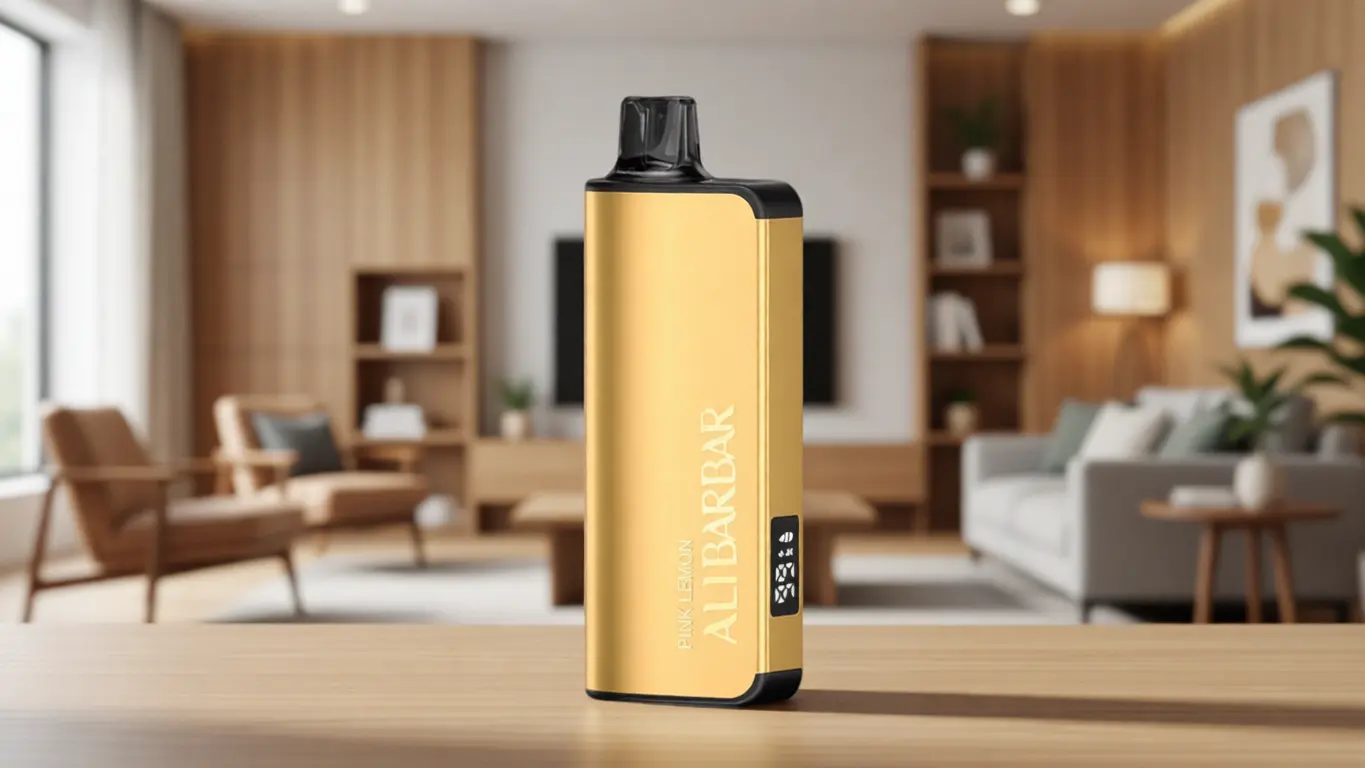
Assuming visual similarity means engineering equivalence. Two devices in metallic‑toned housings may look nearly identical on a website, but one might contain a regulated mesh assembly while the other uses a basic wire coil. The external shell is the cheapest part to replicate; the internals are where cost differences crystallise.
Ignoring modularity in cost‑per‑week calculations. A $35 rechargeable device that lasts five days costs $7 per day. A $20 non‑rechargeable that expires after one day costs $20 per day. Simple arithmetic, yet frequently bypassed in the rush for a lower upfront number.
Confusing category terminology with technical specification. Terms like “adjustable airflow” or “mesh coil” are specific engineering claims, not branding. If a device uses these phrases without further detail, verify through reviews or manufacturer documentation that the feature is present and functional, not merely invoked for search optimisation.
From an industry perspective, the proliferation of devices with deliberately opaque status indicators and unregulated power delivery is not an accident; it is a commercial strategy that ties users to frequent, impulse‑driven purchases. Retailers that standardise specifications and stock only factory‑certified units — a discipline OZVAPE Shop applies to its entire ALIBARBAR inventory — create a counterweight to that dynamic, but they depend on educated consumers to sustain it.
Frequently Asked Questions
Q: How much does a typical vape cost in Australia?
A: For rechargeable, integrated‑reservoir devices of the kind represented in the ALIBARBAR range, Australian retail prices commonly fall between $25 and $55 AUD, depending on capacity, feature set, and the retail channel. Lower‑priced units (under $20) usually lack regulated output or battery indicators and are frequently single‑session, non‑rechargeable designs. At the upper end of the range, you’re paying for thermal regulation, finish durability, and multi‑level status feedback.

Q: Why do some devices cost $20 and others $60?
A: The difference lies almost entirely in the engineering allocation: regulated power delivery, mesh heating elements, gradient battery indicators, and wear‑resistant materials add cost. A $60 device isn’t expensive because of its appearance; it reflects investment in factors that sustain performance and reduce the need for backup units.
Q: Are more expensive devices always better?
A: Not always, but the correlation is strong for devices from manufacturers that apply consistent engineering standards across their range. An expensive device with poor thermal management is a worse value than a moderately priced device with well‑executed regulation. The key is matching the device’s strengths to your usage pattern, not chasing price.
Q: What is the most overlooked factor when comparing prices?
A: Status transparency. A device that leaves you guessing about remaining charge forces you to carry or purchase a second unit, effectively doubling your real cost. Devices with precise battery indicators may have a slightly higher initial price but often represent lower total cost over a week of normal use.
Q: How can I verify I’m buying an authentic, factory‑certified device?
A: Purchase from retailers that explicitly state their sourcing discipline — authorised distribution, batch‑level traceability, and a physical presence in Australia. For the ALIBARBAR range, OZVAPE Shop maintains a documented, authorised supply chain and provides clear specification sheets so you can confirm the device you receive matches the one described.
Q: Does the ALIBARBAR INGOT 15000 last three times as long as the 9000?
A: Not three times, but proportionally longer. The numeric designation approximates the total operational capacity under specified test conditions. Real‑world use varies with individual draw patterns, but users can generally expect a 15000‑series device to outlast a 9000‑series by roughly the ratio suggested by their rated capacities, assuming both are operated within their design envelope.
Q: Is it better to buy a rechargeable device or a sealed disposable?
A: Rechargeable devices with fixed reservoirs (like most ALIBARBAR models) align the power cell’s life with the consumable’s exhaustion, so you’re not discarding a half‑full battery. This reduces both cost per day and unnecessary waste. Sealed disposables are simpler but often lead to premature battery disposal and higher cumulative expense.
Q: What does “mesh coil” actually mean, and why does it add to the price?
A: A mesh coil is a flat, laser‑cut strip of metal alloy that distributes heat across a larger surface area than a traditional round wire. This results in more uniform temperature and less localised overheating. The manufacturing precision required — and the improved consistency — account for the incremental cost over basic wire coils.
Q: Can I get support if a device doesn’t perform as expected?
A: Retailers with local Australian operations and documented post‑purchase support processes can address faults or discrepancies. Before purchasing, check whether the retailer offers a clear pathway for resolution, not just a generic contact form. OZVAPE Shop handles support from within Australia, which reduces the friction of international return procedures.
Q: How often should I expect to replace a device?
A: For rechargeable, integrated‑reservoir units, the device itself should last as long as its intended operational life — that is, until the consumable medium is exhausted. If the battery fails or output degrades before that point, the device was likely not designed with adequate thermal management or power‑cell calibration.
The Right Choice Isn’t the One in the Spotlight
Price information, stripped of context, leads people to buy the wrong device for the wrong reasons. When you know that a $10 difference often buys you battery chemistry that won’t quit on a Tuesday afternoon, or a finish that still looks clean after a month in a jeans pocket, the decision becomes less about affordability and more about alignment with your routine.
The ALIBARBAR collection, available through OZVAPE Shop with documented sourcing and local accountability, demonstrates that a well‑sorted range can span multiple price points without sacrificing the core engineering disciplines that keep users satisfied. Your job isn’t to find the cheapest option or the one with the loudest claims; it’s to find the device that matches your actual, unglamorous daily rhythm, and then to buy it from a channel that stands behind what it sells. Everything else is just noise.