
VAPE FAQs
How Much Does One Vape Cost?

Sep
Many people ask, “How much does one vape cost?” expecting a single number they can compare across a product page. The real question — the one that determines whether you feel satisfied or cheated two weeks later — is: What will it cost to use, reliably, over the time I actually need it? Sticker prices mislead because they ignore lifespan, output consistency, and the small, cumulative costs of carrying backups or replacing units that degrade early. At OZVAPE Shop, we’ve watched thousands of informed adults move past headline figures toward a more useful calculation: cost per reliable use day. This article lays out the engineering and economic factors that let you make that calculation yourself, with the current ALIBARBAR range as a concrete reference point.
What Actually Drives Cost: Engineering Factors You Can Evaluate
The price tag on a device is only the starting line. Three or four design decisions made long before it reaches you will determine whether you spend more or less over its operational life. Understanding these decisions turns cost into something you can predict rather than guess.
Internal Architecture and Output Consistency
A device that performs beautifully on day one but becomes erratic by day five forces you into a corner: you either tolerate unpredictable sessions or discard it early. The difference often lies in the heating element configuration and how the power management system handles declining charge. Well-designed devices use resistance-stable materials and maintain a flat output curve across most of the battery’s range, so you aren’t nursing a weakening experience from the halfway mark. When you pick up a device that feels “half dead” while still showing charge, you’re already paying a hidden cost — you’ll likely buy a replacement sooner than planned.
Power Management and Status Transparency
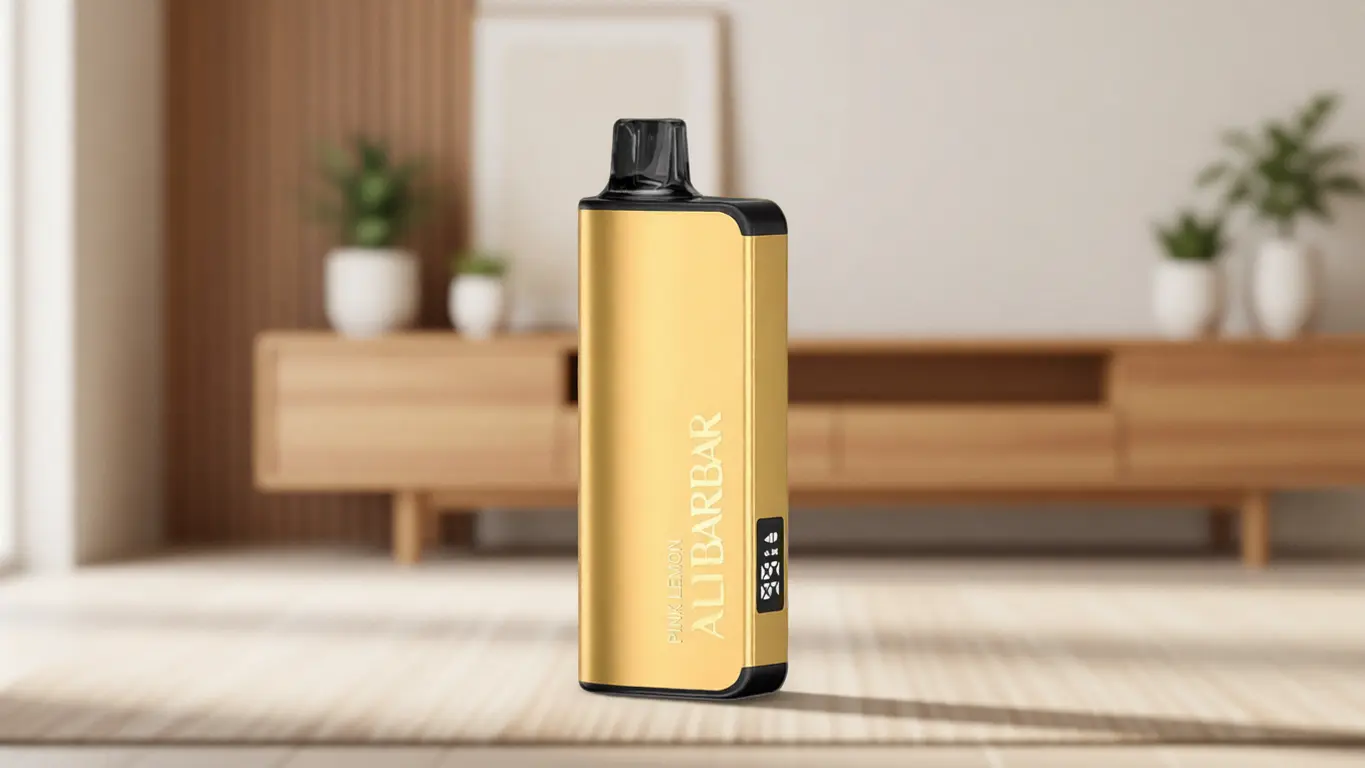
Clear, unambiguous feedback about remaining power and consumable level sounds trivial, but its absence is one of the most common sources of overspending. If a device gives you only a vague light blink when it’s near the end, you’ll naturally compensate by keeping a backup on hand. That doubles your immediate outlay. ALIBARBAR’s engineering teams have invested heavily in discrete but legible indicators that eliminate that guesswork. A device that tells you honestly where it stands costs less to own because you never pay for unnecessary redundancy.
Physical Design and Material Durability
A device carried daily in a pocket or bag is a device that gets scratched, jostled, and squeezed against keys. Surface treatments that look good on a retail shelf can be gone in a week, leaving you with something that feels shabby long before its internals are exhausted — and that often triggers an impulse replacement. The real cost of a device includes whether its finish and structural integrity hold up to your actual routine. Mouthpiece contour matters too: a shape that causes fatigue after prolonged use will have you reaching for another device sooner.
Modularity and Lifecycle Cost
Some devices are sealed units, meant to be used once and disposed. Others are rechargeable, and a growing segment uses replaceable pre-filled pods or chambers. The arithmetic changes dramatically depending on the architecture. A sealed device with a high puff rating might still end up costlier per puff than a rechargeable with a moderate rating, simply because you pay for the battery and shell every single time. Understanding this distinction is the single most powerful tool you have for controlling long-term expenditure. ALIBARBAR’s catalogue purposefully spans architectures — from high-capacity integrated designs to modular options — so that users can align the cost structure with their consumption frequency.
How ALIBARBAR Devices Illustrate These Cost Principles
ALIBARBAR’s current range, available through OZVAPE Shop in Australia, gives a clear demonstration of how engineering choices translate into real-world cost-per-use figures.
For the user who wants to eliminate all maintenance overhead and values a fixed, wholly predictable expense, the INGOT 9000 and INGOT 15000 represent a considered approach. These are enclosed, ready-to-use units where the entire construction — battery, heating element, reservoir — is factory-sealed and optimised as a single system. Their primary cost advantage is simplicity: you know the exact outlay from the moment of purchase, and there is no charger, pod pack, or accessory to factor in. The INGOT 15000, with its higher capacity, naturally pushes the per-use cost lower for high-frequency users, provided the usage pattern matches the device’s rated operational window. The trade-off is that you are committing to the full price of the device in one transaction, and once it’s exhausted, you buy another complete unit.
For users with more variable routines, or those who want to reduce recurring unit costs further, the Ice Adjust 12000 introduces an adjustable architecture. It delivers the same factory-engineered consistency but gives the user control over output intensity, which directly influences consumption rate and, by extension, the usable life of the device. When a single device can be tuned to a lighter setting, its effective cost per day drops accordingly — but only if the setting truly meets your satisfaction, because dialling it back only to compensate for a poor experience just defers the underlying dissatisfaction.
All ALIBARBAR devices share a common thread: they are built around clear status feedback and power systems that do not degrade rapidly in the second half of their charge cycle. This flattens the hidden cost curve that plagues many lower-quality alternatives. You aren’t budgeting for the probability that the device will become inconsistent before it’s empty; that budget line reads zero.
A Practical Framework for Estimating Your True Cost
Rather than comparing head-to-head prices, apply this diagnostic sequence to any device you’re considering:
Determine your typical daily usage. How many discreet sessions or puffs do you reliably consume over a week? Be honest — average the last two weeks, not the lightest or heaviest day.
Look up the device’s rated operational life under standard conditions. Manufacturers often provide a puff count or estimated days. Reduce this by 10–15% to account for real-world variation, unless you know the brand has a reputation for conservative ratings.
Divide the device’s purchase price by the realistic operational life in days. That gives you a rough daily cost. For rechargeable or pod-based systems, add the amortised cost of the power unit over its expected lifespan.
Ask: “Does this device give me clear status feedback?” If the answer is no, budget for carrying an extra unit at least 20% of the time and adjust your cost calculation upward.
Factor in any accessories or replacement parts you’ll need to sustain the experience — chargers, pods, cleaning materials — and spread their cost over the same period.
This framework quickly surfaces that a device priced at $35 isn’t automatically cheaper than one priced at $45. If the $35 unit offers ambiguous battery readouts and a tendency to weaken after half its life, you’ll likely end up spending $70 in the same window that the $45 unit would have handled alone.
Common Selection Errors and What the Industry Has Learned
Mistake 1: Overweighting puff count while ignoring power management. A device with a huge capacity rating means little if the heating element performance collapses after the first third of that range. Users repeatedly report that a smaller, better-regulated device ends up “feeling” fuller for longer, because every session remains consistent. In cost terms, the unusable portion of a high-rated device is just wasted spend.
Mistake 2: Assuming visual similarity indicates equivalent engineering. The external casings of many devices look interchangeable. Internally, the differences in battery cell quality, chipset calibration, and reservoir wicking materials are stark. A device from an authorised supply chain — one where batches are verified and documented — protects you from receiving a unit that looks right but doesn’t perform. OZVAPE Shop’s inventory practices are built around this reality: every ALIBARBAR device is factory-certified, eliminating the uncertainty that leads people to budget for “the occasional dud.”
Mistake 3: Treating modular options as a premium choice when they are a cost-reduction tool. Users sometimes avoid rechargeable systems because the initial kit price seems higher. But a properly designed modular platform can halve the per-use cost compared to an equivalent number of sealed devices. The arithmetic is simple: the battery and control module are bought once, and subsequent chambers or pods are priced as consumables only. Over a year, the difference can be substantial for anyone using devices daily.
Mistake 4: Neglecting shipping, support, and return policies in the cost equation. A device’s final cost includes the risk that it arrives dead, gets lost in transit, or fails early and leaves you without recourse. Responding retailers with clear, local accountability — not just a contact form — effectively reduce the risk premium you pay on every order. This is an often-overlooked line item in any honest cost comparison.
Frequently Asked Questions
Q: How much does an ALIBARBAR INGOT 9000 typically cost?
A: Pricing is set by authorised retailers and can vary with promotions or bundle offers. For current Australian pricing, you can refer to the product page on OZVAPE Shop, where inventory is factory-certified and pricing is displayed transparently.
Q: What makes one device cheaper per use than another?
A: The primary drivers are the usable number of consistent sessions before performance degrades, the efficiency of the power system, and whether the device is entirely disposable or part of a rechargeable platform. A higher upfront cost can translate to a lower daily rate if the device maintains stable output for its full rated life.
Q: Can I trust puff count as a measure of value?
A: Only in combination with other factors. Puff counts are typically obtained under laboratory conditions. Real-world usage differs, and the more important metric is whether the device continues to perform well across the majority of those puffs. Look for brands with conservative, verified ratings rather than inflated claims.
Q: Does purchasing from OZVAPE Shop cost more than other online sources?
A: OZVAPE Shop operates as an authorised channel, so pricing reflects compliance with factory standards. While some unverified sellers may offer superficially lower prices, the absence of supply chain documentation introduces a risk that the product may be a different revision or not meet the same quality controls. The effective cost — after accounting for the risk of receiving an underperforming unit — often favours authorised sourcing.
Q: How should I calculate the cost of a rechargeable device versus a sealed unit?
A: Sum the cost of the rechargeable power module (amortised over its expected life, typically 12–18 months of daily charging) and the cost of replacement pods or cartridges over the same period. Divide by the number of days. Compare this daily rate with the daily rate of a sealed device used at the same frequency. For heavy users, the rechargeable system almost always wins.
Q: What shipping costs should I expect when ordering from OZVAPE Shop?
A: Shipping policies are listed during checkout and vary by order size and destination. OZVAPE Shop’s dispatch process includes standardised tracking and delivery confirmation. Any potential costs beyond the product price are shown before you commit, eliminating surprise expenses.
Q: Are there ongoing maintenance costs with ALIBARBAR devices?
A: For sealed units like the INGOT series, none. For adjustable architectures like the Ice Adjust, there may be occasional component replacement depending on wear, but the core consumable cost is built into the device itself. No special cleaning kits or tools are required.
Q: What if my device doesn’t seem to last as long as the rating suggests?
A: Individual usage intensity varies, and some variation is normal. If you suspect a manufacturing anomaly, OZVAPE Shop maintains a documented support process. Reporting your experience promptly allows the team to check the batch reference and, where appropriate, arrange a replacement or credit, protecting you from an unrecoverable loss.
A device that matches your routine and communicates its status honestly will ultimately demand less of you — fewer emergency purchases, less mental arithmetic, and a lower total outlay over weeks and months. The engineering choices inside the ALIBARBAR range are directed at exactly that outcome: flatten the cost curve by making the device perform predictably until its natural endpoint. When you combine that design intent with a supply chain you can verify, the question “how much does one vape cost?” stops being a guess and becomes a straightforward projection. At OZVAPE Shop, the information and certified inventory to support that projection are available without embellishment, so the only calculation left is the one that fits your actual life.