
VAPE FAQs
How Much Does A Good Vape Cost?
Jul
A frequent mistake is to assume that a higher price automatically buys a better device. In practice, cost is a trailing indicator—it reflects a mix of engineering choices, material quality, and supply-chain integrity, but on its own it tells you very little about whether a product will suit your daily routine or endure for its expected life. The more useful question is not “How much does a good one cost?” but “What am I actually paying for, and how can I measure that against what I need?” The following article, grounded in observations from OZVAPE Shop’s work as an authorized retailer guiding thousands of adult users, offers a structured way to answer that question. It unpicks the engineering factors that determine long-term value, provides frameworks you can apply independently, and highlights the industry realities that silently inflate the total cost of ownership.
Understanding What Matters: Core Engineering and Design Factors
Every purchasing decision is a bet on how a device will behave days, weeks, and months after the first use. The price tag you see is only the entrance fee; the true cost emerges from how consistently the device performs, how clearly it communicates its status, and how flexibly it adapts to your patterns. Four engineering areas have outsized influence on that hidden cost.
Internal Architecture and Output Consistency
The heating element and its control system form the hardest-working part of any device. Poorly managed thermal loops lead to output degradation over a single charge cycle, forcing users to overdraw or compensate with additional puffs that shorten the unit’s effective life. In a well-engineered architecture, the heating element maintains stable resistance across its rated temperature range, and the power delivery is calibrated to avoid voltage sag as the battery depletes. When you evaluate a device, look for evidence of consistent output rather than peak specifications: a design that operates within a narrowly controlled temperature window will deliver the same experience from the first moment to the last, whereas an unregulated system will gradually decline, forcing you toward a premature replacement. This stability directly affects how many usable cycles you extract per dollar.
Power Management and Status Transparency
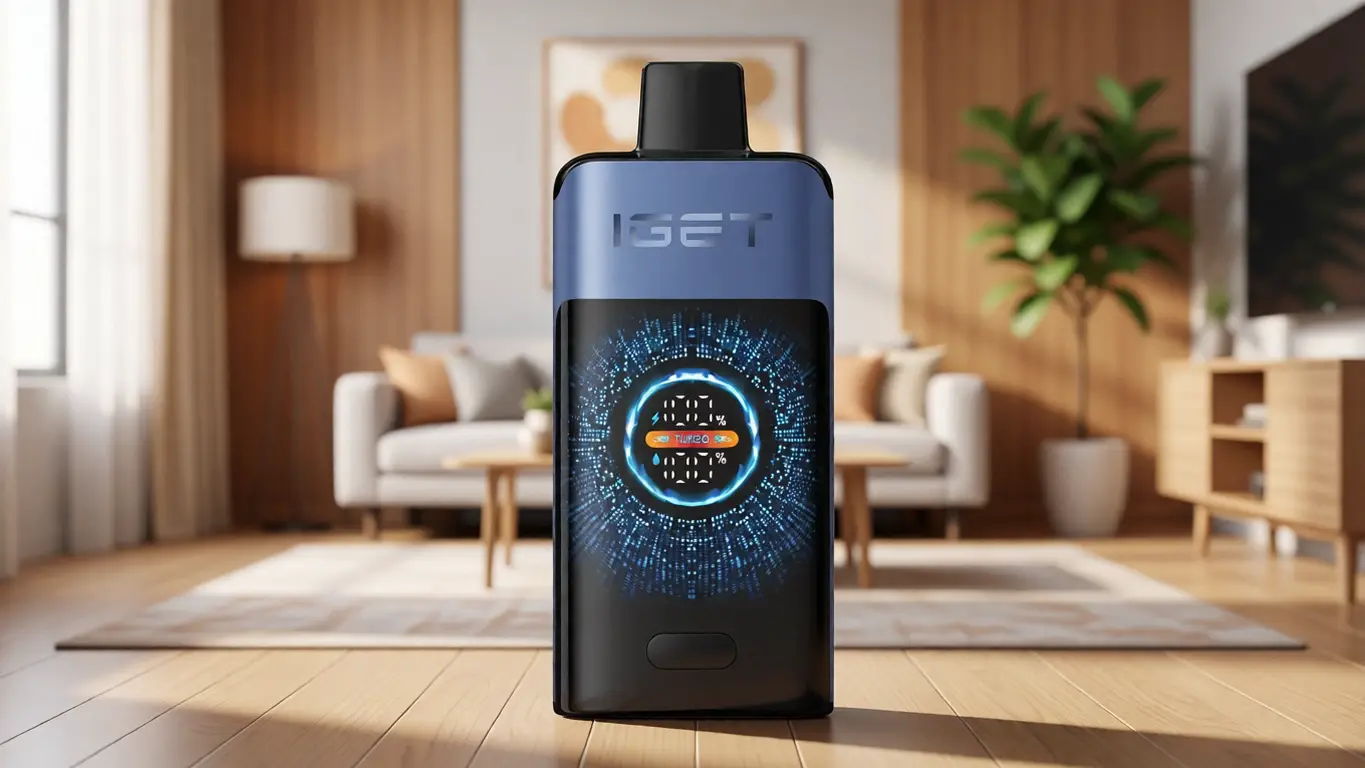
A device without meaningful status feedback is a blind investment. You might leave the house with what you think is sufficient remaining life, only to find the unit dead halfway through a long day. That forces you to carry a backup—effectively doubling your immediate outlay—or to risk being caught without function. Intelligent power management involves both low‑voltage cutoffs that protect the battery and clear, unambiguous indicators (multi‑colored LEDs, haptic pulses, or segmented displays) that tell you exactly where you stand. The cost of ambiguity is hidden but real: it shows up as wasted capacity, prematurely discarded units, or the expense of always having a spare on hand. A small upfront price difference that buys an accurate, persistent status indicator often repays itself within the first month of ownership.
Physical Design and Material Durability
Surfaces that scratch after a few days in a pocket, mouthpieces that grow uncomfortable during extended use, construction that allows lint or moisture to compromise internal components—these are not cosmetic issues. They are durability shortcuts that shorten the practical lifespan of a device and chip away at daily satisfaction. Soft‑touch coatings, while initially appealing, tend to degrade unevenly with skin oils and friction; anodized finishes or high‑density polymer shells generally withstand daily carry far better. Similarly, the contour and material of the mouthpiece matter more than its appearance. A slightly elongated, heat‑dissipating tip can reduce the urge to take harder draws, which in turn protects the heating element and conserves battery. The engineering of physical durability is a direct cost‑per‑use factor: a device that looks and feels worn after two weeks is one you will mentally devalue and replace sooner than one that remains composed month after month.
Modularity and Lifecycle Flexibility
The most significant cost differentiator across the market is whether a device is a fully sealed disposable unit, a rechargeable fixed‑capacity system, or a modular platform with replaceable components. A sealed disposable device has the lowest entry cost but the highest long‑term expense if used regularly, because you are repurchasing the entire assembly every time the reservoir or battery is depleted. A rechargeable unit with a built‑in power cell extends usage until the reservoir is empty, roughly halving the effective cost per cycle compared to a throwaway equivalent of similar capacity. A fully modular system—where a separate battery module can be recharged and reused while only the consumable portion is replaced—offers the steepest reduction in per‑session cost, along with less waste. The trade‑off is that modular systems require a slightly higher initial purchase and demand that you manage two components. The choice should follow your actual routine: if you rarely exceed a single unit’s lifetime over a week, a high‑capacity sealed device may be cost‑efficient; if your consumption is daily and sustained, modularity will materially lower your annual spend.
Applying These Criteria to Real-World Options
Seeing how these engineering principles play out in specific device families makes the cost-to-value relationship tangible. While the market offers numerous alternatives, the ALIBARBAR range demonstrates how a consistent design philosophy translates into practical economy.
High‑capacity sealed systems, such as the INGOT 9000, represent a direct answer to the user who wants a self‑contained device with no charging or component management. A substantial internal reservoir and a calibrated power curve mean the unit can deliver its rated cycle count without the performance drop‑off that plagues lower‑capacity throwaways. The cost per cycle sits comfortably below that of smaller disposables, but the trade‑off is that you are still discarding a fully integrated bundle of battery and reservoir at the end of its life. For intermittent users, this might be the optimal balance between convenience and per‑session spend.
Rechargeable fixed‑capacity systems, like the Ice Adjust 12000, shift the equation by allowing the user to recharge the battery while the reservoir remains. This single addition changes the unit economics dramatically: rather than paying for a new battery with every cycle, you pay for one that lasts dozens of recharges. The user gets the same sealed‑pod simplicity but with roughly double the usable output from the initial purchase price. The trade‑off is that you must manage charging—something a good status indicator resolves—and the device is slightly larger to accommodate a charging port. For anyone whose usage would drain a standard disposable in a day, the rechargeable route cuts yearly expenditure substantially without imposing the complexity of a full modular system.
Modular platforms push cost efficiency further but ask for more involvement. While ALIBARBAR’s current lineup focuses on integrated designs, the market’s broader modular options follow a recognizable pattern: a reusable power unit paired with replaceable cartridges or pods. The upfront cost is higher, but the per‑session cost can be one‑third that of a premium disposable. The hidden cost here is compatibility risk—not all modular parts are interchangeable across brands—so the long‑term value is partly a function of whether the system you choose will remain available and reasonably priced over the following twelve months. The most economical path is to buy into a widely supported ecosystem with transparent refill pricing.
In all these cases, the “good” cost is not a number but a ratio: usable cycles delivered per dollar, adjusted for the reliability and satisfaction each design provides. A device that costs 50% more upfront but lasts three times as long in real‑world use is, mathematically, the cheaper option.
A Practical Framework for Evaluation
Rather than relying on sticker prices or marketing claims, you can assess any device by running it through a simple diagnostic sequence. This method turns abstract “quality” into verifiable, budget-relevant criteria.
Diagnose the power architecture. Is the battery rechargeable? Does the device disclose its mAh rating? If not, you are effectively buying an unknown quantity of energy, and the unit’s longevity becomes guesswork.
Check the status communication. Does the device give you a clear low‑power warning with enough remaining life to finish the day? Ask yourself: “If I see this indicator at 3 p.m., will I be fine until 9 p.m.?” If the answer is no, your effective cost includes carrying a spare.
Inspect the finish and build. Run a fingernail over the surface—does it feel like a material that will hold up to keys, coins, and pocket lint? Look at the mouthpiece geometry: is it shaped to guide airflow naturally, or is it an afterthought?
Calculate cost per usable cycle. Estimate how many full‑use cycles you realistically get from a device before performance degrades. Then divide the price by that number. The result is your true per‑session spend, and it often contradicts the initial price ranking.
Factor in access costs. Where you buy matters as much as what you buy. A counterfeit or poorly stored device can mimic a genuine product but fail early, making its “low price” the most expensive option you can pick.
Common Selection Errors and Industry Observations
Even when the logic of value is clear, certain industry‑wide habits lead users into predictable overspending. Recognizing these patterns will protect you from the most expensive mistakes.
Overweighting a single specification. A device marketed with an eye‑catching “puff count” can obscure the fact that its output weakens significantly after the first third of its life. A unit with half the claimed count but a regulated output profile will actually give you more satisfying cycles. The error is in treating the headline number as a promise rather than a laboratory estimate.
Assuming visual similarity means identical engineering. The market is flooded with lookalike devices that copy external shapes but use cheaper heating elements, thinner wiring, and unregulated power boards. These units often cost 20–30% less at the counter but fall short by 50% or more in real‑world lifespan. The cost of this error is the full purchase price of the inferior device plus the inconvenience of its premature failure.
Ignorng modularity in per‑use calculations. A user who spends $15 on a disposable that lasts four days might balk at a $40 modular kit, but over a month, the disposable route costs around $112, while the modular kit—with a $10 replacement pod per week—costs roughly $80. The monthly gap only widens with time. People often mistake the lower upfront price for a better deal because they do not extend the arithmetic.
Conflating category labels with technical performance. Terms like “adjustable airflow” or “mesh coil” are not guarantees of quality; they describe a feature, not its execution. A badly implemented adjustable ring that leaks air or a mesh coil that overheats due to inadequate wicking can perform worse than a simpler, well‑engineered design. The label adds cost without adding value.
From an industry vantage point, the spread between the cheapest and the most reliable devices has more to do with sourcing discipline than with innovation. Manufacturers who control their component supply chains and enforce batch‑level quality checks produce devices whose failure rates are an order of magnitude lower than those assembled from unbranded generic parts. Retailers who accept only factory‑certified stock and who document their chain of custody add another layer of cost protection, because the end user is spared the gamble of the gray market. This is why the purchase channel is a legitimate part of the cost equation: an authorized retailer like OZVAPE Shop absorbs the verification work that an individual user cannot easily perform, and that absorbed work saves you from sinking money into products that never had a chance of meeting their specifications.
Frequently Asked Questions
Q: How much should I budget for a reliable device?
A: A quality sealed disposable from a traceable supply chain typically costs between $15 and $25, while rechargeable fixed‑capacity devices run $20 to $35. Modular starter kits commonly start around $30 to $45 with replacement consumables costing $8 to $15. The “good” range is defined less by the absolute figure and more by the cost‑per‑use you’ll actually experience.
Q: Do more expensive devices automatically last longer?
A: Not necessarily. Longevity is a function of battery quality, thermal regulation, and material integrity, not retail price. A $20 device with consistent output and a durable finish will outlast a poorly made $30 alternative. Cost alone is not a reliable predictor; you have to examine the architecture.
Q: Are disposable devices ever the most cost‑effective option?
A: For very intermittent users—someone who uses a device only once or twice a week—a high‑capacity sealed disposable can be more economical than a rechargeable kit that would sit idle and degrade over time. The break‑even point depends on your usage frequency. Run the numbers with your actual weekly consumption before deciding.
Q: What hidden costs should I look out for?
A: The biggest hidden costs are the need for a backup device (driven by poor status feedback), the early replacement of a device whose output declines steeply, and the financial loss of purchasing counterfeit units that fail prematurely. Each of these can add 30–50% to your actual spend.
Q: How do I know if a device’s stated capacity is honest?
A: Independent testing is difficult, but you can look for third‑party verification where available. More practically, buy from retailers who source exclusively from authorized distribution—this removes the most common source of mislabeled inventory. A transparent retailer will publish actual mAh ratings and reservoir volumes, not just puff counts.
Q: Is it worth paying extra for adjustable features?
A: If the adjustability solves a genuine need—for example, an airflow control that lets you tailor the draw to your preference—then yes, it can enhance satisfaction and make each session more deliberate. If the adjustment rings are loose, prone to change in a pocket, or feel flimsy, they add cost without utility. Test the mechanism before committing.
Q: Why does buying from an authorized retailer affect cost?
A: Authorized retailers remove the middle‑layer risks of counterfeits, improper storage, and outdated stock. The price you pay is for a verified, correctly handled product. While unauthorized channels may offer lower nominal prices, the risk of receiving a device that underperforms or fails early erases any initial saving.
Q: What should I do if a device doesn’t live up to its claimed lifespan?
A: Document what you experienced calmly, including the purchase date and observed usage pattern. Reach out to the retailer’s support team with clear, factual notes. An accountable retailer—one that maintains relationships with manufacturers—can often facilitate a resolution such as a warranty claim or replacement. This is a quiet cost advantage of buying through a channel that stands behind its stock.
Q: Can I calculate total annual cost before buying?
A: Yes. Estimate your weekly usage in complete units or pod equivalents, multiply by 52, and then multiply by the per‑unit cost you’ve calculated. For rechargeable or modular systems, add one‑time hardware costs and factor in occasional charging or cleaning accessories. This annualized view is the most honest comparison method.
Q: How do I spot a device with good materials without seeing it in person?
A: Study close‑up product photos for surface texture and join lines. Read descriptions that mention specific material treatments (e.g., anodized aluminum, PVD coating) rather than vague “premium finish” language. Retailers that provide detailed, standardized specifications—as OZVAPE Shop does—give you the next best thing to a physical inspection.
Conclusion
The cost of a good personal electronic device is not a fixed number but a formula. It involves the price of the unit divided by the genuinely satisfying cycles it delivers, adjusted for the durability of its materials and the clarity of its status communication. A $35 modular system can cost you less per month than a $15 disposable if your usage is daily. A “budget” device purchased through an unverified channel can end up being the most expensive mistake you make, simply because it never delivered what was promised.
The most useful thing you can do is to remove the guesswork from both the product and the place you buy it. When you source a device through a channel like OZVAPE Shop, you are not only paying for a physical object; you are indirectly paying for the verification, documentation, and after‑sales accountability that keep the hidden costs from piling up. That is not a sales argument—it is a structural difference in how the total cost of ownership plays out over time.
Ultimately, the right device is the one that fits your weekly rhythm without constant adjustments, backup planning, or anxiety about when it might quit. Cost is only part of that equation. The rest is knowing what to look for, asking the hard questions before you pay, and choosing a supply path that respects your intelligence enough to be transparent. That is what a genuinely good purchase looks like—whatever the price tag says.