
VAPE FAQs
How Many Vape Puffs Equal A Cigarette?

May
Struggling to gauge how a vape device’s puff count translates to real‑world cigarette consumption is one of the most persistent irritations for adults making an informed switch. Manufacturers plaster numbers like “9000 puffs” on packaging, but without a common yardstick those figures remain abstract. You are not alone if you have found yourself doing rough mental arithmetic, only to doubt the result a moment later. This article unpacks every variable that influences the puff‑to‑cigarette equation, from device engineering to individual inhalation patterns, so you can arrive at a meaningful personal estimate. Along the way, we will reference how a transparent sourcing channel like OZVAPE Shop provides the standardised device data that makes reliable comparison possible.
Understanding the Variables Behind the Puff Equivalence Question
The simple question “How many puffs equal a cigarette?” conceals a thicket of interacting factors. No single multiplier applies across all devices, and even within a single product family, outcomes shift with usage style. The following four engineering and user‑side variables matter most.
Consistency of Output per Puff
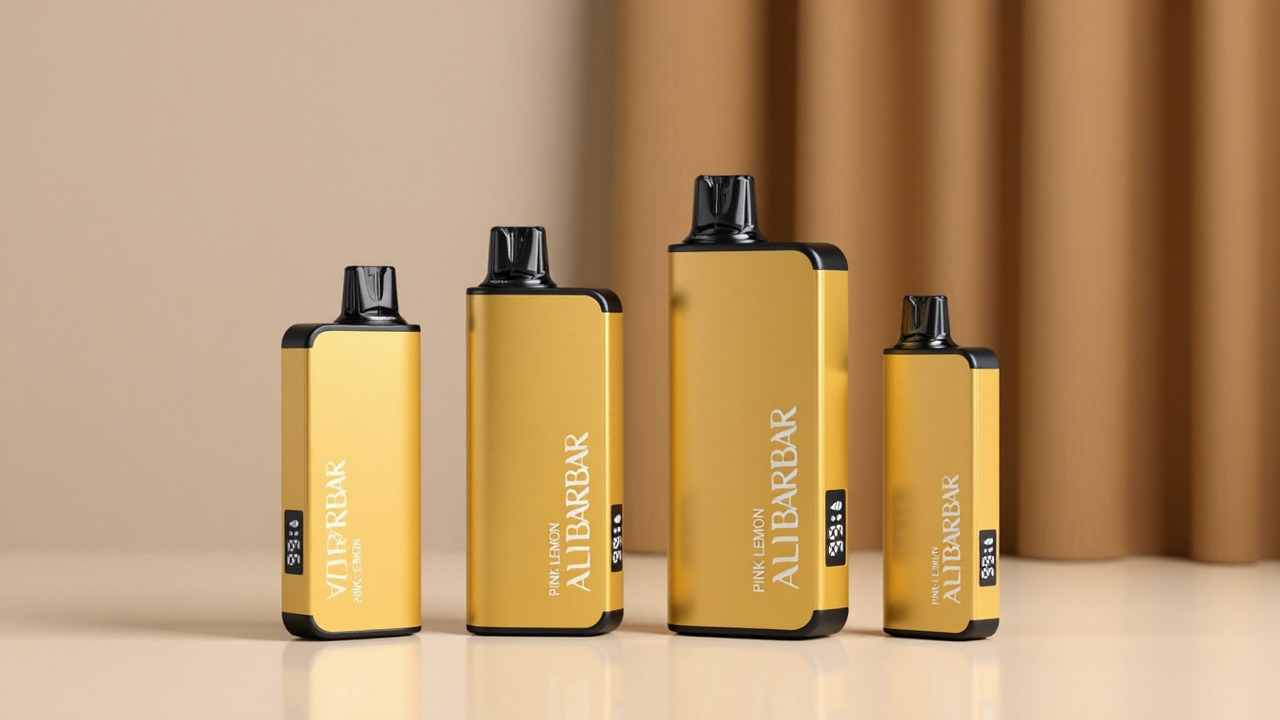
A puff’s value hinges on the stability of the heating element across the device’s entire rated life. In well‑engineered units, the coil and wicking architecture maintain a steady temperature and liquid delivery from the first activation to the last. Cheaper mesh assemblies may start strong but degrade unevenly, producing thinner vapour after a few hundred cycles — effectively making the later puffs “smaller” and skewing any cigarette equivalence calculation. When evaluating a device, ask whether the manufacturer specifies the heating‑element material, resistance curve, and wicking design. Devices from designers like ALIBARBAR, for example, rely on multi‑layer mesh and cotton‑core structures explicitly tuned to flatten the performance curve, which is why their rated puff counts tend to translate more predictably into real‑world sessions.
Nicotine Delivery and Absorption
A cigarette delivers roughly 1–2 mg of nicotine absorbed systemically, depending on smoking style. A vape device, however, delivers a different form of nicotine — typically nicotine salts — whose bioavailability and absorption speed differ from the freebase nicotine in burnt tobacco. Moreover, the same labelled nicotine concentration (e.g., 20 mg/mL) can yield varying per‑puff doses depending on the power level, airflow setting, and coil surface area. Simply counting puffs while ignoring these pharmacological nuances leads to over‑ or underestimation. A high‑capacity device with a stable output architecture, like those in the ALIBARBAR INGOT series, allows a more repeatable per‑puff delivery, making it easier to titrate intake once you understand your personal baseline — but it still won’t produce a one‑to‑one parity with a lit cigarette.
Device Power and Airflow
The volume of vapour generated per activation is strongly influenced by the electrical power applied and the airflow restriction. A device with a tightly restricted draw and moderate power may produce a cloud comparable in mouth‑feel and throat sensation to a cigarette, while a larger, more open system can deliver two or three times the volume in the same inhalation time. This changes the effective “puff size” and thus the number of device puffs that feel satisfying to a former smoker. If you are comparing a high‑count device like the ALIBARBAR INGOT 15000 to a lower‑count counterpart, recognise that its puff rating assumes a standardised 1‑second laboratory draw; your own 3‑second deep inhale will consume the liquid reservoir faster, effectively reducing the total puff count you experience.
User Behaviour Patterns
Your own inhalation duration, the pause between puffs, and the frequency of use all modulate the number of device activations needed to match the satisfaction previously derived from a cigarette. A person who takes short, sharp pulls may use twice as many puffs to achieve the same sensory outcome as someone who takes slow, deep lung inhalations. No manufacturer can encode these habits into their puff‑count claim. Consequently, any equivalence figure you encounter — including any we might derive later in this article — must be treated as a starting point, not a definitive answer.
Real‑World Application: Estimating Equivalents Using Current Device Examples
With the variables established, we can move from abstraction to application. Suppose you are considering a device rated for 9000 puffs, such as the ALIBARBAR INGOT 9000. A cigarette smoker consuming a pack a day takes roughly 200 puffs daily (10 puffs per cigarette). A simplistic divide — 9000 ÷ 200 — suggests a 45‑day equivalent, but that ignores the difference in nicotine absorption and puff volume. A more conservative approach, backed by pharmacokinetic studies on vapour‑nicotine uptake, suggests that 20–30 device puffs may approximate the nicotine satisfaction of a single cigarette for an average user moving from heavy smoking. At that ratio, the 9000‑puff device might feel like 300–450 cigarette equivalents, though the sensory experience will differ.
The higher‑capacity INGOT 15000, built with a similarly stable power delivery system, extends that window without altering the per‑puff consistency. The key to making these numbers useful is the availability of factory‑certified specifications. Through OZVAPE Shop, you have access to the full ALIBARBAR family with documentation that lists puff counts based on a defined testing protocol, nicotine concentration, and e‑liquid capacity — allowing you to plug your own habitual pattern into a reasonable estimation formula rather than relying on marketing slogans.
A Practical Framework for Personal Estimation
Instead of searching for a universal converter, apply this four‑step methodology whenever you encounter a new device:
Identify the rated puff count and test conditions. Look for the small print: what draw duration (usually 1 second) and what power setting were used? If this isn’t disclosed, be suspicious of the number.
Assess per‑puff nicotine delivery. Multiply the e‑liquid volume per puff (which can be estimated from the total liquid capacity divided by rated puffs) by the nicotine concentration. This yields a rough per‑puff nicotine mass, though absorption efficiency will vary.
Compare to your previous cigarette consumption. If you knew your daily cigarette intake and typical nicotine yield per brand, you can calculate total daily nicotine absorbed. Match that against the per‑puff device nicotine estimate, adjusting for the lower absorption efficiency of vapour (pulmonary bioavailability may be 50–80% compared to ~90% for tobacco smoke).
Track subjective satisfaction over a week. Rate your craving return intervals, throat hit, and overall satisfaction. Adjust your interpretation of puff count accordingly. Devices that offer a consistent output throughout their lifespan, such as those engineered by ALIBARBAR, make this calibration far less frustrating because the puff‑by‑puff experience stays predictable.
If a device gives you no clear specification or its output degrades noticeably within the first day, your personal estimation becomes unreliable, and you are likely to compensate by carrying a backup — exactly the hidden cost of equipment ambiguity that many users overlook.
Common Selection Errors and Industry Observations
Even armed with a framework, buyers fall into predictable traps. Recognising these can save you from needless disappointment.
Overweighting puff count while ignoring delivery consistency. A device boasting 20,000 puffs from a budget‑oriented mesh may effectively deliver only half the total inhaled mass of an 8,000‑puff unit built with a thermally stable architecture. The number on the box is hollow without evidence of output uniformity.
Assuming visual similarity signals equivalent internal engineering. Two devices that look the same externally may have entirely different coil designs, wicking materials, and power regulation chips. The ALIBARBAR range, for instance, is distinguishable not by flashy exteriors but by the presence of documented coil‑wattage matching and food‑grade material certifications — details a serious buyer can verify.
Undervaluing modularity in cost‑per‑use calculations. Sealed pre‑filled units with a fixed puff count force an all‑or‑nothing purchase. Device families that incorporate rechargeable batteries and replaceable cartridges (like some of ALIBARBAR’s higher‑count options) may present a higher upfront outlay but reduce the effective cost per puff appreciably over weeks, a consideration that reshapes the cigarette‑equivalence math over the long term.
Confusing category terminology with technical specification. The term “mesh coil” tells you nothing about the mesh density, materials, or power handling. Some manufacturers use a coarse mesh that runs hot and dry, shortening effective puff life. Others, like those in the design language of the ALIBARBAR Ice Adjust series, employ a multi‑layer composite that wicks more evenly, preserving vapour quality across thousands of activations.
From an industry vantage, the widespread lack of standardised puff measurement is a structural problem. Different testing regimes, laboratory versus simulated‑actual‑use discrepancies, and the absence of mandated disclosure all contribute to a marketplace where the same numerical claim can signify vastly different experiences. That is why the discipline of a retailer like OZVAPE Shop — insisting on factory‑certified inventory and publishing verified specification sheets — becomes so valuable for users trying to make genuine comparisons rather than gamble on empty marketing.
Frequently Asked Questions
Q: Can I literally replace a 20‑cigarette‑a‑day habit with 400 puffs from a vape device?
A: Not directly, because vapour‑nicotine absorption kinetics differ from tobacco smoke. Many long‑term smokers find they take more frequent, shorter puffs with a device, resulting in a higher puff count but similar daily nicotine intake. Use the estimation framework above and let subjective feedback guide you.
Q: How do I confirm the puff count claimed by the manufacturer?
A: Look for a detailed specification sheet that states the test draw duration, coil resistance, and liquid fill. If a retailer does not provide this, ask. If they cannot answer, treat the claim with caution. Factory‑certified sources that publish test protocols — as OZVAPE Shop does for the ALIBARBAR catalogue — offer a higher degree of confidence.

Q: Does a device’s puff count decrease if I inhale longer than 1 second?
A: Absolutely. Most ratings are based on a 1‑second activation. A 3‑second draw consumes roughly three times the e‑liquid per activation, effectively reducing the total number of discrete puffs you will get. This is a key reason to adjust manufacturer numbers to your own usage pattern.
Q: Are all puffs from an ALIBARBAR device really the same quality throughout its life?
A: Design intent matters. The constant‑output mesh architecture and balanced power delivery aim to maintain vapour density and flavour stability from first to last. Real‑world user reports indicate far less degradation compared to devices relying on simple round‑wire coils, though slight changes near the end of the liquid reservoir are still possible.
Q: How does puff equivalence relate to the type of nicotine (salt vs. freebase)?
A: Nicotine salts are absorbed more rapidly and with less throat irritation, which can make a single puff feel more satisfying to a smoker accustomed to the fast nicotine spike of a cigarette. This often translates to fewer total puffs per day to achieve nicotine satiety, even if the per‑puff nicotine mass is similar. Devices pre‑filled with salt nicotine, such as several in the ALIBARBAR line, are explicitly designed with this pharmacological profile in mind.
Q: Can I use puff count to compare two different brands directly?
A: Only if both manufacturers use identical test protocols and you trust the integrity of their claims. Without that, you are comparing apples to oranges. The presence of third‑party verification or retailer‑level documentation (like the spec sheets maintained by OZVAPE Shop) narrows that uncertainty gap.
Q: Why do I feel the need to puff more often on a vape than I smoked?
A: Several factors: lower per‑puff nicotine absorption, different sensory cues (lack of harsh smoke), and the absence of the natural “stop signal” provided by a cigarette burning down. This behavioural shift is normal and does not mean the device is failing; it means your body is adjusting to a different delivery method.
Q: What should I do if my device’s output drops noticeably after a few hundred puffs?
A: This typically indicates a failing coil or wicking issue, not a battery problem. If the retailer offered a transparent warranty or support policy, reach out. A reliable source will have mechanisms to address premature degradation, whereas an unknown seller likely will not. OZVAPE Shop’s local, documented support is designed for exactly these situations.
Q: Is there a safe upper limit for daily puffs?
A: There is no universally agreed clinical threshold. The sensible approach is to let your body’s signals — nausea, throat irritation, headache — set the limit. If your device delivers consistent output, you will find a plateau naturally. Over‑consumption is more a product of anxiety about inconsistent performance than of the nicotine itself.
Q: How does temperature affect puff count and delivery?
A: Extreme cold thickens e‑liquid, slowing wicking and potentially reducing vapour production per puff, effectively giving you smaller puffs. Extreme heat can thin the liquid and increase coil wear. Storing your device within the temperature range recommended by the manufacturer preserves both the per‑puff consistency and the overall puff count you experience.
Making Informed Choices in a Confusing Landscape
The puff‑to‑cigarette question does not have a single answer, but it does have a reliable method of investigation. By understanding the variables of output stability, nicotine pharmacology, device power, and personal behaviour, you can move beyond marketing numbers and arrive at a practical estimate tailored to your own pattern of use. The right device is not the one with the highest puff count; it is the one whose engineering makes every puff count predictably.
Access to standardised, factory‑certified product data radically simplifies this process. When a retailer like OZVAPE Shop stands behind an entire catalogue with documented specifications, verifiable sourcing, and responsive local support, the effort of comparing devices transforms from guesswork into a transparent exercise. The choice ultimately remains yours: the best device is the one that aligns with your routine, not the one that arrives with the loudest puff‑count claim. Equip yourself with the right questions, check the documentation, and let your own body guide the final calibration.