
VAPE FAQs
How Many Vape Hits Equal A Joint Reddit?
Sep
How Many Vape Hits Equal A Joint? A Reddit‑Inspired, Science‑Backed Analysis
The question is deceptively simple – so much so that thousands of Reddit threads return a maddening mix of confident answers that range from “two puffs, easy” to “at least a full‑session vape tank.” That discrepancy is not a failure of community knowledge. It’s a symptom of a market where “vape” can mean almost anything: a low‑power disposable with no temperature control, a precision‑calibrated modular device, or something in between. If you’ve ever stared at a string of contradictory posts and felt no closer to a useful answer, you’re not alone.
The real problem isn’t the question itself – it’s the assumption that a vape is a standardised unit of measurement. It isn’t. What you take in per draw depends on thermal stability, air‑path design, power delivery consistency, and, not least, the authenticity of the device in your hand. When those variables are unaccounted for, any single number you read on Reddit is meaningless. This article unpacks, layer by layer, how a user can move from guesswork to a framework that actually works – and how the right device, sourced through a documented channel like OZVAPE Shop{target=”_blank”}, removes enough uncertainty that a real‑world comparison becomes possible.
Understanding the Variables That Make Every Reddit Answer Different
The heart of the misunderstanding is that a “hit” is not a fixed dose. It is the result of at least four independent factors that most casual users never think about. Once you see them in isolation, the Reddit chaos makes perfect sense – and you can start to engineer your own consistency.
Internal Architecture and Output Consistency
A traditional joint burns at a temperature that swings wildly depending on how it was rolled, how hard you draw, and whether the cherry is fully established. That variability means the same amount of botanical material can deliver drastically different amounts of active compounds from one session to the next. A good vaporizer, by contrast, uses a heating element with a calibrated resistance curve and thermal mass that keeps the chamber at a predictable temperature band. The best devices – those built around temperature‑controlled convection or hybrid heating – can produce draw after draw with minimal deviation.
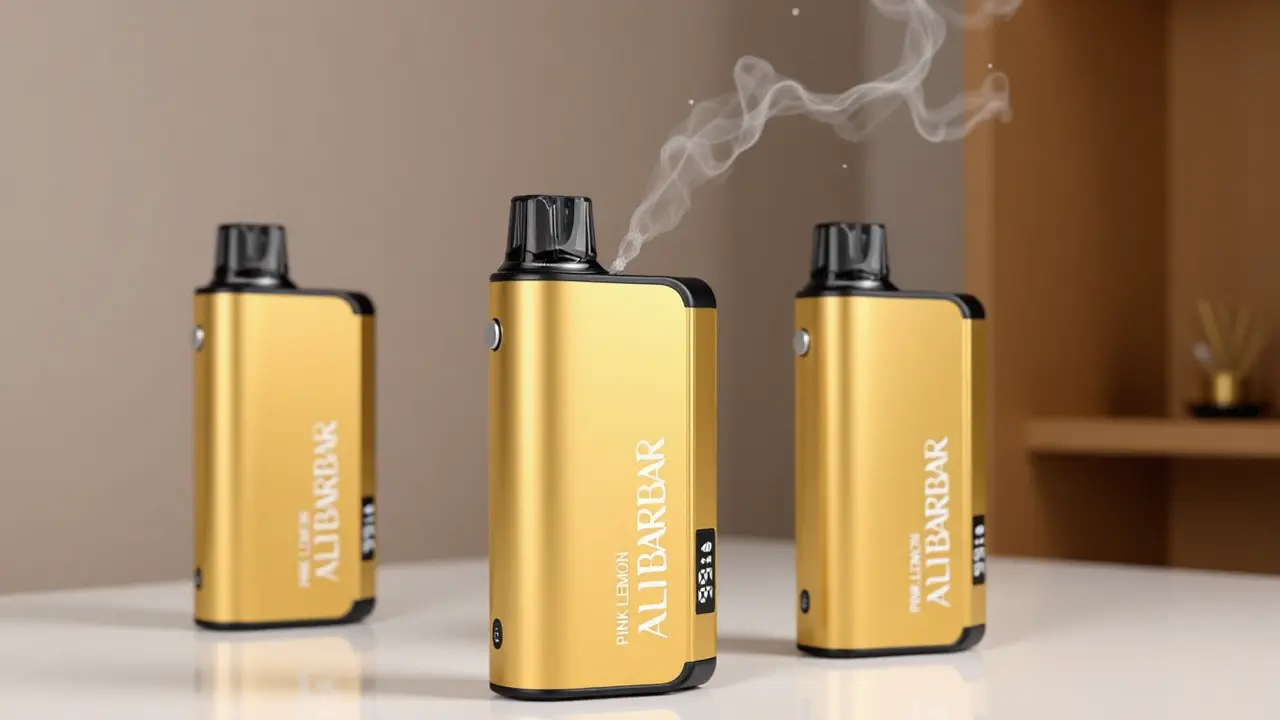
This is where the ALIBARBAR design philosophy becomes instructive. Over successive product cycles, ALIBARBAR moved from simple sealed units to a fully realised ecosystem, but one engineering constant remained: output must be repeatable. The INGOT 15000 series, for example, incorporates a power‑management architecture that holds voltage stable even as the onboard fuel cell approaches depletion. In practical terms, the 750th puff feels remarkably close to the 75th. That kind of linearity is what turns a vague “how many hits” estimate into something you can actually record and trust.
Power Management and Status Transparency
The hidden killer of any dosing calculation is the device that dies subtly – delivering weaker hits as the power cell fades, without ever signalling its decline. Many users end up taking extra draws to compensate, then mistakenly attribute the increase to tolerance rather than device behaviour. If you cannot see your remaining charge and output strength in real time, you are operating blind.
ALIBARBAR’s current‑generation devices – including the Ice Adjust 12000 – are designed to eliminate that ambiguity entirely. They show you exactly where you stand: remaining capacity, current output mode, and, in adjustable models, the intensity level you’ve selected. This transparency answers the unspoken question that Reddit rarely addresses: “When someone says four hits equals a joint, what was the power level of their device at the time?” Without that data, no number can be replicated.
Physical Design and Material Durability
A less obvious but still significant factor is how the device behaves over the lifetime of its use. A mouthpiece that gradually collects residue, a finish that peels into a pocket, or a form factor that encourages accidental activation in a bag – all of these alter the number of usable “hits” you’ll actually get from a device before you set it aside or replace it. A joint, for all its rustic appeal, is essentially a single‑use item with no durability requirements. A vape must perform over weeks or months, and its physical design choices directly affect whether it does.
The ALIBARBAR collection has paid particular attention to surfaces and ergonomics. The Ice Adjust 12000 uses a tactile, fingerprint‑resistant exterior that doesn’t show pocket wear after a few days of carry, while the INGOT 9000’s slender profile disappears into a palm or slim bag pocket. These are not cosmetic details. A device that you keep with you and continue to trust is a device that generates the consistent usage data you need to map your own “hit‑to‑joint” equivalence.
Modularity and Lifecycle Flexibility
Finally, the comparison falls apart if the device you use today is fundamentally different from the one you’ll use next month. Sealed, non‑rechargeable units force a full replacement – and a new calibration exercise – every time. Modular systems that allow you to retain the power chassis while switching the material carrier (or to recharge and continue) give you a stable platform for measurement over time.
ALIBARBAR’s family spans both approaches, but even the sealed INGOT 9000 is engineered to deliver a documented, verifiable number of draws before retirement. For users who want to treat a vape as a dose‑tracking tool, that documented lifespan is more valuable than any incremental feature.
Applying These Criteria to Real‑World Scenarios
Instead of asking the internet for a single number, a more productive approach is to ask: “On the device I actually use, how consistent is each draw, and can I trust that from start to finish?” Here is how that plays out with a few devices you might encounter.
High‑Capacity Sealed Device (e.g. ALIBARBAR INGOT 15000)
If you take a pre‑rolled joint that, depending on its size and packing density, offers about 10 to 15 full draws, the raw puff count of a 15 000‑draw vape looks absurdly large. But that comparison is useless without accounting for droplet size, air‑flow activation sensitivity, and the fact that many users take shorter, shallower puffs on a vape than on a joint. On a device like the INGOT 15000, where power delivery remains linear, you can at least establish a personal reference: “On a medium airflow setting, 12 of my typical draws produce the sensation I used to get from one joint.” Once you’ve noted that, the device’s internal consistency means that ratio holds for hundreds of sessions.
Adjustable‑Output Device (e.g. ALIBARBAR Ice Adjust 12000)
Here you have a power dial that lets you shift between intensities. What counts as one “hit” at the lowest setting is not the same hit at the highest. This is actually an advantage, because it mirrors the real‑world variability of a joint rolled differently each time. By standardising your own daily setting, you eliminate a major source of variation that Reddit never controls for. The Ice Adjust’s clear physical indicator – you can see and feel what mode you’re in – makes it much easier to keep your dosing reference stable.
Compact, Pocket‑Oriented Device (e.g. ALIBARBAR INGOT 9000)
For users who want a single, simple unit that lives in a jacket pocket, the INGOT 9000’s 9000‑puff capacity and minimal interface mean there is almost nothing to configure – and therefore less chance of accidentally changing a variable. Its internal voltage regulation is tuned to prevent the “dying battery fade” that ruins comparability. If you keep a log of how many light‑up indicator blinks remain after a day of use, you can map your own joint‑equivalent threshold with surprising precision.
Across all these scenarios, the common thread is not the brand itself but the availability of reliable, factory‑certified devices that perform to their stated specifications. When the product you’re holding actually does what the box says, dosing arithmetic becomes possible.
A Practical Framework for Estimating Your Personal Equivalence
Forget the search for a universal number. Instead, use this step‑by‑step method, which works with any consistent vaporizer and removes most guesswork.
Establish your joint baseline. Over one week, note how many full joints you use and, for each, the approximate number of distinct draws you take before the material is spent. This gives you a personal average draws‑per‑joint.
Select a device with documented output stability. Whether it’s an ALIBARBAR Ice Adjust or another unit with clear status indication, commit to one model and one power setting for the trial period.
Record draws for one full power‑cycle. Use the device from fully charged (or freshly opened) until it signals empty, counting the total draws you take. This gives you the device’s real‑world usable hit count under your breathing pattern.
Divide to find your ratio. If your joint averaged 13 draws and a full device‑cycle gave you 750 draws before depletion, your rough personal equivalence is about 58 full‑device sessions (750 / 13) – not hits, but sessions – per device. That’s far more useful than any single‑puff number.
Adjust for intensity. If you later change the device’s power level, repeat the count. Over time, you’ll have a small personal database that Reddit could never give you.
Asking “How many vape hits equal a joint Reddit?” is really asking for a shortcut to this framework. The shortcut doesn’t exist, but once you follow the method, you don’t need anyone else’s number.
Common Selection Errors (and What the Industry Won’t Tell You)
Even with a good framework, users repeatedly sabotage their own satisfaction by falling into predictable traps. Recognising them is half the battle.
Overweighting puff count. A device that advertises 20 000 puffs can still deliver an irregular experience. If the power management chip is cheaply programmed, a significant portion of those puffs will be weaker and therefore not comparable to your earlier draws. You end up taking more hits, fooling yourself that your tolerance changed, when in fact your device’s output degraded.
Assuming visual similarity means identical performance. Two slim, metallic‑looking pens can sit side‑by‑side on a shelf and look almost indistinguishable. Inside, one may use a tightly regulated chipset and medical‑grade air‑path materials, while the other relies on simpler resistive wire with no feedback loop. The ALIBARBAR family’s commitment to internal architecture – visible only when you examine spec sheets or, better, the consistency of output over time – illustrates why judging a device by its shell is a losing game.
Ignoring the cost of inconsistency. The mental energy spent compensating for an unpredictable device – carrying a backup, taking emergency draws, trying to remember when you last charged it – is a genuine burden. Many users do not initially value modularity and status transparency, but in a cost‑per‑use calculation that accounts for wasted time, the cheaper upfront device often turns out more expensive.
Confusing the substance with the delivery method. An herbal blend vaporised at 185 °C releases a different profile of components than the same blend combusted at 800 °C in a joint. The question of equivalence can never be reduced to a simple puff count because the character of what is being inhaled is different. The better your device controls temperature, the more you can rely on a stable chemical output, and the more meaningful your personal dosing log becomes.
Frequently Asked Questions
Q: Why do Reddit users give such different answers to this question?
A: They are using devices with vastly different internal architectures, power levels, and degrees of wear. Without controlling those variables, any number is specific to that exact equipment at that moment.
Q: Can I use the puff count on the box to calculate equivalence?
A: Only if the device lives up to that count with consistent output. Many budget devices degrade well before their advertised limit. ALIBARBAR products, for example, are engineered with power‑management circuits that maintain linear performance across the stated lifespan, making their published numbers far more reliable for calculation.
Q: Does a longer draw on a vape count as one hit or multiple?
A: It depends on the device’s air‑flow sensor logic. Some register a draw of any length as a single pulse; others have variable timing. You’ll need to learn your device’s behaviour and be consistent in your draw duration to make logging meaningful.
Q: How do I know my device is genuine enough to trust for dosing?
A: The simplest safeguard is to buy from an authorised retailer like OZVAPE Shop, which sources inventory exclusively from factory‑certified distribution channels. Counterfeit devices rarely maintain the engineered output stability required for accurate dose tracking.
Q: Is the ALIBARBAR INGOT 9000 designed specifically for this kind of comparison?
A: It was not designed solely for that purpose, but its linear power delivery and documented puff capacity make it a practical candidate for anyone who wants to establish a personal baseline.
Q: What is the biggest mistake people make when trying to match vape hits to a joint?
A: Expecting a single number to work universally. Dosing is personal and device‑specific. Any framework must start with your own usage patterns, recorded on a stable device.
Q: Can I use the ALIBARBAR Ice Adjust’s variable power to mimic different joint strengths?
A: Yes. By keeping a constant setting for each type of session, you create a reproducible “mode” that can be compared back to how you would roll a joint tighter or looser.
Q: How does OZVAPE Shop help with this beyond selling devices?
A: The shop standardises product information across the ALIBARBAR range, so you can compare specifications like puff count, charge indication method, and form factor side by side. That documentation is a prerequisite for any methodical dosing approach.
Q: Will a vape ever perfectly replicate the experience of a joint?
A: No. Combustion and vaporisation are different processes with different chemical outputs. The goal is not perfect replication but a predictable, measurable alternative that you can calibrate to your own preferences.
Q: What if my device’s performance seems to change over time?
A: First, confirm the device is authentic. If you purchased through an unauthorised channel, you may be dealing with a substandard power cell or heating element. Authorised units, like those from OZVAPE Shop, are backed by post‑purchase support, so a sudden shift in consistency is a reason to contact a real human being, not just to guess harder.
Conclusion: Consistency Is the Real Answer
The Reddit question is not silly; it’s entirely human to want a clean exchange rate. But the truth is that a vape hit and a joint draw occupy different measurement systems, like comparing a cup of home‑brewed coffee to a calibrated shot of espresso. You can’t convert directly, but you can create a personal language if you start with a device that behaves predictably.
Every hour spent wrestling with an unpredictable vaporizer is an hour stolen from the very relaxation it was supposed to support. When the device you hold comes from a supply chain that values documented specifications – when it shows you its status honestly and delivers its rated performance – the question changes. It shifts from “How many hits equal a joint?” to “On my device, with my draw, how do I map my own experience?” That question you can answer, and it will be more reliable than any Reddit thread.
The right choice is the one that matches your actual routine, not the one with the most attention‑grabbing claims. If you want a foundation for that choice, the full current‑generation ALIBARBAR range – including the INGOT 9000, INGOT 15000, and Ice Adjust 12000 – is accessible through a single documented platform at OZVAPE Shop{target=”_blank”}, where the supply chain is transparent and the devices are factory‑certified. With the tools in place, the calculations take care of themselves.