
VAPE FAQs
How Many Puffs Should You Vape At A Time?
May
You reach for your device, take a few draws, and pause. Then the question surfaces — should you stop here, or is it fine to continue? Unlike more established routines where consumption is naturally paced by the shape of a cigarette or the end of a cup of coffee, modern personal electronic devices remove those built‑in stopping points. The absence of a clear external cue can turn a simple moment into a source of uncertainty or, for some, a creeping worry about overuse.
That unease is not irrational, but it is largely addressable. The number of puffs that makes sense at a given time is not a universal constant. It is a function of the device’s engineering, your own patterns, and the way those two interact across minutes or hours. By understanding what is happening inside the unit during consecutive draws — how heat accumulates, how power reserves drain, and how the output changes — you can make decisions based on observable signals rather than guesswork. OZVAPE Shop maintains a comprehensive specification library that makes this kind of technical evaluation possible for the ALIBARBAR range, giving adults access to the precise data points that underpin confident use.
Understanding What Matters: Core Engineering and Design Factors
The question “how many puffs at a time?” cannot be answered thoughtfully without first examining the physical constraints the device itself imposes. Two units that look broadly similar may behave entirely differently when asked to deliver twenty draws in ten minutes, simply because their internal architecture, power management, and thermal dissipation characteristics differ. Below are the engineering realities that most directly influence a session’s length and quality.
Internal Architecture and Output Consistency
Inside every well‑designed unit, a heating element is paired with a liquid delivery system. That pairing is not just about generating vapour — it is about maintaining a stable temperature profile moment after moment. When you take one puff, the element consumes energy, vaporises a small volume of liquid, and then begins to cool. If a second puff follows too quickly, the element may not have returned to its resting temperature, and the coil’s wicking material may not be fully saturated again.
Poorly engineered devices show their limitations here. After four or five rapid draws, the flavour thins, the sensation alters, and the user is left compensating by drawing harder or longer. This is not merely inconvenient; it erodes trust in the device. A well‑built heating platform, by contrast, uses materials with predictable resistance curves and wicking architectures that refill the coil bed almost instantly. The result is that the tenth puff tastes essentially the same as the first. For the user, this means that the session’s endpoint is determined by personal preference rather than by performance collapse — an important distinction when you are trying to gauge what “enough” means for you.
Power Management and Status Transparency
No portable device can operate beyond the limits of its power cell. A small battery may manage twenty draws comfortably but begin to deliver reduced output soon after, producing a gradual decline that the user often misinterprets as the liquid running low. More significantly, when no clear status indicator is present, you are left guessing whether the device will last through the next hour or whether you should carry a backup. That ambiguity causes many people to adopt precautionary behaviours — bringing multiple units, taking fewer puffs than they actually want, or, conversely, rushing through a session because they fear the device may fail mid‑use.
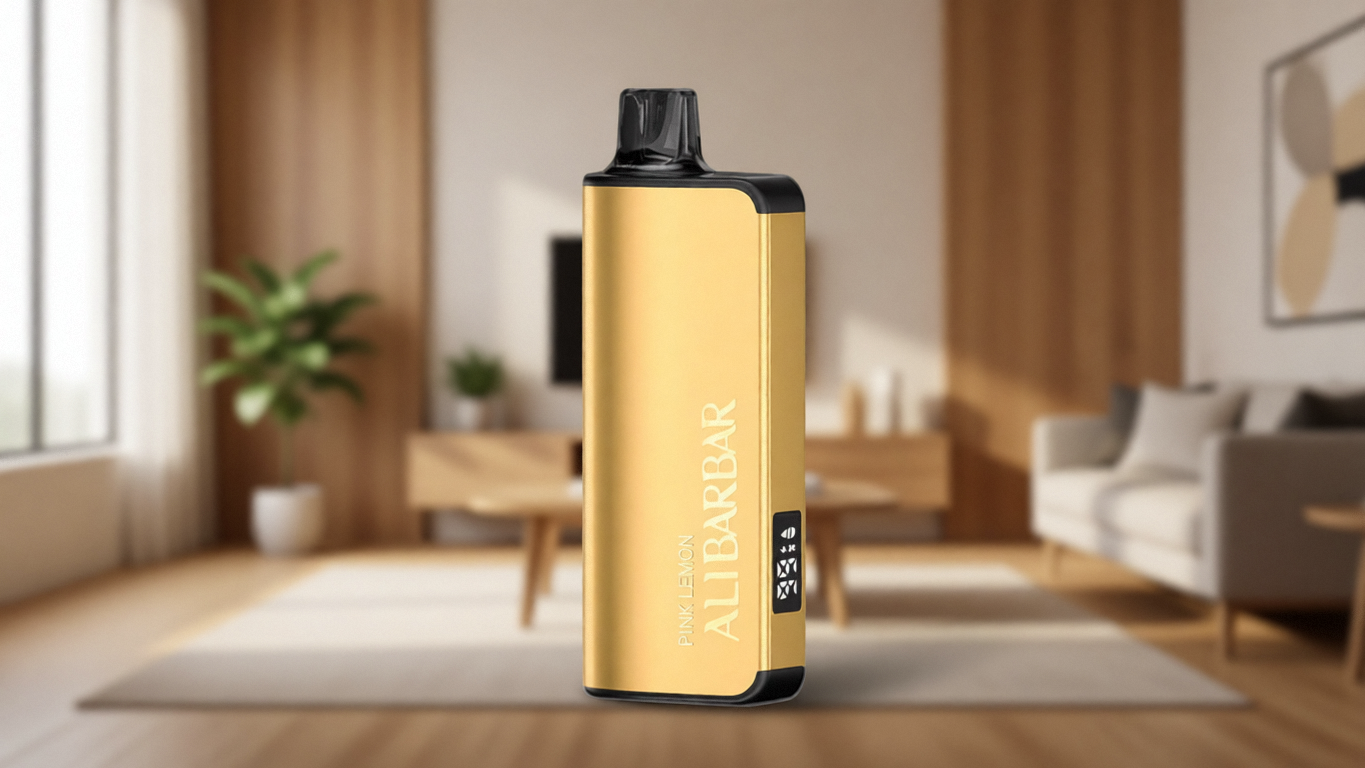
Transparent power management changes this calculation entirely. A device that communicates its remaining charge in discrete steps allows you to match your puff count to the available resource. If you know you have two hours of moderate use still available, the anxiety that drives excessive or timid consumption evaporates. This is not a luxury feature; it is the difference between operating with information and operating in the dark.
Physical Design and Material Durability
The mouthpiece contour, the weight distribution, and the finish that meets your fingers all shape how many consecutive draws feel natural rather than fatiguing. A poorly shaped mouthpiece can make prolonged use uncomfortable, causing you to stop not because you are satisfied but because the ergonomics are working against you. Similarly, surface treatments that begin to show wear after a few days in a pocket subtly communicate disposability, encouraging a rushed, indifferent usage pattern rather than a considered one. When a device feels solid and remains comfortable through extended contact, you are more likely to pause when you genuinely choose to, rather than when the hardware nudges you away.
Modularity and Lifecycle Flexibility
Some devices are sealed units; once the built‑in reservoir is depleted or the integrated power cell degrades beyond a useful threshold, the entire product must be replaced. Others employ a modular architecture — replaceable pods, rechargeable batteries, or both. This distinction matters for session planning in a less obvious way: with a sealed unit, users sometimes adopt a “finish it” mentality, drawing more often than they would otherwise in order to exhaust the device before its perceived end of life. A modular system, by contrast, removes the pressure. You can take as many or as few puffs as you like at any moment, secure in the knowledge that the component can be replaced on its own timeline, not dictated by the session’s pace.
Applying These Criteria to Real-World Options
When you look at the current ALIBARBAR lineup — available through OZVAPE Shop — these design principles stop being abstract. The INGOT 9000, for instance, is built around a large integrated cell and a substantial liquid reservoir. Its stated total capacity of approximately 9000 puffs is not a recommended per‑session figure but an indication of overall longevity. In practical terms, the device’s power management system maintains a stable output over the vast majority of that lifespan, and its airflow design keeps the coil temperature within a narrow band during typical use. This means that an adult user can take a series of draws over five or ten minutes without experiencing the burnt or thin vapour that signals an over‑stressed coil in lesser units. The session ends when the user decides, not when the hardware falters.
The Ice Adjust 12000 adds another variable: adjustable airflow. By altering the draw resistance, you can moderate the volume of each puff. A tighter setting yields a smaller, warmer delivery; a more open setting produces a larger, cooler one. This has a direct bearing on how many draws feel appropriate in a sitting. Some find that a larger per‑puff delivery naturally leads to a shorter session, while others prefer a tighter draw and a longer, more gradual routine. The device accommodates either because its engineering does not impose a one‑size‑fits‑all breathing pattern.
Other options in the broader market — often compact, non‑rechargeable units with limited liquid capacity — tell a different story. Their smaller power reserve and simpler coil assemblies mean that chain‑style use can push the system into a degraded state within a handful of draws. The contrast is instructive not because one category is inherently better, but because it illustrates why the question “how many puffs?” cannot be answered without first asking “with what device?”
A Practical Framework for Evaluation
Rather than looking for a fixed number, approach the question diagnostically. Apply these steps with any device you are considering — or one you already own.
Check the manufacturer’s stated total puff count and battery capacity. Do not treat the total as a per‑session value, but use the battery size (in mAh) to estimate how many draws the unit can deliver at full power. A device with 650 mAh may manage roughly 300–400 draws before noticeable drop‑off, while a 1000‑mAh cell extends that window considerably.
Observe the status indicators. If the device uses LED stages, note how quickly they progress during your typical paced use. After five draws, has the indicator moved? After ten? This gives you a personalised map of consumption.
Taste and sensation are real‑time feedback. The moment you detect a change — a drier sensation, a fading of the primary note, a harshness at the back of the throat — stop. That change is the coil telling you it needs recovery time. Continuing beyond that point yields a poorer experience and may permanently degrade the wicking material.
Log your pattern over a few days. Pick a consistent activity — your commute, a work break, a quiet evening hour — and count how many draws feel complete without any of the negative signals described above. The average that emerges is your reasonable per‑session range for that device. Swap devices, and the number may shift.
If the device is modular, time your component changes. Monitor how many sessions a single pod supports before flavour fades, then back‑calculate. A pod that lasts 300 draws and provides 20 satisfying sessions of 15 puffs each tells you that 15 is a sustainable session length.
Common Selection Errors and Industry Observations
Experienced observers of this market notice the same missteps repeated across user communities. Four stand out in relation to session planning.
Overweighting the total puff count. A device advertised as “9000 puffs” creates an expectation of marathon uninterrupted use. In reality, the battery and the coil’s thermal recovery time place strict ceilings on how many draws can be taken in a single sequence before performance degrades. Treating the headline figure as a per‑session licence leads to a hasty, unsatisfying use‑up mentality.
Assuming visual similarity means equivalent internals. Two slim, stick‑style devices may look identical on a shelf, but one might contain a temperature‑regulated chipset and densely packed wick, while the other uses a bare resistance wire and loose cotton. The first can sustain an extended session; the second cannot. Superficial comparison undermines the whole decision.
Undervaluing modularity in session flexibility. The psychological pressure to finish a sealed unit is real, and it pushes adults toward patterns that don’t match their actual needs. A system that lets you swap a pod without penalty removes that push. In cost‑per‑use calculations, the premium for a modular architecture is often offset by the avoidance of rushed consumption that generates waste.
Confusing category terminology with technical specification. Terms like “mesh coil” or “adjustable airflow” are sometimes used generically. Without validated performance data — the kind OZVAPE Shop provides in standardised specification tables — it is easy to assume a feature will deliver a particular per‑session capacity, only to find that the implementation falls short. Demand specifics, not labels.
From an industry standpoint, the trend toward higher‑capacity, rechargeable devices reflects an understanding that users value session autonomy. Manufacturers are increasingly investing in the coil‑wick interface and battery‑management firmware rather than merely enlarging the liquid tank. This shift rewards users who evaluate devices by their sustained behaviour, not by isolated headline figures.
Frequently Asked Questions
Q: Is there a recommended maximum number of puffs per session?
A: No universal figure exists. A well‑engineered device with a robust power supply may support 20–30 consecutive draws comfortably, while a smaller unit may show degradation after 8–10. Rely on taste consistency and battery indicators rather than a fixed count.
Q: How does the ALIBARBAR INGOT 9000 handle extended sessions?
A: Its thermal design and stable power output allow consecutive use without marked flavour decline for most of its rated capacity. However, like any electronic device, allowing a brief pause every 10–15 draws helps maintain optimal coil temperature and prolongs the experience.
Q: Can I finish a 9000‑puff device in one sitting?
A: Physically, no. The battery would deplete long before the liquid reservoir is exhausted. Attempting to chain‑drain the device would also overheat the coil, producing an unpleasant taste and potentially damaging the wick. The 9000‑puff rating is a total lifespan measure, not a session guide.
Q: What happens if I take too many puffs too quickly?
A: The most immediate sign is a “dry” or harsh sensation as the wicking material fails to replenish adequately. Repeatedly forcing the device into this state can irreversibly scorch the coil, shortening its usable life and permanently altering the output.
Q: How does adjustable airflow affect how many puffs I take?
A: A tighter draw delivers less volume per puff, potentially leading to a longer session with more puffs. An open, airy draw increases per‑puff volume, often resulting in fewer puffs before a sense of completion. Neither is objectively correct; the choice should match your own rhythm.
Q: Are there devices that give me a clear signal when I should stop?
A: Some, like the ALIBARBAR Ice Adjust 12000, incorporate multi‑stage LED indicators that track battery drain in real time. When the device reaches a low charge, the indicator prompts a natural break. Absent such feedback, you must rely on flavour and sensation, which are reliable but require more attention.
Q: Does the weight or feel of a device really influence how much I use it?
A: Yes. Ergonomic mouthpieces and balanced weight distribution reduce the physical fatigue that can cut sessions short or, conversely, encourage extended use without awareness. A device that feels natural in the hand promotes a more intentional, less reflexive pattern.
Q: Where can I find standardised specifications to compare session capacity reliably?
A: Retailers that publish consistent data sheets — including battery capacity, coil resistance, liquid volume, and puff count under controlled conditions — provide the most useful basis for comparison. OZVAPE Shop presents such figures for the ALIBARBAR range, enabling side‑by‑side evaluation.
Q: Is it safe to use a device until the battery is completely empty in one session?
A: While modern lithium‑ion cells include protection circuits, deeply discharging a battery in a single prolonged session generates heat and may reduce the cell’s long‑term lifespan. It is more prudent to use the device in shorter blocks and recharge before levels become critically low.
Q: How do I know if my session length is reasonable for my needs?
A: If you finish a session without experiencing harshness, burnt notes, or dissatisfaction, and the device’s battery still shows reserve, the length was appropriate. If you consistently find yourself wanting more but stopping because the device degrades, your device may be undersized for your pattern — not your pattern itself the problem.
Putting It Together
The absence of a built‑in timer on personal electronic devices is not a design flaw; it is an invitation to pay attention instead of outsourcing the decision. How many puffs you take at a time is answerable not by a chart but by the intersection of your own routines and the engineering that sits in your hand. A device that delivers consistent output, communicates its status openly, and stays comfortable throughout your natural rhythm makes the question feel less urgent — because the answer emerges from use, not from anxiety.
When the specifications are transparent and the construction is honest, as with the ALIBARBAR devices documented through OZVAPE Shop, the framework shifts from rule‑following to informed self‑regulation. You stop counting and start recognising. That recognition — not a memorised number — is what makes a session feel complete without feeling indulgent. The right choice, as with anything personal, is the one that fits the life you actually lead, not the one that quotes the loudest number.