
VAPE FAQs
How Many Puffs Of Vape Is One Cigarette?
Oct
Introduction
The question appears straightforward: how many draws from a personal electronic device equal one combustible cigarette? It gets posed in online forums, in conversations between new adopters, and even in the quiet calculations people make when they try to rationalise a switch. And yet, the more carefully you examine the question, the more it refuses any simple numerical answer. The assumption that a single puff from any device carries the same delivery as a single puff from a cigarette ignores fundamental differences in engineering, user behaviour, and the very way nicotine is absorbed through different aerosol chemistries.
This article does not attempt to produce a universal conversion number — because none exists. Instead, it provides a structured way to think about the relationship between device design and nicotine delivery, which is the only honest way to approach the “puff equivalent” question. By understanding what genuinely influences output consistency and user experience, you can make a more accurate personal estimate and, more importantly, stop chasing a metric that leads many people toward counterproductive choices. At OZVAPE Shop, we have observed that the most satisfied adults are those who abandon simplistic equivalences and instead learn how their particular device behaves across a range of conditions. That is the foundation of everything that follows.
Understanding What Matters: Core Engineering and Design Factors
A meaningful conversation about puff equivalence cannot begin with a number; it must begin with the device itself. Not all portable electronic tools are built to produce the same amount of aerosol per activation, nor to maintain that output from the first draw to the last. The following factors determine how reliably a puff can be counted — and how much weight any such count can carry.
Internal Architecture and Output Consistency
At the heart of every personal electronic device sits a heating element married to a liquid delivery system. The precision of that marriage dictates whether each puff delivers approximately the same volume of aerosol and the same concentration of nicotine. A poorly wicked coil, for instance, produces a thin, unsatisfying draw when it is starved of liquid, then a dense, harsh one when it floods — all without any change in puff duration. Over a device’s operational life, this inconsistency compounds, making it impossible to say with any confidence that 10 puffs equate to a fixed quantity of nicotine.
In contrast, devices that use robust, well‑matched coil and wicking architectures — often seen in modular or high‑capacity designs — show much flatter output curves. The average user can detect this as a steady, predictable resistance and a consistent warmth, even after hours of regular use. For someone trying to reconcile their device usage with their previous cigarette habit, this predictability is not a luxury; it is a prerequisite for any credible personal comparison.
Power Management and Status Transparency
A cigarette delivers a predictable dose of nicotine every time it is lit, regardless of where it sits in the pack. A battery‑driven device cannot make the same guarantee unless its power management system is calibrated to maintain a stable output voltage across the entire state‑of‑charge range. Many entry‑level units experience a noticeable drop in performance when the battery falls below 50%, which means that a puff taken late in the day delivers less nicotine than one taken early in the morning, even if the user inhales in an identical way.
Adding to the uncertainty is the absence of clear status feedback. Devices that simply blink a light when the power is low leave the user guessing when the drop‑off began. The practical result: experienced users learn to carry a backup, and any attempt to tally puff counts against cigarette consumption becomes an exercise in systematic error. Devices that incorporate graduated battery indicators, puff counters, or consistent power delivery from full charge to near‑empty remove this hidden variable. They allow the user to trust that the 50th puff is not materially different from the first, which is the only condition under which a per‑puff comparison can even be attempted.
Physical Design and Material Durability
Ergonomics and mouthpiece contour might seem distant from nicotine delivery, but they influence puff behaviour. A mouthpiece that feels comfortable leads to full, natural draws; an awkwardly shaped one promotes short, hurried inhalations that alter aerosol density. Similarly, surface materials that show scuffing after a few days in a pocket introduce a subtle psychological signal of disposability, encouraging users to treat the device carelessly. Devices built with durable, stain‑resistant finishes and thoughtfully sculpted mouthpieces tend to be used more consistently and with better technique, reducing one more source of variance in puff‑to‑puff output.
Modularity and Lifecycle Flexibility
Closed, pre‑filled units offer simplicity at the cost of inflexibility. When the liquid is depleted, the entire unit is discarded. From a puff‑equivalence perspective, this format presents a hidden challenge: the internal reservoir may be optimized for a specific number of draws, but real‑world usage rarely matches the laboratory test protocol. Some users draw longer, some shorter; some store devices in hot cars, altering liquid viscosity. Without any ability to adjust or refill, the user has no way to compensate for these deviations.
Devices with replaceable components — whether refillable pods or swappable cartridges — give the user a measure of control. They can choose a different nicotine concentration, monitor liquid consumption visually, and replace a worn coil that would otherwise degrade output long before the power unit is exhausted. This modularity transforms the “puff per cigarette” question from a search for a fixed number into an ongoing, personalised calibration, which is ultimately far more useful.
Applying These Criteria to Real-World Options
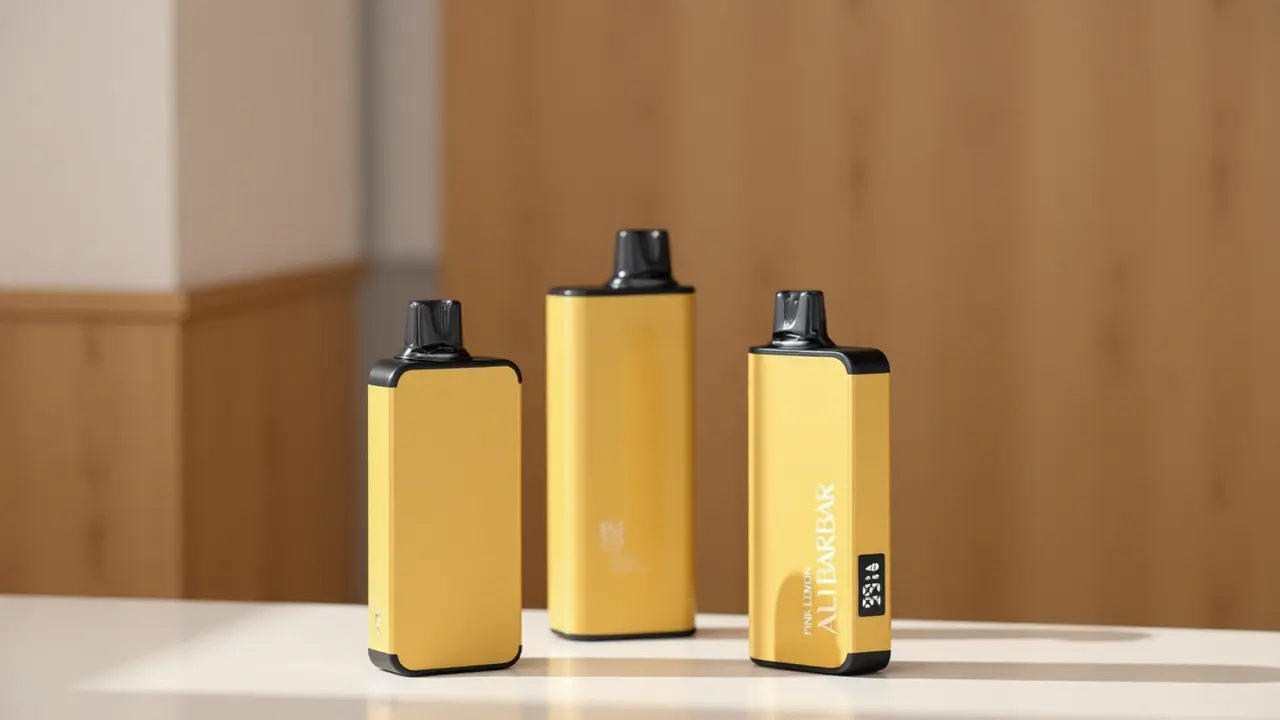
To ground the abstract factors in something tangible, it helps to look at device families that have deliberately engineered for consistency and transparency. The ALIBARBAR range, accessible through authorised channels like OZVAPE Shop, provides a useful example precisely because each series was designed with a distinct user archetype in mind — and each addresses the puff‑consistency problem in its own way.
The ALIBARBAR INGOT 9000, for instance, is a compact, pre‑configured unit that uses a refined mesh heating element and internal airflow design to maintain steady aerosol production. Its integrated puff counter and clear battery readout mean that a user can track, with reasonable fidelity, how many draws they are taking over a fixed period. This alone does not answer the cigarette‑equivalence question, but it provides the raw data a person needs to make their own correlation: “I used to smoke 15 cigarettes a day; I now use approximately 200 puffs from device X without experiencing withdrawal, ergo my personal approximate ratio is around 13 puffs per cigarette.” The precision of the device’s output is what makes such a calculation possible.

The INGOT 15000 builds on that architecture with higher-capacity power management that resists voltage sag even as the internal source drains. For an adult who previously smoked multiple packs daily, a device that can maintain full output from morning to evening without mid‑day drop‑off is more likely to produce meaningful puff‑count data. The Ice Adjust 12000, meanwhile, introduces user‑selectable output modes, which add a layer of complexity but also a layer of control: by fixing the device to a known power setting, the user eliminates another variable that could otherwise distort any attempt at puff‑to‑cigarette mapping.
These are not the only devices that prioritise consistency, but they illustrate a principle: the engineering efforts that go into output stability, status feedback, and material durability are the very same efforts that make a puff count a trustworthy metric. Devices that lack these features may still fulfil their primary function, but they cannot support the kind of rigorous personal comparison many users are seeking.
A Practical Framework for Evaluation
For any adult trying to understand their own usage relative to their past cigarette habit, the following process can bring clarity — provided they use a device with consistent output and reliable tracking.
Establish a baseline. For one week, note how many cigarettes you would have smoked under normal circumstances. This gives you a daily nicotine‑seeking pattern, not a rigid number.
Select a device with a reliable puff counter and stable power delivery. Without these, skip the counting; you will only mislead yourself.
Standardise your inhalation technique. Aim for draws of roughly 2–3 seconds. Shorter or longer draws change aerosol volume and will skew the data.
For the first three days, do not try to ration puffs. Simply use the device whenever you feel the urge, and record the total puff count at the end of each day.
Look for patterns. If your daily puff count stabilises around, say, 200 puffs, and you previously smoked 20 cigarettes, your rough personal equivalent is 10 puffs per cigarette. If you feel over‑nicotised or under‑satisfied at that ratio, adjust the device’s nicotine concentration (if possible) or your inhalation duration, and repeat the observation.
Re‑test after a month. Tolerance and behaviour change, so recalculating periodically prevents stale assumptions.
Diagnostic questions: “Does my device maintain the same draw resistance from morning to night?” If not, your data is corrupted. “Can I see exactly how much power or life is remaining?” If not, you are likely to experience invisible performance fade that undermines any puff‑based estimate.
Common Selection Errors and Industry Observations
Even well‑informed adults make predictable mistakes when they first try to translate cigarette consumption into device usage. Recognising these errors can save months of frustration.
Overweighting the puff count number while ignoring consistency. Many users fixate on the advertised “puff capacity” of a device — typically a laboratory figure derived from a machine puffing under ideal conditions — and then divide it by their daily cigarette count to get a per‑cigarette puff figure. This creates a false precision because the device’s real‑world output can vary by 30% or more depending on draw strength, ambient temperature, and battery condition. The figure that matters is the device’s ability to deliver the same puff every time, not the total puff count on the packaging.
Assuming visual similarity means equivalent internal engineering. Two devices that share the same external form factor can house entirely different heating elements, airflow paths, and power circuits. A budget unit that looks like a premium device will rarely provide the output stability needed for reliable per‑puff comparisons. Evaluating internals — through reliable specification sheets, not marketing images — is essential.
Undervaluing modularity in cost‑per‑use calculations. When the goal is to understand how much nicotine you are consuming relative to cigarettes, a closed, disposable unit forces you to guess because you cannot track liquid consumption or adjust strength. A modular device that allows you to see the remaining liquid level, swap strengths, or replace a tired coil gives you objective data points. Over weeks and months, this visibility directly improves the accuracy of your personal equivalence estimate.
Confusing category terminology with technical specifications. Industry shorthand such as “high‑capacity” or “long‑life” is relative. A device labelled “long‑life” might deliver 800 puffs in controlled tests, while another not labelled as such might deliver 1,200, but with less output stability. Smart users learn to cross‑reference the puff rating with independent observations of consistency and to ask what kind of battery management is inside.
From an industry perspective, the market is slowly bifurcating. One segment continues to produce simple, disposable designs with minimal user feedback; these will always frustrate anyone seeking reliable puff‑to‑cigarette mapping. Another segment, represented by brands that invest in advanced power management and transparent status indicators, is creating devices that finally make the conversation meaningful. This is why many experienced users migrate toward architecture that gives them control — not because they want complexity, but because they want to stop guessing.
Frequently Asked Questions
Q: Is there a scientifically accepted number of puffs that equals one cigarette?
A: No. Nicotine absorption varies with plasma nicotine levels, inhalation depth, device output, and liquid formulation. No regulatory body or independent laboratory has established a fixed conversion ratio because the variables are too device‑ and user‑specific.
Q: Why do some sources claim 10–15 puffs per cigarette?
A: These figures typically derive from rough approximations: a machine puff of 2 seconds from a low‑power device may deliver a similar total aerosol volume to a single cigarette puff. But they ignore nicotine bioavailability and user behaviour, making them unreliable for any real‑world planning.
Q: How can I use a puff counter on my device to compare to my old cigarette habit?
A: Track your daily puff count over a week using a device with stable output. Compare it to the number of cigarettes you would have smoked in the same period. The resulting ratio is your personal baseline, valid only for that device and your inhalation style.
Q: Does a higher puff count on the packaging mean the device is stronger?
A: Not necessarily. “Puff count” on a label refers to the number of machine draws the device can produce before the reservoir is depleted. It says nothing about how much nicotine each puff delivers. A device rated for 5,000 puffs might deliver less nicotine per puff than one rated for 800 puffs if the latter uses a higher‑strength liquid or a more efficient heating element.
Q: How can I be sure my device isn’t delivering less nicotine as the battery drains?
A: Look for a device with regulated output — sometimes called constant‑output or regulated power delivery. These circuits maintain the same voltage to the coil regardless of battery charge. If your device does not advertise this feature, it likely experiences performance drop‑off. Quality units from ranges like ALIBARBAR are engineered specifically to mitigate this fade.
Q: What should I do if my device feels weaker after a few days of use?
A: A gradual decline usually signals a fouled coil, depleted liquid, or a battery that cannot sustain peak voltage. If the device is modular, replace the pod or coil; if it is a sealed unit, the performance drop is permanent. Using a device past this point will distort any puff‑by‑puff comparison.
Q: Does the type of nicotine in the device affect puff equivalence?
A: Yes. Liquid formulations that contain nicotine in a protonated (salt) form are absorbed more rapidly and at higher concentrations per puff than those containing conventional free‑base nicotine. A user switching from a strong cigarette to a high‑concentration salt device may feel satisfied with fewer puffs, even if the total puff count seems low relative to their old smoking rate.
Q: Why do some users feel over‑nicotised even when their puff count matches their estimated cigarette number?
A: Because puff counts do not capture inhalation depth or hold time. A user accustomed to short, sharp cigarette puffs may unconsciously take longer draws on a device, absorbing more nicotine per puff. Reducing draw duration or lowering nicotine concentration can correct this.
Q: How does OZVAPE Shop help me compare device specifications for puff consistency?
A: OZVAPE Shop provides standardised technical documentation for the ALIBARBAR range, including details on coil type, power management architecture, and typical puff-to-puff output stability. This allows adults to evaluate devices not by marketing claims but by engineering fundamentals.
Q: If I want to start tracking my puffs, which ALIBARBAR device is most suitable?
A: The INGOT 9000 and INGOT 15000 both integrate accurate puff counters and regulated power output, making them appropriate for users who want to log daily usage. The choice between them depends on your expected daily consumption and preference for device size.
Conclusion
The search for a universal “puffs per cigarette” number is understandable but ultimately misdirected. The real question is not how a device compares to a cigarette in some abstract scientific sense, but whether the device you are using can give you the consistent, measurable experience required to know your own intake. That capability depends entirely on design choices — on heating element precision, on power management algorithms, on status transparency — that are invisible in a product image but immediately felt over a week of use.
Informed adults make better decisions when they stop asking for a magic number and start asking sharper questions: “Does this device give me the same puff at 8 AM and 8 PM? Can I track my usage accurately? Will I know when performance begins to degrade?” Through OZVAPE Shop, devices that meet these technical standards are accessible alongside the documentation that explains them. The right choice is never the one that promises the flashiest feature or the highest puff rating; it is the one that fits your actual routine and gives you the data to make sense of your own behaviour.