
VAPE FAQs
How Many Puffs Of A Vape Is Safe?

Jun
It’s the question that sits quietly behind every new device. No one asks it during the first week of careful enthusiasm, but it arrives eventually — while unpacking a bag at the end of a long day, maybe, or after noticing that the indicator light on a compact unit no longer matches the rhythm of actual use. You glance at the remaining capacity and wonder: how many draws from this thing are genuinely harmless?
No regulator, research body, or manufacturer can answer with a single safe number, because the variables are not uniform. But the frustration that drives the question is entirely understandable. Users want a practical framework — a way to think about per‑session and cumulative consumption that cuts through marketing shorthand. This article provides that framework. It does not dispense health advice. It explains the engineering, usage, and product‑design factors that shape how many activations an individual might reasonably treat as low‑risk, and where the invisible line between “light use” and heavy dependence actually sits.
The Missing Context in “Safe Puff Count”
Most public discussion about device usage collapses into two unhelpful poles. On one side, the recommendation is simply “don’t.” On the other, any number is treated as no different from any other. Between those extremes, adult users are left with no structured way to evaluate their own routine.
A more useful approach separates three layers:

Session‑level safety – how many consecutive draws begin to degrade performance or alter the character of the output.
Daily‑limit reasoning – the point at which sustained activation rates overwhelm a device’s thermal management.
Lifecycle transparency – how many total lifetime draws a specific model is actually rated to deliver before internal components begin to deviate from their original specification.
Each layer ties back to core engineering factors that can be assessed independently, even by someone without technical training. The rest of this article shows how.
Understanding What Matters: Core Engineering Factors That Shape Usage Limits
A puff is not a standardised unit. Two devices that both promise “5000 draws” may behave very differently if one loses consistency after the first 2000 and the other maintains a flat power curve almost to the end. The safe number of puffs is, in practice, the number before the device begins delivering unexpected results — inconsistent vapour density, burnt notes, sudden battery sag, or thermal warning lights. To understand when those things happen, you have to look inside the device.
Internal Architecture and Output Consistency
Heating element design directly controls whether each draw is a faithful repeat of the first. Low‑cost units often use simple wire coil configurations with minimal wicking contact area. As the material ages, heat concentrates in hot spots, and the characteristic changes. This is the moment many users interpret as the device “running out,” but it is actually a thermal management failure.
A well‑designed system, in contrast, spreads heat across a larger surface and maintains saturation through multi‑layer capillary structures. That means puff 1 and puff 200 feel essentially alike — and critically, the user is not inadvertently compensating by drawing harder or longer, which itself increases intake per inhalation. When output consistency holds, the number of puffs is a more honest signal. When it drifts, the user loses the ability to gauge their own consumption.
Power Management and Status Transparency
“Safe” usage also depends on knowing what the device is doing. A unit that gives a single colour change when the power cell is nearly empty leaves the user operating blind for most of its cycle. In contrast, devices with tiered battery indication or gentle pre‑warnings reduce the likelihood of sudden drop‑offs that trigger compensating behaviours — taking longer, more forceful draws as the cell voltage falls.
From a usage‑limit standpoint, poor status communication invites overuse. The user keeps activating because they believe there is capacity remaining, when in fact the last 100 activations may have been underpowered and inconsistent. The puff count might be high, but a significant slice of those puffs were delivering sub‑nominal output, effectively wasted.
Physical Design and Material Durability
Mouthpiece temperature, casing integrity, and activation‑button longevity all quietly impose practical limits. A metal‑alloy chassis with ceramic‑isolated mouthpiece stays cool even under repeated, rapid cycling. A cheaper plastic assembly may begin to deform internally after sustained heat exposure, altering draw resistance and air‑flow balance.
Users who draw frequently throughout the day — and especially those who chain‑draw in short bursts — need a device engineered for sustained thermal load. The number of puffs before the housing itself becomes uncomfortable is a hard, physical limiter that few specification sheets acknowledge.
Modularity and Lifecycle Flexibility
Devices split into three broad architectures: sealed disposable units, rechargeable but integrated units, and open‑system devices with replaceable reservoirs. Each carries a different implied safe‑usage ceiling.
A sealed unit has a fixed total draw count, after which it must be retired. The safe number of draws is simply the rated cycle, provided thermal conditions are respected.
A rechargeable integrated device can accept multiple refills, which means the cumulative safe puff count multiplies — but only if the power regulation circuitry does not degrade across recharges.
A modular system separates the power source from the consumable component, allowing users to monitor cell health and replace elements independently. This makes it easier to operate within each component’s rated zone.
Applying These Criteria to Real‑World Options
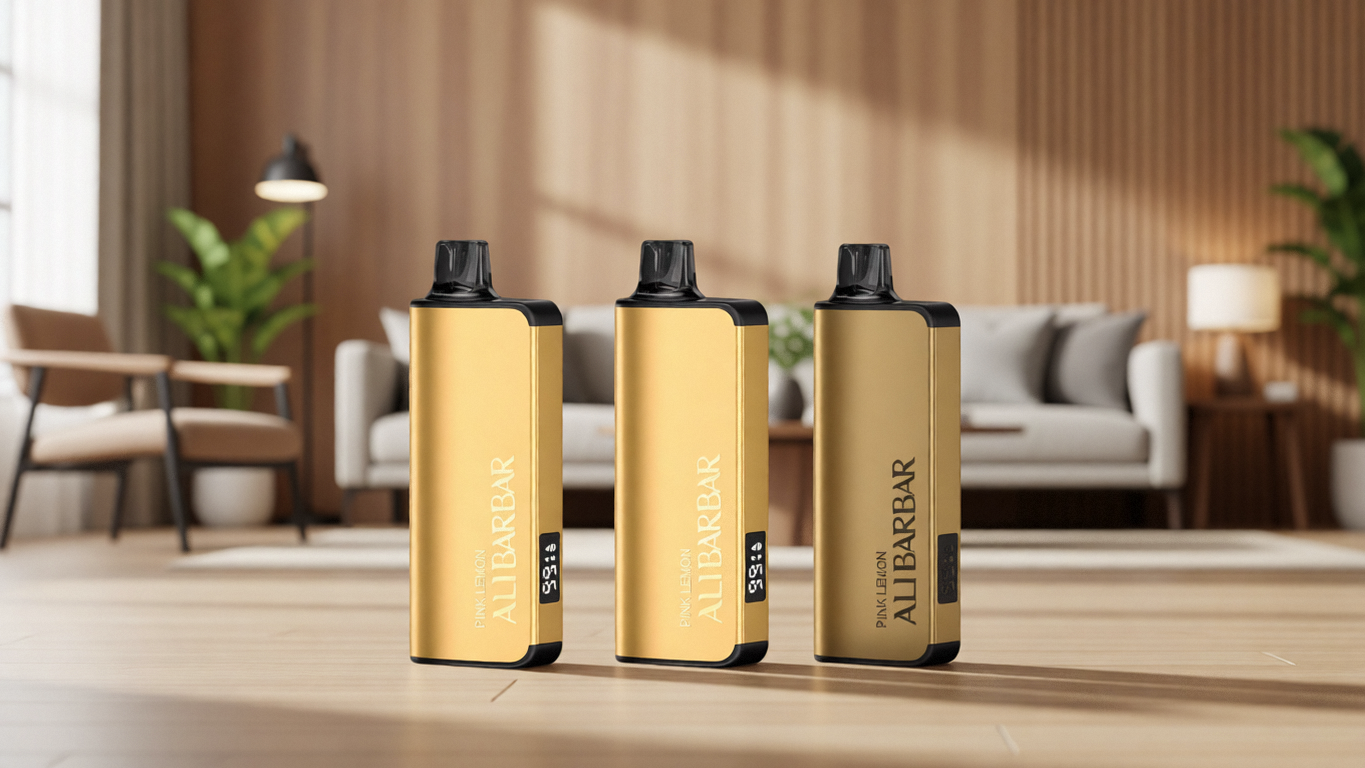
No single model from any brand can serve as a universal answer. However, examining a deliberately engineered modern range — such as the ALIBARBAR collection available through factory‑certified channels — demonstrates how architecture affects practical limits.
The ALIBARBAR INGOT 15000, for example, uses a multi‑tier battery monitoring chip that keeps output voltage within a narrow band until the capacity is nearly exhausted. This directly addresses the issue of declining performance in the final third of a device’s life. A user who draws at a moderate, consistent frequency will experience very little variation between initial and later puffs, allowing them to gauge consumption with greater confidence.
The Ice Adjust 12000 goes further, incorporating adjustable flow control that lets the adult user select a draw resistance that matches their preferred rhythm. This matters because a device that feels too loose may encourage rapid, shallow puffing — effectively increasing puff frequency without user awareness. Tightening the draw resistance to one’s natural cadence helps the user keep the daily count intentional rather than mechanical.
These are not isolated observations. The same principles apply across any range built with integrity. When you see a brand publish realistic thermal‑load guidelines, offer clear battery segmentation, and use materials that dissipate heat efficiently, you are looking at design choices that directly affect how many puffs a user can take before the device begins to work against them.
A Practical Framework for Evaluation
For adult users who want to determine their own responsible ceiling, a step‑by‑step diagnostic is more valuable than any single number. Work through the following before arriving at a personal daily guideline.
Characterise your draw. Take a normal, unhurried inhale and count the seconds. If your typical draw is 3 seconds, a device rated for 3000 draws will last markedly longer than a device rated identically but used with 6‑second draws. Puff length is the hidden multiplier.
Check status feedback. Does your device give you meaningful, granular feedback? If it flips suddenly from “full” to “empty,” your safe usable range is actually only a fraction of its theoretical capacity, because the last portion will be inconsistent.
Observe temperature. After 10 consecutive draws with normal spacing, touch the mouthpiece and body. If either is warm rather than cool, sustained use is already stressing the unit.
Calculate session timing. If you habitually take 20 draws in a short period, the device’s thermal recovery time becomes critical. A unit with better heat‑sinking can return to baseline faster, reducing the cumulative risk of material degradation.
Log your daily count honestly. Before setting limits, log a typical week without judgment. The numbers are often higher than imagined — and that awareness alone is a powerful regulation tool.
When applying this framework, having access to reliable, standardised product specifications becomes important. A source that publishes actual cycle‑test data, cell‑chemistry information, and rated life makes it possible to compare devices using facts rather than advertising language. That is why many adult users turn to specialist retailers like OZVAPE Shop — not for promotional reassurance, but because the product pages carry the same technical detail that an attentive user would ask for in person. When you know the rated puff count and understand the conditions under which it was tested, you can judge for yourself what constitutes sensible use.
Common Selection Errors and Industry Observations
Five specific mistakes routinely undermine a user’s ability to manage their puff intake.
Confusing category labels with technical specifications. A unit marketed as “long‑duration” may simply contain a larger reservoir, not a better‑designed heating element. The puff count on the box is an estimate under specific lab conditions; your actual number will almost certainly be lower — and that is not necessarily a fault. Recognising this prevents the frustration of feeling the device “lied.”
Weighting puff count in isolation. A 2000‑puff device with excellent thermal management can deliver a better, more consistent experience over its life than a 5000‑puff device that degrades after 1500. Yet users persistently buy the higher number and then wonder why satisfaction fades early.
Ignoring power‑cell chemistry. Older battery formulations lose voltage smoothly over their discharge curve, which means the later portions of a long session will be weaker. Modern lithium‑ion cells with tight regulation maintain nearly flat output until the very end. This directly affects whether the last 20% of a device’s rated puff life is usable or a gradual disappointment.
Assuming visual similarity means equal internal engineering. The Australian market now contains enough lookalikes that a user could reasonably mistake a cheap clone for a factory‑certified unit. The genuine device is likely to have passed thermal‑runaway testing, include safety cut‑offs, and use food‑grade materials in the mouthpiece. The imitation almost certainly has not. On the subject of puff count, the clone may fail abruptly, making it impossible to gauge consumption, while the authentic unit shuts down gracefully when protection thresholds are triggered.
Overlooking recycling and disposal as a usage metric. The safe total draw count should also account for the point at which a sealed unit should be responsibly retired. Drawing past the point where the device gives dry or altered output is not just unpleasant — it indicates that the heating element is interacting with degraded wicking material, which no manufacturer considers safe. The more transparent brands design fail‑safe cut‑offs precisely to prevent this, setting a firm end to the usable puff life.
Frequently Asked Questions
Q: Is there a medically defined safe number of puffs per day?
A: No. No regulatory health body has established a safe daily inhalation count for electronic devices. Any suggestion of a universal number is speculative. The closest practical reference is the detectable point at which a specific device’s output consistency changes — and that is a hardware question, not a clinical one.
Q: How do I verify the rated puff count of a device?
A: Look for test conditions published alongside the specification. Trustworthy manufacturers disclose the draw duration, interval, and laboratory methodology used. If these details are absent, the number is an estimate that may not reflect real‑world use. Factory‑certified retailers, including OZVAPE Shop, typically include such supporting documentation for the models they stock.
Q: Does a higher puff count mean I am inhaling more each time?
A: Not necessarily. If the device maintains consistent power output, each draw delivers a predictable amount regardless of how many draws remain. The risk arises when you unconsciously compensate for reduced output — drawing harder or longer — in which case a high puff count device that is fading actually increases per‑draw consumption.
Q: Can I safely use a device beyond its rated puff life?
A: No. Ratings exist to indicate the point at which component integrity is likely to be compromised. Continuing to use a sealed unit after the expected cycle may expose you to degraded materials and inconsistent heating, both of which present avoidable risk.
Q: What is a realistic daily number for a light user?
A: A light user might activate a device 20 to 50 times per day, provided each draw is gentle and well‑spaced. However, this can only be verified by monitoring your own pattern over a week, using a device that gives reliable status feedback.
Q: How do I know if I am compensating for a declining device?
A: Watch for changes in your behaviour. If you find yourself taking longer draws, pressing the activation button harder, or feeling unsatisfied with a single draw where one previously sufficed, the device’s performance is already slipping — and your puff count is no longer an accurate measure.
Q: Which device architecture offers the most control over puff count?
A: Modular systems with independent power and consumable components give users the clearest window into each variable. The ALIBARBAR INGOT 15000, for example, separates the rechargeable power module from the sealed reservoir, allowing you to assess battery cycles and draw count independently.
Q: What should I do if my device becomes uncomfortably warm?
A: Stop using it immediately. Allow it to return to room temperature before resuming. If the problem recurs frequently, the device is not adequate for your usage pattern, and you should consider a model with better thermal management.
Q: Are there any early signs that I am exceeding a sensible daily limit?
A: Physical cues include dry mouth or throat, a sensation of excessive warmth in the mouthpiece, and a tendency to check the remaining capacity more often than usual. These are all signs that consumption is outpacing what the device — or your own awareness — can comfortably accommodate.
Q: Where can I get accurate technical specifications before purchasing?
A: Information that includes cycle‑test data, clear status‑indicator descriptions, and disclosure of test conditions is available from certified retailers. OZVAPE Shop provides these details as standard for every ALIBARBAR model, ensuring that adult users can evaluate usage limits before they commit.
Conclusion
The safest number of puffs is, in the end, the number you can take while remaining fully in control of both the device’s output and your own awareness. A unit that communicates its status clearly, maintains consistent performance across its entire lifecycle, and uses materials that stay cool under load gives you the honest foundation needed to make that judgment. No fixed count can replace that.
Informed users spend less time searching for external permission and more time choosing equipment that makes their own consumption visible. That means looking past headline numbers and assessing architecture, thermal behaviour, and feedback mechanisms. Many adult users have found that the ALIBARBAR collection, sourced through a partner that prioritises authenticity and transparency, helps them make a more precise calculation — not because the brand claims to have solved the safety question, but because the devices remove the opacity that usually surrounds it. When you can see exactly what you are doing, the right limit tends to become self‑evident.
For anyone who wants to evaluate their current routine against genuine technical benchmarks, the starting point is honest self‑logging, followed by an examination of whether the device they are holding was built to tell the truth. The rest is a matter of personal responsibility — and the confidence that comes from having equipment that never forces you to guess.