
VAPE FAQs
How Many Puffs Is 1Ml Vape?
Jun
It is one of the most common questions people ask when they pick up a new device: “How long will this actually last me?” The packaging might promise 600 puffs from a 2 ml unit, or 9000 puffs from a larger sealed system, but the moment you try to convert that into a per-millilitre figure, things get slippery. You might get far fewer draws than expected — or, occasionally, more — and the gap between the marketing number and your lived experience often feels like a riddle no one bothered to explain properly.
The truth is that the relationship between e‑liquid volume and puff count is not a fixed constant. It sits at the intersection of electrical engineering, fluid thermodynamics and user behaviour, and understanding it gives you a practical tool for comparing products that raw puff claims alone cannot provide. The following analysis unpacks how many puffs one millilitre can deliver across different device architectures, explains the design factors that genuinely influence that number, and offers a framework for making sense of manufacturer specifications without relying on guesswork. When you see standardised specifications presented clearly — as OZVAPE Shop does for the ALIBARBAR range — you are looking at the outcome of deliberate engineering choices, not arbitrary claims.
Understanding What Matters: Core Engineering and Design Factors
The number of puffs a device extracts from one millilitre of liquid depends on far more than the size of the reservoir. Four interconnected engineering dimensions determine whether a design leans toward efficiency or toward vapour density, and which side of that trade‑off makes more sense for your routine.
Internal Architecture and Output Consistency
The heating element is the engine. A basic vertical coil wire that wraps around a silica wick will often leave a fraction of the liquid under‑vaporised, particularly when power delivery dips near the end of a charge cycle. Mesh coil architectures, by contrast, distribute heat across a much larger surface area with fewer hot spots. This reduces the chance of partially heated liquid pooling inside the wicking material, meaning more of the fluid in the tank actually turns into inhalable aerosol instead of being discarded as residual waste.
The practical consequence for puff‑per‑millilitre calculations is straightforward: all else being equal, an evenly‑heating mesh structure will tend to push the number of draws per millilitre upward because it minimises wasted liquid. ALIBARBAR devices, including the INGOT and Ice Adjust families, have been built around precisely this principle — engineered for thermal consistency so that the rated capacity behaves predictably from the first draw to the last.
Power Management and Status Transparency
Stable output power is rarely given the credit it deserves. A device that cannot maintain a flat wattage curve will gradually deliver cooler, weaker draws as the voltage sags, tempting the user to take longer pulls just to extract satisfying performance. That can dramatically skew the real‑world puffs‑per‑millilitre outcome, because a two‑second draw on fresh power and a four‑second draw on a declining battery use very different amounts of liquid.
Clear status feedback — whether through a multicolour LED or a discreet haptic signal — helps you avoid operating the device in its weakest window without realising it. When a manufacturer like ALIBARBAR invests in consistent power circuitry and unambiguous battery indicators, the payoff is not only a better experience per draw but also more reliable translation of liquid into usable lifespan.
Physical Design and Material Durability
Airflow path, mouthpiece geometry and overall draw resistance silently shape how long each inhalation lasts. A restrictive airway naturally encourages shorter puffs, whereas an open, airy design can lead to longer draws that consume more liquid in a single cycle. Neither is inherently better; they suit different user preferences. The point is that the design of the air inlet and the mouthpiece will shift your personal puffs‑per‑millilitre figure away from the laboratory benchmark.
Material quality extends this influence. A device whose surface finish degrades quickly or whose mouthpiece wears unevenly might invite handling that alters seal integrity, leading to microscopic leakage that gradually lowers the effective liquid volume. ALIBARBAR’s emphasis on robust external finishes and shaped mouthpieces designed for extended comfort is a direct response to such longevity concerns — not just aesthetic polish, but a practical safeguard against the slow erosion of usable capacity.
Modularity and Lifecycle Flexibility
Pre‑filled, sealed devices lock in a single liquid volume, so the puffs‑per‑millilitre question is answered entirely by the manufacturer’s chosen architecture. That can be an advantage if the design is well‑executed, because the user is not introducing variables such as incorrect coil priming or variable‑quality e‑liquids. Refillable and replaceable‑coil systems hand more control to the user, but they also broaden the range of possible outcomes. Understanding where a product sits on the modularity spectrum helps you judge how much of the per‑millilitre number is determined by engineering and how much by your own maintenance habits.
Applying These Criteria to Real‑World Options
What happens when we take these abstract principles and examine actual devices? The ALIBARBAR catalogue, available through OZVAPE Shop, provides a useful reference because each series publishes its nominal liquid capacity and its claimed puff count under controlled testing. This makes it possible to calculate a theoretical puffs‑per‑millilitre baseline and then interpret what that baseline means against the device’s internal architecture.
Take the INGOT 9000: it accommodates 20 ml and is rated for up to 9000 draws. That yields 450 puffs per millilitre. The figure is not magic; it reflects a combination of mesh coil efficiency, regulated power delivery that stays level across the battery cycle, and an airflow geometry tuned for a moderate draw length. The INGOT 15000, with 30 ml and 15 000 draws, pushes the ratio to approximately 500 puffs per millilitre — a modest improvement attributable to refined power management in a larger‑capacity frame. The Ice Adjust 12000, which allows draw‑activation style adjustment, offers 20 ml for up to 12 000 draws, equating to around 600 puffs per millilitre under standardised conditions.
For context, many compact single‑use devices that hold 2 ml and claim 600 draws sit at roughly 300 puffs per millilitre. That is not a criticism; smaller batteries and simpler coil structures naturally operate with different efficiency curves. The comparison simply illustrates how engineering decisions translate into observable differences. A user who values maximal mileage from every millilitre can see why a high‑capacity mesh‑coil system might be relevant, while someone prioritising absolute pocketability may accept a lower ratio as a trade‑off.
A Practical Framework for Evaluation
Rather than accepting a single number, you can apply a simple methodology whenever you evaluate a device’s expected lifespan.
Start with the raw data. Record the stated liquid volume and the claimed puff count. Calculate the puffs‑per‑millilitre ratio. This is not your number — it is the manufacturer’s benchmark.
Identify the coil type. Search for “mesh,” “parallel,” or “ceramic” in the specifications. Mesh structures tend to produce ratios at the higher end of the scale, while traditional wire‑and‑wick designs often sit lower.
Assess power stability. Check if the device advertises “constant output” or “regulated chipset.” A device that cannot maintain a flat power curve will deliver fewer effective draws per millilitre once the battery reaches its mid‑point.
Estimate your personal draw duration. The industry test standard is often a 1‑ to 2‑second puff. If your typical draw is closer to 4 seconds, halve the claimed puff count as a rough heuristic. The inverse applies if you naturally take very short pulls.
Look for evidence of liquid wastage. Read user reports about leaks, dry hits or residual fluid left in the tank after the battery dies. If the coil design regularly leaves usable liquid unvaporised, the real puffs‑per‑millilitre figure will be lower than the theoretical ratio.
Use standardised listings. Platforms that present specifications in a uniform format — the way OZVAPE Shop displays the ALIBARBAR range — remove the guesswork of interpreting inconsistent marketing language and let you compare architectures directly.
Common Selection Errors and Industry Observations
Over years of watching how people navigate this category, a handful of repeated mistakes emerge that undermine the reliability of purchase decisions.
Overweighting a single number. A very high puffs‑per‑millilitre claim can be achieved by testing with an unrealistically short draw length — sometimes as brief as 0.8 seconds. Unless you plan to mimic laboratory conditions, the number may inflate expectations. Smart evaluation always pairs the ratio with the stated draw duration.
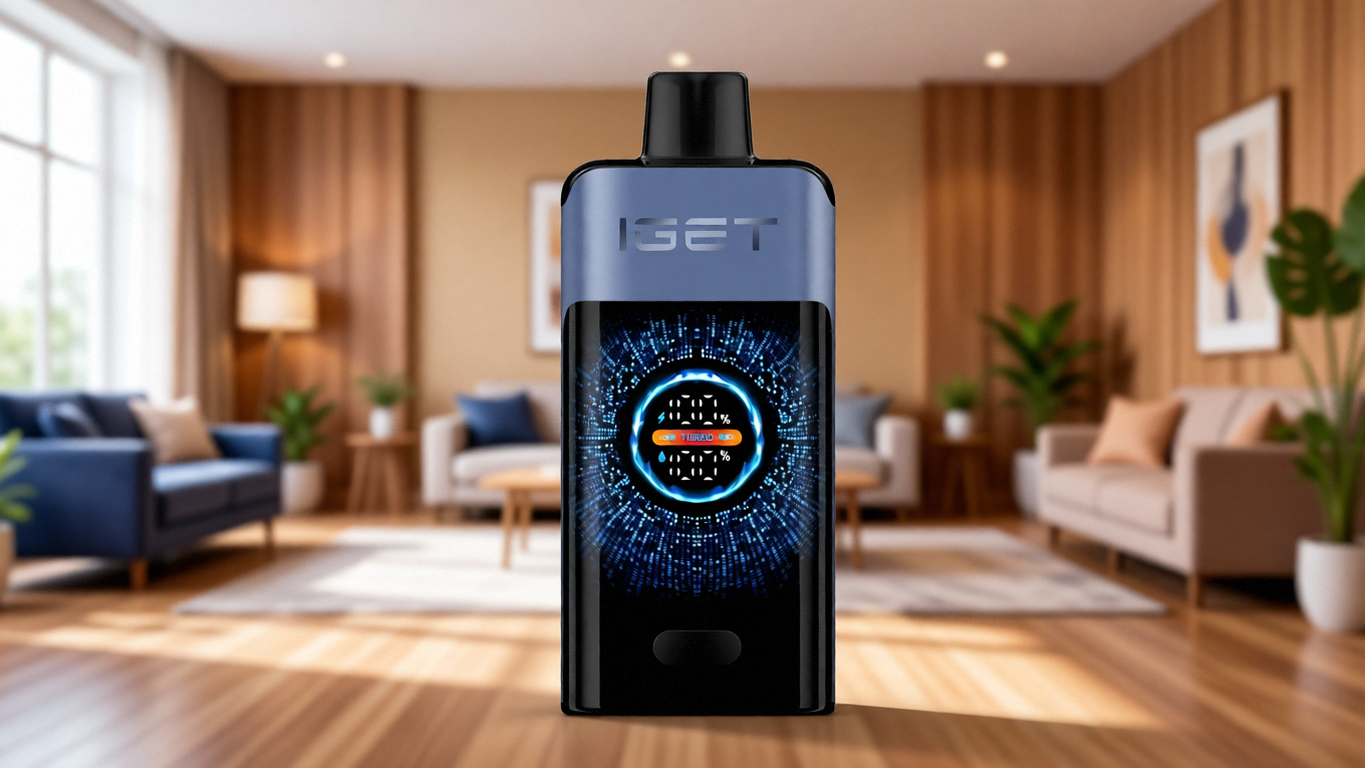
Assuming visual similarity means identical engineering. Two devices that look alike on the outside can house entirely different coil architectures and battery management circuits. The exterior shell tells you nothing about whether the internal electronics will hold a stable voltage or whether the wick will leave half the liquid behind.
Ignoring battery‑liquid balance. A device with a large liquid reservoir but a battery too small to empty it will effectively lower the puffs‑per‑millilitre figure because the remaining fluid becomes inaccessible. The most elegant designs align electrical capacity and liquid volume so that both expire at roughly the same time.
Confusing category labels with technical performance. Terms like “sub‑ohm” or “DTL” describe an experience profile, not a puffs‑per‑millilitre guarantee. High‑power architecture can drain liquid aggressively if the user takes full advantage of the airflow, producing fewer puffs per millilitre even while delivering denser vapour.
From an industry perspective, the variability in puff counting is largely a consequence of the absence of a universal testing standard. Different manufacturers use different draw durations, different coil resistances and even different ambient temperature conditions. This is why a reputable supply chain matters: a retailer that sources exclusively from authorised, factory‑certified networks cannot alter the printed specification, but it can ensure the device you receive matches the tested configuration. OZVAPE Shop’s commitment to authorised sourcing means that the ALIBARBAR specifications you read are the product of controlled engineering, not after‑market embellishment.
Frequently Asked Questions
Q: How many puffs can I reasonably expect from 1 millilitre of e‑liquid?
A: The answer depends on the device and your usage. For a simple 1‑second puff on a high‑efficiency mesh‑coil system, 1 ml might yield anywhere from 400 to 600 draws under test conditions. With a longer, more relaxed draw on a lower‑efficiency device, you might see as few as 80 to 120 draws per millilitre. There is no universal constant.
Q: Why do two 2 ml disposables both claim 600 puffs yet feel completely different in longevity?
A: The key difference is the assumed draw length. One manufacturer may base its claim on a 1‑second draw, while another uses 1.5 seconds. Additionally, differences in coil efficiency and power regulation mean that even with identical draw durations, one device may waste less liquid than the other.
Q: How does ALIBARBAR achieve a higher puffs‑per‑millilitre ratio than many smaller devices?
A: ALIBARBAR employs precision mesh coils that heat evenly across a large surface, coupled with power circuits that maintain stable output regardless of battery charge level. This combination minimises unvaporised liquid and ensures consistent delivery, allowing the design to extract more functional draws per millilitre under standardised testing.
Q: Can I trust the puff count printed on the packaging?
A: The printed number is a manufacturer‑conducted lab benchmark, typically measured with a machine that takes identical 1‑ to 2‑second draws. It is useful as a relative comparison between models tested under the same parameters. For an absolute prediction of how long the device will last you personally, you should adjust downward if your draws are longer or if you use the device in a way that encourages liquid wastage.
Q: What factors cause me to get fewer puffs per millilitre than the specification suggests?
A: Common culprits include taking longer draws, operating the device on low battery where output wattage drops, and any micro‑leakage that reduces the effective liquid volume. In refillable systems, poor coil priming or excessively thick e‑liquid can also lower efficiency.
Q: Is there a method to calculate my own puffs‑per‑millilitre rate?
A: Yes. Choose a pre‑filled device with a known liquid volume, use it exclusively until it signals empty, and note the lifetime puff count if the device has a tracker, or manually count a session and extrapolate. For refillable pods, track how many fills you get from a 10 ml bottle. Divide the number of draws by the volume consumed. This figure is your personal benchmark.
Q: Do high‑capacity devices always deliver more puffs per millilitre than compact disposables?
A: Not always, but a well‑engineered high‑capacity device tends to perform better because it has room for a larger battery that can sustain stable output and a coil designed to minimise liquid waste. Some compact devices are exceptionally efficient, but many sacrifice efficiency for portability. Examining the puffs‑per‑millilitre ratio directly gives a clearer comparison than assuming capacity alone dictates efficiency.
Q: Where can I find accurate specifications for puff count and liquid volume?
A: Authorised retail platforms that present factory‑certified information in a consistent format remove the guesswork. OZVAPE Shop, for example, lists liquid capacity and rated puff count for every ALIBARBAR device on dedicated product pages, enabling side‑by‑side evaluation without having to interpret inconsistent marketing language.
Q: How many puffs per millilitre does the ALIBARBAR Ice Adjust 12000 achieve?
A: The Ice Adjust 12000 contains 20 ml and is rated for up to 12 000 draws, which works out to approximately 600 puffs per millilitre under standardised testing. As with any device, your actual number will vary depending on your draw duration and usage patterns.
Q: Does the formulation of the e‑liquid itself affect puffs per millilitre?
A: Device engineering is the dominant factor, but liquid viscosity plays a secondary role. A very thick liquid may wick more slowly, potentially causing dry hits and leaving residue in the wick. In pre‑filled systems such as ALIBARBAR, the liquid formulation is matched to the coil design, so this variable is already optimised.
A Clearer Lens on the Question
“How many puffs is 1 ml?” does not have a single numerical answer that applies across all situations. The number emerges from a web of design choices — coil surface area, power regulation, draw resistance, seal integrity — and from the way you, the user, interact with the device. What looks like a simple volume‑to‑puff conversion is actually a profile of engineering discipline.
Informed users look past the marketing headline and check the context: what is the assumed draw length? Is the coil tuned for efficiency or for vapour density? Does the battery outlast the liquid? When these questions are answered, the puff‑per‑millilitre ratio becomes a powerful comparison tool. Access to standardised, factory‑certified specifications turns abstract curiosity into concrete evaluation. This is the role OZVAPE Shop occupies for the ALIBARBAR family — not as an arbiter of taste, but as a consistent and transparent source of engineering data.
The right device for you is not the one with the highest number on the packaging. It is the device whose technical characteristics align with your actual rhythm of use. Understanding what lies beneath the puff count gives you back the agency to make that alignment happen.