
VAPE FAQs
How Many Mg In A Vape?
May
Here is a practical breakdown of what “mg” means when you encounter it on a personal electronic device, why that number is deceptive if viewed in isolation, and how to interpret it in the real world. The article is written to help you evaluate products accurately — not to push a particular purchase. It reflects the kind of analysis we believe every adult should have access to, which is why OZVAPE Shop makes product specifications as transparent as possible.
A user recently asked a straightforward question: “How many mg in a vape?” On the surface, it looks like it should have a simple answer. But anyone who has spent time comparing devices knows it doesn’t. The number printed on a box — 20 mg, 35 mg, 50 mg — is only one variable in a chain of factors that determine what you actually take in. The gap between that printed number and the reality of daily use is where confusion, waste, and dissatisfaction live. This article exists to close that gap. It gives you a framework to interpret what “mg” means, why the same number can feel completely different on two devices, and how to use specification data — like that provided by OZVAPE Shop — to make choices grounded in your actual routine, not in marketing shorthand.
What Does “mg” Actually Quantify?
The milligram figure you see on a device or liquid container almost always refers to concentration per millilitre (mg/mL). It is not a measure of total content. If a disposable device holds 2 mL of solution at 50 mg/mL, the entire unit contains 100 mg of active ingredient. If another holds 10 mL at 50 mg/mL, it contains 500 mg. Both are labelled “50 mg,” yet the second supplies five times the total load over its lifespan. This is why “how many mg in a vape” is an incomplete question: you must also ask how many millilitres the device holds, how efficiently it consumes that liquid, and over how many puffs the total load is distributed.
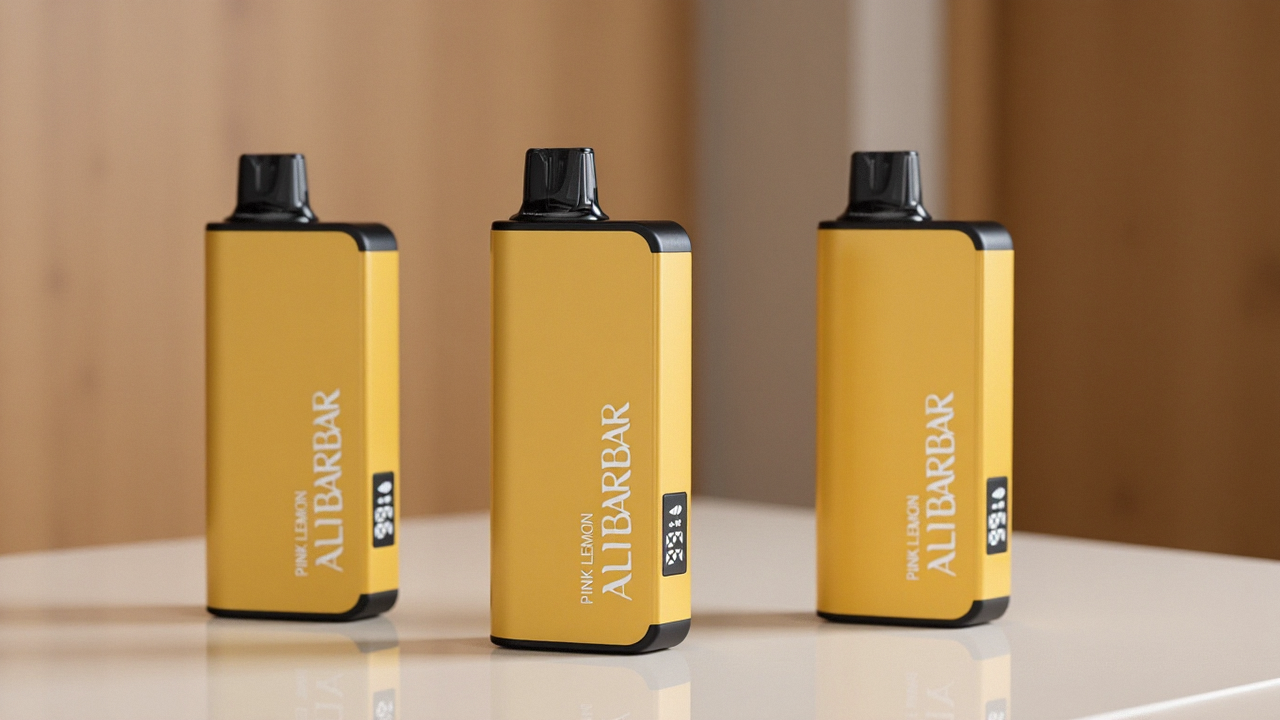
In the Australian market, the situation gets more nuanced. Regulatory frameworks restrict the maximum concentration that can be sold through prescription pathways, and the supply chain must be traceable. Devices from established families like ALIBARBAR are manufactured to deliver a consistent output across their entire stated puff count, which means the concentration specification matters. A device that starts strong and fades will never give you the full intended dose. That is why we consistently remind users that two products displaying the same mg/mL figure can yield very different experiences if their internal architectures diverge.
What You Actually Feel Depends on Engineering, Not Just Concentration
The practical impact of a given mg/mL value is shaped by the device’s power management, coil resistance, and airflow design. A high‑resistance coil paired with a tightly tuned draw will deliver less of the active ingredient per second of inhalation than a sub‑ohm setup pulling hard on the same liquid. So a 20 mg/mL solution in a powerful device might match or exceed the sensory effect of a 50 mg/mL solution in a low‑output sealed unit. Understanding this prevents the costly mistake of assuming that a higher printed number always translates to greater satisfaction.
ALIBARBAR engineers address this variability by standardizing output across a model range. Their devices use calibrated heating elements to maintain a steady gradient from the first puff to the last, which greatly reduces the annoying tail‑off that plagues poorly regulated products. When you read a specification sheet from a verified retailer like OZVAPE Shop, you are not just seeing a mg/mL figure. You are seeing a number that was tested against a defined thermal environment, with a predictable relationship between puff duration, liquid consumption, and delivered payload. That makes the mg number meaningful rather than aspirational.
Interpreting Concentrations Against Real‑World Usage Patterns
Adult users generally fall into a few observable patterns. Someone who takes infrequent, brief draws during a workday might only go through 0.3 mL to 0.5 mL of liquid daily. At 35 mg/mL, that is roughly 10 mg to 17 mg total per day — a moderate quantity. Someone who draws more frequently, or takes longer inhalations, can easily reach 1 mL to 2 mL per day, which at the same concentration yields 35 mg to 70 mg total. The per‑mL number stays the same; the daily load changes dramatically.
The key insight is that you cannot assess suitability based on mg/mL alone. A heavy user needs a combination of liquid capacity and realistic consumption rate that doesn’t force multiple device purchases through the day. A lightweight user needs a lower total capacity so the load doesn’t sit unused and degrade. ALIBARBAR’s range is structured around this reality: the INGOT 9000 is built for extended, steady‑throughout‑the‑day use, while the Ice Adjust 12000 adds customizable airflow and a larger reservoir for those who never want to find themselves empty. Neither is “stronger” simply because of a printed mg figure. Their role is defined by how the whole system — capacity, output calibration, and airflow — interacts with your habits.
A Practical Evaluation Method
Before you fixate on a single number, work through these steps. They will protect you from the most common selection errors.
Determine your daily liquid consumption. Track the volume of liquid you finish in a week, then divide by seven. This gives you a real average, not a guess.
Multiply by your current concentration. That yields your daily intake. Whether that feels appropriate or insufficient tells you whether your concentration is right.
Check the device’s rated puff count and tank size. Divide tank volume by puff count to estimate consumption per puff. This tells you how efficiently the device uses its liquid.
Review power and coil specifications. If the device operates at a higher wattage than your current one, expect a proportionally higher per‑puff delivery — even if the mg/mL stays identical.
Read the manufacturer’s specification sheet thoroughly. A reputable supplier like OZVAPE Shop presents this data in a standardized, comparable format. That makes it far easier to spot when a product is genuinely different versus when a different label has been placed on the same core platform.
This methodology shifts the decision from an emotional reaction to a printed number toward a calculated match between your actual intake patterns and a device’s engineered output. It’s the same approach a product analyst would use, and it rarely leads to disappointment.
Common Misconceptions That Drive Misguided Purchases
Mistake 1: Equating total milligrams with per‑session intensity. A device advertising “50 mg” prominently may be listing total content, not concentration. You see this sometimes with overseas imports where regulatory labelling is inconsistent. That 50 mg might be spread over 300 puffs, delivering a fraction of what a 20 mg/mL device with high wattage produces per puff. Always check whether the number refers to concentration (mg/mL) or total mass (mg per unit).
Mistake 2: Assuming visual similarity means equivalent output. Two stick‑shaped disposable devices can sit side by side and look almost indistinguishable, yet one might contain a mesh coil operating at 12 watts while the other uses a traditional round wire at 8 watts. The mesh unit will vaporize liquid more rapidly, boosting per‑puff delivery even if both liquids are 35 mg/mL. Form factor reveals nothing about internal calibration.
Mistake 3: Ignoring the effect of draw strength and duration. Human behaviour is the largest unmeasured variable. A 3‑second draw on an open‑airflow device can consume 2 – 3 times the volume of a 1.5‑second draw on a restricted device. The concentration number doesn’t account for this, which is why status indicators and consistent draw resistance matter so much. Devices that maintain a stable draw from beginning to end — like the ALIBARBAR Ice Adjust 12000, which allows you to tailor the airflow to your preference — give you more control over dose than a device that lets you suck harder and harder as the coil degrades.
Mistake 4: Treating a high mg number as a badge of efficacy. Some adult users gravitate toward the highest available strength assuming it will be the “most effective.” In reality, too high a concentration in a powerful device can lead to a harsh, uncomfortable sensation that causes users to take shorter, shallower puffs — inadvertently reducing their total intake. The body’s feedback loop self‑regulates, but the user is left thinking the device “doesn’t work.” It does work; the pairing was simply mismatched.
Frequently Asked Questions
Q: Is 50 mg/mL considered strong?
A: It sits at the upper end of commonly manufactured concentrations. Whether it is appropriate depends on your historical usage and the device’s power output. In a low‑wattage sealed unit, it may feel moderate; in a high‑power device, it can be overwhelming.
Q: How do I know the total milligrams in a ALIBARBAR INGOT 9000?
A: Total content equals the liquid capacity multiplied by the specified concentration. The exact capacity and concentration for the version you are viewing are listed on the product specification page at OZVAPE Shop. Do not rely on third‑party summaries; check the primary source.
Q: Why does a 20 mg/mL device sometimes feel stronger than a 50 mg/mL one?
A: Because per‑puff delivery is a function of wattage, coil surface area, and draw duration. A 20 mg/mL liquid vaporized at 15 watts can put more active ingredient into each inhalation than a 50 mg/mL liquid slowly aerosolised at 6 watts.
Q: Can I calculate my daily intake accurately?
A: To a useful approximation, yes. Track the volume of liquid you consume per day and multiply by the mg/mL value. If you use a sealed disposable, divide the stated tank volume by the number of days it lasts you. Realise that your actual absorption will be somewhat lower than the calculated number due to incomplete transfer.
Q: What should I look for on a specification sheet to judge consistency?
A: Look for mentions of regulated output, mesh coil design, and any reference to consistent delivery across the device’s lifespan. If a manufacturer cannot or does not describe these characteristics, assume output will degrade as the coil ages.
Q: How many milligrams should a first‑time user look for?
A: There is no universal threshold. A person switching from heavy use of a different product category might need a higher concentration to manage the transition comfortably, while someone who uses infrequently might find even 20 mg/mL excessive. Start conservatively and adjust.
Q: Does ALIBARBAR offer devices with different mg options?
A: The product line includes multiple series, each available in specific configurations determined by the intended use case. The exact variants stocked at any time, with their full specifications, are visible on the dedicated ALIBARBAR portal maintained by OZVAPE Shop.
Q: How does Australian regulation affect the mg figures I see?
A: All products sold through legal, traceable channels in Australia must comply with therapeutic goods legislation, which imposes limits on concentration and requires that the product be notified and registered where applicable. When you purchase from an authorised retailer, those limits are already reflected in the available stock.
Q: Is it possible to have a device with zero milligrams?
A: Yes. Devices formulated without the active ingredient are available for those who prefer the sensory and behavioural aspects without any pharmacological load. These products will explicitly state 0 mg/mL or equivalent.
Q: What if the device behaves differently from the stated mg specification?
A: If output feels inconsistent, check for common user‑side issues first: a depleted battery, a blocked airflow path, or a coil that has reached the end of its functional life. If the problem persists with a fresh device from a sealed package, contact the retailer from whom you purchased it. OZVAPE Shop maintains a documented customer support protocol to investigate such discrepancies.
The “how many mg” question is a starting point, never a conclusion. A concentration number tells you only what is in the liquid, not how it reaches you, how steadily it arrives, or how long it lasts. Devices that earn trust are those that pair a realistic milligram rating with engineered consistency and clear status feedback. When you build your choice on that broader picture — when you compare not just the front of the box but the internal logic of the device — you stop chasing numbers and start matching tools to the texture of your actual day. That is what informed selection looks like, and it’s the only kind we would ever want to facilitate at OZVAPE Shop.