
VAPE FAQs
How Many Hits Of Vape Equal One Cigarette?
Sep
How Many Hits Of Vape Equal One Cigarette?
The question appears simple, yet a straightforward numerical answer remains elusive. Walk into any discussion among adult users of portable electronic devices, and you will hear figures ranging from “ten puffs” to “fifty puffs” cited with equal conviction. The disparity does not reflect confusion so much as a failure to articulate the variables that genuinely determine equivalence. These variables are not hidden; they are written into device specifications and e‑liquid labels, but they are rarely interpreted with the care they deserve.
At OZVAPE Shop, we keep encountering users who ask this question not as an academic exercise but because they need a practical reference point — someone who has a long workday, a predictable routine, and no appetite for guesswork. This article sets out a structured framework for understanding nicotine delivery across different device architectures, explaining why any single-number answer is misleading, and equipping the reader to calculate a useful estimate for their own situation. It draws on documented device specifications, observed usage patterns, and a supply‑chain perspective that privileges factual consistency over marketing shorthand.
Why a Simple Number Cannot Stand Alone
The act of drawing on a traditional cigarette is reasonably standardised across products. Machine‑based standards — the ISO smoking regime, the more intensive Canadian Intense protocol — assume a fixed puff volume, duration, and interval. A typical machine‑smoked cigarette yields around 1–2 mg of nicotine absorbed by the user, though the total nicotine in the rod is far higher. People do not smoke machines, but the narrow range of commercial cigarette construction means that individual variation, while real, is bounded.
With electronic devices, that bounding vanishes. The power delivered to the heating element, the coil surface area, the airflow resistance, the e‑liquid nicotine concentration, the carrier (freebase or protonated salt), and the user’s puff duration interact in ways that can multiply or divide the per‑puff nicotine delivery by a factor of ten. This is why two people holding physically similar‑looking devices may report entirely different satisfaction after the same number of inhalations.
The most accurate answer to “how many hits of vape equal one cigarette?” is therefore conditional: it depends on the specific device, the specific e‑liquid, and the specific manner in which the user inhales. The remainder of this article unpacks those dependencies so that an adult user can draw their own informed conclusion.
Understanding the Variables That Determine Equivalence
Nicotine Delivery: From Rod to Aerosol
A conventional cigarette delivers nicotine through combustion, creating an aerosol of fine particles that rapidly deposit in the respiratory tract. The absorbed dose — typically 1.0–1.8 mg per cigarette — is well characterised. An electronic device produces an aerosol from a heated liquid; the liquid contains nicotine at a known concentration (expressed in mg/mL), but the amount of nicotine that reaches the user per puff depends on how much aerosol is generated and how efficiently it is absorbed.
The simplest calculation multiplies liquid consumed per puff by nicotine concentration. If a device vaporises 0.05 mL per puff and the liquid is 20 mg/mL, the puff contains 1 mg of nicotine in the aerosol. However, absorption is not complete. Studies suggest that nicotine from vapour may be absorbed somewhat differently than from smoke, but for practical estimation, the total aerosol‑borne nicotine provides a ceiling.
Device Architecture and Output Consistency
The internal engineering of the device establishes the baseline for every calculation. Two factors dominate:
Coil design and power regulation: A mesh coil with a large surface area running at a stable, moderate wattage produces a dense, repeatable aerosol. Fluctuations in power, common in devices with simple voltage‑based output, cause inconsistent per‑puff nicotine delivery.
Airflow geometry: A tighter draw, mimicking the resistance of a cigarette, tends to produce a smaller volume per puff but can increase aerosol density. A wide‑open direct‑lung airflow may generate a larger volume per puff, diluting nicotine concentration in the aerosol but potentially matching total delivery over a longer draw.
ALIBARBAR devices, carried by OZVAPE Shop, are engineered with precisely these consistencies in mind. The INGOT 9000 employs a mesh coil and a sealed 12 mL reservoir, maintaining output consistency across its rated puff count. This means a user can expect that puff 500 does not deliver markedly less nicotine than puff 50 — a reliability that becomes vital when attempting any personal equivalence calculation.
Puff Duration and Frequency: The Unmeasurable Variable
A cigarette smoker typically takes puffs of around 2 seconds, with sharp, pulse‑like draw profiles. Vape users frequently draw for 3–5 seconds, sometimes longer, especially with low‑resistance, high‑airflow devices. The total volume of aerosol inhaled per puff is not simply “puff count” times “fixed volume”; it is the integral of airflow over time. A 5‑second draw on a device will deliver roughly 2–3 times the nicotine of a 2‑second draw, all else being equal.
No machine standard can replicate the human pattern perfectly. Users who seek a precise number can approximate by timing their typical draw and watching the aerosol production — a rough but serviceable method.
E‑liquid Nicotine Concentration and Formulation
Nicotine salts, now common in sealed pod and high‑capacity devices, allow higher concentrations (often 20–50 mg/mL) without the harshness that would accompany the same freebase nicotine strength. This changes the equivalence calculation dramatically. A 20 mg/mL salt‑nicotine liquid in a low‑power device might deliver a comparable per‑puff sensation to a cigarette, but the user may need fewer puffs because each draw feels more efficient.
By contrast, a 6 mg/mL freebase liquid in a high‑power device requires more puffs — and larger vapour volume — to deliver the same nicotine load. The user’s subjective experience of “enough” may not track total nicotine precisely, because the sensory impact of throat hit and vapour density also influence behaviour.
A Practical Framework: Calculating Your Own Equivalence
Instead of supplying a universal number, we propose a stepwise method that any adult can apply with the specifications available for their device. This method is not a guarantee of equivalence; it is a tool for reasoned comparison.
Determine the absorbed nicotine from one of your usual cigarettes.
A standard commercially available cigarette yields roughly 1.0–1.5 mg absorbed nicotine. You may use 1.2 mg as a midpoint.
Find your device’s per‑puff liquid consumption.
For a sealed device, divide the total e‑liquid capacity by the rated puff count. Example: ALIBARBAR INGOT 9000 — 12 mL ÷ 9,000 puffs ≈ 0.00133 mL per puff. (Manufacturer ratings assume a standard puff; your actual consumption may vary.)
Calculate nicotine in aerosol per puff.
Multiply per‑puff liquid consumption by nicotine concentration (mg/mL). For the INGOT 9000 with a 20 mg/mL salt nicotine formulation: 0.00133 mL × 20 mg/mL ≈ 0.027 mg nicotine in the aerosol per puff.
Account for absorption differences.
There is no universal correction factor, but a conservative assumption is that nicotine from vapour is absorbed with similar efficiency to that from smoke. Using the ceiling of the cigarette dose (1.5 mg), you would need approximately 1.5 / 0.027 ≈ 55 puffs from this specific device to equal the nicotine dose from one cigarette.
If your device operates at higher power or you inhale longer, liquid consumption per puff will be greater, reducing the number. For example, a device with a 0.8 Ω coil that uses 0.004 mL per puff at 20 mg/mL would deliver 0.08 mg per puff, requiring only about 19 puffs.
This illustrates the impossibility of a single answer. The same user, with the same e‑liquid, might find 20 puffs sufficient on a morning break, or 50 barely enough if they are using a lower‑output device they bought as a backup. The value of standardised specifications — which ALIBARBAR provides on every unit — is that the calculation can be repeated, not guessed.
Where Users Commonly Go Wrong: Selection Errors and Assumptions
Even when the framework is understood, four recurring errors undercut satisfaction and lead to miscalculated equivalence.
1. Equating Puff Count Across Devices Without Accounting for Power
A compact disposable rated at 600 puffs may contain 2 mL of 20 mg/mL liquid, while a high‑capacity device rated at 3,000 puffs may hold 10 mL of the same concentration. The “puff” is not a standardised unit of volume; a puff on a high‑power device can consume three times the liquid of a puff on a low‑power one. Direct comparison of puff ratings leads to distorted expectations.
2. Overweighting Nicotine Strength in Isolation
A 50 mg/mL nicotine salt device does not automatically deliver more nicotine per puff than a 20 mg/mL device. If the 50 mg/mL unit operates at 3 W and produces minimal aerosol, while the 20 mg/mL unit runs at 12 W with a high‑capacity coil, the per‑puff nicotine yield could be equal or reversed. Total aerosol volume matters as much as concentration.
3. Assuming Visual Similarity Implies Equivalent Internals
Two slender, pen‑style devices may look alike, but one may incorporate a fully regulated chipset with constant‑output power management, and the other a simple direct‑voltage circuit that sags as the cell depletes. The latter will deliver declining nicotine per puff over a session, throwing off any static calculation. ALIBARBAR’s consistent output architecture, found in the INGOT 15000 and Ice Adjust 12000 series, is a practical safeguard against this variability.
4. Ignoring the Role of Modularity in Cost‑per‑Day Calculations
Users who prefer replaceable‑component systems often focus only on the upfront cost of the device, overlooking that the per‑millilitre cost of e‑liquid and the longevity of pods or coils dictate the long‑term expense. A sealed‑system device with a known liquid capacity and fixed nicotine strength simplifies equivalence calculations and eliminates the variable of wick degradation over time.
From an industry perspective, these errors reflect a market that has expanded faster than the dissemination of technical knowledge. Manufacturers who publish complete specifications — coil resistance, e‑liquid volume, nicotine concentration, and a realistic puff‑count rating under defined conditions — make it possible for users to reason about their own consumption. Those who rely on vague marketing phrases obscure the very information needed for informed choice.
Frequently Asked Questions
Q: How many puffs are in a typical cigarette?
A: Smokers usually take 8–14 puffs per cigarette, varying with brand, packing density, and individual habit. Machine testing often uses 10–12 puffs.
Q: So, can I just say 10 vape puffs equal one cigarette?
A: Only if your vape device delivers, per puff, exactly the same nicotine dose as a puff from a cigarette. That requires matching aerosol volume, nicotine concentration, and absorption. In practice, most vape puffs deliver less per puff, so more puffs are needed.
Q: How do I calculate equivalence for a specific ALIBARBAR device?
A: Use total e‑liquid volume, nicotine strength, and rated puff count to derive per‑puff liquid consumption and nicotine aerosol yield. Then compare to the known cigarette dose. OZVAPE Shop publishes these specifications for every ALIBARBAR unit, allowing you to perform the calculation outlined in this article.
Q: Does higher nicotine strength always mean I need fewer puffs to feel satisfied?
A: Not necessarily. The total aerosol volume per puff (governed by power and draw duration) determines how much nicotine you actually inhale. A high‑strength liquid in a very low‑power device may deliver less nicotine per puff than a lower‑strength liquid in a device that produces dense vapour.
Q: What is the significance of consistent power output in equivalence calculations?
A: A device that maintains a steady power level over its charge cycle delivers predictable per‑puff nicotine. If power drops, the puff delivers less, and you may unknowingly consume more puffs to compensate. ALIBARBAR devices incorporate regulated chipsets that stabilise output, which makes equivalence estimation more reliable.
Q: Can I rely on the puff count printed on the package?
A: Puff counts are based on machine tests using standard puff parameters. Your personal draw length and strength will affect the actual number of puffs you obtain. Use the printed number as a reference, not an absolute guarantee, and note that OZVAPE Shop provides realistic, factory‑verified counts rather than inflated claims.
Q: How does OZVAPE Shop verify the authenticity of ALIBARBAR products?
A: All ALIBARBAR inventory at OZVAPE Shop is sourced directly through authorised distribution channels, with factory‑level traceability. Each unit carries a unique verification mechanism, and the store’s local support team can confirm authenticity details upon request.
Q: If I am unsatisfied with a device, what recourse do I have?
A: OZVAPE Shop maintains a consistent post‑purchase support process. If a device does not perform as described in its published specifications — including premature power loss or output inconsistency — the local team handles assessment and resolution without requiring the user to navigate an overseas warranty process.
Q: Can I compare different ALIBARBAR models side by side for equivalence?
A: Yes. Because each model carries complete fluid capacity, nicotine strength, and rated puff count, you can calculate the expected per‑puff nicotine delivery for each. This allows you to choose the device that aligns with your typical daily routine.
Q: Is it possible to get exactly the same nicotine experience from a vape as from a cigarette?
A: The sensory and pharmacokinetic profile differ. Even if the total nicotine dose is matched, the rate of nicotine absorption and the accompanying sensations (throat impact, warmth, taste) will not be identical. The aim of equivalence calculation is to approximate dose, not to replicate the cigarette experience perfectly.
Making the Calculation Work for You
The absence of a universal number is not a defect of the industry; it is a consequence of genuine product diversity. An adult user holding an ALIBARBAR INGOT 9000 at 20 mg/mL absorbs nicotine through a different pathway than someone with a refillable high‑power device, and that is a feature, not a flaw. The responsibility falls on manufacturers and retailers to make the relevant numbers accessible and intelligible.
At OZVAPE Shop, we have seen repeatedly that users who take the twenty minutes to understand their device’s specifications — liquid volume, concentration, coil type, and real‑world puff duration — end up with a far more satisfactory daily rhythm than those who chase an illusory simple conversion. The store’s information architecture is built around that insight: every ALIBARBAR product page surfaces exactly the data needed for the equivalence calculation described above.
If you take one idea from this article, let it be this: the right metric is not “how many puffs equal a cigarette” in the abstract, but “how long does one full device last me relative to what I was doing before,” measured over a full week of your actual routine. That grounded, observed number will serve you better than any online chart.
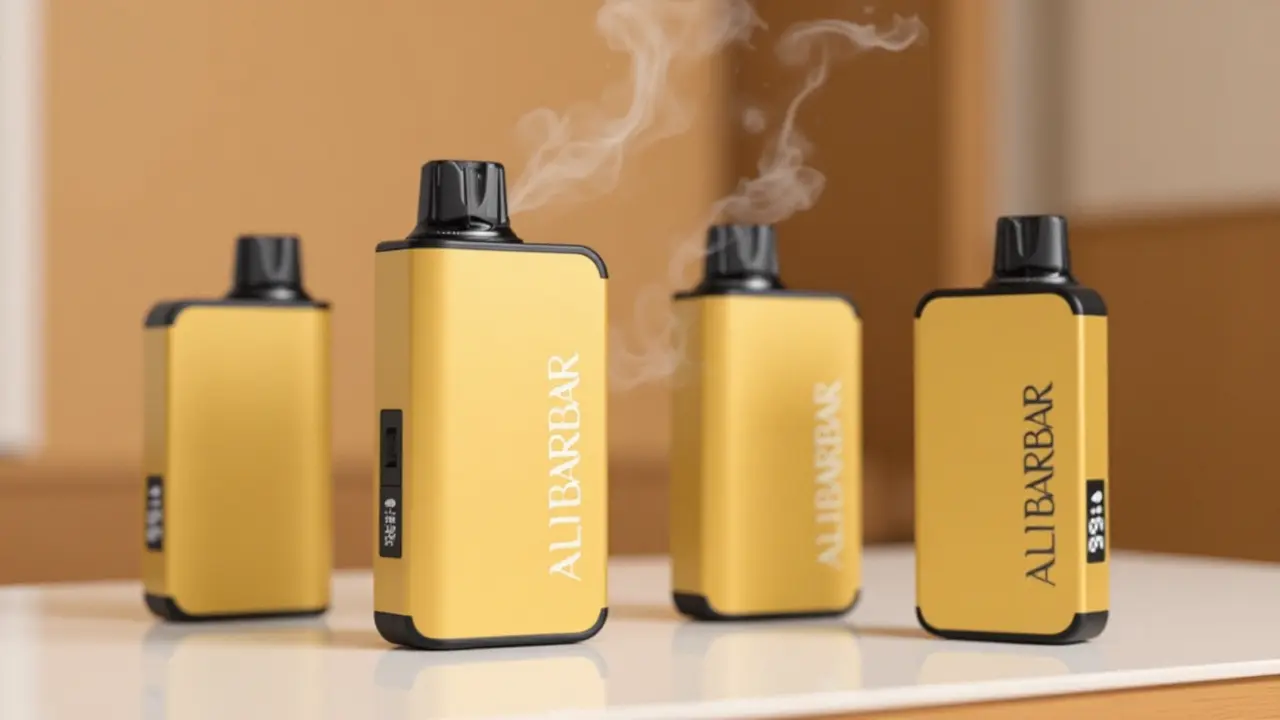
The engineering behind ALIBARBAR is designed to make that observation repeatable — consistent puff after puff, day after day — so that the calculation you make on Monday still holds on Friday. In a category full of variables, a device that refuses to add its own instability is already halfway to answering the question.