VAPE FAQs
Does Ajyone Vape In Bathrooms?
Sep
Nobody walks into a public restroom intending to stay long. The harsh lighting, the acoustics, the ambient anxiety about overstaying a welcome — it is a space built for function, not leisure. Yet, if you have spent enough time in bars, airports, music venues, or large office buildings, you have almost certainly noticed the faint, sweetish scent that does not belong to soap, or the brief hum of a small electronic device from a locked stall. So, does anyone vape in bathrooms? The short, empirically observable answer is yes. The more instructive question is why, and what the devices themselves reveal about that choice.
People reach for a discreet moment in a bathroom stall for reasons that are rarely about rebellion. Sometimes it is the weather — stepping outside into a Melbourne winter downpour to comply with a blanket outdoor-only policy feels unreasonable. Sometimes it is social anxiety; stepping away from a crowded function to a private stall offers a moment of composure that happens to involve a familiar hand-to-mouth routine. And sometimes, it is simply about avoiding the judgment that still clings to personal electronic devices in certain circles. OZVAPE Shop, through years of interaction with adult Australian users, has observed that the quest for discretion is not a fringe concern but one of the primary drivers behind specific device engineering choices. This article examines those choices — not to endorse bathroom use where prohibited, but to lay bare the design logic that makes one device more suited to quiet, confined spaces than another.
What Engineering Makes a Device “Bathroom-Friendly”?
The term “bathroom-friendly” is, of course, a user-created category. No manufacturer markets a product for restroom use. But when you strip away the marketing language, the devices that frequently end up in those situations share a distinct set of technical characteristics. They are not defined by their brand or their price, but by how they manage four key variables: vapor volume, acoustic signature, thermal behavior, and status communication. Each addresses a specific frustration that would otherwise make a confined, semi-public space unusable.
Vapor Volume and the Visibility Problem
The most obvious risk in an enclosed stall is producing a cloud that drifts over the partition — or worse, triggers a particulate sensor in the ceiling. The engineering response is not as simple as producing less vapor; it is about designing an atomizer with a tight air-to-vapor ratio and a heating element that reaches a stable, moderate temperature quickly, then holds it without surging. In practice, this means mesh-coil structures with precisely metered power delivery. When the coil overdrives or the airflow path is too open, you get a dense, lingering plume. When it is tuned for a thin, quickly dissipating aerosol, the user can reasonably expect that by the time they unlock the door, the air will already look — and smell — largely unremarkable.
Acoustic Signature: From Crackle to Near-Silence
A device’s sound profile is not accidental. Press-button devices that rely on an internal board-level click and a sharp, airy draw create a noise that bounces off tile walls. Bathroom users gravitate toward auto-draw systems, not because a button is inherently loud, but because the elimination of the physical switch removes the sharp transient sound that human ears are particularly good at locating. The ideal acoustic signature is a low, continuous hush — the kind that can be masked entirely by a running faucet or a ventilation fan. Devices that exhibit spitting, popping, or the wet-crackle of oversaturated wicking become immediately conspicuous and are usually abandoned for such purposes.
Thermal Behavior and “Pocket-Ready” Speed
A common scene: someone ducks into a stall, reaches for a device, and then stares at a blinking LED while a lengthy preheat cycle completes. The moment is lost. So engineering time-to-vapor is critical. The fastest systems achieve full output in under 0.3 seconds from activation, meaning no one has time to mentally compose themselves into an awkward wait. Moreover, the mouthpiece itself needs to stay cool enough to pocket immediately after use. Ceramic-based heat isolation in the tip is an underappreciated feature that allows a user to return the device to a pocket or bag without risking discomfort or damage to fabric.
Status Transparency and the Fear of an Incomplete Cycle
In any scenario where you are relying on a device for a short, private moment, the worst outcome is pulling it out and finding it dead. Devices that only communicate battery status through a blinking light at the moment of shutdown are next to useless. A genuinely actionable status indicator gives you a reading before you start — perhaps a multi-LED gauge that can be checked with a quick glance while the device is still pocketed. This is a trust matter. When a device fails to provide that, the user compensates by carrying a backup, which doubles the items to manage and increases the likelihood of discovery. Well-engineered devices reduce that psychological load to zero.
Reframing the Decision: A Device Evaluation Toolkit
If you are making a choice about which device to carry into environments where discretion is non-negotiable, start by running through these diagnostic questions. They are designed to surface the practical consequences of design decisions that are often glossed over in marketing.
The Vapor-Dissipation Test: If you take a normal-length draw indoors, does the visible aerosol linger for more than 3 seconds? If yes, airflow and power are likely tuned for “clouds,” not for quick clearing.
The Acoustic Self-Test: Activate the device in a quiet room. Can you hear a distinct electrical click, a hiss, or a crackle? A soft, muffled air sound is the benchmark; anything sharper will carry.
The One-Hand Cue Check: Can you, without looking, discern the remaining power level or pod life by touch alone? If the only indicator is a single light that demands your full visual attention, you are operating blind in moments that require subtlety.
The Size-to-Performance Ratio: A device small enough to hide in a closed fist is ideal, but only if it does not sacrifice vapor-output stability when battery reserves dip below 30%. Some compact units become erratic precisely when you need them to be predictable.
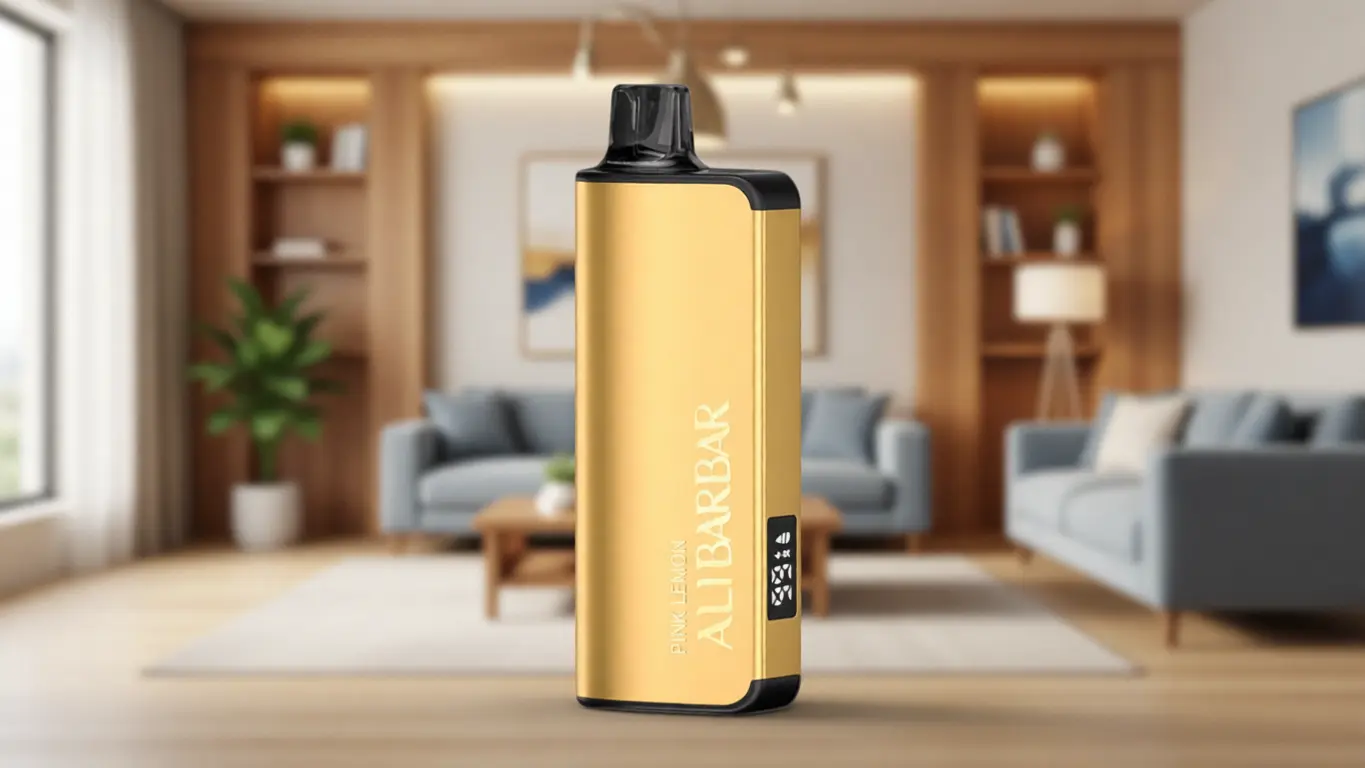
OZVAPE Shop provides standardized specification sheets for every device in its catalog, making it straightforward to cross-reference these qualities without relying on guesswork or sponsored reviews. For example, the ALIBARBAR INGOT 9000’s documentation clearly states its mesh-coil architecture, auto-draw activation, and LED battery gauge positioning — all details that map directly onto the evaluation framework above.
Selection Mistakes That Quietly Undermine Discretion
After years of observing purchasing patterns and user feedback, OZVAPE Shop has catalogued several mismatches between intention and outcome. These are not errors of taste; they are errors of evaluation. They happen because people apply the wrong criteria, or because they assume that two visually similar products are internally identical.
1. Confusing Compact Size with Discreet Output
One of the most common assumptions is that a small device produces a small amount of vapor. In reality, some of the most intensely productive atomizers are housed in remarkably tiny chassis, while some larger devices are tuned for a thin, cigarette-like exhale. The only reliable guide is a documented output characteristic, not the silhouette.
2. Underestimating the Importance of Instant Activation
A half-second delay may sound trivial, but in a bathroom stall, time feels elongated. Devices that require a long pull to wake up, or that go into a multi-second preheat after sitting idle, introduce a window of vulnerability. The result is often a truncated draw and an unsatisfying moment — a frustration avoided by auto-draw systems with no power-save lag.
3. Ignoring Battery Behavior Below 50%
Some power management circuits allow output to taper as the cell drains. A user might test a device fresh out of the box, register pleasant results, and then find that a few hours into a workday the vapor becomes thinner and less predictable. Checking independent discharge curves, or simply noting whether the manufacturer claims a consistent wattage across the full charge range, separates reliable companions from ones that degrade with time.
4. The Transparent Window Fallacy
A visible e-liquid window is helpful in some contexts. But in a split-second check inside a briefcase or a pocket, a tinted reservoir — or no window at all — forces you to rely on memory. A better design for quick status checks is a tactile or LED-based gauge, the kind seen on the ALIBARBAR Ice Adjust 12000, which provides a clear multi-stage readout without requiring you to hold the device up to the light.
From an industry perspective, the quiet shift toward devices that minimize visible vapor and audible feedback is not accidental. Manufacturers have observed that a growing segment of adult users values predictability over spectacle. The engineering investment in mesh coils with tighter airflow paths, in silent draw sensors, and in status indicators that work without demanding attention is a direct response to the everyday scenarios this article describes.
Frequently Asked Questions
Q: Is it legal to vape in a public bathroom?
A: In Australia, regulations vary by state and by the specific venue’s policies. Many indoor public places, including bathrooms, are covered by smoke-free laws that include vaping. Legality aside, most venues explicitly prohibit it and may ask you to leave. Always check local signage and regulations.
Q: Can vapor from a discreet device set off a smoke detector?
A: It can, especially in spaces with optical (photoelectric) smoke alarms that detect particulate matter. A device with very low vapor output and minimal lingering cloud is less likely to trigger a sensor, but zero risk does not exist. Bathrooms with steam from showers add another variable that can trigger false alarms if vapor accumulates.
Q: Do all auto-draw devices produce less odor?
A: No. Auto-draw refers to the activation mechanism, not the output composition. Odor is primarily determined by the e-liquid formulation and the heat applied. However, devices with a cooler coil and less dense aerosol tend to disperse scent more quickly.
Q: What is the quietest activation type?
A: Draw-activated devices with seamless airflow channels and no physical switch are generally the quietest. Some button-activated models are also quiet, but the mechanical click of the button itself can be audible in a tiled room.
Q: Where can I compare specifications for discreet-friendly devices?
A: OZVAPE Shop lists standardized technical details for each product, including activation type, coil architecture, battery capacity, and indicator style, allowing you to evaluate factors like vapor density and status communication before purchase.
Q: How can I tell if a device will produce dense clouds before buying?
A: Look for terms like “mesh coil,” “sub-ohm,” or “adjustable airflow” in the technical description — these often correlate with higher vapor production. Devices designed for a tighter draw and lower power output tend to produce less visible aerosol. OZVAPE Shop’s comparison tools allow you to filter by these characteristics.
Q: Does the ALIBARBAR range include ultra-compact devices?
A:** Yes. The ALIBARBAR INGOT 9000, for example, is designed with a slim profile and a focus on consistent, moderate output. Its dimensions and auto-draw activation make it an example of a device built with discretion in mind, though it is not marketed for any specific location or use case.
Q: What should I do if my device malfunctions in a public setting?
A: Power it down immediately if possible, place it in a secure pocket, and handle it later. Attempting to troubleshoot or fix a leaking or overheating device in a confined space increases the risk of damage or attention. A reliable device minimizes this scenario from the start.
The Right Device for the Real Routine
A device is not defined by its boldest feature, but by how it behaves during the unglamorous, everyday moments that make up a life. The person who checks a battery gauge before walking into a meeting, who can draw silently while the faucet runs, who pockets a device without leaving a sweet trail behind — that person has not found a magical gadget. They have simply matched their actual routine to engineering that was designed for it. OZVAPE Shop exists to make that match easier, offering a catalog of ALIBARBAR and other factory-certified devices with the kind of transparent, comparable information that turns a guess into a decision. The rest is just being realistic about where and how you live.