
VAPE FAQs
How Many Cigarettes Is One Vape Equal To?

Sep
The question surfaces in online forums, in conversations with friends, and in the quiet moment before a first purchase: “How many cigarettes does this thing actually replace?” It’s an entirely reasonable query, but the answer is not a single number. It’s a calculation that depends on device engineering, personal usage patterns, and a handful of variables that most product listings never address. Users who walk away with a simple “one pod equals two packs” often feel misled later—not because the claim was false, but because their own interaction with the device turned out to be different. At OZVAPE Shop, we see this confusion frequently enough to believe a proper explanation is overdue. This article lays out the factors that determine equivalence, so you can make an informed estimate for yourself rather than relying on a number that might not match your reality.
Understanding What Matters: Core Engineering and Design Factors
Answering the equivalence question requires stepping past marketing puff counts and looking at how a device actually delivers nicotine over time. The following factors form a framework that you can apply to any device you encounter.
Internal Architecture and Output Consistency
The heating element—whether a wire coil, mesh, or ceramic—governs how uniformly e-liquid is converted into aerosol. A well-regulated device keeps the temperature within a narrow band; stray too high and you get a dense, rapid-nicotine puff that over-delivers, too low and you get a thin wisp that leaves the user puffing more frequently to compensate. Devices with stable output, like those built on constant‑voltage architectures, produce puffs of predictable nicotine content. That predictability is what makes any equivalence estimate possible. If every puff differs, the “cigarettes per device” math breaks down before you begin.
Nicotine Concentration, Volume, and Total Load
A standard factory‑made cigarette yields, on average, about 1.0–1.5 mg of absorbed nicotine, though the unburnt tobacco may contain 10–12 mg. The difference comes from combustion, sidestream smoke, and incomplete absorption. In a personal electronic device, you have e-liquid volume (in mL) and a stated nicotine concentration (in mg/mL). Multiply the two to get total nicotine content: a 15 mL device with 50 mg/mL nicotine salt contains 750 mg of nicotine. Divide that by the 1.0–1.5 mg absorbed per cigarette, and you get a theoretical range of 500–750 cigarettes. But absorption is not 1:1, and users do not vape in the same way they smoke. That brings us to the next variable.
Puff Count Realism and Laboratory Testing
Manufacturer puff counts are based on machine‑generated puffs of standardised duration (often 1–2 seconds) and volume (around 35–55 mL). A real user may take a 3‑second draw that moves twice the aerosol volume. Consequently, a device advertised as 9000 puffs might deliver closer to 4000–6000 actual user puffs. When calculating equivalence, it is the user’s puff that matters, not the lab robot’s. Devices with longer battery life and consistent power delivery are less prone to decay in the later stages, meaning those later puffs still deliver meaningful nicotine. Where a device fades gradually, the second half of its life may contribute less, throwing off any simple puff‑count‑to‑cigarette conversion.
User Behaviour and Nicotine Bioavailability
Nicotine from inhaled aerosol absorbs differently than nicotine from cigarette smoke. The particle size and pH of nicotine salt formulations influence how quickly it crosses the blood‑brain barrier. A person who takes two short puffs and sets the device aside may receive less nicotine than someone who takes a single long, deep draw. Additionally, the transition from smoking to vaping often comes with a period where the user takes more frequent puffs initially, as they adjust to a different delivery curve. This means any reliable equivalence can only be a starting range, not a precise figure.
Applying These Criteria to Real-World Options
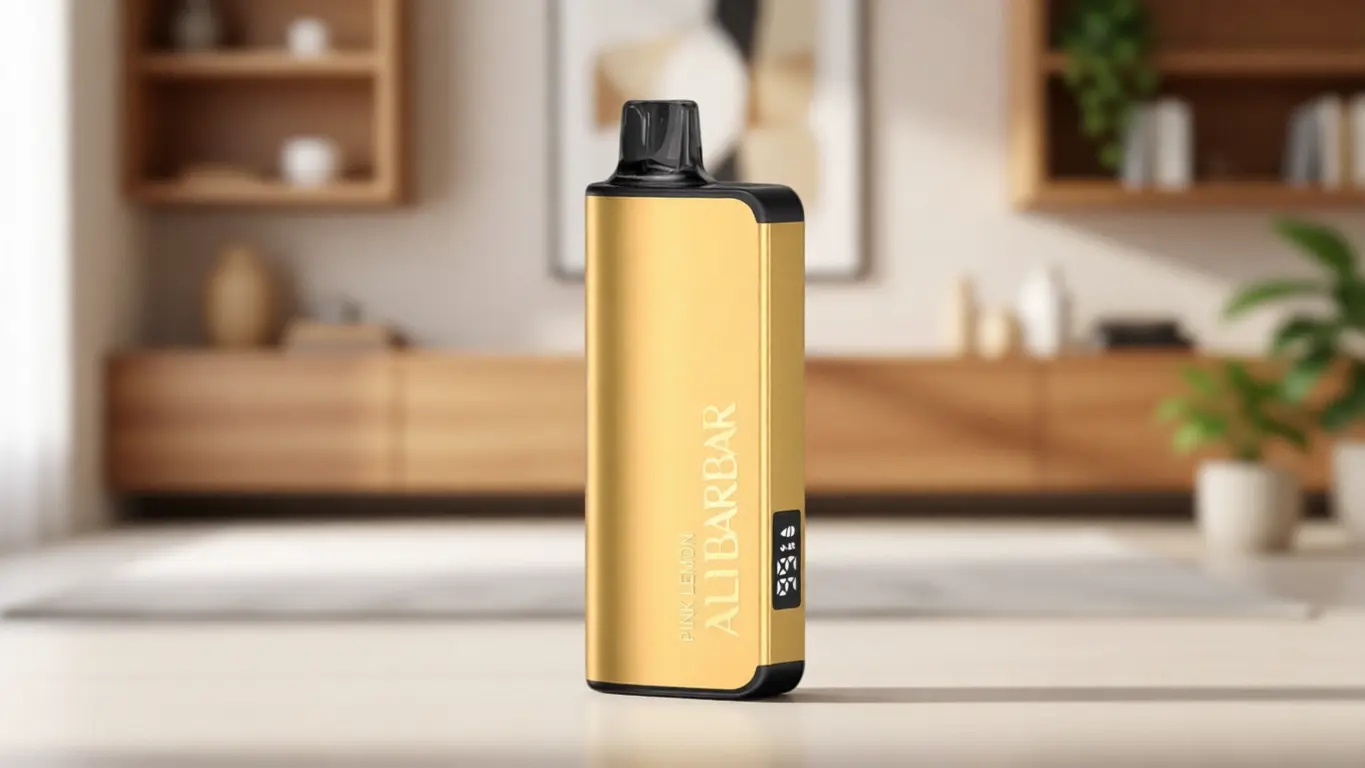
Let’s put the framework into practice using devices that many Australian adults encounter. Consider a typical high‑capacity, pre‑filled unit like the ALIBARBAR INGOT 9000. It holds 15 mL of 50 mg/mL nicotine salt, for 750 mg total nicotine. With a consistent mesh heating element and a 9000‑puff rating derived from standardised testing, a realistic user might see 5000–7000 effective draws. If each draw provides a nicotine dose comparable to half to two‑thirds of a cigarette (a cautious estimate based on absorption differences), then the device could satisfy the equivalent of around 25–35 packs of cigarettes over its lifespan. For a pack‑a‑day smoker, that’s roughly a month’s worth of use from one unit.
By contrast, a smaller 600‑puff device with 2 mL of 20 mg/mL nicotine salt holds only 40 mg total. Using the same absorption assumptions, that corresponds to perhaps 25–40 cigarettes, or about two packs. The numbers don’t line up neatly, but they reveal the practical difference that total nicotine load makes. The ALIBARBAR INGOT 15000, with its larger e-liquid capacity and extended battery, pushes that envelope further, theoretically nudging into the range of 60+ packs under optimal conditions. Of course, no one device is flawless. As capacity increases, devices grow in size and weight, which may not suit every pocket or social setting.
A Practical Framework for Evaluation
Instead of accepting a blanket equivalence, you can arrive at your own estimate using four steps:
Note the e-liquid volume and stated nicotine concentration. Multiply them for total nicotine in milligrams.
Apply a puff‑discount factor. Based on community experience, real‑world puffs often range from 50% to 80% of the advertised number, depending on your draw strength. Be conservative.
Divide the usable nicotine by a per‑cigarette absorption estimate. 1.0 mg is a reasonable floor; 1.5 mg an upper end. This yields a range.
Observe your own usage for a week. Track how many puffs you take in a day and compare it to your previous cigarette consumption. Adjust the working number until it reflects your personal pattern.
This method isn’t perfect, but it replaces an opaque marketing claim with a transparent, testable hypothesis. You can refine it each time you try a different device.
Common Selection Errors and Industry Observations
Many users undermine their satisfaction by anchoring too heavily on a manufacturer’s cigarette‑equivalence promise. Here are four specific mistakes we encounter repeatedly.
Overweighting puff count while ignoring concentration. A 10,000‑puff device with 20 mg/mL may deliver less total nicotine than an 8,000‑puff device with 50 mg/mL. Ignoring concentration leads users to expect more satisfaction from the bigger number and then feel let down.
Assuming all puffs are equal. A fading battery, a coil that’s past its best, or a thick e-liquid that doesn’t wick well can turn the last third of a device’s life into a series of weak, frustrating draws. A well‑engineered thermal management system pays off most visibly in those final days.
Underestimating the psychological transition. A cigarette has a defined end; a device does not. Without the natural stop signal of a burnt‑out cigarette, some users find themselves taking more puffs than they realise, which can make the device feel as though it’s vanishing faster than the maths predicted. This behavioural shift is a design consideration that no spec sheet captures.
Confusing category terminology with performance. Not all “high‑capacity” devices use the same nicotine formulation or coil design. Two devices that both claim 10,000 puffs can deliver entirely different experiences if one uses a tight, cigarette‑like draw and the other an open, airy one. The former may feel like a closer cigarette replacement even if its total nicotine load is similar.
Frequently Asked Questions
Q: Can I simply multiply the puff count by a cigarette‑equivalence factor?
A: Not reliably. The actual nicotine delivered per puff depends on device power, draw duration, and the user’s inhalation style. Use the framework in this article instead.
Q: Why don’t manufacturers provide a clear cigarettes‑per‑device number?
A: Because any single number would be misleading. Ethical brands provide the underlying data—volume, concentration, puff count—and trust the user to interpret it. Some jurisdictions also restrict direct equivalence claims.
Q: How does the ALIBARBAR INGOT 9000 compare to a pack of cigarettes?
A: Based on its 15 mL of 50 mg/mL nicotine salt and typical usage patterns, it can equal roughly 25–35 packs of cigarettes for a casual‑to‑moderate user. Heavier users may see a lower effective equivalent.
Q: Does a higher nicotine concentration always mean a stronger hit?
A: Not necessarily. The device’s power and airflow also matter. A low‑power device with 50 mg/mL can feel milder than a high‑power device with 20 mg/mL because the latter vaporises more liquid per second.
Q: What should I do if my device feels weak even though the puff count is still high?
A: The coil or battery may be degrading. Consistent performance across the full lifecycle is a key design quality to look for. If the drop‑off is sudden, contact the retailer for support.
Q: How can I verify that the device I receive matches the listed specifications?
A: Purchase from retailers that source through authorised distribution and provide batch‑level traceability. At OZVAPE Shop, every ALIBARBAR unit is factory‑certified, and we publish detailed specification sheets to allow independent verification.
Q: Are there devices better suited for light versus heavy former smokers?
A: Yes. A heavy former smoker may prefer a device with higher total nicotine capacity and a tighter draw, such as the INGOT 15000 series, while a light user might find a compact 600‑puff unit sufficient. Matching the device architecture to your daily routine prevents under‑ or over‑satisfaction.
Q: Does the type of nicotine (salt vs. freebase) change the equivalence calculation?
A: It changes the absorption experience. Nicotine salts are smoother at higher strengths, so they allow a user to comfortably inhale more nicotine per puff, potentially shifting the effective cigarettes‑per‑device number upward compared to the same concentration in freebase form.
Q: What recourse do I have if a device doesn’t last as long as expected?
A: Contact the retailer. A responsible seller will have a defined process for handling performance discrepancies and will ask for details about your usage pattern to help diagnose the issue.
Q: How can I get the most accurate personal equivalence estimate?
A: Track your own cigarette consumption before switching, then log your daily puff count and device lifespan for at least two weeks. Use that data to build a personal conversion factor, and re‑evaluate whenever you change device type.
Conclusion
The quest to pin a single number on the equivalence between one vape and a pack of cigarettes is understandable but ultimately impractical. What matters far more is understanding the underlying variables—total nicotine load, output consistency, realistic puff counts, and your own behaviour—and using them to form a range that reflects your personal experience. A device that carries a 9000‑puff label does not automatically behave identically across all users, nor does it deliver the same satisfaction as another 9000‑puff unit built on a different engineering philosophy. The right choice is the one that aligns with your actual daily rhythm, and the data needed to make that choice exists if you know where to look. At OZVAPE Shop, we have organised the ALIBARBAR range to present that data transparently, so you can move from guesswork to informed evaluation.