
VAPE FAQs
How Many Cigarettes In A 6000 Puff Vape?
Oct
The practical question behind every 6000‑puff claim is not simply mathematical. It springs from a genuine frustration: a user who has tried devices that promise two weeks and deliver five days, or who found the final third of the unit’s life unsatisfyingly weak, inconsistent, or just dead before its time. At OZVAPE Shop, we hear a version of this inquiry almost daily, and the honest answer begins with the recognition that a “puff,” as measured by two different manufacturers, can represent two fundamentally different sensory events. Understanding why that is—and what to look for in a device that will actually honour its rated capacity—is the real work of making an informed choice.
What Actually Determines Whether a Puff Count Is Meaningful
Before you can convert any number of device activations into an equivalent number of combustible products, you need to know what the activation represents. This is not a detail of personal preference; it is a function of the internal architecture and control logic that the manufacturer chose. When users report that advertised puff counts feel inflated or unattainable, the cause is almost always found in one of the following areas.
Thermal Architecture and Output Uniformity
The coil‑and‑wick assembly inside a device is a tiny thermal system. A well‑engineered heating element maintains resistance stability across hundreds of heating cycles, ensuring that the aerosol produced on puff 4000 is, in terms of density and temperature, recognisably the same as puff 400. Poor thermal load management, by contrast, leads to gradual carbonisation of the wicking material, volatile heat spikes, and diminishing vapour quality long before the liquid reservoir is empty. When the user stops using the device because the experience has degraded—even though liquid remains—the “rated puffs” have not actually been delivered in any usable sense.
Why this matters: most users do not count puffs. They notice when the device no longer satisfies, and they dispose of it. If the heating architecture cannot sustain a clean output profile across its full liquid supply, the puff‑count label becomes a theoretical ceiling, not a lived experience.
Power Delivery and State Transparency
Devices that draw power from an integrated battery rely on a voltage regulation circuit to keep the heating element at its designed operating point as the cell discharges. Cheaper regulation or aggressive power curves may spike voltage early and then sag, producing overly intense initial use followed by a long, anemic tail end. The user who experiences this will consume liquid at an accelerated rate initially and then find later puffs too weak to count.
Furthermore, the practical value of a battery life indicator or a consumption readout cannot be overstated. A device that tells you nothing about its remaining charge or liquid volume forces you into guesswork. When guesswork inevitably fails, the common solution is to carry a backup unit. That backup unit represents a real, recurring cost that is rarely accounted for when comparing retail prices.
Mechanical Durability and Daily Carry Realities
A 6000‑puff device is, by design, intended to accompany an adult for a week or more of ordinary use. During that time it will be pocketed, handled with keys and phones, and subjected to temperature shifts. Mouthpiece contamination, body scratching, and airflow obstruction from lint are not hypothetical; they are predictable. Materials that show early wear or mouthpieces that develop micro‑abrasions become unpleasant long before the functional internals give out.
Modularity and Cost Per Satisfactory Use
Not every device in the high‑puff category is reusable. Many are sealed units that must be entirely replaced when the liquid is exhausted. Others offer replaceable cartridges or rechargeable batteries. The presence or absence of modularity changes the calculation of what a puff actually costs, because a sealed unit that fails to deliver its last 1500 usable activations represents total loss, whereas a replaceable‑cartridge system at least allows the power section to be retained. Users who overlook this distinction are, in effect, betting that the sealed unit’s quality control is flawless—a bet the industry’s consistency record does not support.
Engineering That Makes a 6000‑Puff Rating Trustworthy
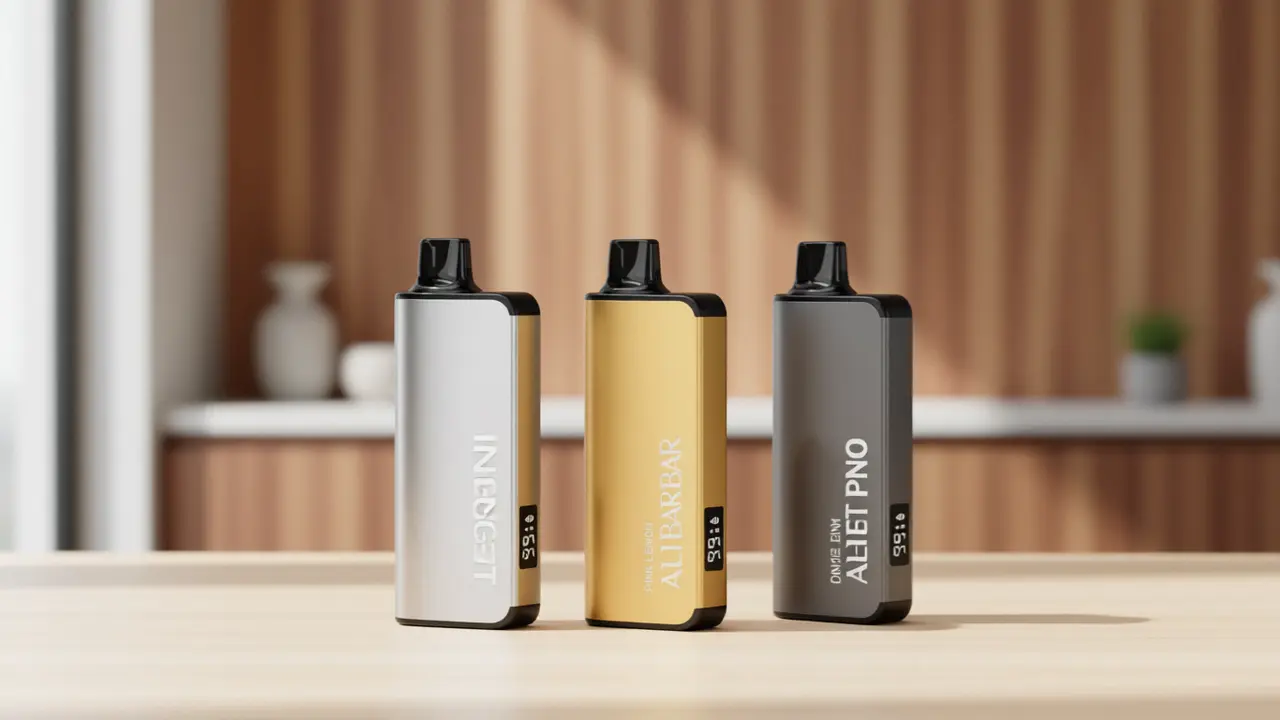
ALIBARBAR’s design team, whose work we follow closely at OZVAPE Shop because we authorised‑resell the full catalogue, arrived at a consistent philosophy by studying exactly these failure points. Devices like the INGOT 9000 and INGOT 15000 come from a lineage that deliberately prioritises battery‑liquid balance and thermal headroom. While the 6000‑puff specification sits slightly below these models, the same engineering discipline applies: the power management is calibrated to flatten the output curve so that the aerosol density the user experiences on the first day and the last day are perceptibly similar.
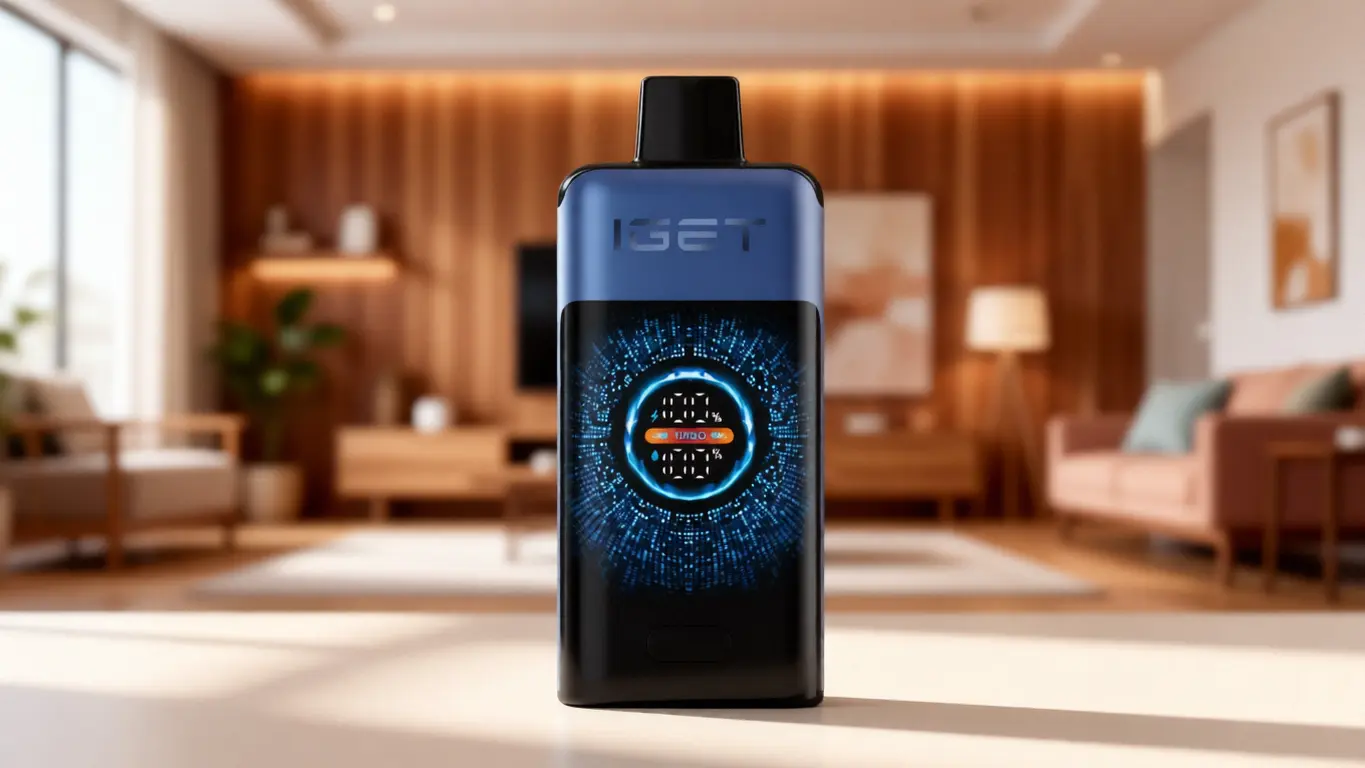
A concrete example: the Ice Adjust 12000 includes a real‑time display that tracks remaining liquid and charge—not as an afterthought, but as a core design feature intended to eliminate the “I didn’t know it was empty” moment. When a manufacturer is confident enough to show you exactly where you stand, it’s because their hardware and calibration can be trusted not to deviate from the readout. That kind of transparency does more to justify a puff‑count claim than any number of promotional badges.
Other device families use different approaches—some opt for large batteries with minimal feedback, others for aggressive early power—but the trade‑off is always the same: you gain something visible (a sticker number, a lower initial price) and sacrifice something experiential that only becomes apparent several days into use.
A Framework for Comparing Puff‑Count Claims Without Relying on Marketing
Rather than reaching for a formula like “1 cigarette equals 10 puffs,” which assumes a standard activation length that does not exist, we suggest a five‑point diagnostic that you can apply to any product listing, regardless of brand.
Ask what the puff count is calculated against. A responsible specification will state the laboratory puff duration (commonly 1‑2 seconds) and the assumed volume per puff. If this information is missing, the number is, by definition, unverifiable.
Check the ratio of claimed puffs to liquid volume and battery capacity. A 6000‑puff device typically requires at least 12‑14 mL of liquid and a cell of 500‑650 mAh with conservative output settings. If you encounter a 6000‑puff claim paired with 8 mL of liquid and a tiny battery, the arithmetic should raise a flag.
Look for a physical consumption indicator. A transparent window, a digital gauge, or even a graduated mouthpiece changes the relationship from “trust me” to “check for yourself.”
Search for user experiences that mention late‑stage performance, not just first impressions. The first 500 puffs are the easiest to get right. The feedback that matters most comes from people who have used it to the end.
Calculate cost against usable experience, not rated puffs. If a device becomes unsatisfying after 4000 activations but is marketed as 6000, the price per satisfactory use is 50% higher than the sticker suggests. This is the real number.
This approach does not require technical expertise. It requires only that you treat a device specification the way you would treat a utility contract—by reading what is excluded as carefully as what is promised.
Common Selection Errors and What They Reveal About the Wider Market
In observing how adults choose devices in the high‑puff segment, we notice several recurring patterns that are worth stating plainly because they directly diminish user satisfaction.
Over‑Prioritising the Single Largest Number
A user will sometimes compare a 6000‑puff device to a 5000‑puff device and choose the 6000 solely on the strength of the larger integer, without examining whether the extra 1000 activations are actually accessible. What matters is usable puffs under real conditions, not a laboratory endurance test conducted at a draw length no one uses. The industry does not publish a standardised “usable puff” metric, so the number alone is an invitation to chase a phantom.
Assuming Visual Similarity Means Engineering Equivalence
Many devices in the 5000‑6000 puff range share a similar cylindrical or box‑style form factor. The outward appearance says nothing about the coil wire composition, the wicking material, or the voltage regulation curve. Two nearly identical‑looking devices can diverge by a factor of two in the number of satisfying puffs they actually deliver. Assuming parity based on appearance is one of the costliest mistakes a user can make.
Neglecting the Cost Implications of a Sealed Architecture
Sealed units are convenient, but they embed a risk: the user cannot intervene when something goes wrong. A device that includes a replaceable pod or a rechargeable battery, such as the higher‑capacity ALIBARBAR units, shifts the design’s vulnerability. The power cell is retained across liquid changes, which reduces waste and isolates the most common failure point (liquid exhaustion/coil decline) from the rest of the hardware. Users who lose confidence in a sealed unit’s late‑life performance end up buying replacements sooner; users of modular systems replace only the consumable portion. This difference compounds quickly.
Treating Category Labels as Technical Specifications
Terms like “disposable,” “rechargeable,” and “refillable” are used imprecisely across the market. A device labelled “rechargeable” may still be entirely sealed, meaning the battery outlasts the liquid but you cannot extend product life beyond the factory‑filled reservoir. Understanding the precise architecture—not the category tag—prevents disappointment.
These are not isolated user errors. They are the predictable downstream consequences of a market where technical transparency is not yet the norm. Retailers who prioritise clarity—by providing standardised specs, verified specifications, and plain‑English product comparisons—are doing the most direct work to correct the imbalance.
Frequently Asked Questions
Q: How many cigarettes does a 6000‑puff vape equal?
A: There is no fixed conversion. A commonly used clinical estimate places a typical combustible product at 10‑15 puffs, assuming a 2‑second draw. On that basis, 6000 puffs would equate to 400‑600 cigarettes. However, actual experience depends on draw length, device output consistency, and whether the device can deliver all 6000 activations at satisfying density. Users who draw longer or deeper will consume liquid faster, reducing the total number of activations far below the listed rating.
Q: Why do some 6000‑puff devices seem to last half as long as promised?
A: The most frequent causes are inconsistent power delivery that degrades vapour quality long before the liquid is gone, optimistic puff‑count testing performed with ultra‑short draws, and a sealed design that gives no warning when the coil begins to underperform. A device without any real‑time consumption indicator forces you to rely entirely on the manufacturer’s claim, which is not independently audited.
Q: What should I look for to be sure a device’s puff count is accurate?
A: Look for a published puff duration standard; a liquid volume and battery capacity consistent with the claim; transparent material that allows you to see remaining liquid, or a digital gauge that reports it; and independent user feedback that specifically discusses performance in the final portion of the device’s life.
Q: Are ALIBARBAR devices that show remaining puffs more reliable?
A: The presence of a real‑time display, as on the Ice Adjust 12000, is not a guarantee of perfection, but it is a strong signal that the manufacturer is confident enough in its calibration to let you verify it. A display also eliminates the “is it empty?” uncertainty that prompts users to carry unnecessary backup units.
Q: Does a higher puff count always mean better value?
A: No. Value is determined by cost per usable, satisfying activation. A 9000‑puff device that fades after 6000 may be more expensive per satisfactory use than a well‑engineered 6000‑puff device that stays consistent to the last activation. Modular devices can shift the value equation further because you replace only the consumable portion.
Q: How does OZVAPE Shop ensure the puff‑count information I receive is trustworthy?
A: We source all ALIBARBAR products exclusively through factory‑authorised distribution channels, and we publish the manufacturer’s stated specifications exactly as they are documented, including puff duration assumptions where provided. Our support team answers technical questions without relying on unverifiable claims, and we maintain direct feedback loops with our users to identify any discrepancies between documented performance and real‑world reports.
Q: What is the difference between a sealed device with a rechargeable battery and a modular device?
A: A rechargeable sealed device includes a charging port so that the battery can be topped up, but the liquid reservoir and coil remain permanently enclosed. Once the liquid is exhausted or the coil degrades, the entire unit is discarded. A modular device separates the power section from the liquid‑holding cartridge, allowing you to replace the consumable cartridge while retaining the battery. This reduces electronic waste and lowers the long‑term cost per use.
Q: Can I use a puff counter to estimate my actual cigarette consumption?
A: You can, but only if you first establish your personal “puffs per cigarette equivalent” by observing how many device activations you typically use in a session that would previously have involved one combustible product. Over a few days, recording the puff count on a device that provides one will give you a personalised conversion factor far more accurate than a generic estimate.
Q: Is there any industry standard for measuring puffs?
A: No mandatory standard exists. Manufacturers set their own laboratory testing parameters. Some publish these parameters; many do not. Until standardisation emerges, the best protection is to buy from retailers who disclose the manufacturer’s test conditions and who select brands with a track record of consistency.
Q: What should I do if a device clearly does not reach its rated puff count?
A: First, verify that your draw length and frequency are roughly aligned with the specification’s assumptions. If the disparity persists, contact the retailer. At OZVAPE Shop, we maintain documented support channels for exactly this circumstance, because a product that fails to meet its stated specification is a credibility issue we take seriously—not only for the user but for the integrity of our own catalogue.
The Real Conversion Happens in Your Routine
Reducing a device to a single equivalence number is tempting because it feels like a shortcut to a decision. The smarter path is to recognise that a puff count is a proxy for device engineering, and that the number stamped on the packaging is only as valuable as the thermal and power systems that sustain it. ALIBARBAR’s design direction—prioritising consistent output, transparent status feedback, and modular construction where appropriate—represents a deliberate answer to the industry’s biggest source of user disappointment.
At OZVAPE Shop, we structure our entire catalogue to support this kind of evaluation, not to obscure it. When you have access to documented specifications, standardised comparison data, and a team that can answer a technical question without deflecting, the question “How many cigarettes in a 6000 puff vape?” transforms from a source of confusion into a starting point for a genuinely informed purchase. The choice that fits your routine is never the one with the most sensational sticker number; it is the one engineered to stay consistent until the very last activation you choose to take.