
VAPE FAQs
How Many Cigarettes Are Equivalent To One Vape?
Oct
One of the most common questions asked by adults transitioning from combustible cigarettes is also one of the most difficult to answer with a single number: “How many cigarettes are equivalent to one vape?” The question is sensible — people want to understand what they’re getting. But behind that simple question lies a tangle of variables that make any blanket answer misleading. Nicotine concentration, device power, puff duration, and even individual inhalation technique all reshape the equation. What follows is not a magic conversion chart. It is a structured analysis of the factors that determine nicotine equivalency, designed to give you the tools to make your own informed estimates — and to recognise when you’re being offered a number that means very little.
For those who prefer to work with devices that provide predictable, documented output characteristics, OZVAPE Shop offers a range of factory‑certified personal electronic devices where specifications are clear and verifiable, making this kind of analysis far more practical.
Understanding the Variables That Defeat a Simple Conversion
A cigarette delivers nicotine primarily through smoke particles that are absorbed in the lungs. Decades of studies have established that an average smoker absorbs roughly 1–2 mg of nicotine per cigarette, depending on brand, puff depth, and smoker behaviour. But the total nicotine present in a cigarette (typically 10–14 mg) is mostly destroyed by combustion or lost in sidestream smoke. The absorbed dose is the figure that matters.
With a personal electronic device, no combustion occurs. An e‑liquid containing nicotine (usually in the form of a salt or freebase) is heated, and the resulting aerosol carries nicotine into the respiratory tract. The variables are instantly multiplied:
Nicotine Concentration and Form
A 50 mg/mL nicotine salt e‑liquid creates a different experience than a 3 mg/mL freebase liquid, not only in intensity but in absorption speed. Salts are absorbed more quickly and peak similarly to a cigarette, while freebase tends to have a slower, longer arc.
Device Architecture and Power
A low‑wattage draw‑activated disposable and a high‑wattage sub‑ohm tank are genuinely different instruments. The disposable will produce a small, cigarette‑like puff with high‑concentration nicotine; the sub‑ohm tank will aerosolise far more liquid per puff, but at a much lower concentration. The total nicotine delivered per puff can overlap, but the experience does not.
Puff Duration and User Behaviour
A standardised puff in laboratory conditions might be 3 seconds and 55 mL of volume. Real‑world usage varies wildly. One person’s “session” with a device might involve three quick draws; another’s might be a prolonged, deep inhale. This alone can create a two‑ or three‑fold difference in nicotine uptake from the same device.
Bioavailability
Not all inhaled nicotine is absorbed. Cigarette smoke has a relatively high bioavailability of around 30–40% for experienced smokers. Vape aerosol absorption rates are generally estimated between 40% and 60%, but the particle size, pH, and even the presence of certain flavour carriers can shift this. A conservative working estimate for absorbed nicotine from a vape puff is about 50% of what the device emits — but that emission itself is not always what the label suggests.
The core takeaway: you cannot convert puffs to cigarettes without understanding the entire system. But you can build a rough framework if you approach the problem from a total‑nicotine perspective.
Applying the Criteria to Real‑World Devices
To illustrate how the equivalence calculation works in practice, let’s walk through three distinct device categories that are commonly available in the Australian market. In each case, we will start from a realistic total nicotine payload and estimate the number of combustible cigarettes that might deliver a comparable absorbed dose.
High‑Capacity Disposable Devices (Nicotine Salt)
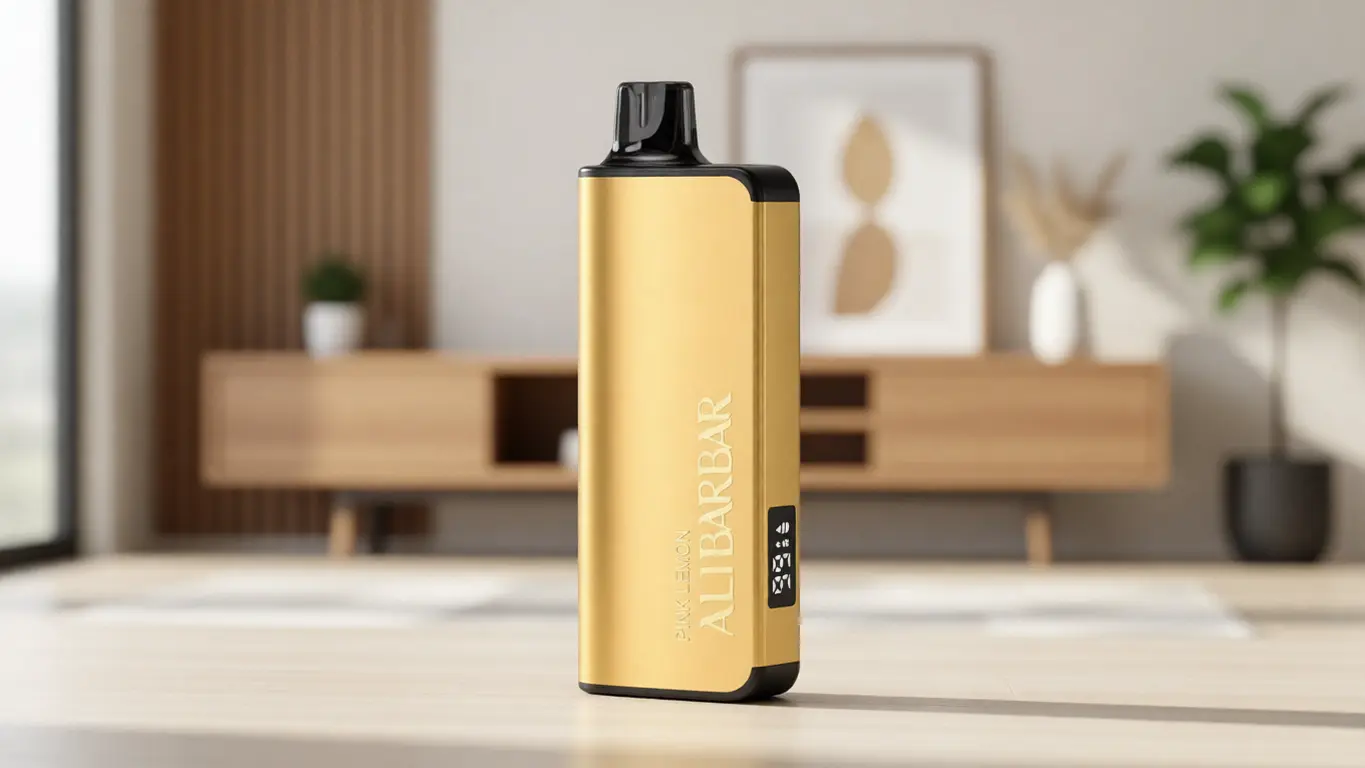
Consider the ALIBARBAR INGOT 15000, a device that specifies approximately 15,000 puffs with a 50 mg/mL nicotine salt formulation. The internal reservoir holds around 15 mL of e‑liquid. That gives a total nicotine content of 750 mg (15 mL × 50 mg/mL). Applying a 50% absorption estimate, the system delivers roughly 375 mg of bioavailable nicotine over its full operational life. Using a middle‑range cigarette absorption value of 1.2 mg per cigarette, that is in the vicinity of 310–320 cigarettes.
A similar calculation for the ALIBARBAR INGOT 9000 (9,000 puffs, ~9 mL, 50 mg/mL) yields about 450 mg total nicotine → ~225 mg absorbed → approximately 185–190 cigarettes.
These numbers are deliberately labelled as “approximate.” They assume consistent puff volume and a constant output rate throughout the device’s lifespan — things no disposable can guarantee absolutely. But for a user who smokes a pack (20 cigarettes) per day, the INGOT 15000 suggests a rough equivalent of 15–16 days of smoking, while the INGOT 9000 sits closer to 9–10 days.
Closed‑System Pod Devices
A popular alternative is a closed pod system using 20 mg/mL nicotine salt pods. A typical pod holds 2 mL of liquid, so 40 mg total nicotine per pod. At 50% absorption, that’s 20 mg absorbed nicotine per pod, or roughly 16–17 cigarettes per pod. Most manufacturers estimate 200–300 puffs per pod, which works out to roughly 10–15 puffs per cigarette equivalent — a figure that aligns with many users’ informal observation that a few minutes on a pod device feels comparable to one cigarette.
Open‑System Sub‑Ohm Devices
At the other extreme, a sub‑ohm tank filled with 6 mg/mL freebase liquid may consume 5 mL per day for a heavy user. That’s 30 mg total nicotine, or about 15 mg absorbed — equivalent to only 12–13 cigarettes over a full day. Yet the vapour volume is substantial, and the behavioural pattern more closely resembles hookah‑style use. The cigarette analogy breaks down here; these devices serve a different need altogether.
Notice that none of these numbers are precise. The value of running the calculation lies not in obtaining a definitive answer, but in developing an intuition for the orders of magnitude involved — and in recognising when a device’s stated puff count or tank capacity is likely to translate into days of use that match your routine.

A Practical Framework for Estimating Your Personal Equivalence
Given the variability, a user‑friendly estimation process looks more like a series of diagnostic questions than a single formula.
Quantify your cigarette baseline. How many factory‑made cigarettes do you actually smoke per day? If you roll your own, be aware that the nicotine content can differ from tailor‑mades.
Identify the device’s total nicotine payload. For a disposable, this is the e‑liquid volume multiplied by the stated nicotine concentration. For a pod system, it’s the pod volume times concentration, and you can multiply by the number of pods you go through per day or week.
Apply an absorption correction. For most modern devices in the medium‑power range, using 0.5 (50%) absorption is a reasonable starting point. If you vape with very deep lung inhales and hold the vapour, the figure may be higher; if you take quick mouth‑to‑lung draws, slightly lower.
Divide by your per‑cigarette absorbed nicotine. Use 1.2 mg as a representative figure for a standard factory cigarette. If you were a light smoker of ultra‑low yield cigarettes, you might use 0.8 mg; for unfiltered or roll‑your‑own, 1.8 mg may be closer.
Calculate days of use from puff count or reservoir size — but treat the puff count with healthy scepticism. Puff counts on disposables are based on a laboratory puff profile (commonly 1–2 seconds, small volume). Your real‑world puffs may be twice as long. A device rated for 9,000 puffs may deliver 4,000 in your hands. Observing how long a device lasts relative to your cigarette consumption is ultimately more reliable than trusting the spec sheet.
If you apply this framework and arrive at a figure that seems implausible — say, your 15,000‑puff device should last a month but is empty in a week — then either your inhaling is much longer than the test standard, the device’s total liquid volume has been mis‑estimated, or the puff‑to‑liquid conversion is off. This discrepancy is itself useful information for future purchase decisions. Many adult users who track this over time find that devices with clearly communicated specifications, sourced through retailers that verify those specs, produce the most predictable results.
Common Selection Errors and Industry Patterns
Through extended observation of user behaviour, certain patterns emerge that consistently lead to disappointment. These are rarely discussed explicitly, yet they shape satisfaction more than any marginal difference in device specifications.
Over‑Indexing on Puff Count Alone
A device advertising 15,000 puffs invites the assumption that it will last three times longer than one advertising 5,000 puffs. In practice, the relationship between claimed puff count and actual days of use is far looser, because the underlying e‑liquid volume and concentration determine the total nicotine budget. A 5,000‑puff device using 20 mg/mL liquid may deliver less total nicotine than a 3,000‑puff device using 50 mg/mL. Treat puff count as a secondary indicator; total nicotine content is primary.
Assuming Visual Similarity Equals Equivalent Engineering
Two cylindrical disposables may look nearly identical on a shelf, yet one may use a mesh coil and precisely controlled wicking that maintains output consistency for 80% of its rated life, while the other may experience a noticeable decline after half the liquid is consumed. This is not always evident from external inspection, which is why supply chain integrity and factory certification matter. Devices from an authorised channel are more likely to perform as documented.
Undervaluing Modularity in Total‑Cost Calculations
A sealed disposable with 15 mL of 50 mg/mL liquid at a given price might appear more economical than a refillable pod system, but the total‑cost‑per‑milligram of absorbed nicotine can be surprisingly close once pod replacements are factored in. More importantly, a device that dies without warning strands you with no remaining functionality, whereas a modular system with rechargeable batteries and replaceable pods maintains readiness. This hidden lifecycle cost often becomes apparent only after several unsatisfactory experiences.
Confusing Category Terminology with Performance
The term “disposable” covers everything from 300‑puff compact units to the 15,000‑puff devices discussed above. Yet users sometimes apply assumptions from one subcategory to another, expecting a high‑capacity device to suffer the same performance fall‑off as a low‑capacity one, or vice‑versa. Industry‑level recognition of subcategories — compact, standard, high‑capacity — would reduce confusion, but until that becomes common, the burden remains on the consumer to read specifications carefully.
Frequently Asked Questions
Q: How many cigarettes does one disposable vape equal?
A: There is no fixed conversion. A rough calculation based on total nicotine content and absorption suggests that a high‑capacity device like the ALIBARBAR INGOT 15000 might approximate 300–320 cigarettes, but individual usage patterns and device consistency can shift this by ±30%.
Q: How many puffs of a vape equal one cigarette?
A: Under laboratory puff conditions (1–2 seconds, small volume), many sources cite 10–15 puffs as feeling roughly equivalent to one cigarette, but longer, deeper puffs can bring that number down to as few as 5. The nicotine strength of the liquid is the primary driver.
Q: Is the nicotine from vaping absorbed the same way as from smoking?
A: No. Cigarette smoke delivers nicotine in a burst via particles that cross the blood‑brain barrier rapidly. Nicotine salt e‑liquids approach that speed, while freebase nicotine absorbs more gradually. Additionally, vaping does not generate the same level of monoamine oxidase inhibitors found in tobacco smoke, which alters the subjective satisfaction for some individuals.
Q: How can I verify that a device’s stated nicotine content and puff count are accurate?
A: Independent third‑party verification of every batch is rare for consumer devices. The most practical approach is to purchase from retailers that source through authorised, factory‑certified channels and that stand behind their product descriptions with clear post‑purchase support. This reduces the likelihood of receiving a product that deviates significantly from its specifications.
Q: What should I do if a device runs out of power before the stated puff count is reached?
A: A rechargeable device will eventually exhaust its e‑liquid, not its battery. If a device loses power and does not recharge, it may be a manufacturing defect. Contact the retailer; reputable operators will investigate and provide a remedy. Battery‑life expectations should be part of your pre‑purchase evaluation.
Q: Are all 50 mg/mL products equivalent?
A: Far from it. The efficiency of the atomiser, the quality of the nicotine base, the pH of the formulation, and the wicking material all affect how much nicotine actually makes it into the aerosol. Two devices with identical labelled concentration can deliver noticeably different amounts of bioavailable nicotine.
Q: How many mg of nicotine per mL should I choose to match my cigarette habit?
A: Heavy smokers (over 20 cigarettes per day) often gravitate toward higher concentrations (35–50 mg/mL salt) from compact devices, while lighter smokers may find 20 mg/mL more comfortable. The device’s power and your inhalation style also matter, so some experimentation is inevitable. Start lower than you think you need; you can always take more puffs.
Q: How should I interpret puff‑count claims?
A: As comparative, not absolute. A 15,000‑puff device generally contains roughly three times the liquid reservoir of a 5,000‑puff device from the same manufacturer, but your actual puff count will depend on the length and intensity of each draw. Use the number to gauge capacity differences, not to predict calendar days.
Q: Why do some devices feel stronger than others even with the same nicotine strength?
A: Coil design (mesh vs. wire), airflow restriction, and the temperature curve programmed into the device all affect the volume and character of the aerosol. A tighter draw with higher heat can produce a more potent sensation, even at identical concentrations.
Q: Is vaping less nicotine‑efficient than smoking?
A: Bioavailability is generally comparable, but the behavioural ritual is different. Many users vape more frequently because the device is always available and the social restrictions are fewer, which can lead to higher total daily nicotine intake. Conscious monitoring of usage patterns is the only reliable protection against inadvertently increasing consumption.
Making Sense of the Numbers Without Losing Context
The question “how many cigarettes equal one vape” is, in the end, the wrong question. It pretends that a modern personal electronic device is a simple nicotine dispenser when it is actually a system whose output depends on a dozen interacting variables. The right question is: “Given my smoking pattern, how can I choose a device that gives me a comparable level of satisfaction while giving me the ability to manage my nicotine intake predictably?”
Answering that requires honest self‑observation, basic arithmetic, and specifications that can be trusted. Specifications are only as good as the chain that delivers them. When a retailer can trace every unit back to an authorised factory run and is willing to state its specifications without exaggeration, the consumer is on solid ground. That is the standard OZVAPE Shop sets for its ALIBARBAR collection — not because the numbers are magic, but because they’re real enough to build a plan around.
Your routine, your preferences, and your tolerance are unique. No chart will ever replace the direct feedback of using a device and observing how long it lasts, how it makes you feel, and how it fits into your day. The purpose of the framework above is to give you a way to interpret that feedback so that each successive choice is better informed than the last.