
VAPE FAQs
How Many Calories Per Puff Of A Vape?

Jun
If you have ever paused mid‑draw and wondered how much energy — in the form of calories — you might be inhaling with each puff from a portable electronic device, you are not alone. This question surfaces in forums, support tickets, and quiet moments of personal curiosity, driven by a broader desire to understand exactly what enters the body. When browsing devices on a curated platform like OZVAPE Shop, the typical adult user is confronted with a wealth of technical specifications — battery capacity, rated puff count, heating element architecture — but rarely a straightforward, evidence‑based answer to the question of caloric content. This article addresses that gap. It does not promote a particular device or lifestyle; it simply unpacks the science of aerosol composition, explains why the answer is almost reassuringly small, and shows how device engineering plays an unexpected, indirect role in the consistency of that negligible number.
What’s Actually in a Puff? The Basis of Caloric Content
E‑Liquid Components and Their Energy Potential
The aerosol generated by a personal electronic device begins as a solution commonly known as e‑liquid. The core ingredients — propylene glycol (PG), vegetable glycerin (VG), flavour concentrates, and often a precise amount of nicotine — are well understood from a food‑science perspective. Both PG and VG are classified as carbohydrates in chemical terms, which means they carry a measurable energy value when metabolised. VG contributes approximately 4.3 kilocalories per gram, while PG delivers a slightly lower figure, closer to 4.0 kcal/g. Flavourings, even those perceived as sweet, are used at minuscule concentrations (typically below 2–3% of the total liquid mass) and seldom add a calorie count that registers on standard nutritional scales.
How Many Calories Travel in a Single Puff?
The key to answering the headline question lies in mass transfer, not ingredient chemistry alone. A typical puff from a modern device produces between 5 and 10 milligrams of total aerosol mass. If we assume a worst‑case scenario — a high‑VG liquid where 70% of the aerosol mass is VG — a 10 mg puff carries about 7 mg of VG. Multiply 0.007 grams by 4.3 kcal/g, and the result is approximately 0.03 calories per puff. In a more moderate configuration (50 % VG, 6 mg puff mass), the figure falls to roughly 0.01 calories. To put that in perspective, you would need to take over 3,000 such puffs to reach the energy equivalent of a single small apple — a sustained usage level that far exceeds what any responsible adult would attempt in a day.
Does the Body Actually Absorb Inhaled Calories?
A calorie counted on a label is a calorie that undergoes digestion and absorption through the gastrointestinal tract. Inhalation is a different route entirely. The lung’s primary job is gas exchange; it is not equipped to efficiently absorb viscous aerosol droplets into systemic circulation as a direct energy source. Much of the inhaled VG and PG is either exhaled visibly or trapped in the upper airway and later cleared through normal mucociliary processes. Even the portion that does enter the bloodstream follows metabolic pathways that do not translate, gram for gram, into usable energy the way ingested food does. No credible nutritional study has suggested that routine use of personal electronic devices meaningfully contributes to daily caloric intake. The short, data‑backed answer to the original question is: an individual puff delivers an energy quantity so close to zero that it has no measurable impact on body weight or metabolic balance.
Why Consistency in Device Performance Matters — Even for a Trivial Calorie Count
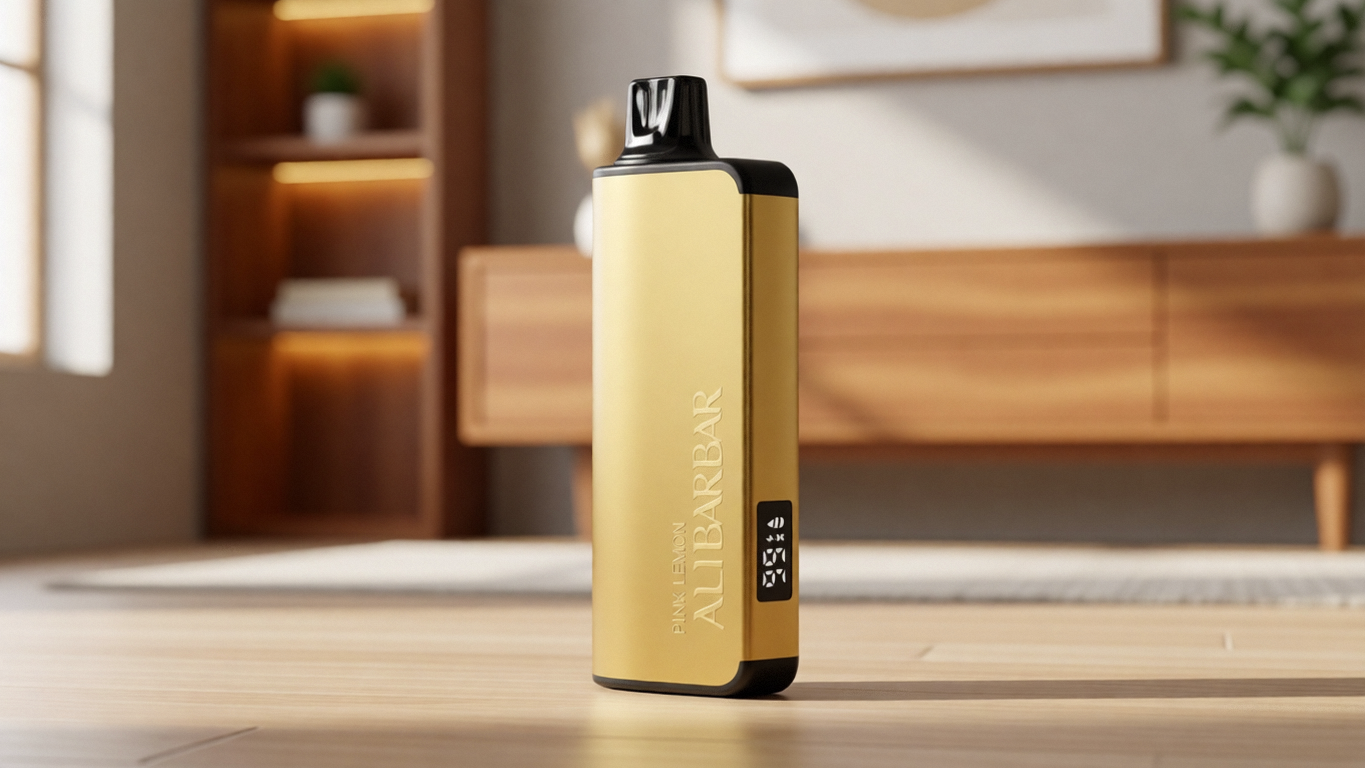
If the calorie number is already negligible, why does device engineering enter the conversation at all? The answer lies in a broader principle of product reliability: users who value transparency about what they are consuming will naturally gravitate toward devices that perform predictably puff after puff. Inconsistent vapour output not only clouds the caloric picture (by varying the mass delivered per draw) but also erodes the user’s confidence in the device as a whole. This is where the design philosophy behind the ALIBARBAR range — available through OZVAPE Shop — illustrates a relevant point without being the subject of the article.
Heating Element Architecture and Vapour Output Stability
The heart of any device is its atomiser. Budget‑oriented units often employ simple round‑wire coils that exhibit gradual resistance drift over their operational life, causing the aerosol density to shift subtly from one hour to the next. In contrast, more deliberately engineered systems — including the mesh‑based architecture found in ALIBARBAR’s INGOT series — maintain a larger, more uniform heating surface. This design reduces the likelihood of hot spots and ensures that each activation draws an amount of e‑liquid that stays within a narrow band. While the difference in calories per puff remains vanishingly small, the stability of output removes one more variable for anyone who prefers to track their usage patterns precisely.
Power Management and Status Transparency
Devices without regulated output tend to produce weaker aerosol as the battery voltage sags, particularly toward the end of charge. This introduces an unintentional variability: the morning puffs might carry slightly more mass than the evening puffs. ALIBARBAR’s engineering explicitly addresses this through onboard power management that compensates for battery decline, keeping the effective heating temperature steady until the cell is exhausted. Combined with clear, unambiguous status indicators that tell the user exactly when power is low, the device eliminates the guesswork that plagues less refined alternatives. For the calorie‑conscious user, this means the per‑puff energy calculation stays constant regardless of battery state — a minor but real reassurance.
Physical Design, Airflow, and the Illusion of “More”
How a device feels during use can influence the user’s perception of intake. A tight draw (mouth‑to‑lung) naturally limits the puff volume, while an open direct‑lung airflow encourages longer, deeper inhalations that consume more e‑liquid per session. ALIBARBAR’s product range acknowledges this by offering discreet, pocketable designs with carefully tuned airflow resistances that match their intended usage context — a full workday, social setting, or travel. The caloric outcome remains inconsequential, but the relationship between physical design and actual consumption rate is a nuance that discerning users learn to evaluate.
Choosing a Device When Predictability Is a Priority
If you accept that the caloric content of a single puff is not a health concern, the real takeaway shifts toward device selection criteria that matter every day: consistent output, honest puff‑count ratings, and manufacturing integrity. ALIBARBAR’s INGOT 9000 and INGOT 15000, both available through authorised channels, were built for users who dislike carrying a backup device because the first one became unpredictable after a few hours. Their battery capacity and liquid reservoir are matched so that neither component runs dry prematurely — a detail that quietly improves the user experience far more than any calorie calculation ever could.
Other widely distributed device families pursue different priorities. Some compact units prioritise absolute minimalism at the cost of transparency (no power‑level indicator, no consistent vapour volume under varying battery loads). Larger refillable systems offer maximum customisation but demand the user’s willingness to monitor coil condition and wicking performance. Neither approach is wrong, but they serve different temperament types. ALIBARBAR occupies a middle ground — a sealed, maintenance‑free unit with enough engineering underneath to keep each day’s usage identical to the last. For the individual who simply wants a dependable tool, this alignment of design and user expectation becomes the deciding factor.
A Practical Framework for Evaluating Device Consistency
Rather than advising which brand to pick, a more useful contribution is to equip you with a set of diagnostic questions that can be applied to any personal electronic device, regardless of manufacturer:
Does the device specify regulated output? Look for language around constant voltage or temperature control. Without it, assume vapour production will weaken as the battery depletes.
What is the coil surface area and material? Mesh arrangements generally produce more even heating than single‑wire coils, reducing puff‑by‑puff variance.
Are status indicators clear and actionable? A blinking light that requires a manual to decode introduces friction. The best devices communicate remaining capacity at a glance.
What do long‑term reviews say about end‑of‑life behaviour? A device that performs identically on puff 1 and puff 950 out of a rated 1000 demonstrates quality power management.
Is the air pathway designed for your typical draw style? If you naturally inhale deeply, a pen‑style unit with a very loose airflow may lead you to consume more e‑liquid per session than a device with a tighter, more cigarette‑like draw.
These criteria form a practical checklist that takes less than five minutes to apply yet consistently separates devices that honour their published specifications from those that treat numbers as marketing placeholders.
Common Errors People Make When Thinking About Calories and Vaping
1. Assuming “Sweet Taste = High Sugar/Calories”
Many flavour concentrates use sweeteners like sucralose or ethyl maltol, which provide a sweet taste at concentrations far below a milligram per millilitre. The caloric contribution from these trace additives is practically non‑existent. The sweet sensation is a sensory trick, not a nutritional event.

2. Believing Zero‑Nicotine Means Calorie‑Free
Nicotine itself has negligible energy content, but the base of a nicotine‑free e‑liquid is still a mixture of PG and VG. The calorie count per puff is essentially the same whether nicotine is present or not. The absence of nicotine does not magically remove the VG or PG.
3. Confusing Inhalation Dose With Oral Ingestion
A user who accidentally touches e‑liquid to the tongue and swallows it will absorb calories through normal digestion. Inhalation, however, bypasses that pathway. The two routes yield wildly different metabolic outcomes, and the inhaled fraction has never been shown to contribute to weight gain.
4. Extrapolating Puff Calorie to Whole Device and Panicking
If one puff contains 0.03 calories, a 5000‑puff device could mathematically contain 150 calories total — less than a slice of bread. But this is an inappropriate aggregation, because the body does not treat inhaled VG as a food energy source. Treating the sum of vapour droplets as a meal plan leads to distorted priorities.
5. Undervaluing Device Consistency When Tracking Personal Habits
Users who wish to monitor every aspect of their consumption — be it for personal awareness, budget, or lifestyle reasons — sometimes overlook that an inconsistent device introduces far more noise into their data than the calorie count ever could. A device that delivers 8 mg in one puff and 5 mg in the next turns any calculation into a rough estimate at best.
Frequently Asked Questions
Q: Do vape puffs contain calories at all?
A: Yes, in a technical sense, because the base liquids PG and VG are energy‑containing compounds. However, the quantity per puff is on the order of 0.01–0.03 calories, and almost none of that is metabolised through the lungs.
Q: Can vaping make me gain weight?
A: There is no evidence that routine inhalation of e‑liquid aerosol causes weight gain. The caloric content is minimal, the lung’s absorption efficiency is poor, and the total daily exposure is dwarfed by even the smallest dietary intake.
Q: How many calories are in an entire disposable device?
A: If a device carries 10 mL of high‑VG liquid, the raw chemical energy value might be around 40–45 calories, similar to a few almonds. Yet because the route is inhalation, not digestion, the amount your body actually utilises is considered negligible for practical dietary purposes.
Q: Is VG calorie‑free?
A: No. Vegetable glycerin provides approximately 4.3 kilocalories per gram. It is used widely in food products and is metabolisable, but its energy contribution matters only when swallowed, not when inhaled.
Q: What about the sweet flavour? Isn’t that sugar?
A: The sweetness usually comes from non‑caloric or very low‑calorie sweeteners used in tiny amounts. Even when a flavour contains a sugar‑like molecule, the absolute quantity per puff is so small that it does not register on nutritional scales.
Q: Should I count vape calories in my daily food log?
A: There is no scientific basis to do so. The energy absorbed through inhalation is, for all practical purposes, below the threshold of measurement in a standard dietary assessment. You would gain more accuracy focusing on the creamer in your coffee.
Q: Can your lungs actually absorb calories from VG?
A: The lung can absorb small molecules, but VG is a viscous, hygroscopic liquid that tends to be either exhaled or trapped in airway mucus. Even if a fraction enters the bloodstream, it is not processed as a direct caloric source in the way that glucose from digestion would be. The net metabolic effect is functionally zero.
Q: Why do people keep asking about vape calories?
A: The question often arises from a commendable desire to understand exactly what goes into the body. In a world where food labels are detailed, the absence of clear nutritional information on a product that is inhaled creates understandable curiosity. A platform like OZVAPE Shop, by providing detailed device specifications and transparent sourcing, addresses part of that information gap — even if the specific calorie figure turns out to be of no practical consequence.
Q: Do different device types change the calorie per puff?
A: In theory, a high‑power sub‑ohm device that produces denser clouds will transfer more e‑liquid per puff, so the per‑puff calorie count rises proportionally. But even at extremes, a single puff might reach 0.1 calories — still not worth tracking. Moreover, regulated devices (like those in the ALIBARBAR range) keep this vapour volume consistent, whereas unregulated units drift.
Q: What if I swallow some e‑liquid by accident?
A: Swallowing is a completely different pathway. A small inadvertent ingestion should be treated seriously because the liquid is concentrated; even a few millilitres could introduce a noticeable calorie load and, more importantly, nicotine if present. This is why child‑resistant caps and safe handling are critical. For inhaled use, however, the scenario does not apply.
Conclusion
The question “how many calories per puff of a vape?” has a data‑driven answer: an amount so small that it lies beyond any reasonable nutritional or metabolic concern. The real value of posing the question is that it signals a user’s deeper interest in understanding their device — what it delivers, how consistently it performs, and whether the product’s engineering aligns with the promises on its packaging.
When you access a device through a channel like OZVAPE Shop, the broader benefit is not the calorie count itself, which is trivial, but the availability of standardised, honest product information that lets you evaluate factors that genuinely shape your daily experience: thermal management, status transparency, and long‑term build quality. The ALIBARBAR collection, as one example, embodies a design ethos that treats predictable, even output as a baseline requirement, not a premium feature.
The right device is the one that matches how you actually live — your routine, your preference for feedback, your tolerance for carrying spares. If it also happens to make the negligible caloric conversation irrelevant through sheer consistency, that is simply a sign of thoughtful engineering. In the end, an informed choice is always a more satisfying one than a purchase driven by attention‑grabbing claims, and understanding the real numbers behind the puff is the first step toward making one.