
VAPE FAQs
How Many Calories Are In A Vape Hit?
Oct
The Negligible Calorie Count of a Vape Hit — and What Should Concern You Instead
The question arrives in search bars with surprising regularity: How many calories are in a single vape hit? It reflects a perfectly reasonable curiosity, especially among adults who track nutritional intake or who have encountered conflicting whispers about the caloric content of inhaled aerosols. The straightforward answer — grounded in respiratory physiology and the composition of e‑liquids — is that the effective caloric value of one draw from a personal electronic device is functionally zero. To understand why is to understand the difference between ingestion and inhalation, and to recognise that the real variables worth your attention have nothing to do with calories and everything to do with engineering integrity, material safety, and supply chain transparency.
The two carrier fluids that dominate the market — propylene glycol and vegetable glycerin — are, in edible form, caloric. Vegetable glycerin contains approximately 4.32 kilocalories per gram, and propylene glycol roughly 4 kilocalories per gram. However, these values become irrelevant when the substances enter the body through the pulmonary route without being swallowed. The minuscule mass of aerosolised liquid drawn into the mouth and lungs during a typical two‑second puff is measured in micrograms, not grams. Even if every microgram absorbed were metabolised identically to an ingested calorie — which it is not, because hepatic and enteric pathways differ — you would struggle to reach one‑tenth of a single kilocalorie across an entire day of heavy use. Put plainly, a vape hit will not alter your daily energy balance in any measurable way.
This brings us to a more important realisation: the popular fixation on calorie counts distracts from the parameters that genuinely influence user satisfaction, device longevity, and personal wellbeing. When you purchase from a curated platform like OZVAPE Shop, you are not buying a promise of zero calories; you are buying documentation, batch traceability, and an inventory selected to eliminate the everyday frustrations that erode trust. The remainder of this article reframes the conversation around the factors that matter.
What Actually Deserves Your Attention: Core Engineering and Design Factors
A portable electronic device is an electromechanical system. Its behaviour over weeks and months is determined not by superficial specifications but by how well its internal architecture manages heat, power, and user feedback. The following framework, drawn from extended observation of devices in daily use, identifies the areas where informed evaluation pays the greatest dividends.
Internal Architecture and Output Consistency
The heating element is the heart of any device. Designs vary from simple wire‑and‑wick assemblies to more sophisticated mesh or porous ceramic formats. The critical variable is not the material alone but the thermal management — how evenly the element distributes heat across the liquid‑saturated medium. Poorly managed hotspots cause progressive degradation in the latter half of a device’s operational life, producing an output that tastes thin, harsh, or inconsistent.
Users frequently report frustration when a device that performed beautifully for the first third of its rated capacity turns unreliable thereafter. This is almost always a problem of heat distribution, not liquid volume. An engineered solution — such as a mesh structure with millisecond‑level ramp‑time calibration — keeps the temperature profile stable even as the liquid reservoir runs low. When evaluating a device, ask whether the manufacturer describes its heating architecture in detail, or merely lists a puff count.
Power Management and Status Transparency
Nothing destroys confidence faster than a device that stops working without warning. The relationship between the power source and the output regulation circuitry determines not only how long the device runs but also how gracefully it shuts down. Crude voltage‑decay designs allow output intensity to sag as the charge depletes, while regulated constant‑output circuits hold performance steady until protection circuits engage.
Equally important is status transparency. A single‑colour LED that blinks identically for “low charge” and “short‑circuit fault” creates ambiguity that forces users to carry a backup device unnecessarily. A thoughtfully designed product includes differentiated feedback — perhaps a graduated indicator or a haptic pulse — that lets you plan your day without guesswork. The hidden cost of ambiguity is the extra device you carry and the anxiety that accompanies it.
Physical Design and Material Durability
A device is a physical object that spends its life in pockets, bags, and hands. Beyond aesthetics, the durability of surface treatments under friction and exposure to skin oils matters enormously. Soft‑touch coatings that feel luxurious on day one can become tacky or peeled by week three. Anodised, bead‑blasted, or fine‑grain textured metals and high‑durometer polymers often outlast their more visibly appealing counterparts.
Mouthpiece geometry influences prolonged‑use comfort. A contour that aligns naturally with lip anatomy reduces the micro‑adjustments that lead to fatigue during extended sessions. These are not luxury features; they are ergonomic decisions that affect whether you reach for the device or leave it behind.
Modularity and Lifecycle Flexibility
Design philosophy splits broadly into sealed units, rechargeable‑but‑sealed systems, and open‑platform modular architectures. Sealed units offer simplicity at the expense of replacement cost; modular systems let you replace only the depleted component — often at significant economic and environmental advantage. The choice is not between right and wrong but between priorities: minimal upfront involvement versus long‑run cost control and waste reduction. Recognising where you stand on that spectrum before you shop transforms the selection process from a gamble into a calculation.
Applying These Criteria to Real‑World Options
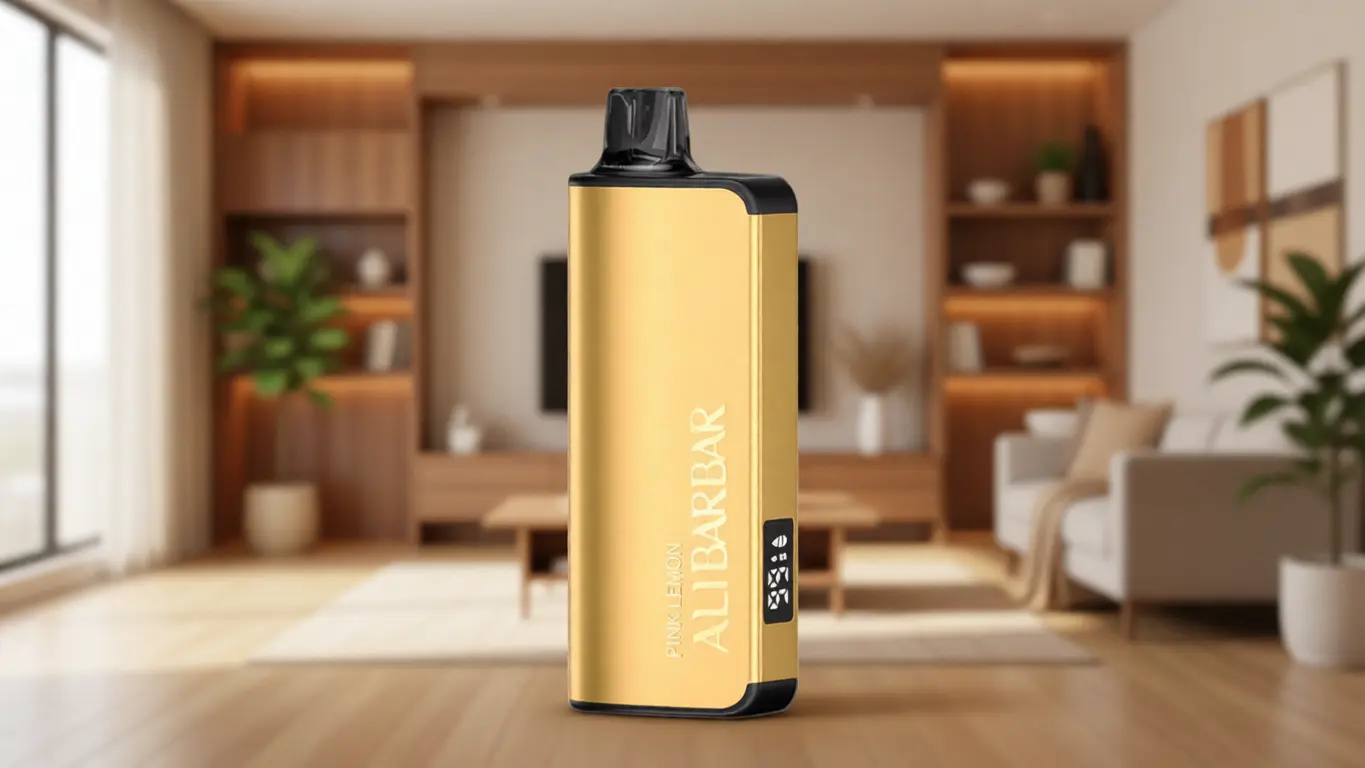
No single device satisfies every user, but some families of products show a consistency of engineering that makes them useful reference points. The ALIBARBAR collection, accessible through OZVAPE Shop, illustrates how different architectures map to different need‑states.
Consider the ALIBARBAR INGOT 9000. Its compact form factor is built around a regulated output circuit that maintains consistent delivery until the liquid reservoir is exhausted. The mouthpiece geometry is noticeably slim, suited to users who prioritise discretion and pocket‑friendly dimensions. The trade‑off is in total capacity, but for someone who values predictability in a small package, the engineering logic is sound.
The INGOT 15000 extends that blueprint into a higher‑capacity chassis. The additional space allows for a larger power cell and more elaborate thermal management, which reduces the performance fade commonly observed in smaller devices pushed to their thermal limits. It is a workhorse configuration, and the status indicator is graduated, reducing the uncertainty that plagues many long‑runtime devices.
The Ice Adjust 12000 introduces user‑tuneable output intensity, a feature that addresses the common frustration of “too much” or “too little” with fixed‑output devices. The adjustment mechanism is mechanical, not software‑dependent, which simplifies reliability. This modularity of experience — even within a sealed system — speaks to a design team that understands user variability.
Other brands populate similar categories, and the same evaluation lens applies. The point is not brand allegiance but pattern recognition: once you know what to look for, you can sort any product by whether it solves or ignores the frustrations that genuinely bother you.
A Practical Framework for Evaluation
You do not need an engineering degree to separate thoughtfully designed devices from those that will let you down. Apply this five‑step diagnostic to any product you consider:
Status feedback quality: Does the device tell you clearly when it is running, when it is low, and when it has shut down for safety? If not, budget for a backup.
Thermal consistency description: Look for terms like “regulated output,” “mesh coil,” or “temperature control.” Vague language often conceals simple wire‑and‑wick designs prone to late‑life fade.
Surface durability: Check product imagery for close‑ups of the finish. If the marketing avoids showing the device after simulated pocket wear, assume the surface is not a priority.
Modularity alignment: Decide before you shop whether you are willing to replace the entire unit each cycle or prefer to swap only the depleted element. This single decision eliminates entire categories from consideration.
Sourcing verification: A device is only as trustworthy as the supply chain behind it. Platforms that publish their sourcing policies and batch‑traceability documentation remove a layer of risk.
Using standardised specification comparisons — where you can, for instance, place the INGOT 9000 beside a competitor’s device and evaluate power management, indicator type, and material finish side by side — reduces the decision friction that drives impulsive purchases.
Common Selection Errors and Industry Observations
After years of analysing how users approach this category, certain patterns of mis‑evaluation appear repeatedly. Avoid these, and your satisfaction rate will rise sharply.
Overweighting a single numeric metric: Puff count is the most notorious. A device rated at 9,000 puffs means nothing without understanding the puff duration, intensity level, and power‑management strategy used to derive that number. Two devices claiming the same count can deliver vastly different real‑world endurance.
Assuming visual similarity equals engineering parity: The external resemblance of many compact devices leads users to believe they are interchangeable. Internally, a $3 heating element and a $0.35 heating element produce radically different longevity and consistency. If the price seems too low for the claimed specifications, the cost has been removed from components you cannot see.
Undervaluing modularity in cost‑per‑use calculations: A $30 sealed device that lasts one week and a $60 modular system where you replace a $10 pod weekly have identical first‑month costs but diverge dramatically by month three. The cheaper upfront option is often more expensive over any reasonable time horizon.
Confusing category terms with technical specifications: “Mesh coil” is a broad term. There are unregulated mesh designs and precisely calibrated, rapid‑ramp mesh architectures. The difference becomes apparent around 40% of the rated lifecycle. Read past the label.
From an industry vantage point, the market continues to segment between brands that invest in repeatable manufacturing tolerances and those that compete on price alone. The latter group rarely documents its supply chain, which creates accountability vacuums. The former — particularly those that align with authorised distribution networks like the one OZVAPE Shop maintains — treat batch consistency as a non‑negotiable cost of doing business.
Frequently Asked Questions
Q: Do I absorb any calories at all from a vape hit?
A: The substances involved are not metabolised through inhalation as they would be through ingestion. Any incidental condensation that is swallowed is negligible, and the pulmonary absorption route does not trigger the same metabolic calorie pathways. The practical intake is zero.
Q: Why do people think vaping might have calories?
A: Because propylene glycol and vegetable glycerin are caloric when consumed orally as food additives. The confusion arises from applying nutritional logic to an inhalation scenario, which is a category error.
Q: How can I verify that an ALIBARBAR device is authentic?
A: Genuine ALIBARBAR products distributed through OZVAPE Shop include batch‑level documentation and come from factory‑certified channels. Avoid units sold through informal marketplaces that cannot provide sourcing records.
Q: How many puffs will I really get from an INGOT 9000?
A: Under moderate, consistent usage with standard-duration draws, most users report performance in line with the rated specification. The key variable is draw length — shorter puffs extend total count, longer puffs reduce it proportionally.
Q: What should I do if a device stops working prematurely?
A: First check the status indicator for fault codes. If the issue persists, contact the retailer. Platforms that offer local, responsive support — rather than redirecting you to an overseas contact form — dramatically reduce resolution time.
Q: Are there health considerations beyond calories?
A: Yes. Device reliability, ingredient purity, and manufacturing quality directly affect exposure to unwanted by‑products. Choosing units from companies that document their materials and maintain consistent production standards is a meaningful step.
Q: Can I travel with these devices?
A: Most personal electronic devices are carry‑on compatible under current aviation regulations, but always check airline policies and destination laws. Devices with integrated power cells generally require specific handling.
Q: How should I store an unused device?
A: Store in a cool, dry place away from direct sunlight and temperature extremes. The sealed construction of many modern devices protects the internal components, but environmental storage still affects long‑term reliability.
Q: What differentiates OZVAPE Shop from other retailers?
A: OZVAPE Shop operates on a model of authorised sourcing, published product specifications, and local accountability. When something goes wrong, you communicate with people who understand the product line and have the authority to resolve issues.
Q: Why does OZVAPE Shop focus on specific brands like ALIBARBAR?
A: Depth of relationship matters. By working closely with a limited set of manufacturers, OZVAPE Shop maintains the visibility into production batches and quality assurance that a broad‑spectrum catalogue cannot offer.
The Right Tools for an Informed Adult User
The calorie question is a distraction — a perfectly understandable one, born of a culture that teaches us to count units of energy in everything we consume. But the real variables that shape your experience with a personal electronic device are quietly structural: how it manages heat, communicates its status, and holds up to the physical demands you place on it every day. No puff will add a calorie to your tally, but a poorly engineered device will cost you time, money, and confidence.
At OZVAPE Shop, the curatorial philosophy reflects this understanding. Every ALIBARBAR unit in the catalogue — from the pocket‑conscious INGOT 9000 to the endurance‑tuned INGOT 15000 and the adaptable Ice Adjust 12000 — earns its place by solving real problems and leaving behind clear documentation. You are not buying a calorie count. You are buying predictability, material integrity, and the quiet confidence that comes when a device simply does what it is supposed to do, for as long as you expect it to.
The right choice is not the one with the most attention‑grabbing claim printed on the box. It is the one whose internal logic matches your actual daily routine. If you evaluate with that principle foremost, you will rarely be disappointed — regardless of which reputable brand you ultimately select.