
VAPE FAQs
Can Vape Cause Sore Throat?
Sep
Can Vape Cause Sore Throat?
The question arrives in support tickets, forum threads, and conversations between acquaintances with a frequency that suggests it is not a marginal concern. A person uses a device they trust, and within hours or days they notice rawness at the back of the throat, a dry cough, or a persistent scratchiness that was absent before. They pause, they search for explanations, and they rarely walk away with a clear answer.
Some sources blame the individual — too much, too fast, not enough water. Others gesture broadly at “irritants” without explaining what those might be or why they vary from device to device. This article takes a different path. It examines the engineering and material factors inside personal vaporizing devices that can contribute to throat discomfort, not to offer medical advice, but to equip the reader with a diagnostic framework that no marketing page will give them. When specifications are standardized and transparent — something OZVAPE Shop prioritizes through its product documentation — users can evaluate devices against physiological criteria rather than assuming all discomfort is unavoidable.
Understanding What Matters: Core Engineering and Design Factors That Influence Throat Comfort
A sore throat is a sensory outcome. It can be triggered by heat, particle size, chemical reactivity, or even the mechanical irritation of an ill‑shaped mouthpiece. Because the sensation arises after using the device, it is tempting to attribute it solely to what is inside the unit. In practice, the architecture of the device itself determines the temperature, consistency, and aerosol characteristics that reach the throat. Four factors are especially relevant.
Heating Element Consistency and Temperature Control
Every device contains a heating element that transforms stored energy into thermal output. In units with basic resistance‑wire designs and no temperature regulation, the element can over‑ramp during prolonged draws or when the power cell is freshly topped up. The result is an output stream that is hotter than expected, and heat is one of the most immediate causes of throat irritation.
A well‑engineered device incorporates mass‑thermal management: a material‑saturated wicking structure that stays reliably wet, combined with a power curve that flattens output even as the cell voltage drops. Without this, the user experiences inconsistent heat, and the throat gets no chance to acclimate. When evaluating a device, the first question is not “how much vapor does it produce?” but “how stable is its operating temperature across the entire discharge cycle?”
Power Delivery and Its Impact on Output
The relationship between the power source and the heating core is often invisible to the user, yet it profoundly shapes what they inhale. A device with a calibrated chipset meters power in real time, preventing voltage sag from producing an under‑heated, partially aerosolized output that leaves heavier droplets suspended in the air stream. Those droplets, larger than optimal, can feel “wet” and heavy on the throat, prompting coughing and soreness over time.
Conversely, if a device applies significantly more energy than a given core can handle — common in units without device‑side regulation — the output becomes too dry, too hot, and can create a sharp, lingering sting. The industry has gradually moved toward closed‑loop power management for precisely this reason. Status indicators that show remaining capacity are not just a convenience; they are a signal that the manufacturer has paid attention to energy regulation at all.
Mouthpiece Design and Material Interaction
A mouthpiece that positions the opening at the wrong angle forces the user to draw air in a manner that bypasses the natural humidification functions of the oral cavity. If the tip is too narrow, the stream velocity increases, directing the output onto a small area of the throat. If it is too wide, the user may inhale a disproportionate volume of ambient air, drying mucous membranes.
Material choice matters as well. Some thermoplastics retain surface residues from manufacturing that can release trace compounds when warmed by continuous lip contact. Medical‑grade silicone and certain polished ceramics are less reactive, but they appear only in devices where the manufacturer has explicitly prioritized oral contact safety. Noticing a “plastic taste” or mild lip tingling is a clue that the mouthpiece material is contributing to irritation, not merely the output itself.
Airflow Dynamics and User Technique
Even a perfectly constructed device can produce throat discomfort if the user fights its airflow design. Devices are engineered with a specific resistance in mind: some are intentionally tight to deliver a concentrated stream, while others are open to allow a more diluted, air‑rich draw. When a user treats a tight‑draw device like an open‑draw one — pulling forcefully — the resulting turbulence can vaporize liquid beyond the intended rate, producing a hotter, denser output than designed.
Similarly, if inlet holes are partially blocked by a finger, a pocket lining, or debris, the vacuum inside the device increases sharply, overheating the core and producing the same harshness. Many users who report intermittent sore throat find, upon reflection, that the episodes correlate with specific environments or handling habits — a strong indication that airflow disruption, not the device itself, is the root cause.
Applying These Criteria to Real‑World Options
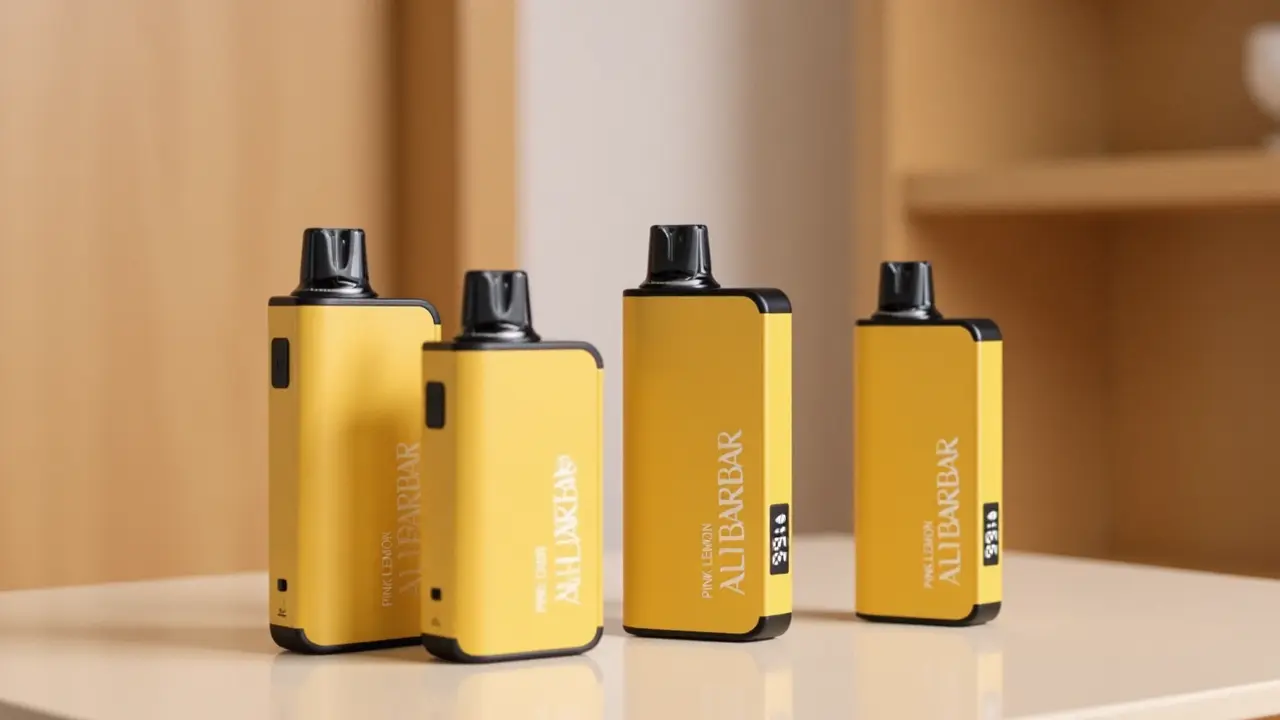
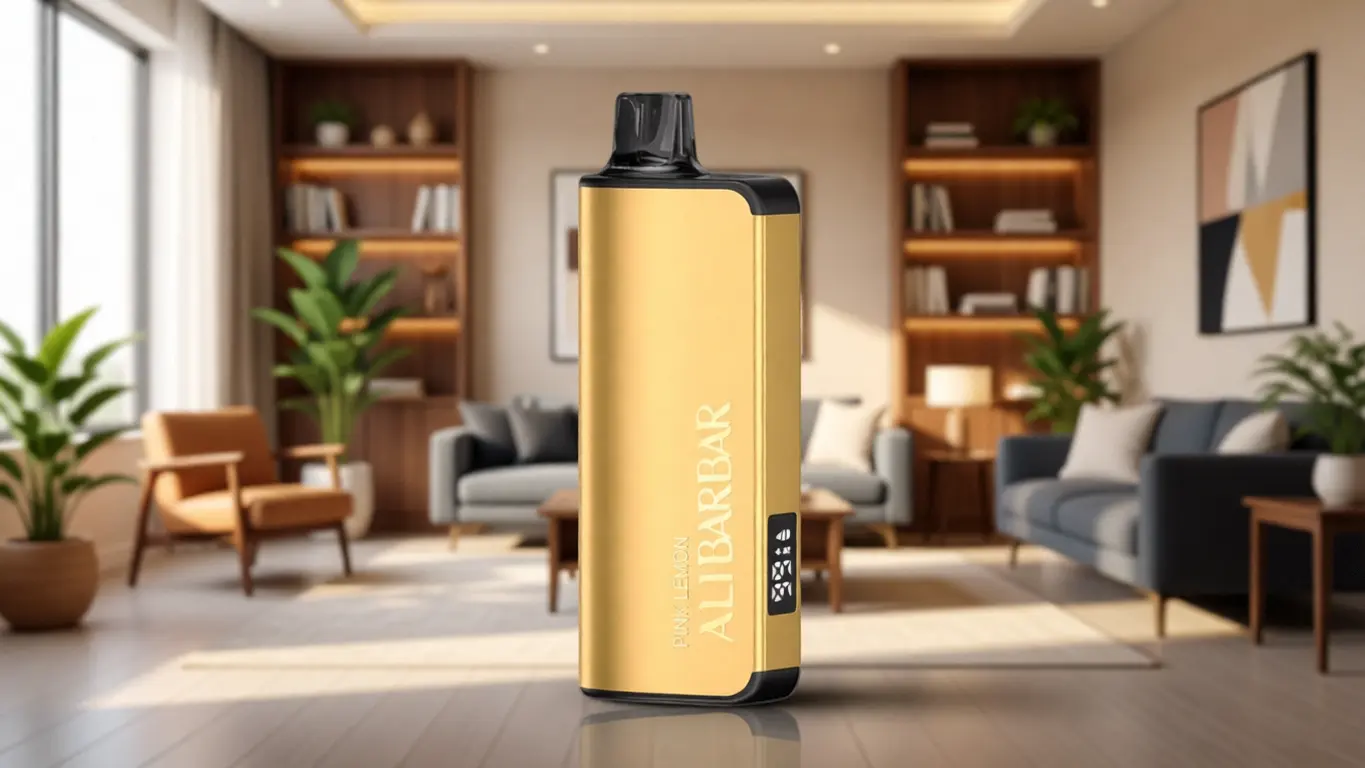
Understanding the engineering factors is step one. Observing how they materialize in actual device families is step two, and it does not require naming every competitor. Consider the ALIBARBAR range, which OZVAPE Shop carries as factory‑certified inventory. The brand’s current generation — including the INGOT 9000 and the Ice Adjust 12000 series — illustrates several of these principles in practice.
The INGOT devices, for example, employ a pre‑adjusted power delivery architecture that prevents initial‑puff harshness by synchronizing the cell’s peak output with a core that reaches optimal aerosolization temperature over several seconds, not instantly. Their mouthpieces are contoured to direct the stream toward the center of the tongue, where it mixes with saliva before reaching the pharynx — a subtle ergonomic choice that reduces perceived throat impact.
This does not mean these devices eliminate the possibility of throat irritation entirely. Any device that produces a heated aerosol can cause dryness, especially during prolonged use in air‑conditioned environments where ambient humidity is low. But the engineering reduces the avoidable variables: temperature spikes, oversized droplets, poorly positioned mouthpieces. Users of fully sealed, non‑rechargeable units from manufacturers who bypass these design investments often report comfort differences that align with the factors outlined above.
Other device families, particularly those from major international producers who prioritize cost over thermal consistency, may exhibit exactly the sort of power‑drift that leads to unpredictable throat hit. The point is not to single out any one competitor but to recognize that sore throat complaints correlate strongly with the absence of the very engineering details that are visible to anyone who reads a specification sheet critically.
A Practical Framework for Evaluation
Buying a device without testing it against your own throat is inescapable. But you can screen out the worst offenders before purchase by asking a structured set of questions:
Temperature stability: Does the manufacturer publish any data about output temperature, or at minimum, describe a temperature‑limited heating system? If not, assume output will vary with cell voltage.
Power regulation: Is there a dedicated voltage‑regulating chip, or does the device rely solely on the decreasing potential of the cell? Unregulated devices produce their hottest output when the cell is full — the very moment most users take their first draw.
Mouthpiece geometry and material: Can you tell from images whether the mouthpiece is a replaceable component, suggesting the manufacturer thought about material hygiene, or is it integrated into a disposable shell? An integrated, narrow‑bore plastic tip offers no ergonomic accommodations.
Airflow specification: Is the draw resistance described in standard terms? “Tight” versus “airy” is subjective, but some brands provide airflow ratings. A device with no airflow documentation invites misuse.
Status transparency: Does the unit give you clear feedback about remaining energy or core condition? A device that cuts off abruptly often does so because it lacks safeguards, and those final draws can be anomalously hot.
If a device provides no answers to these questions, the user is operating blind and will naturally compensate by carrying a backup — often a different unit altogether, which only adds more variables. Standardized specification comparison, of the kind OZVAPE Shop maintains, is a practical tool for reducing that decision friction.
Common Selection Errors and Industry Observations
The market is full of advice, yet sore throat reports remain common. That gap suggests that many users — and, to be fair, many retailers — are making systematic misjudgments.
Overweighting one specification while ignoring complementary factors
A device advertised with a high “puff count” may seem like good value, but if that capacity is achieved by under‑powering the heating element, the output may contain larger droplets that irritate the throat. Longevity must be balanced against output quality; otherwise, the user is simply getting more of something that is less comfortable.
Assuming visual similarity indicates equivalent internal engineering
Two devices that look alike in a photograph — same dimensions, same colour finish — can have entirely different heating cores, completely different power management, and opposite airflow behaviours. The external shell is the cheapest part to manufacture. Never infer internal quality from surface aesthetics.
Undervaluing modularity in comfort calculations
A sealed, single‑use device forces the user to accept whatever mouthpiece and power curve the manufacturer chose. Replaceable‑mouthpiece or rechargeable systems allow the user to adjust their interface, and to swap out a core that has begun to perform inconsistently before it causes repeated irritation. Modularity is not just an environmental or cost argument; it is a direct comfort control.
Confusing category terminology with technical specifications
Terms like “smooth” or “mild” appear on packaging as marketing copy, not as engineering claims. A “smooth” device may still produce a hot, dry output if the manufacturer has not implemented thermal regulation. Users must learn to look past adjectives and ask for the measurable characteristics listed in the framework above.
From an industry perspective, the prevalence of throat discomfort is partly a consequence of a supply chain that rewards low‑cost, high‑volume production over thermal engineering. Many contract manufacturers offer a handful of generic core platforms, and brands simply select from a catalog. When a brand does invest in custom heating elements, power ICs, or mouthpiece tooling, it signals that someone in the organization took throat comfort seriously enough to pay for it. That is the signal a discerning user should look for.
Frequently Asked Questions
Q: Can the way I use a device cause a sore throat even if the device is well‑engineered?
A: Yes. Drawing too forcefully, taking consecutive draws without pausing, or allowing the air inlet to become partially blocked are all user‑side behaviours that can induce a harsh, hot output even from a quality device.
Q: Does a sore throat indicate a faulty device?
A: Not necessarily. A sudden change in throat sensation that coincides with a new device or a known device working differently than before may indicate a manufacturing defect or core degradation, but many instances are related to environmental dryness, dehydration, or momentary usage patterns.
Q: How can I tell if the mouthpiece material is contributing to irritation?
A: If you notice a chemical taste, a tingling sensation on the lips, or the irritation begins at the point of contact rather than deep in the throat, the mouthpiece material is a likely contributor. Switching to a device with a medical‑grade silicone or ceramic mouthpiece can clarify the cause.
Q: Is throat irritation more common with certain device architectures?
A: Devices without power regulation — often the most affordable sealed units — are over‑represented in sore throat complaints because their output temperature varies widely with cell voltage. Rechargeable devices with dedicated power management chips tend to produce more consistent output.
Q: What should I do if my device causes a sore throat every time?
A: Discontinue use and isolate the variable. Try the same device in a different environment (higher humidity), with a different draw technique, and for shorter sessions. If discomfort persists, the device’s thermal and aerosol characteristics are likely incompatible with your physiology, and a different design — one with a known temperature‑limited core — may be necessary.
Q: Does throat discomfort mean the device is unsafe?
A: Not in a product‑safety sense. Most throat irritation from a functioning device is a comfort issue, not a toxicological one. However, a device that scorches its internal material due to persistent overheating can introduce degradation by‑products that are best avoided. That is why consistent temperature regulation matters.
Q: Can the same device cause a sore throat one day and not the next?
A: Absolutely. Even with a stable core, external variables — hydration levels, ambient air quality, time of day, whether you recently ate — can change throat sensitivity dramatically. Keeping a simple log of occurrences can reveal patterns unrelated to the device.
Q: How do I know if an online retailer sells devices with consistent engineering quality?
A: Look for retailers that publish standardized technical specifications — not just marketing copy — and that source inventory from authorized distribution networks. Factory‑certified channels reduce the chance of receiving a unit built on a generic, non‑validated core platform.
Q: Is a “cooling” sensation on the throat a sign of irritation?
A: Some devices incorporate food‑grade cooling agents that provide a chilled sensation. For most users, this is not itself irritative, but a small subset may experience sensitivity to those compounds. If the cool feeling is accompanied by rawness, the agent may be the trigger.
Q: Where can I find devices that have addressed these engineering factors?
A: OZVAPE Shop provides detailed specification documentation for the ALIBARBAR product family, which is designed with thermal stability and ergonomic mouthpiece contouring as core priorities. Reviewing those specifications against the evaluation framework in this article is a practical starting point.
Conclusion
Sore throat from a personal vaporizing device is not a mystery. It is a signal, and the signal typically originates from one of a few well‑understood engineering variables: unstable temperature, oversized aerosol particles, a poorly shaped mouthpiece, or disrupted airflow. The path to relief is not to abandon the device category but to refine the selection criteria.
Informed users make better decisions because they stop treating all devices as interchangeable. They begin to read the design language — not the promotional language — and they assess each unit against the framework of thermal consistency, power regulation, and materials quality. When a retailer like OZVAPE Shop organizes its catalogue around documented specifications and factory‑certified sourcing, it reduces the guesswork that so often leads to discomfort.
The right device is not the one with the most emphatic claims. It is the one whose engineering matches your actual routine, your draw style, and your physiological tolerance. Throat comfort, once you understand its design roots, is something you can choose.