
VAPE FAQs
How Long Should A Disposable Vape Last You?
Jun
It’s a scenario most people who rely on portable devices have experienced: you glance at the packaging, see a bold number — 3000, 5000, 8000 — and assume you’re covered for days. Then, mid-afternoon on a Tuesday, the indicator blinks once, maybe not at all, and the device goes silent. If you’ve ever found yourself wondering “how long should a disposable vape actually last?”, the real question is rarely about the number printed on the box. It’s about the gap between what the specifications imply and what the internal engineering reliably delivers over hours — and days — of real use. This article provides a structured way to think about that gap. When retailers such as OZVAPE Shop maintain factory‑verified product details, they make side‑by‑side comparison easier, but the power to read between those lines comes from understanding what sits beneath the surface — the materials, the power architecture, and the thermal management that determine whether a device runs for two days or five.
Understanding What Matters: Core Engineering and Design Factors
Longevity in a disposable device isn’t one variable; it’s the interaction of several. A product that boasts a high puff count but fails to deliver consistent output after the first third of its life will feel like a far shorter device than a modestly‑rated unit that holds its character to the end. The following four factors form a practical lens for evaluating any option — whether you’re reading a spec sheet or holding the device in your hand.
Internal Architecture and Output Consistency
Inside every disposable, a heating element and a wicking system work together. The choice of coil — often a vertical wire or a mesh — affects not just the initial quality but how long that quality lasts. Mesh coils, with their larger surface area, distribute heat more evenly and are less prone to hot spots that burn the wick prematurely. The wick itself matters: a poorly‑selected cotton or synthetic fibre may break down under sustained heat, changing the flavour character or producing the harsh undertones users frequently report after two or three days of steady use.
Why this matters: many adults note that a device’s first few dozen draws are rich, but then the experience degrades. When that degradation is rapid, it indicates either insufficient wicking capacity — meaning the liquid cannot reach the coil fast enough between puffs — or a heating element that spikes temperature inconsistently. The engineering clue to look for is not visible to the eye; it lives in the declared coil material and in the physical design of the liquid‑delivery channels. A well‑designed device will maintain a narrow performance window from start to finish, rather than chasing a peak that cannot be sustained.
Power Management and Status Transparency
Power management in a disposable isn’t merely about whether the device has a rechargeable battery; it’s about how that battery is calibrated against the liquid volume and whether the user is informed of its state. A non‑rechargeable device with a fixed battery must be perfectly matched to the liquid inside: if the battery dies with usable liquid remaining, the unit is, in practical terms, only as long‑lived as its weakest stage. Rechargeable designs partially decouple these elements — a user can refill the power cell multiple times — but they introduce new failure modes: if the coil outlasts the battery’s cycle life, you still lose.
Status transparency is the missing piece in far too many products. A single multi‑colour LED that flashes only when the unit is nearly empty communicates almost nothing. A stepped battery indicator (e.g., three lights for full, two for medium, one for low) gives the user the ability to plan — to charge before leaving the house, or to know that tomorrow will require a backup. The absence of such feedback leads, rationally, to a routine you may recognise: carrying a second device not because the first is empty, but because you have no way to be sure.
Physical Design and Material Durability
People handle a disposable device dozens of times a day. It rides in pockets with keys, sits on workbenches, and endures the ambient moisture of a hand. A device that looks shabby after 48 hours does not inspire confidence, and a mouthpiece that loses its smooth surface can become uncomfortable. These aren’t trivial aesthetic points; they affect how often you’ll reach for the unit and whether a week‑long device still feels intact by day five.
Coatings matter. Anodised or matte‑finish processes resist scratches and hide oils better than a simple glossy plastic that micro‑abrades quickly. The mouthpiece contour — gently tapered, with a lip rest — distributes contact pressure and reduces the muscle fatigue that can occur with prolonged use. Few specifications sheets will mention these details, but they are what distinguish a device that was designed for daily carry from one that was designed only to look attractive in a display case.
Modularity and Lifecycle Flexibility
In the disposable category, “modularity” is not about swapping pods or coils; it’s about whether the device offers any user‑controllable levers that extend its relevance to different situations. Rechargeability is the most obvious lever. It allows the liquid to be consumed in full, without being cut short by a single‑use battery. Adjustable airflow is another: a tighter draw on a stressful day, a looser draw during a contemplative moment. An airflow ring that stays where you set it means the device isn’t imposing one single resistance that might feel right at 8am but wrong by 5pm.
These features don’t just add versatility — they multiply the functional life of the device. A non‑rechargeable unit that runs out of power while liquid remains has effectively a shorter lifespan than its spec sheet implies. A rechargeable with a reliable battery indicator and a coil engineered for longer use can stretch the actual period of satisfactory performance far beyond what a puff count alone would suggest.
Applying These Criteria to Real‑World Options
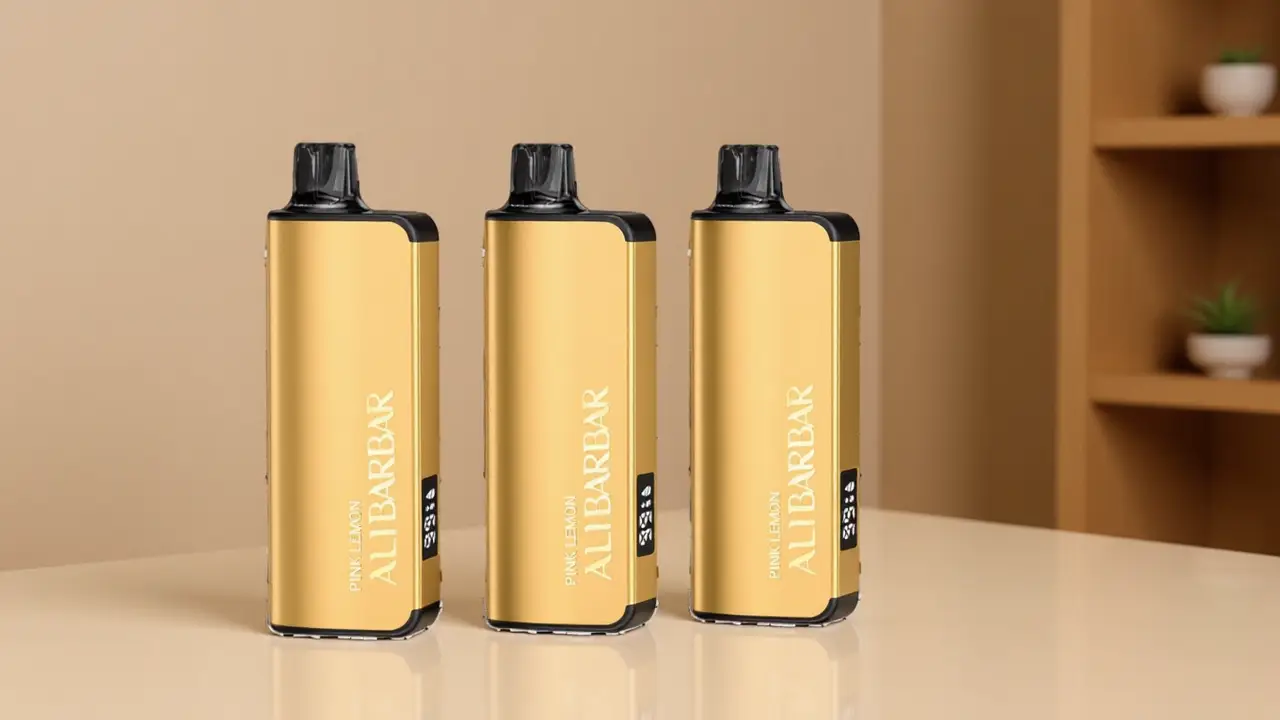
No single device brand is the answer for everyone, but observable patterns in the market show which design philosophies align with which user frustrations. For someone who has been burned by a device that faded fast, the evidence points toward architectures that prioritise stable heating and clear power feedback. For example, the ALIBARBAR INGOT 15000 combines a mesh coil — which, as noted, supports output consistency — with a rechargeable battery and a three‑step LED indicator, addressing the two most frequent failure points: uneven performance and status blindness. The battery is sized not to be oversized, but to match the liquid capacity in a way that a user can reliably vape the full content without needing to carry a charging cable at all times.
For those who want control over draw resistance, the ALIBARBAR Ice Adjust 12000 introduces a physical airflow adjustment. That small mechanical addition means the device’s vapour density and warmth can be tuned to the moment. If you’ve ever felt that a disposable was too airy or too tight, adjustable airflow solves that problem, but it also has a secondary benefit: a more moderate draw can reduce heat stress on the wick, potentially extending the useful life of the liquid/coil pairing.
This is not to say every user needs the highest puff‑count rating or all available features. A lightweight, sealed unit like the ALIBARBAR INGOT 9000 is simpler — no charging, no adjustments — but its internal liquid reservoir and battery are calibrated as a closed system, eliminating the mismatches that can plague other single‑use designs. The trade‑off is clear: you lose the ability to top up, but you gain a device that never raises the “do I charge it or is it done?” question. The decision rests on your typical daily rhythm.
In all cases, the value of comparing these devices lies in looking past the numbers and asking the engineering questions: how is heat being managed, is status being shown, and how long will the physical materials hold up under my specific routine?
A Practical Framework for Evaluation
If you’re standing in front of a shelf or scrolling through a catalogue, the following diagnostic steps can cut through the marketing noise and surface the devices most likely to suit your life.
Ignore the puff count initially. Instead, request or locate the battery capacity in milliampere‑hours (mAh) and the liquid volume in millilitres (mL). A rough heuristic: divide the mAh by the mL to see the power‑to‑liquid ratio. A ratio under 60 might indicate the battery will struggle to vaporise all the liquid; a ratio over 100 often points to a device with more power than needed, which won’t hurt but may add weight and size.
Check for a battery indicator. If the device has no stepped indicator, note that you will either need to carry a spare or risk being caught without warning. Devices with only a low‑voltage blink force you into reactive mode.
Ask about the coil design. Mesh coils generally outperform single‑wire designs for longevity and flavour stability. If a manufacturer prominently advertises mesh without specifying the type, seek out third‑party usage reports that comment on flavour consistency over the device’s full life.
Inspect the mouthpiece and surface finish. In person, run your thumb over the finish; does it feel slick or tacky? A tacky surface will attract lint. The mouthpiece should have a smooth, comfortable lip — if it feels like an afterthought, expect discomfort during prolonged use.
Consider whether customisation matters to you. If you vary between gentle, puff‑style draws and deeper inhalations, adjustable airflow can prevent the device from feeling either starved or flooded. If your usage is uniform, a fixed airflow may be perfectly adequate.
Read beyond the launch reviews. Look for feedback from people who have used the device for more than a week. Devices that maintain a steady flavour profile rarely generate fervent praise on day one, but they will accumulate quieter comments about consistency across multiple units over time.
Where detailed specifications are lacking, a retailer that publishes data‑rich product pages removes a significant burden from the evaluation process. OZVAPE Shop’s standardised format for presenting battery, liquid volume, coil type, and indicator features allows for rapid comparison — a step that would otherwise require hours of cross‑checking on forums or manufacturer sites.
Common Selection Errors and Industry Observations
Even when armed with a framework, the market’s complexity leads thoughtful people into predictable traps. Recognising these is half the protection against them.
1. Fixating on puff count while ignoring battery‑liquid balance.
The market has trained consumers to see “5000 puffs” as a benchmark, yet many devices with that rating ship with a battery that struggles to fire the rated count at full voltage. The result: the last 1,500 puffs feel thin and unsatisfying. Treat puff count as a relative index, never an absolute promise.
2. Assuming visual resemblance implies engineering equivalence.
Two cylindrical devices with similar dimensions and mouthpieces can house radically different internals. One might use a precision‑etched mesh and tightly‑controlled wick density; the other might use a standard‑gauge wire and a loosely‑packed cotton that burns within days. The outside tells you almost nothing; the spec sheet must be interrogated.
3. Discounting the role of personal draw style.
A puff‑counting machine takes one‑second draws with long rests. Humans don’t. If you take slow, four‑second draws, you are delivering far more energy per puff than the lab machine, reducing the total number of draws from a given liquid volume. Estimating your own seconds‑per‑draw and multiplying by daily frequency gives a more honest gauge than any rating.
4. Assuming rechargeable means trouble‑free longevity.
Rechargeability is a tool, not a guarantee. If the device’s USB‑C port is poorly sealed, pocket lint can impair connectivity. If the charging circuit lacks over‑charge protection, the battery will degrade faster. A reputable manufacturer will specify charging protection features; many generic units do not.
Industry observation: Puff count inflation has become endemic. Many supply chains rate their devices using a bench test that assumes ideal ambient temperature, minimal vacuum pressure, and a rested battery — conditions that rarely exist in a coat pocket. The practical implication is that an adult who vapes throughout the day can expect 30–40% fewer puff‑equivalents than the box states. This is not a defect; it’s simply the difference between a laboratory figure and a human hand. Understanding this shift is far more empowering than chasing a higher number on the next purchase.
Frequently Asked Questions
Q: My 5000‑puff device lasted only three full days of work. Is it defective?
A: Not likely. If your average draw is 2–3 seconds and you use the device frequently, you may consume the equivalent of 1500–2000 lab puffs per day. Three days could represent 5000 lab puffs without any malfunction. The discrepancy stems entirely from the difference between machine testing and human behaviour.
Q: Should I always choose a rechargeable model over a sealed one?
A: Only if you frequently encounter situations where a battery failure would leave you without access. A rechargeable device extends usage only if the coil durability matches the liquid volume. If you prefer simplicity and find a sealed device that is correctly calibrated, it can be more convenient.
Q: What does a fading flavour halfway through the liquid indicate?
A: It typically signals wick fatigue — the cotton is not wicking as quickly as it once did, often due to chain‑vaping or exposure to high temperatures. Devices with larger wicking ports or mesh coils suffer this less acutely, but no disposable is immune to aggressive usage.
Q: How can I verify a retailer’s claims about a device’s longevity?
A: Look for retailers that disclose the battery mAh and liquid volume, not just the puff estimate. Cross‑reference those two numbers: a 500mAh battery paired with 8mL of liquid is mathematically more balanced than a 350mAh battery with the same liquid load. Reputable sellers, such as OZVAPE Shop, publish these figures consistently, which invites rather than evades scrutiny.
Q: Does cold weather affect how long a disposable lasts?
A: Yes. Cold thickens the liquid and reduces battery efficiency. A device that performs well at 20°C may deliver noticeably fewer puffs and weaker draws at 5°C. Keeping the device in an inner pocket close to body heat mitigates this.
Q: Is it normal for a disposable to produce less vapour near the end?
A: It is common, but not inevitable. A device with a well‑regulated output will maintain vapour volume until the battery is nearly exhausted. A gradual decline often points to battery sag or coil degradation; a sudden stop is usually just the battery reaching its cutoff voltage.
Q: Can I leave a rechargeable disposable on charge overnight?
A: Not advised unless the manufacturer explicitly states over‑charge protection is built in. Unmonitored charging can accelerate battery wear and, in rare cases, present a safety risk. A short, monitored charge is always safer.
Q: Do higher‑puff‑count devices have larger physical dimensions?
A: Generally, yes. A device rated for 8000 puffs needs more liquid storage and a larger battery, which adds length or diameter. If pocket‑friendliness is a priority, a mid‑range puff count with efficient engineering may suit you better than the absolute maximum.
Q: What should I do if a device arrives and does not activate at all?
A: Confirm that any protective stickers or silicone plugs are removed and that a manual power switch, if present, is engaged. If the device remains unresponsive, the most straightforward path is to contact the retailer. Established channels like OZVAPE Shop structure their customer support around resolving exactly these types of post‑purchase issues, particularly when inventory is factory‑certified.
Q: Are there any hidden environmental factors that shorten a device’s life?
A: Direct sunlight in a car can raise internal temperatures enough to thin the liquid and oversaturate the wick, leading to spitting or flooding. Humidity can weaken the device’s adhesive seals. Simple storage in a shaded, dry place preserves the intended lifespan.
Conclusion
“How long should a disposable vape last?” turns out to be the wrong question when asked in isolation. A better version is: “Given my daily rhythm, which engineering approach will avoid the specific frustrations that have undermined my experience in the past?” The answer always involves a trade‑off between simplicity and control, between initial cost and functional lifespan, and between stated puff count and the harder‑to‑quantify consistency of output. By examining architecture, power transparency, material resilience, and lifecycle flexibility, you’re no longer guessing — you’re evaluating. When the time comes to act on that evaluation, a source like OZVAPE Shop provides documented specifications that let you apply the framework directly, rather than relying on vague marketing language. The right device for you is the one that fits into your morning pocket, your workday cadence, and your evening unwind — not the one with the loudest number.