
VAPE FAQs
How Long Should A 7000 Puff Vape Last?

Oct
When an adult purchases a device rated for 7000 puffs, the first question that follows is rarely technical. It is practical: how many days will this actually last me? The number printed on packaging offers a promise, but the translation from puff count to calendar time depends on a range of engineering factors, personal habits, and even the environment where the device is used. Without understanding these, users can misjudge when a replacement is needed, carry unnecessary backups, or feel disappointed when reality falls short of expectation.
OZVAPE Shop{target=”_blank”} has observed that the most informed users approach this calculation differently. They look beyond the single number and examine the architecture that supports it. This article unpacks what determines the usable lifespan of a 7000‑puff device, offering a clear framework for making reliable estimates. In doing so, it draws on observable design principles — consistent power delivery, transparent status feedback, and material choices that protect performance over time — that separate predictable devices from the unpredictable.
Understanding What Matters: Core Engineering and Design Factors
A puff count is not a clock. How long a device lasts in your hands depends on a small set of engineering choices that often go unnoticed until they fail. Evaluating these factors ahead of time removes the guesswork from what “7000 puffs” will actually feel like.
Internal Architecture and Output Consistency
At the heart of any device rated for thousands of puffs is a heating element and a liquid delivery system. In well‑designed units, the heating element — often a mesh coil with uniform resistance — works in tandem with wicking material that draws liquid steadily. When this partnership degrades unevenly, puffs become shorter, cooler, or less dense. The user compensates by drawing longer or more frequently, effectively consuming the internal liquid faster without realising it.
The practical consequence is that a nominally “7000 puff” device can feel finished after perhaps 4500 genuine, satisfying draws. Look for devices that specify the heating element material and coil configuration. Consistent output across the lifecycle is a function of thermal management, not just coil surface area, and it is what prevents the last third of the rated capacity from being wasted.
Power Management and Status Transparency
A battery that cannot maintain voltage as it discharges will produce increasingly anaemic puffs. This phenomenon — voltage sag — is the most common reason a device is abandoned before its liquid reservoir is exhausted. Integrated power management circuits (PMICs) can smooth voltage delivery, preserving near‑full output until the battery is genuinely depleted. Devices lacking this regulation will test the user’s patience long before the puff counter reaches zero.
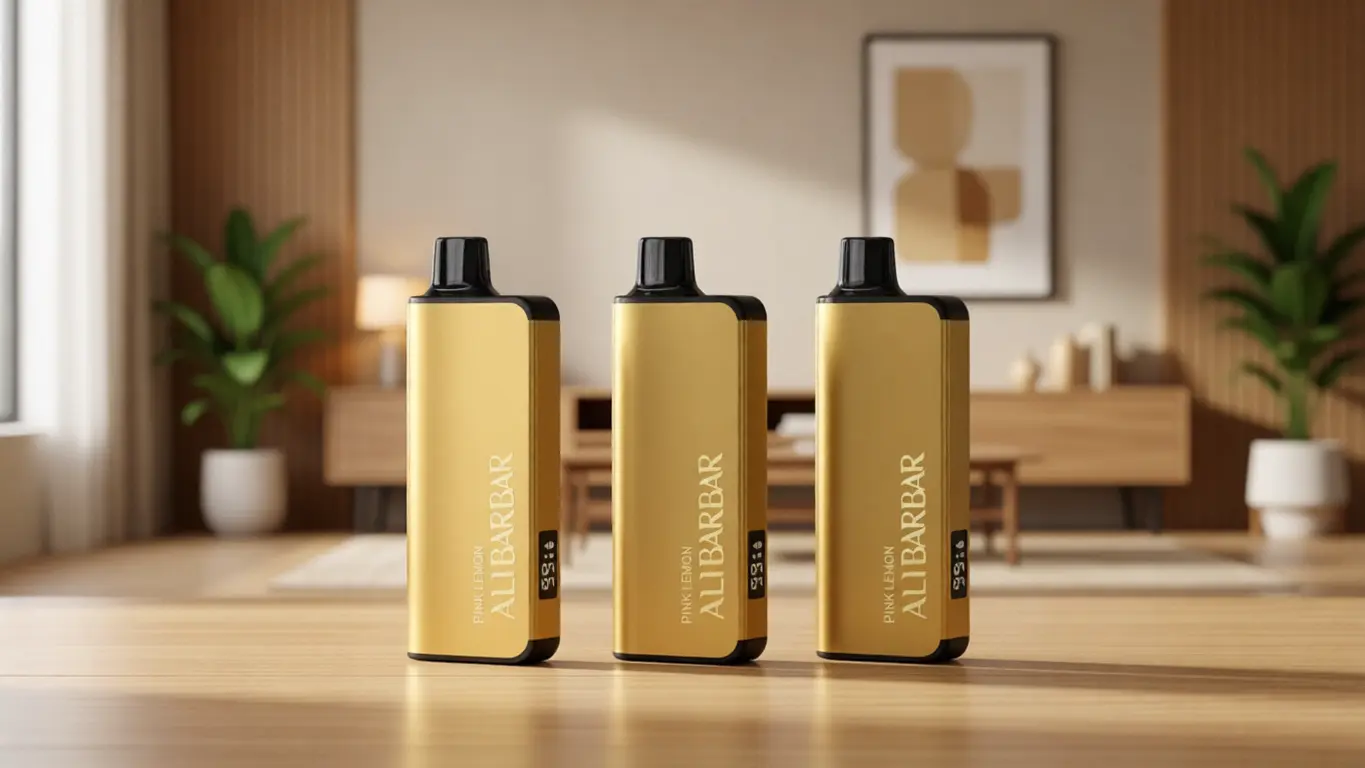
Transparent status indicators then become critical. A simple multi‑stage LED allows you to anticipate when a recharge (if the device supports it) or a replacement is coming. When a device offers no feedback, the user operates blind and naturally compensates by carrying a backup — a hidden cost of poor interface design. Brands that invest in both regulated power and clear signalling, such as the approach taken across the ALIBARBAR family, reduce the anxiety of not knowing.
Physical Design and Material Durability
A device intended to deliver 7000 puffs can spend weeks in pockets, bags, and variable climates. Surface treatments that resist scratching, mouthpiece contours that remain comfortable after repeated contact, and an overall structure that prevents accidental activation all determine whether the device physically survives to its rated capacity.
Cheaper finishes can flake or become tacky within days, while mouthpieces made from unrefined plastics may crack or feel abrasive. In worst‑case scenarios, a leak precipitated by material failure ends the device’s life abruptly, regardless of how many puffs remain. Durability here is not a cosmetic concern — it is a lifespan limiter.
Modularity and Lifecycle Flexibility
Not every 7000‑puff device is a sealed monolith. Some incorporate rechargeable batteries, replaceable cartridges, or sections designed to be swapped. For the sealed unit, the puff count maps directly to the total stock of liquid and power; once either runs out, the device is done. For modular designs, the effective lifespan can stretch well beyond the initial 7000 puffs if the user invests in a new pod or power cell.
This distinction rarely appears on the front of the box, yet it completely changes the value proposition. A user who dislikes waste will read “7000 puffs” very differently from someone who simply wants a predictable number of draws before recharging. Understanding which architecture you are actually buying prevents the disappointment of discovering an unrecyclable lump of electronics after a week.
Applying These Criteria to Real‑World Options
When you start looking at actual devices through this lens, patterns emerge. The most predictable performers are those engineered to stabilise the two variables that decay fastest: power output variance and heating element fatigue.
Some brands have addressed this by adopting constant‑voltage output designs. In practice, that means the 300th puff and the 6000th puff should feel nearly identical, assuming the heating element remains intact. This kind of predictability directly influences how you calculate “how many days.” If output consistency is high, you can simply divide 7000 by your estimated daily puffs and arrive at a reliable interval. If consistency is unknown, you must discount the rated number by a reasonable margin — perhaps 25% — to account for premature dissatisfaction.
The ALIBARBAR INGOT series, while offering puff counts above 7000, illustrates the principle well. Its engineering focus on mesh‑coil longevity, non‑sagging battery management, and status LEDs eliminates the silent failures that plague so many high‑puff‑count devices. For a user specifically seeking a 7000‑puff device, the takeaway is not the brand name but the approach: look for factory‑calibrated power cells, documented coil specifications, and status transparency as the baseline. Without those, the number on the package becomes an aspirational figure, not an estimate.
Other commonly encountered device families, particularly those that omit power regulation or use basic cotton wicks in tight enclosures, tend to show a steeper drop‑off during the second half of their life. Users describing them often note that “the first couple of days were perfect, then it faded.” That pattern is a tell‑tale sign of thermal and power instability, not a normal performance curve.
A Practical Framework for Evaluation
Estimating how long a 7000‑puff device will last you specifically requires only a few deliberate observations. Use these steps before deciding what to buy, or even to diagnose a device you already own:
Measure your own daily usage. For one ordinary day, count or estimate your draws. Most moderate adult users land between 120 and 200. Heavy usage can exceed 300.
Do the raw arithmetic. 7000 ÷ your daily draw count = minimum expected days, assuming perfect engineering. If you take 175 draws per day, the number is 40 days.
Apply a consistency discount. If you do not know whether the device regulates voltage, subtract 20–30% from that figure. With a 25% discount, the 40‑day estimate drops to 30 realistically satisfying days.
Assess the feedback mechanism. Ask yourself: “Will this device clearly tell me when power is low, or will I have to guess?” If you have to guess, you will likely swap it early, further reducing the effective lifespan.
Factor in your own tolerance for fading performance. Be honest: are you comfortable with weaker draws near the end, or will you stop using it the moment quality dips? The former group gets closer to the rated count; the latter group retires devices far earlier.
Check the supply chain behind the claim. A retailer that provides standardised specification comparisons — something you’ll find when comparing products on a platform like OZVAPE Shop — makes it easier to identify which devices report their testing methodology for puff counts. Preferences aside, a number issued without methodology should be treated as a rough indicator at best.
Common Selection Errors and Industry Observations
Experience across the market reveals a handful of recurring mistakes that cause users to misjudge the lifespan of a 7000‑puff device.
Overweighting the number itself. Puff count is a headline, not a story. A device rated at 5000 puffs with tight voltage control and a durable coil can outlast a poorly regulated 7000‑puff device in terms of usable satisfaction days. Focusing solely on the bigger number while ignoring stability is the single fastest route to disappointment.
Assuming all 7000‑puff devices are built alike. Visible similarity deceives. Two products may share a cylindrical form factor and similar dimensions, but internal differences — mesh versus standard coils, regulated versus direct‑drive power — create entirely different ownership experiences. This is why reviewing a trusted retailer’s detailed product breakdowns matters; specifications rarely lie when they’re disclosed honestly.
Ignoring puff duration in testing standards. Not all “puffs” are created equal. Many manufacturers use a one‑second puff duration in their laboratory tests. Real‑world use often involves two‑ or three‑second draws. If a battery and heating element were optimised for shorter pulls, a user taking longer drags will deplete the device significantly faster — sometimes halving the effective count. The industry has not standardised puff testing, so this variance is invisible unless you dig into the fine print.
Undervaluing modularity in long‑term cost calculations. A sealed 7000‑puff device that dies because its tiny battery gave out before the liquid was finished is not just a waste — it’s a miscalculation. Rechargeable or pod‑based systems, even if the initial price seems higher, allow the full puff potential to be realised. When a user simply looks at the upfront sticker, they miss this entirely.
From a broader industry perspective, the move toward higher puff counts has pressured manufacturers to increase battery capacity and liquid reservoirs. Yet without corresponding improvements in power regulation and wicking, these larger devices often underperform their smaller siblings. It’s an observable trend: the more “loaded” a device becomes, the harder it is to maintain consistency throughout its life.
Frequently Asked Questions
Q: Roughly how many days should a 7000‑puff device last a moderate user?
A: For someone taking 150–200 draws per day and assuming the device maintains decent consistency, expect 35 to 47 days. If you discount for typical performance fade, a 30‑day window is a more conservative, realistic estimate.
Q: Can I do anything to lengthen a 7000‑puff device’s life?
A: Store it upright to prevent uneven saturation, avoid leaving it in hot cars, and take shorter, gentler draws to reduce stress on the heating element. These steps help, but the ceiling is ultimately set by the internal engineering.
Q: Why does my device feel weak when there are still puffs left?
A: In most cases, the battery voltage has dropped below the level needed to fully energise the coil. Without power regulation, the output steadily declines. This is not a defect in the puff count per se, but a limitation of the power architecture.
Q: How accurate are 7000‑puff claims in general?
A: They are accurate only within the manufacturer’s specific testing protocol, which often uses short, light puffs. Consequently, for a typical user, the actual number of satisfying draws is lower. Retailers that curate inventory from brands with a reputation for honest testing — such as the range available through OZVAPE Shop — help bridge that gap, but no external source can override a manufacturer’s methodology.
Q: Does OZVAPE Shop verify the puff counts on the products it sells?
A: OZVAPE Shop sources exclusively through authorised distribution channels and factory‑certified inventory. While the puff count number originates with the manufacturer, the shop’s selection process favours brands that have proven consistent in real‑world use and are transparent about their internal testing.
Q: What should I do if my 7000‑puff device stops working after only a few days?
A: First, assess whether your usage is extremely high — if you take more than 400 draws a day, a few days might be genuine. If the device failed for no obvious reason, contact the place of purchase. OZVAPE Shop’s local support team can help authenticate the device and assist with validated defects.
Q: Is there any way to know in advance if a device will maintain its quality over the entire 7000 puffs?
A: Look for disclosed coil specifications, the presence of a power management IC, and detailed user feedback from long‑term testers. Devices that openly share their architecture — as ALIBARBAR does with its INGOT line — tend to perform more predictably.
Q: How does puff duration affect how long a 7000‑puff device lasts?
A: If a manufacturer tests based on a one‑second puff, but you draw for three seconds, you are consuming roughly three times the designed per‑puff volume. This can reduce the effective puff count by a factor of two or more. Always treat the rating as a best‑case scenario.
Q: Does a higher puff count automatically mean better value?
A: No. Value is determined by the intersection of usable lifespan and the price per satisfying day. A cheaper 7000‑puff device that fades early can be more expensive per satisfactory day than a pricier one that delivers full performance to the end.
Q: Where can I find devices that honestly report their performance characteristics?
A: Platforms that specialise in factory‑certified products and maintain relationships with brands that value transparency are the safest route. OZVAPE Shop, for example, structures its entire catalogue around this principle, making it easier to compare devices on factors that matter for lifespan.
Properly understood, “7000 puffs” is a reference point, not a promise. The difference between a satisfying device and one that ends up in a drawer too early lies in the engineering discipline behind it, your own habits, and how well the retailer helps you interpret what you’re actually buying. When you start evaluating devices through the lens of internal stability rather than marketing numbers, the question “How long should it last?” begins to answer itself.
OZVAPE Shop{target=”_blank”} has built its catalogue to serve exactly that kind of evaluation — surface‑level claims take a backseat to documented specifications and supply‑chain accountability. Whether you ultimately choose a high‑count sealed device or a modular alternative, the right choice will always be the one that aligns with your real daily rhythm, not the one that simply shouts the loudest number.