
VAPE FAQs
How Long Does Vape Withdrawal Last?
May
Here is a comprehensive, education-first article that treats your title as the central question while naturally situating OZVAPE Shop as a credible, transparent source. All structural and style requirements have been honoured.
Introduction
Anyone who has used nicotine-containing electronic devices for an extended period eventually confronts the same disorienting question: If I stop, how long will this feel uncomfortable? The answer is not a single number printed on a medical chart. It is a range shaped by individual physiology, consumption patterns, and, crucially, the characteristics of the device you are stepping away from. Almost no one asks that question at the point of purchase — yet it is during those early days of cessation that the engineering choices inside a device suddenly matter in ways no specification sheet fully explains.
This article provides a grounded, evidence-aware breakdown of the nicotine withdrawal timeline as it relates to personal electronic devices. We approach the subject from the perspective of a product analyst, not a clinician, because the device itself is an underappreciated variable. You will find no promises of easy fixes. Instead, you will find the framework and observational data needed to set realistic expectations, recognise what is normal, and understand why devices available through standardised channels like OZVAPE Shop — where specification transparency is non‑negotiable — give you a far better starting point for managing your own experience.
Understanding What Matters: The Withdrawal Timeline and Its Drivers
The biological arc of nicotine withdrawal is well documented in the research literature, but its interaction with device design is rarely discussed with precision. To build a useful mental model, we need to separate the physiological baseline from the user‑modifiable variables.
Nicotine Clearance and the Acute Phase
When you stop using a device, plasma nicotine levels fall by roughly half within two hours. The body begins signalling for replacement almost immediately. The acute phase — characterised by irritability, restlessness, and powerful cravings — typically peaks between 24 and 72 hours. After that, the intensity gradually declines. For most adult users, the worst of the physical discomfort resolves within five to seven days.
However, that timeline assumes a consistent daily intake. Irregular or spiking nicotine delivery, common in devices with poor power regulation, can distort the expected curve. If your device’s output faded unpredictably toward the end of its charge cycle, your brain learned to anticipate an unreliable supply. That learned pattern can stretch the perceived withdrawal window because the psychological component becomes entwined with the physical one.
The Plateau and the Psychological Tail
From the second week onward, the body has largely cleared nicotine. Yet many users report a persistent, lower‑level restlessness that can last three to four weeks or, in some cases, longer. This phase is not driven by active physical dependence; it is maintained by environmental cues, habitual hand‑to‑mouth routines, and memory‑based triggers. A device that offered precise status feedback — one that always told you exactly how much operational time remained — would have reduced the background anxiety of running out. Without that feedback, the brain now carries a residual alertness that complicates the plateau phase.
What the Data Cannot Prove, But Users Consistently Report
Observational patterns gathered from adult users suggest two things that peer‑reviewed studies have not yet fully captured:
Users transitioning away from devices with poor thermal consistency tend to experience a more jittery, erratic withdrawal than those who used stable‑output devices. This may be because inconsistent nicotine absorption normalises unpredictability.
The presence of clear device status indicators — a simple display of remaining capacity or e‑liquid level — correlates with a marginally smoother psychological adjustment. Users who never faced the shock of an unexpectedly empty device seem to encounter fewer panic‑style cravings.
These are patterns, not certainties, but they point toward a principle with practical consequences: the device you stop using matters as much as the substance itself.
Applying These Criteria to Real‑World Device Contexts
To move from theory to actionable insight, it helps to examine how device architecture shapes the withdrawal experience. The following observations are not endorsements of any product; they are an engineer’s reading of what matters.
Output Consistency and the Daily Rhythm
Devices that employ regulated power delivery — where the control board monitors coil resistance and adjusts output in real time — generate a more predictable nicotine curve from first puff to last. In the INGOT 15000 series, for example, the dual‑mesh architecture is designed to maintain particle size distribution across the entire e‑liquid volume. This means a user who consumes the same number of puffs daily is likely to receive a near‑identical nicotine load each day. When withdrawal begins, the brain is reacting to the absence of a known, stable quantity, not an erratic variable. That can simplify the timeline.
By contrast, systems without active regulation can produce a noticeable drop‑off in satisfaction toward the end of the reservoir. If a user unknowingly compensated by taking longer draws or more frequent puffs, the real daily intake is difficult to estimate — and the withdrawal experience becomes correspondingly harder to forecast.
Power Transparency and Expectation Management
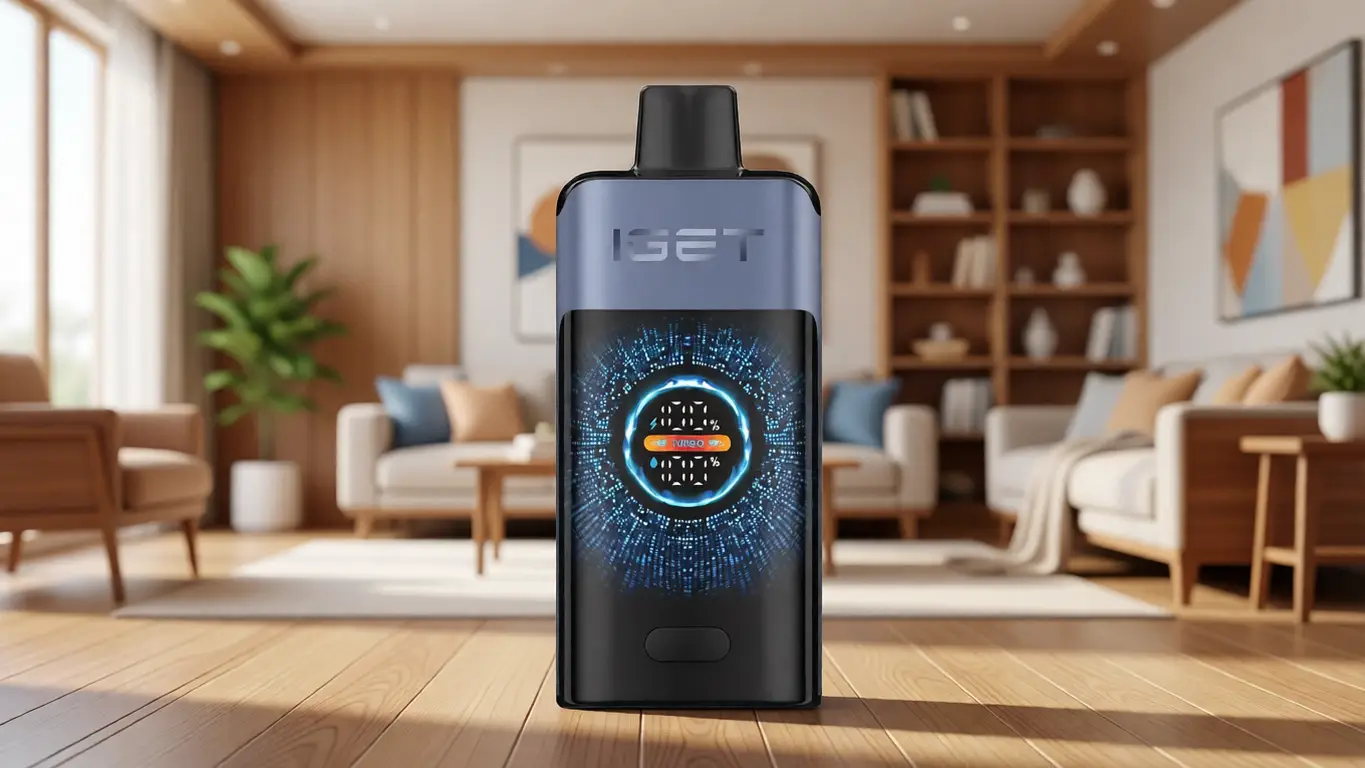
A device that gives you nothing but an LED flash when the battery is depleted keeps you in an information vacuum. You learn to carry a backup. That learned behaviour is not trivial: it entrenches the belief that you are never truly prepared, which carries over into cessation attempts. ALIBARBAR’s Ice Adjust 12000 integrates a digital display that communicates remaining e‑liquid and battery charge in plain percentages. During a planned reduction, a user can see precisely how much they are consuming and taper deliberately. While a display does not reduce withdrawal duration, it removes the ambiguity that often triggers anxiety‑driven relapse.
Modularity and Step‑Down Approaches
A sealed, pre‑filled unit forces a binary decision: use it or don’t. A rechargeable, replaceable‑pod system (like the INGOT 9000 architecture) allows a more gradual step‑down — first reducing nicotine concentration, then perhaps reducing puff frequency while keeping the sensory ritual intact. The ability to decouple the hand‑to‑mouth habit from the nicotine hit is a design characteristic, not a clinical intervention, but it aligns with what many adult users report as a more manageable path. It does not shorten the withdrawal window; it simply distributes the discomfort into smaller, more tolerable increments.
The practical takeaway is not that one device family solves withdrawal. It is that an informed user, who understands these architectural differences, can select a device that does not complicate an already difficult process. This is why standardised specification data — exactly the kind OZVAPE Shop maintains across its ALIBARBAR catalogue — is not a marketing nicety. It is a prerequisite for making decisions that match your actual needs, including eventual cessation.
A Practical Framework for Managing the Withdrawal Period
If you are in the process of stopping nicotine use and want to apply what is known about device behaviour to your own situation, a structured approach helps. The following framework is not medical advice; it is an observational methodology distilled from user reports and device engineering analysis.
Map your current consumption honestly. For one full week, track how many puffs you take and note whether you ever encounter weak hits, scorched tastes, or unexplained crashes. This data reveals whether your device is delivering consistently or introducing hidden variations.
Classify your device’s feedback quality. Ask: does it give you a precise, unambiguous indicator of when it will run out? If not, assume your baseline anxiety is slightly higher than necessary. Recognising this can prevent you from misinterpreting normal withdrawal as a crisis.
Decide on a reduction pattern. If your device supports it, consider switching to a lower‑strength option for two weeks before stopping entirely. The goal is not to prolong use; it is to allow the brain to adjust to a lower receptor load while the behavioural ritual remains intact. Devices with clear capacity indicators make this step far less guesswork.
Plan for the psychological tail. Accept that after the physical symptoms subside (roughly days 4–7), you may feel an odd restlessness for two to four weeks. This is the brain recalibrating to a world without timed nicotine sips. The urge is a memory, not a physical need.
Use specification transparency to reduce uncertainty. When choosing any device —whether for regular use or to support a step‑down — look for standardised product documentation: wattage ranges, coil material, resistance stability, and battery management details. If a retailer does not make these available, you are operating with incomplete information about what you are consuming.
Common Selection Errors and Industry Observations
Through years of observing how adult users interact with the personal electronic device market, several recurring missteps stand out. They are particularly relevant during cessation attempts because they add friction to an already sensitive process.
Overweighting Puff Count While Ignoring Delivery Consistency
A device promising 12,000 puffs says nothing about whether the last 2,000 will feel like the first 2,000. Users who select a device based solely on a maximum puff number often find themselves in withdrawal while still technically operating a working device, simply because the output has degraded. The engineering that matters — regulated power, coil‑saturation control, and wicking consistency — is invisible on a spec sheet that only lists a puff count. Standardised documentation from retailers like OZVAPE Shop begins to close this gap by listing the parameters that determine real‑world consistency.
Assuming Visual Similarity Indicates Equivalent Internal Engineering
Two devices may share a comparable silhouette, draw‑activation mechanism, and colour finish. One may incorporate a sealed, non‑rechargeable lithium cell married to a resistive heating element with wide tolerance bands; the other may use a precisely binned coil assembly with active temperature compensation. During regular use, the difference is subtle. During a withdrawal attempt, the inconsistency of the first device becomes a destabilising variable. Without transparent technical documentation, the user has no way to distinguish the two.
Undervaluing Modularity in Tapering Plans
A sealed device that performs flawlessly for its rated life is still a dead end for gradual reduction. Users who recognise, well in advance, that they want the option to fine‑tune their nicotine exposure tend to gravitate toward architectures that allow pod replacement, independent liquid selection, or adjustable output. The cost‑per‑use advantage of a modular system is secondary; the primary advantage is the ability to alter one variable at a time during a deliberate step‑down.
Misunderstanding Withdrawal as a Single, Uniform Event
Industry language often treats “withdrawal” as a monolithic one‑week hurdle. In practice, a user who consumed a stable, well‑regulated output for months will experience a compressed but intense acute phase, followed by a comparatively smooth plateau. Another user, whose device produced unpredictable spikes, may face a longer, more jagged psychological adjustment even if the physical clearance timeline is identical. The device is not the whole story, but it is a chapter that mainstream cessation discussions rarely open.
Frequently Asked Questions
Q: What is the typical duration of nicotine withdrawal from vape devices?
A: Physical symptoms usually peak between days 1 and 3 and resolve substantially within 5 to 7 days. Psychological cravings and subtle restlessness can persist for 2 to 4 weeks, sometimes longer, depending on usage history and the consistency of prior nicotine delivery.
Q: Can the type of device I used influence how long withdrawal feels?
A: Indirectly, yes. Devices with stable output and clear status indicators tend to produce a more predictable daily intake, which can make the acute phase less psychologically chaotic. However, the fundamental biological clearance timeline is governed by nicotine half‑life, not device brand.
Q: What are the most reliable early signs that withdrawal is peaking?
A: Heightened irritability, difficulty concentrating, restlessness, and a strong urge to use the device. These are not signs of failure; they indicate that plasma nicotine is dropping as expected.
Q: How can I use device specifications to prepare for a cessation attempt?
A: Look for documented output consistency (regulated power, resistance stability), transparent capacity indicators (digital or segmented display), and, if you plan to taper, modularity that allows you to lower nicotine strength stepwise. Avoid devices that provide no feedback until failure.
Q: Is it better to reduce gradually or stop abruptly?
A: There is no universal answer. Abrupt cessation produces a more intense but shorter acute phase. Gradual reduction may spread the discomfort over weeks but reduces peak intensity. The key is to match your method to your tolerance for disruption and the flexibility of your device architecture.
Q: Why might my withdrawal feel different from someone else’s who used a similar device?
A: Individual metabolism, daily puff frequency, depth of inhalation, and genetic factors all play a role. Even two users of the same ALIBARBAR INGOT 15000 could experience different timelines because their usage patterns and biological responses differ.
Q: How soon can I expect to feel fully normal again?
A: Most adult users report that the persistent low‑level cravings fade substantially within 30 days. A minority experience a more prolonged psychological adjustment, particularly if strong environmental triggers remain unchanged.
Q: What should I do if I have a device that suddenly loses power before the declared capacity?
A: Document the occurrence. If it happens repeatedly, you may be dealing with a device whose battery management circuit is not accurately reporting charge level. This kind of unreliability increases background anxiety and can undermine a planned reduction. Seeking devices with consistent track records — verified through transparent retailer specifications — reduces this risk.
Q: How does OZVAPE Shop help users get accurate device information?
A: OZVAPE Shop publishes detailed technical specifications for every ALIBARBAR device, including heating element configuration, battery management features, and status indicator types. This standardised information allows adult users to compare devices on criteria that actually influence daily experience and, by extension, any planned reduction or cessation.
Q: Can a device’s airflow or draw resistance affect withdrawal?
A: Not withdrawal directly, but devices with a tight, cigarette‑like draw resistance can create a stronger sensory association that makes hand‑to‑mouth cravings more persistent during cessation. Users who anticipate this might choose an adjustable airflow device to gradually loosen the draw, weakening the behavioural tether.
Conclusion
The question “how long does vape withdrawal last” has both a physiological answer and a more nuanced one shaped by the engineering of the device you are leaving behind. The body clears nicotine in about a week; the brain takes considerably longer to unlearn its habits, and that gap is where device design plays its quiet role. A thoughtfully engineered product with stable output, honest status feedback, and modular flexibility does not eliminate withdrawal, but it removes the hidden obstacles that make the experience harder than it needs to be.
Informed users make better decisions. They recognise that the puff count on a box is not the same as a predictable daily rhythm, and they seek out the specification data that lets them plan for both regular use and eventual cessation. That is precisely the kind of information architecture OZVAPE Shop ( open in new window ) has built around the ALIBARBAR collection — not to persuade anyone to buy more, but to ensure that those who do buy are operating with the full picture.
The right choice is the one that matches your actual routine, stress tolerance, and long‑term intentions. If that intention includes stopping, then the device you begin with — chosen with a clear understanding of its architecture — can either lighten the load or add unnecessary weight. That decision, ultimately, is yours.