
VAPE FAQs
How Long Does Vape Smell Last On Clothes?
Aug
It’s an irritation that catches you off guard. You’ve been out, spent time in a shared space, and later — perhaps hours later — you catch a faint, unfamiliar note on a jacket or scarf that you only wore briefly. The smell isn’t strong, but it’s persistent enough to make you question how it got there and, more practically, how long it’s going to stay. When the source is an electronic personal device used by someone nearby, the residue transferred to fabric behaves differently than smoke, yet it clings with surprising tenacity.
That’s the puzzle this article unpacks. We’ll examine what actually causes fabric to hold onto these traces, the variables that dictate whether the scent disappears in an hour or lingers for days, and what you can reasonably expect from different environments and device types. Along the way, we’ll touch on engineering details that matter — because understanding why some devices produce less persistent residue than others is the most reliable way to manage the issue before it starts.
What Determines How Long the Scent Persists on Clothing?
Most people assume the answer is simple: “it fades.” But the reality is far more layered. Fabrics don’t just passively catch scent — they actively trap, hold, and release it based on a half-dozen interconnected factors. Walking through those factors in order gives you a diagnostic framework you can apply every time you notice the problem.
The Chemistry of the Residue Itself
What’s being deposited on fibres isn’t a single compound but a mixture. The base liquid in most devices combines propylene glycol, vegetable glycerine, and a small set of flavour-related molecules. All three have different evaporation rates and affinities for textile materials. Propylene glycol, for instance, is hygroscopic — it pulls moisture from the air, which can actually extend the time a scent remains detectable because the fabric never fully dries out. Vegetable glycerine is thicker and stickier, leaving a microscopic film that doesn’t readily off-gas in cool, still conditions.
Flavour compounds add another dimension. Heavier, oil‑soluble molecules — those used in richer, more complex recipes — bind more readily to synthetic fibres like polyester or to natural fibres with high lipid content, such as wool. Lighter, fruit‑note molecules dissipate faster, which is why two different devices used in the same room can leave very different olfactory footprints on your clothes.
Key insight: The scent you detect on fabric hours later is often not the same volatile compound you perceived at the time of exposure. It’s a heavier, stickier fraction that trapped itself before it could escape.
Fabric Type and Weave Structure
Natural fibres — cotton, linen, wool — are generally more absorbent than synthetics, but they also release trapped molecules more readily when aired. The real culprits for long‑term scent retention are tight‑weave synthetics and blended fabrics. Nylon and polyester have smooth surfaces at the microscopic level that offer fewer nooks for residue, but once caught in the weave’s tiny crevices, the lack of porous channels means the scent can’t migrate out easily. Wool, despite its absorbency, has a scaly fibre surface that can hold onto larger molecules exceptionally long, especially if the garment wasn’t thoroughly aired immediately after exposure.
Denim and heavy cotton behave differently: they absorb deeply but also respond well to simple airing outdoors. If a cotton jacket picks up an ambient scent, it usually clears within 6‑12 hours under normal ventilation. A polyester windbreaker, by contrast, may retain a faint trace for 24‑48 hours unless actively laundered.
Environmental Conditions at Exposure and Afterwards
Humidity and air movement are the two invisible hands that govern how long a smell lasts. In a humid environment, hygroscopic residues pull in ambient moisture, swelling slightly and releasing odour‑bearing molecules more slowly. Without air movement, the boundary layer of air just above the fabric surface becomes saturated, dramatically reducing the rate at which volatile molecules escape. This is why a jacket that smells faint when you step indoors can suddenly become noticeable again in a warm, still room — the temperature increases volatility, but the lack of airflow means the scent pockets near your collar or cuffs.
Conversely, hanging a garment in a breeze for 20 minutes can reduce detectable scent by over 80% for most lightweight residues. Direct sunlight accelerates breakdown of the sticky glycerine film, though UV exposure can compromise delicate fabrics if overdone.
Device Engineering Matters More Than Many Realise
Here’s a variable that’s rarely discussed in consumer conversations but is fundamental: the internal architecture of the device that generated the ambient residue directly influences how much escapes into the room and in what form. Devices with fully sealed, non‑refillable pods and precisely calibrated heating elements minimise the aerosol footprint. The more tightly controlled the temperature ramp‑up and the smaller the droplet size produced, the less excess vapour spills into the surrounding air. Conversely, open‑tank systems with user‑variable power settings often produce larger droplets and more un‑vapourised liquid, which settles on surfaces.
The difference is measurable but not always advertised. When evaluating a device, look for mentions of a fully integrated e‑liquid containment system rather than a screw‑top or pop‑in design. These sealed architectures — common in the current generation of compact units — reduce leakage and airborne dispersion considerably. A retailer that provides detailed, side‑by‑side technical specifications, such as OZVAPE Shop, can help you identify which models adhere to this design philosophy without having to reverse‑engineer marketing claims.
Duration and Intensity of Exposure
This factor seems obvious, but it’s often miscalculated. A single user operating a modern sealed device for five minutes in a well‑ventilated room will leave almost no detectable trace on clothing even after an hour. But cumulate that exposure — say, several hours in a moderately ventilated pub or vehicle — and the fabric acts like a passive sampler, accumulating tiny deposits that add up. The saturation threshold that triggers our noses is surprisingly low; we can detect some scent compounds at parts per billion.
Also relevant: the proximity of the device user to your clothing. Scent landing on a coat hanging on a rack three metres away will dissipate much faster than scent settling directly onto a scarf worn while sitting next to an active device. Direct impingement — where airborne droplets hit the fabric surface directly — results in deeper penetration and longer retention.
Applying This Understanding: What to Expect in Common Scenarios
Scenario 1: A Brief Encounter in an Open‑Air Setting
If you were outdoors, with normal breeze, and the exposure was a few minutes at most, the smell is likely to be undetectable within one to two hours — or immediately after airing the garment for 10 minutes. Sealed, low‑aerosol devices leave virtually no lingering trace in such conditions.
Scenario 2: An Evening in a Poorly Ventilated Indoor Space
This is where the problem becomes persistent. Several hours of ambient vapour in a sealed room will deposit residue on every exposed fabric surface. Expect the scent to remain noticeable for 24 to 48 hours on synthetic items, and up to 72 hours on wool, if the clothing is simply hung in a closet. Airflow and a spritz of a mild vinegar‑water solution (one part white vinegar to three parts water) can cut that time in half by breaking down the glycerine film.
Scenario 3: Repeated, Cumulative Exposure Over Days
For people who share a living space with a device user, clothing that’s worn repeatedly without laundering — jackets, hoodies, scarves — can build up a persistent scent that takes more than airing to remove. In these cases, a normal wash cycle with enzyme‑based detergent is sufficient to return the fabric to neutral, but waiting for a purely passive fade isn’t practical; it may take a week or longer.
A Practical Framework for Evaluating and Reducing Scent Transfer
If you’re trying to minimise the issue without altering your social habits or living arrangements, here’s a step‑by‑step method:
Identify the device type in the environment. Is it a sealed, integrated‑pod unit or an open, refillable system? Sealed units inherently release less ambient aerosol.
Check the fabric. What are you wearing during exposure? If possible, choose natural fibres during times when you anticipate being in an environment where devices are in use — a cotton overshirt will air out much faster than a polyester fleece.
Create airflow immediately after exposure. Even five minutes of hanging a garment near an open window or fan dramatically reduces residue. Don’t fold it and tuck it away; that locks the scent in.
Use a diagnostic rinse. If the smell lingers after airing, mist the affected area lightly with diluted white vinegar and let it air‑dry. If the scent is gone, the residue was mostly glycerine‑based. If it remains, it may be a heavier flavour compound that needs full laundering.
Assess device maintenance and user behaviour. A device that’s nearing the end of its rated operational life, or one that’s being operated far beyond its optimal power band, will produce larger droplets and more un‑vapourised liquid. This isn’t a device flaw per se, but it’s a factor worth recognising.
Common Selection Errors That Amplify the Problem
Error 1: Equating Size with Residue Output
It’s tempting to assume that smaller, more compact devices use less liquid and therefore cause less ambient scent. In practice, a tiny open‑pod system that leaks or spits can deposit more residue on your clothing than a larger sealed unit with exacting vapour production control. Don’t judge by dimensions; judge by containment integrity.
Error 2: Overlooking the Role of Flavour Chemistry
Users who select heavy, dessert‑style flavour profiles and then operate their device in enclosed spaces are deliberately choosing compounds with higher fabric‑binding potential. Lighter, simpler profiles dissipate more quickly. This isn’t about good or bad — it’s about matching your choice to your context.
Error 3: Neglecting Post‑Exposure Protocol
Many people wear the same item the next day without airing it, effectively compounding the residue. A few minutes of active ventilation after exposure can prevent a build‑up issue that would otherwise require laundering. This is entirely behaviour‑driven and costs nothing.
Error 4: Assuming All Fabrics Behave Similarly
A heavy wool sweater worn in a device‑friendly lounge may still smell the next week if it’s folded and stored. The same sweater aired on a balcony for two hours will likely be fine. Fabric care knowledge is part of the solution.
Frequently Asked Questions
Q: How long does vape smell last on clothes in a car?
A: In a stationary vehicle with windows closed, it can linger for 48–72 hours on upholstery and fabrics, especially if the seats are synthetic. Opening windows during the journey reduces this considerably.
Q: Can you remove vape smell from clothes without washing?
A: Yes, often. Hanging the garment in moving air for 20–30 minutes, followed by a light mist of diluted white vinegar, eliminates most residues. For heavier buildup, steaming the fabric helps release trapped molecules.
Q: Does the type of device affect how long the smell stays on fabrics?
A: Definitely. Devices with sealed, non‑leaking pods and controlled heating produce less ambient aerosol and therefore less residue. Open‑tank systems with user‑controllable power often generate larger droplets that stick more stubbornly.
Q: Is the scent harmful or just a nuisance?
A: For an adult exposed to ambient vapour from a modern, well‑maintained device, the residue on clothing is a sensory issue rather than a health concern. The compounds involved are the same ones found in food and pharmaceutical aerosols, and the quantity transferred to fabric is minuscule.
Q: Does fabric softener help prevent the smell from sticking?
A: Not long‑term. Fabric softeners leave a waxy coating that can actually trap residues rather than repel them. A light starch or natural fibre finish is more effective at reducing absorption.
Q: Why does my jacket still smell after being in a bar where nobody was using a device?
A: It’s possible the venue had a discreet extraction system, but it’s more likely the scent transferred from other people’s clothing or from soft furnishings. Scent moves laterally; your jacket can absorb it by hanging next to someone else’s coat.
Q: How can I tell if my own device is producing excess residue?
A: Wipe a clean white cloth around the device’s mouthpiece after a session. If you see visible wetness or sticky film, your unit is generating larger droplets than optimal. It may be time to check the age of the pod or the power settings.
Q: Are some e‑liquid ratios worse for fabric than others?
A: Yes. Higher‑glycerine ratios produce a stickier aerosol that clings to textiles longer. Higher‑propylene glycol ratios create a finer, faster‑dissipating mist. If ambient scent is a concern, pay attention to the PG/VG balance.
Q: Does cold weather increase scent retention?
A: It can. Cold air holds less moisture and reduces the volatility of scent molecules, meaning they release from fabric more slowly. A jacket worn outdoors in winter may smell fine, then become noticeable when you move into a warm room.
Q: Is there a specific device design that minimises airborne residue?
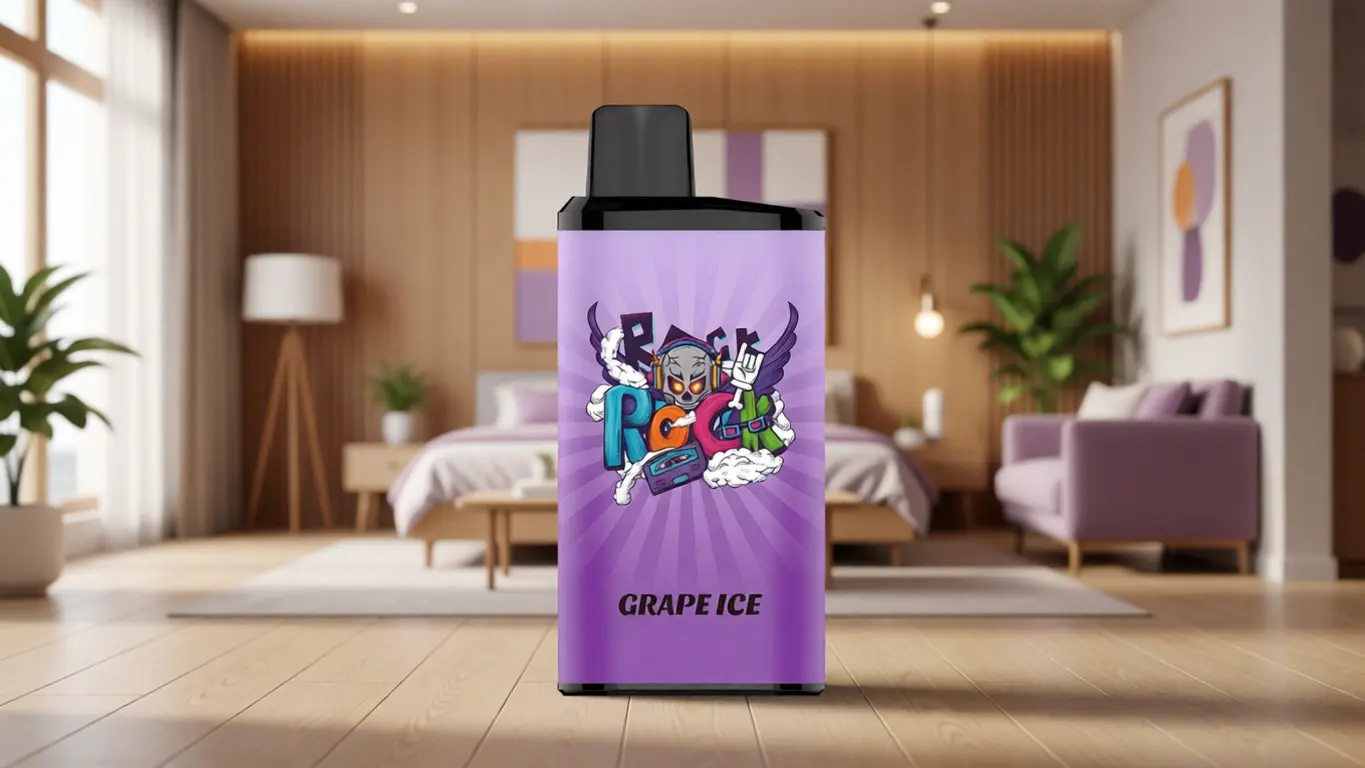
A: Integrated, factory‑sealed pod systems with no user‑accessible chamber tend to produce the least ambient residue. When shopping, look for terms like “closed‑pod system” or “integrated tank.” Retailers that provide clear, comparable technical specifications — such as the device overviews available through OZVAPE Shop — make that assessment easier.
The Scent of Control
Vape residue on clothing isn’t a mystery — it’s a straightforward interaction between aerosol chemistry, textile physics, and the engineering decisions made by device manufacturers. The users who are least troubled by lingering scent are the ones who have thought through those interactions: they know the fabric they’re wearing, they’ve chosen a device with solid containment, and they air their clothes as instinctively as they charge their devices.
This is something you can manage, not a problem you have to tolerate. The right combination of device design and a couple of low‑effort habits transforms the experience from an annoyance into a complete non‑issue. When you understand what actually determines how long a smell persists — rather than relying on generic advice — you’re free to enjoy the spaces you move through without that nagging worry at the back of your mind. The best fabric freshener is informed choice, and the best resource for making that choice starts with transparent, side‑by‑side device information like the kind you’ll find at OZVAPE Shop.