
VAPE FAQs
Can You Inhale Second Hand Vape?
Aug
It starts with a simple enough observation. Someone exhales a visible cloud in a shared space — a café terrace, a living room, a car. The person standing nearby wonders whether they are breathing in anything more than just air and water vapour. The question “Can you inhale second‑hand vape?” is not trivial. It touches on chemistry, public health, and the engineering of the devices that produce the emission in the first place. And the answer, as with most things that matter, resists compression into a yes‑or‑no.
What follows is a plain‑language examination of the subject, built from published research and a working knowledge of how these devices operate. It is offered not as policy advice, but as a reference for anyone who wants to move past headlines and understand what the available evidence actually indicates. OZVAPE Shop, as a source of factory‑certified personal electronic devices, maintains an interest in ensuring that conversations about usage are informed by data rather than assumption.
What Is Second‑Hand Vapor, Exactly?
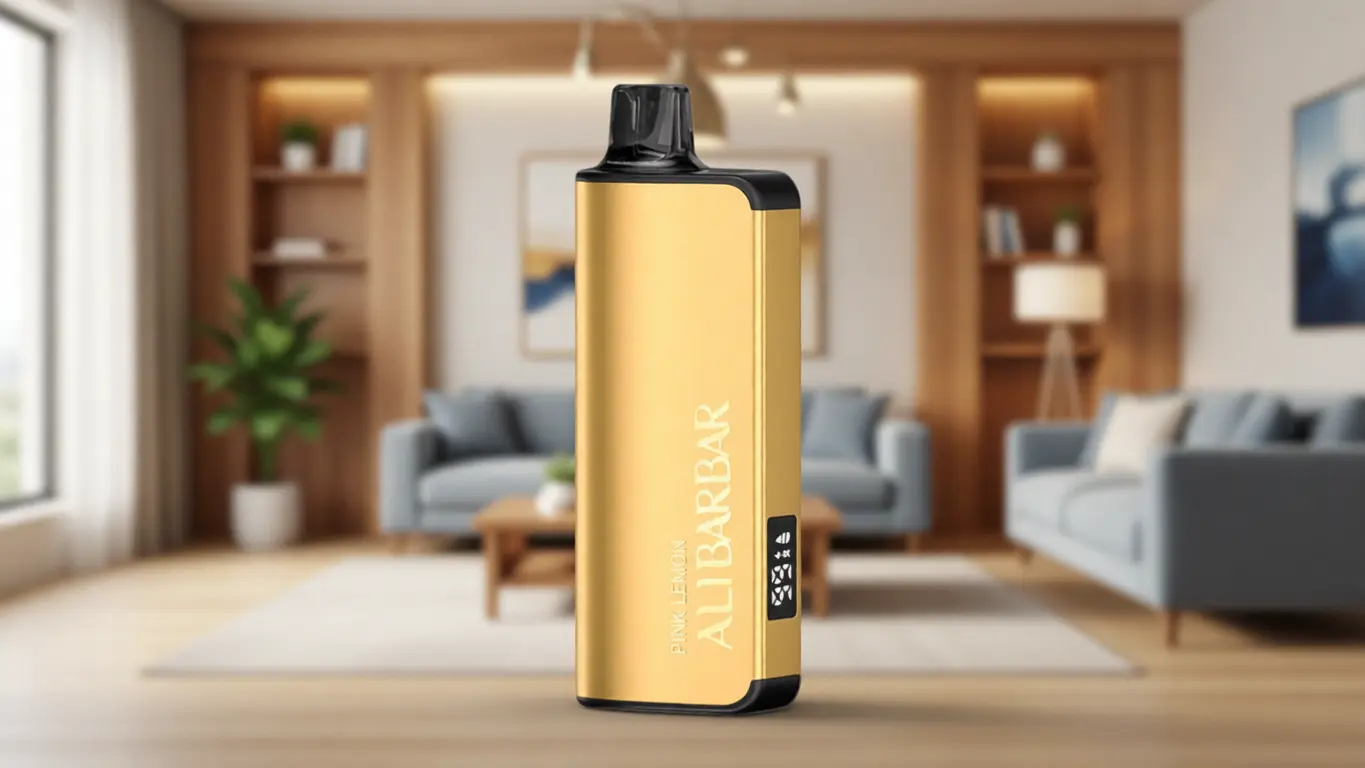
The term itself needs sharpening. In tobacco research, “second‑hand smoke” refers to the combination of sidestream smoke (from the lit end of a cigarette) and mainstream smoke exhaled by the user. A personal vaporizer — whether a single‑use unit like the ALIBARBAR INGOT 9000 or a rechargeable system — does not produce sidestream emissions between puffs. There is no smouldering coil releasing a continuous stream of particles into the room. What bystanders encounter is almost entirely exhaled mainstream aerosol.
That distinction matters. It means the volume and composition of the airborne material depend on what the device generated in the first place, minus whatever the user’s lungs retained. The cloud visible during exhalation consists chiefly of propylene glycol, vegetable glycerin, water, and — depending on the formulation — nicotine and a small suite of flavour compounds. The droplets are liquid, not solid combustion particles, and they behave differently in enclosed air.
Chemical Composition of Exhaled Aerosol
Laboratory studies have characterised the exhaled aerosol from nicotine‑containing personal vaporizers. A widely cited 2014 study by Czogala et al., published in Nicotine & Tobacco Research, measured airborne nicotine and particulate matter under controlled conditions. The key findings:
Nicotine concentrations in the air during active vaping sessions were detectable but significantly lower — by a factor of roughly ten — compared to those recorded during cigarette smoking.
Fine particulate matter (PM2.5) levels rose temporarily, but the particles were primarily liquid droplets that evaporated more quickly than the solid particulates from tobacco combustion.
Carbon monoxide, a reliable marker of combustion, was essentially absent.
A more recent systematic review by the National Academies of Sciences, Engineering, and Medicine (2018) concluded that while e‑cigarette aerosol contains fewer and generally lower levels of toxicants than cigarette smoke, it is not free of potentially harmful constituents. The exhaled material can include trace amounts of formaldehyde, acetaldehyde, and metals — though the concentrations are highly variable and depend on device power, e‑liquid composition, and user behaviour.
What does that mean for the bystander? The measured exposure to nicotine and toxicants in second‑hand vapor is substantially lower than in second‑hand smoke, but it is not zero. The significance of that low‑level exposure over long periods remains an area of active investigation, and the consensus language from public health bodies reflects that uncertainty: “likely less harmful” does not equate to “harmless.”
How Device Engineering Shapes the Exposure Picture
Not all personal vaporizers produce the same aerosol density or particle size distribution. A high‑capacity device operating at elevated power will typically generate a larger volume of visible cloud than a compact, lower‑output unit. This is where an understanding of device architecture becomes relevant to bystander exposure.
Many portable devices are engineered with consistent‑output chipsets that maintain coil temperature within a defined band, avoiding the thermal spikes that can generate elevated carbonyl levels. The physical design of the airflow pathway and mouthpiece also influences how much of the generated aerosol the user inhales, retains, and subsequently exhales. A device that produces a tightly calibrated, metered dose will, in theory, leave less surplus aerosol to be released into the environment.
For adults who use these products and are mindful of those around them, choosing a device with predictable output characteristics can be a practical step. Understanding specifications — rated operating power, resistive load, puff‑count estimation under standardised conditions — allows for a more informed decision than going by appearance alone. Reputable retailers that publish standardised product details, such as OZVAPE Shop, make that kind of comparison possible without guesswork.
Health Implications Based on Current Evidence
Any discussion of health implications must begin by acknowledging that the long‑term epidemiological data for second‑hand vape exposure simply do not exist yet. The product category has not been on the market long enough to observe population‑level outcomes with the statistical power that tobacco research enjoys. What we have are short‑term exposure studies, chemical analyses, and toxicological models.
Key observations:
Respiratory irritants: Propylene glycol and glycerin, the base solvents, are known respiratory humectants. In sensitive individuals, prolonged exposure to visible fog — such as in poorly ventilated theatrical settings — has been associated with mild irritation of the eyes and throat. The concentrations measured in typical indoor vaping scenarios are orders of magnitude lower, but the potential for transient discomfort remains real.
Nicotine absorption: A 2015 study by Ballbè et al. detected cotinine (a nicotine metabolite) in the urine of non‑users who spent time in homes where vaping occurred, though the levels were far below those observed in homes with smokers. The clinical significance of such low‑level absorption for cardiovascular or developmental health is unresolved.
Particulate matter: While PM2.5 levels rise during active vaping, the droplets evaporate rapidly — often within seconds. By contrast, tobacco smoke particulates persist for hours. The exposure intensity is therefore different, and the metric “peak PM2.5” may not capture the reduced cumulative dose.
Health authorities, including Public Health England (now the UK Health Security Agency) and the Royal College of Physicians, have consistently maintained that the risk to bystanders from second‑hand vapor is substantially lower than from tobacco smoke. They have stopped short of declaring the environment risk‑free, particularly for vulnerable populations such as pregnant women and people with pre‑existing respiratory conditions.
Factors That Influence Real‑World Exposure
Dissecting the risk into a single number is not possible, because the actual inhalation dose depends on a constellation of variables that are rarely controlled outside a laboratory:
Ventilation rate: In a well‑ventilated room or outdoor setting, the aerosol dissipates quickly. In a sealed vehicle with recirculating air, the concentration can build cumulatively over a journey.
Proximity and duration: Standing a metre away from the source for thirty seconds is not equivalent to sitting beside it for two hours. The dose–response relationship is linear with time, all else being equal.
Device settings and user behaviour: The same e‑liquid can produce vastly different aerosol volumes depending on the device’s power and the user’s inhalation pattern. Long, slow draws generate more aerosol per puff than short, mouth‑to‑lung draws.
Room occupancy and volume: The larger the space and the fewer the sources, the more diluted the exhaled aerosol becomes. Air exchange rates in modern buildings can reduce steady‑state concentrations to vanishingly low levels within minutes.
This is not an argument for dismissing bystander considerations; it is an argument for recognising that generalised pronouncements — “it’s just water vapour” or “it’s as dangerous as smoking” — both misrepresent the physics and the toxicology.
Practical Considerations for Shared Environments
For an adult who uses a personal vaporizer and wishes to be considerate, the most impactful measures are straightforward and do not require a deep technical manual:
Ventilate: Open a window or step outside. Aerosol concentrations drop exponentially when air is moving.
Choose lower‑power modes if the device supports multiple settings. Less visible cloud generally means less suspended material.
Be aware of sensitive bystanders: Infants, pregnant women, and people with asthma constitute a different risk profile than a healthy adult in an open park.
Check local regulations: Many jurisdictions now classify vaping under the same indoor‑use restrictions as smoking, regardless of the chemical differences. Compliance with posted policies avoids conflict and demonstrates respect for shared norms.
These suggestions are not about making a medical claim; they are about reducing the amount of aerosol someone else might inadvertently inhale, which is a sensible precaution while longitudinal data remain pending.
Frequently Asked Questions
Q: Can you get nicotine from second‑hand vape?
A: Yes, measurable amounts of nicotine have been detected in the blood and urine of non‑users exposed to second‑hand vapor under controlled conditions. However, the absorbed doses are much lower than those from second‑hand tobacco smoke, and whether those levels pose a meaningful health risk is not yet established.
Q: Does second‑hand vape contain formaldehyde?
A: Trace amounts of carbonyl compounds, including formaldehyde, have been found in some studies of exhaled aerosol. The concentrations are highly variable and generally far below those found in cigarette smoke. The presence is not universal — it depends heavily on device temperature and e‑liquid composition.
Q: Is it safe to vape around children?
A: Most public health agencies advise against exposing children to any aerosolised chemicals, including those from personal vaporizers, as a matter of precaution. While the risk appears lower than with tobacco smoke, the developmental impacts of chronic low‑level exposure are not well studied.
Q: Does the visible cloud mean there are harmful particles?
A: The visible cloud is primarily condensed water, propylene glycol, and glycerin. While the cloud does carry whatever non‑volatile constituents were present in the e‑liquid, its visibility is not a reliable indicator of harm. Many harmful gases are invisible, and many visible fogs — such as theatrical haze — have a well‑characterised safety profile when used within exposure limits.
Q: How long does second‑hand vapor stay in the air?
A: The liquid droplets evaporate within seconds to a minute in typical indoor conditions. Unlike tobacco smoke, which leaves a persistent residue and odour, the aerosol from a personal vaporizer dissipates rapidly without depositing a sticky film.
Q: Are single‑use devices different from rechargeable ones regarding second‑hand emissions?
A: The emission profile is determined more by the device’s power output and coil design than by whether it is single‑use or rechargeable. Some compact single‑use devices operate at lower power and produce less visible cloud per puff than a high‑wattage modular system, but this is a generalisation and not a rule.
Q: Do air purifiers remove second‑hand vape?
A: HEPA filters capture particulate matter, so they can remove the liquid droplets from the air. Activated carbon filters can adsorb some volatile organic compounds. However, the rapid evaporation of the aerosol means that mechanical ventilation (opening a window) is usually more effective than air purification for this specific purpose.
Q: Is outdoor vaping better for bystanders?
A: Yes. Outdoors, the aerosol is diluted almost immediately by ambient air movement, which reduces the concentration a bystander might inhale to near‑background levels at distances beyond one or two metres.
Q: Can second‑hand vape trigger asthma?
A: There are case reports of individuals with asthma reporting throat irritation or bronchospasm when exposed to dense vapor in confined spaces. Propylene glycol is a recognised irritant in high concentrations. People with reactive airway disease should exercise caution and avoid situations where they feel discomfort.
Q: Where can I find reliable device specifications that might help me reduce exhaled aerosol?
A: Standardised technical data — including rated power, coil resistance, and estimated puff count — can be obtained from retailers that prioritise factory‑certified inventory and transparent documentation. Reviewing such specifications before purchase allows a user to select a device aligned with their output preferences.
Closing Perspective
The question “Can you inhale second‑hand vape?” is not a detour into alarmism or denial. It sits at the intersection of physics, chemistry, and courtesy. What we know with confidence is that the bystander exposure from a personal vaporizer is fundamentally different from that of a burning cigarette — fewer toxicants, lower concentrations, and a much shorter atmospheric residence time. What remains open is the question of whether decades of cumulative, low‑level exposure to these particular compounds carries any measurable health signal. The honest scientific answer is that we do not yet know, and it will take time and careful epidemiology to find out.
Between now and that future clarity, the considerate course is to operate from what is known — ventilate, respect space, and choose equipment with predictable output if you use it around others. For those who want to understand the devices that influence these variables, resources built on verifiable specifications rather than marketing claims are available. OZVAPE Shop, for example, provides standardised product information that supports this kind of informed selection.
Your decision about what to breathe — and what your neighbours might incidentally breathe — is ultimately a matter of personal assessment and the context you find yourself in. No device and no policy can replace the simple act of paying attention to the people around you.