
VAPE FAQs
How Long Does Second Hand Vape Stay In The Air?
Aug
How long second‑hand vapour remains detectable in indoor air is a question that surfaces regularly in homes, shared workspaces, and hospitality settings. It is not a single‑answer question. The behaviour of exhaled aerosol depends on the engineering of the device that produced it, the specific characteristics of the consumable, the way the device is used, and the ventilation conditions of the room. What makes the question especially difficult is that visible cloud dissipation does not equal the disappearance of suspended microscopic particles, and the absence of a persistent smell does not guarantee the air has returned to its baseline composition.
At OZVAPE Shop, we believe that adult users deserve technical information they can trust, not simplified reassurances or alarmist generalisations. The ALIBARBAR range we carry is selected and documented with precisely this kind of transparency in mind, because the starting point for any conversation about indoor air quality and aerosol behaviour is knowing what a device actually does — not what a marketing description implies it does.
This article explains the engineering and chemical factors that govern how long second‑hand vapour stays airborne, discusses the design choices that can meaningfully influence exposure, and offers a practical evaluation framework that any adult can use. It does not offer medical advice, nor does it claim that any product eliminates risk. It simply arms you with the facts upon which informed decisions are built.
Understanding What Matters: Core Engineering and Design Factors
When trying to gauge how long an exhaled aerosol will linger, the conversation must move past brand names and wattage bragging rights. The following four design factors dictate the physical properties of the vapour cloud before it ever leaves the device, and therefore control its behaviour in room air.
Device Architecture and Aerosol Output Consistency
The heating element — its geometry, the material it is made from, and the efficiency with which it wicks consumable — is the chief determinant of aerosol mass per puff. A device built around a large, high‑surface‑area mesh coil operating at a stable, repeatable temperature produces a denser, more voluminous cloud than a compact round‑wire coil fed by a conservative liquid supply. More mass and more particles mean a longer residence time, because more material must settle, diffuse, or be ventilated away.
Equally important is output consistency over successive puffs. Devices that struggle to maintain a steady operating temperature may deliver variable cloud density; a single large puff surrounded by lighter ones can lead to unpredictable peaks in airborne particle concentration. Well‑engineered thermal management, by contrast, keeps aerosol output predictable, allowing the user to anticipate the cloud’s behaviour with reasonable accuracy.
Why it matters: Users who want to minimise lingering aerosol in a shared space need a device whose output they can confidently forecast. If the device runs hotter on a fresh charge and cooler as the battery depletes, the cloud characteristics change throughout the day, making consistent behaviour impossible.
Power Management and Temperature Stability
The calibration between the power source and the heating element is arguably the most overlooked variable in aerosol longevity. Higher power does not simply make a bigger cloud; it shifts the particle size distribution toward smaller droplets that stay suspended longer and travel further before settling. Moreover, poorly regulated power output — common in devices that lack accurate voltage or temperature control — can overheat the consumable, triggering the production of unintended by‑products that change both the chemistry and the aerodynamic behaviour of the aerosol.
A device that maintains tight temperature control, whether through a simple constant‑voltage circuit or a more sophisticated chipset, reduces these variables. Its aerosol will have a repeatable droplet spectrum and composition, which is a prerequisite for any meaningful estimate of clearance time.
Why it matters: The device that surprises you with a sudden burst of dense vapour when the battery is fully topped up is also the device most likely to leave particles in the air for longer than you expect. Transparency in power management — through clear status indicators or documented output curves — puts the user back in control.
Physical Airflow Design and Droplet Size Distribution
Air enters the device, passes over the heating element, and carries the aerosol to the mouthpiece. The geometry of this pathway shapes the aerosol’s final droplet size. Tighter draws and smaller air inlets tend to produce a finer, more inhalable aerosol that also stays suspended for longer. More open, “airy” designs create a coarser spray that settles more quickly because individual droplets are heavier.
The mouthpiece exit orifice matters too. A narrow, focused pathway can accelerate the aerosol jet, propelling it across a room before it disperses. A wider exit encourages a softer emergence that mixes with ambient air closer to the source. Even the presence of a simple mesh screen can break up larger droplets.
Why it matters: All too often, “discreet” is reduced to visible cloud size. Genuine discretion also includes how rapidly the aerosol dilutes and falls out of the breathing zone. A device that produces a fine, lingering mist is less discreet in a still room than one that puts out a coarser, faster‑settling aerosol, even if the initial visible cloud looks smaller.
Consumable Properties and Formulation Consistency
The consumable inside the device is not just a flavour vehicle. Its base components — propylene glycol (PG), vegetable glycerine (VG), water, and whatever else may be present — determine the aerosol’s hygroscopicity and volatility. High‑VG formulations create thick, visible clouds that persist because the droplets absorb moisture from ambient air and grow, sometimes settling more slowly than expected. High‑PG formulations produce a thinner, less visible aerosol that tends to evaporate or dilute more quickly.
Nicotine content and the specific acids or salts used to alter pH also affect the aerosol’s chemical stability. Trace flavour compounds can introduce semi‑volatile species that linger in the gas phase after the visible droplets have gone. Without documented consistency in consumable formulation — and without a supply chain that guarantees what you bought is what you are using — any estimate of aerosol lifetime becomes guesswork.
Why it matters: A user who relies on the same device but switches between high‑VG and high‑PG consumables without realising the difference will experience wildly different aerosol persistence in the same room under the same ventilation. Informed choice demands that formulations be known and consistent.
Applying These Factors to Real-World Device Choices
Different device classes map quite differently onto the four factors above. The distinctions matter when you are trying to answer the “how long?” question for a specific situation.
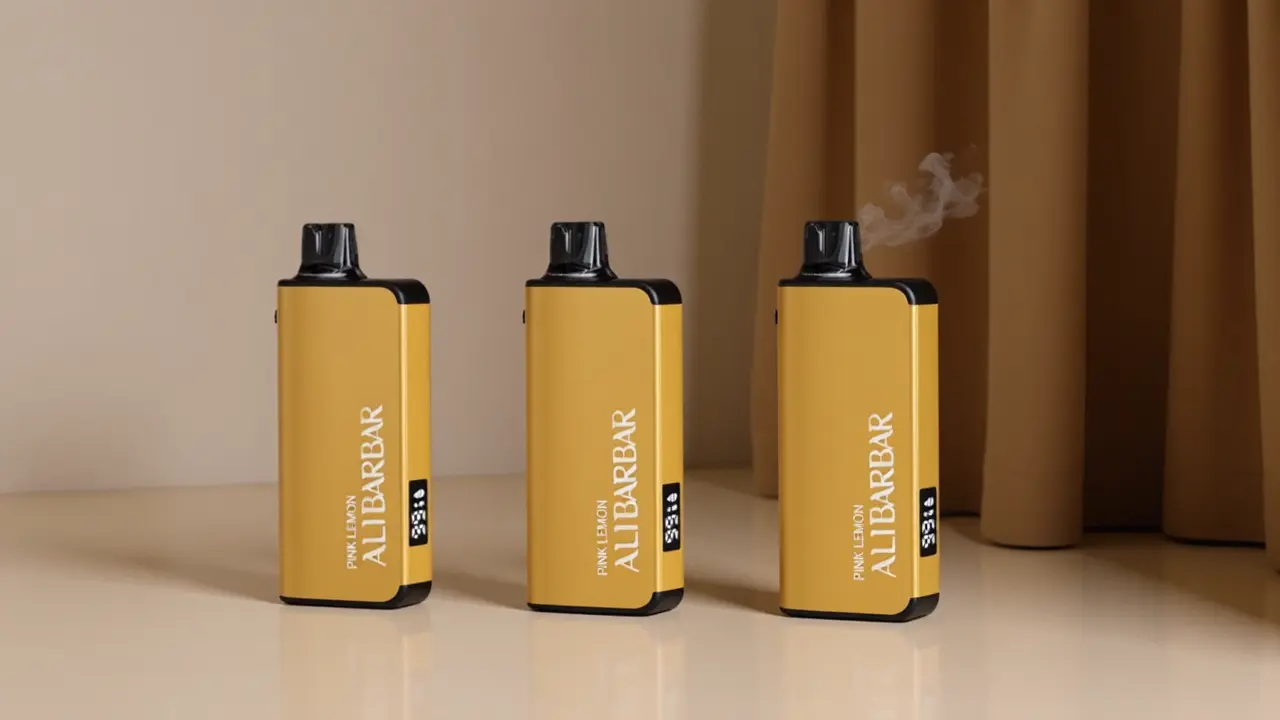
Sealed disposable units — including many of the ALIBARBAR INGOT series available through OZVAPE Shop — are built as closed, factory‑calibrated ecosystems. Their coil geometry, power delivery, and airflow are fixed and tested as a system. This does not make them inherently lower‑output than any other device, but it does mean that their aerosol characteristics are predictable and documented. For someone who wants to estimate clearance time, predictability is a tangible asset.
Rechargeable pod systems with interchangeable cartridges offer more flexibility but less integration. A pod that fits loosely, a coil that ages unevenly, or a liquid that varies batch‑to‑batch introduces variability in droplet size and mass. These are not flaws; they are consequences of modularity. The user who requires repeatable aerosol behaviour must pay closer attention to wear and compatibility.
Open‑system mods with user‑adjustable wattage and rebuildable atomisers sit at the other extreme. They can generate the largest cloud masses and the smallest droplets, particularly at high power with high‑VG liquid. In a still, poorly ventilated room, second‑hand aerosol from such a setup can remain suspended for tens of minutes, detectable by particle counters long after the visible plume disappears.
The point is not that one type is better, but that the design decisions a manufacturer makes have direct, measurable consequences. At OZVAPE Shop, the ALIBARBAR product pages include power ratings, coil type, and airflow characteristics as standard information. This lets adults cross‑reference device specifications with their own tolerance for aerosol persistence rather than relying on generic advice.
A Practical Framework for Evaluating Aerosol Persistence
No single number will tell you exactly how many seconds or minutes second‑hand vapour stays in your particular room. The following framework is designed to help you build a realistic mental model, using the information a responsible retailer provides.
Check the rated power and coil type. Lower‑wattage devices with simple round‑wire coils generally produce coarser aerosol that settles faster. Mesh coils and higher wattage shift the balance toward fine, lingering particles.
Look for power‑delivery stability. Does the manufacturer describe constant‑voltage output, or is the device likely to hit harder when fully charged? If the specifications do not say, assume variability — and therefore unpredictable cloud behaviour.
Assess the airflow geometry. Tighter draw or smaller air holes? Expect longer residence times. Airier designs with wider mouthpieces? Expect more rapid settlement.
Know your consumable’s VG/PG ratio. High VG (above 60%) means a thicker, longer‑lasting cloud. High PG (above 60%) means a lighter, faster‑dissipating aerosol. If the ratio is not published, you are flying blind.
Account for the room. Still, cool, humid air preserves the cloud. Ceiling fans, open windows, and air‑conditioning exchange shorten suspension time dramatically. A small, enclosed space multiplies the effect of any device.
This framework becomes actionable only when device specifications are standardised and trustworthy. OZVAPE Shop’s practice of listing engineering data alongside each ALIBARBAR device — rather than burying it in fine print — is designed to make this comparison straightforward. When you can see at a glance that one sealed unit operates at 8W with a 1.2‑ohm coil and another runs at 18W with a 0.6‑ohm mesh, you have the basis for a meaningful prediction.
Common Mistakes When Assessing Second‑Hand Vapour Risk
Experience shows that even careful users routinely underestimate or overestimate aerosol persistence because of a handful of deeply ingrained misunderstandings.
Mistake 1: Equating visible cloud with the total airborne mass.
Many people assume that once the visible cloud vanishes, the air is clean. That is not how particle physics works. Sub‑micron droplets can remain suspended while being optically invisible. The absence of a cloud tells you nothing about the particle count or chemistry in the breathing zone. Conversely, a highly visible but coarse aerosol may settle out well before you lose sight of it. Visible cloud is a poor proxy for what actually matters.
Mistake 2: Assuming all devices in the same product category behave alike.
The term “disposable” tells you almost nothing about aerosol behaviour. One sealed unit might use a 1.4‑ohm coil and a 50/50 liquid to deliver a modest, fast‑settling puff; another might use sub‑ohm mesh and 70/30 VG to generate a dense, persistent cloud. Lumping them together because they both come pre‑filled is a category error that leads to false expectations.
Mistake 3: Ignoring the impact of consumable ageing and authenticity.
A consumable that has been improperly stored, exposed to temperature extremes, or sourced from an unauthorised supply chain may change viscosity, degrade flavour compounds, or even produce unexpected by‑products when heated. These changes affect aerosol droplet properties in unpredictable ways. Factory‑certified sourcing — the kind OZVAPE Shop commits to — removes this variable.
Mistake 4: Treating the room as a passive container.
The same device used by the same person can produce a cloud that dissipates in 30 seconds in a breezy hallway and lingers for 15 minutes in a sealed car. Ventilation, air movement, temperature, and humidity are not footnotes; they dominate the clearance equation. Any estimate that ignores them is of limited value.
From an industry perspective, these mistakes matter because they fuel both complacency and unnecessary anxiety. Manufacturers that provide clear, technical documentation give users the tools to move past guesswork. Retailers that obscure that information — or do not possess it — leave their customers adrift.
Frequently Asked Questions
Q: Does second‑hand vapour contain nicotine?
A: The exhaled aerosol can contain nicotine, though typically at lower concentrations than the inhaled puff. The amount depends on the device and the consumable. More importantly, the particle size and airborne behaviour determine how much actually reaches a bystander.
Q: How can I reduce the time second‑hand vapour stays in the air?
A: Use a device configured for lower power and coarser droplet production, choose a higher‑PG consumable, increase room ventilation, and avoid puffing in still, enclosed spaces. Knowing your device’s specifications allows you to select one that aligns with your environment.
Q: Is it safe to use a vape device indoors around others?
A: This is a question of risk assessment, not a binary yes or no. The particle load, chemistry, and ventilation conditions all influence the exposure a bystander receives. There is no regulatory threshold for “safe” second‑hand vapour concentration in residential settings, so informed caution is the responsible approach.
Q: Do high‑power devices always produce longer‑lingering aerosol?
A: Not always, but they tend to. Higher power usually means smaller droplets and greater cloud mass. However, airflow design and consumable ratio can partially offset this. A high‑power device with a very open draw and high PG might dissipate faster than a low‑power device with a tight draw and high VG.
Q: How can OZVAPE Shop help me choose a device that suits my preferences for discreet use?
A: The ALIBARBAR product listings on OZVAPE Shop include consistent technical data — power, coil resistance, airflow characteristics — so you can compare devices directly and select one with a predictable aerosol profile. The team can also answer specific questions about device behaviour in use.
Q: Why do some vapour clouds seem to disappear quickly while others hang for minutes?
A: The difference is almost always a combination of droplet size (determined by coil and airflow) and consumable VG content. Higher VG produces denser, more hygroscopic clouds that linger. Rapid dissipation suggests smaller cloud mass or higher ventilation.
Q: Can second‑hand vapour set off smoke alarms?
A: It can, depending on the alarm type. Optical (photoelectric) alarms can be triggered by dense vapour clouds. Ionisation alarms are less likely to respond. Distance, ventilation, and cloud density are the key variables.
Q: Does the age of the device affect aerosol persistence?
A: Yes. As coils degrade, they may produce larger droplets or inconsistent output, changing the cloud’s behaviour. A worn coil can also alter the chemistry, potentially introducing heavier compounds that settle differently.
Q: What should I do if I suspect my consumable is not authentic and is affecting the aerosol?
A: Stop using it. Uncontrolled consumables can introduce unknown solvents or impurities that change vapour composition and persistence. Purchase from a retailer that guarantees factory‑certified inventory — OZVAPE Shop provides that assurance for every ALIBARBAR product.
Q: How long should I wait after using a device before the air is completely clear?
A: There is no universal number. In a well‑ventilated room, most visible aerosol will dissipate within seconds to a minute, and particle counts can return close to background within 5–15 minutes. In a stagnant, enclosed space, sub‑micron particles may be detectable for 30 minutes or longer. Use the evaluation framework described above to make a reasoned estimate, and ventilate whenever possible.
Making the Informed Decision Your Own
The question of how long second‑hand vapour stays in the air is, at its core, a question about knowing your device. There is no substitute for understanding the heating mechanism, power management, airflow, and consumable formulation that together write the aerosol’s airborne script. Once you grasp those variables, the “how long?” question becomes answerable — not with a stopwatch, but with a realistic expectation that you can carry from room to room and device to device.
OZVAPE Shop exists to equip adults with that kind of understanding, supported by a transparent supply chain and product documentation that does not assume the user is uninformed. When you have access to accurate, standardised information about the ALIBARBAR devices in our catalogue, you can weigh the trade‑offs that matter to you — cloud density, flavour performance, aerosol behaviour in confined spaces — and choose accordingly.
The right device is not the one with the most attention‑grabbing claims. It is the one whose engineering matches your actual, everyday life. The choice is yours, and with the information outlined here, you are better prepared to make it.