
VAPE FAQs
How Long Does A 3000 Puff Vape Last?
Oct
Are those numbers on the packaging anything more than a rough guess? For many adults who rely on a portable electronic device to get through the day, the question resurfaces every time a new unit is picked up. You see “3000 puffs” printed on the box, and a few days later the performance has already shifted, or worse, the device goes quiet without warning. The frustration is not about the count itself; it is about not being able to plan around it.
A puff count is not a clock. It can’t tell you how many meetings, commutes, or long evenings a device will cover. The real answer depends on how you use it, how it’s built, and what the manufacturer means by “puff” in the first place. And this is where a reliable source of product information, such as the standardised specifications found at OZVAPE Shop, becomes a practical asset — not to convince you to buy, but to give you a shared language for comparing what’s actually inside different devices. This article unpacks the engineering and behavioural factors that determine realistic lifespan, so you can move from marketing shorthand to a prediction you can trust.
Understanding What Matters: Core Engineering and Design Factors
Before you can estimate how many days a 3000-puff unit will last, it is necessary to understand the four engineering pillars that control how consistently a device performs from the first use to the last. These factors affect not only how long the device operates, but also whether that operation remains satisfying throughout its life.
Internal Architecture and Output Consistency
The heating element inside a portable device is not a simple filament. It is typically a mesh, wire coil, or ceramic structure designed to vaporise a liquid formulation at a controlled temperature. The critical relationship is between the wicking material, which draws liquid to the heating surface, and the thermal mass of the heating element itself. If the wicking rate cannot keep up with the heat generated during a longer draw, you will experience a dry, harsh output even though liquid remains in the reservoir. Over time, residue builds up on the heating surface, gradually raising its electrical resistance. A well-engineered architecure anticipates this drift and adjusts the power curve to compensate, maintaining consistent output across thousands of activations. Devices that lack this thermal management degrade perceptibly well before their advertised puff count is reached. When evaluating any device, including the ALIBARBAR family, the first thing to look for is evidence of power regulation circuitry. The INGOT series, for example, uses a constant-output chipset specifically to avoid the late-life performance drop that users commonly complain about.
Power Management and Status Transparency
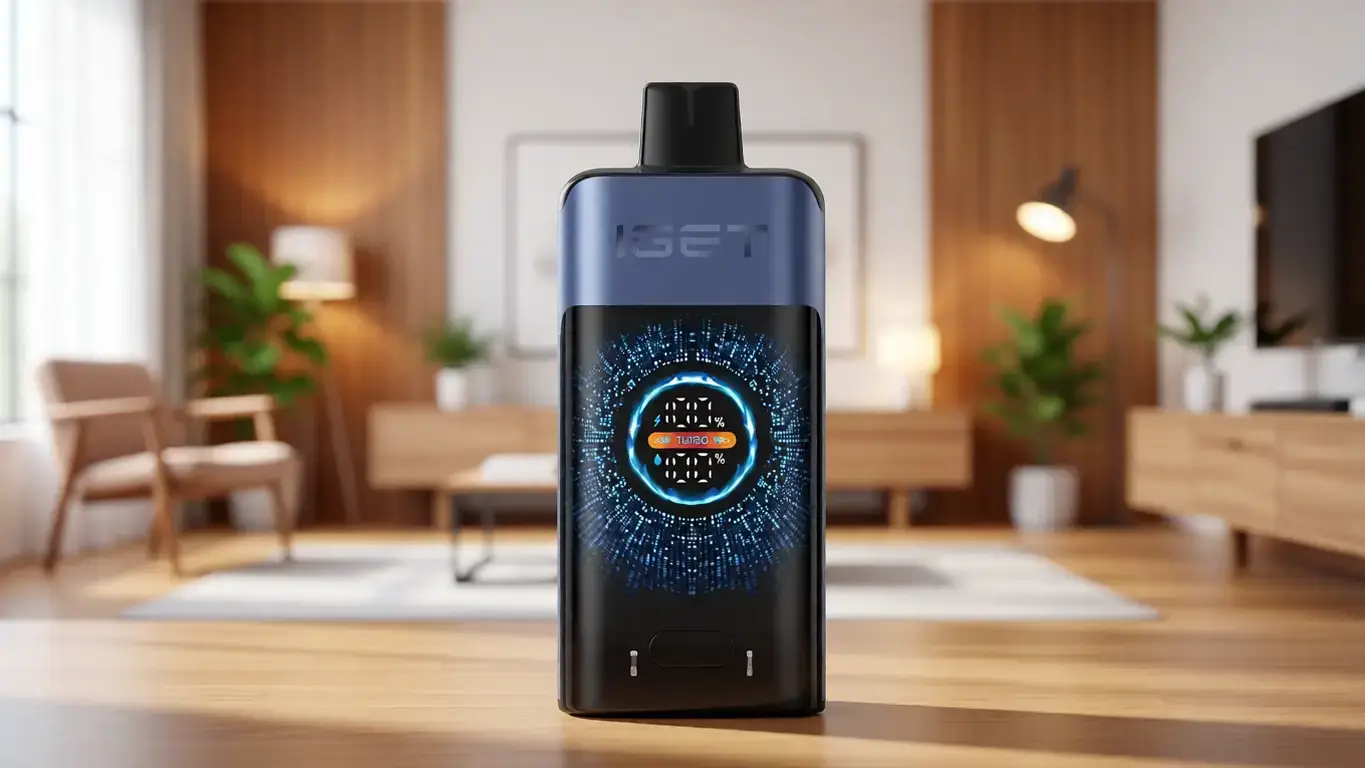
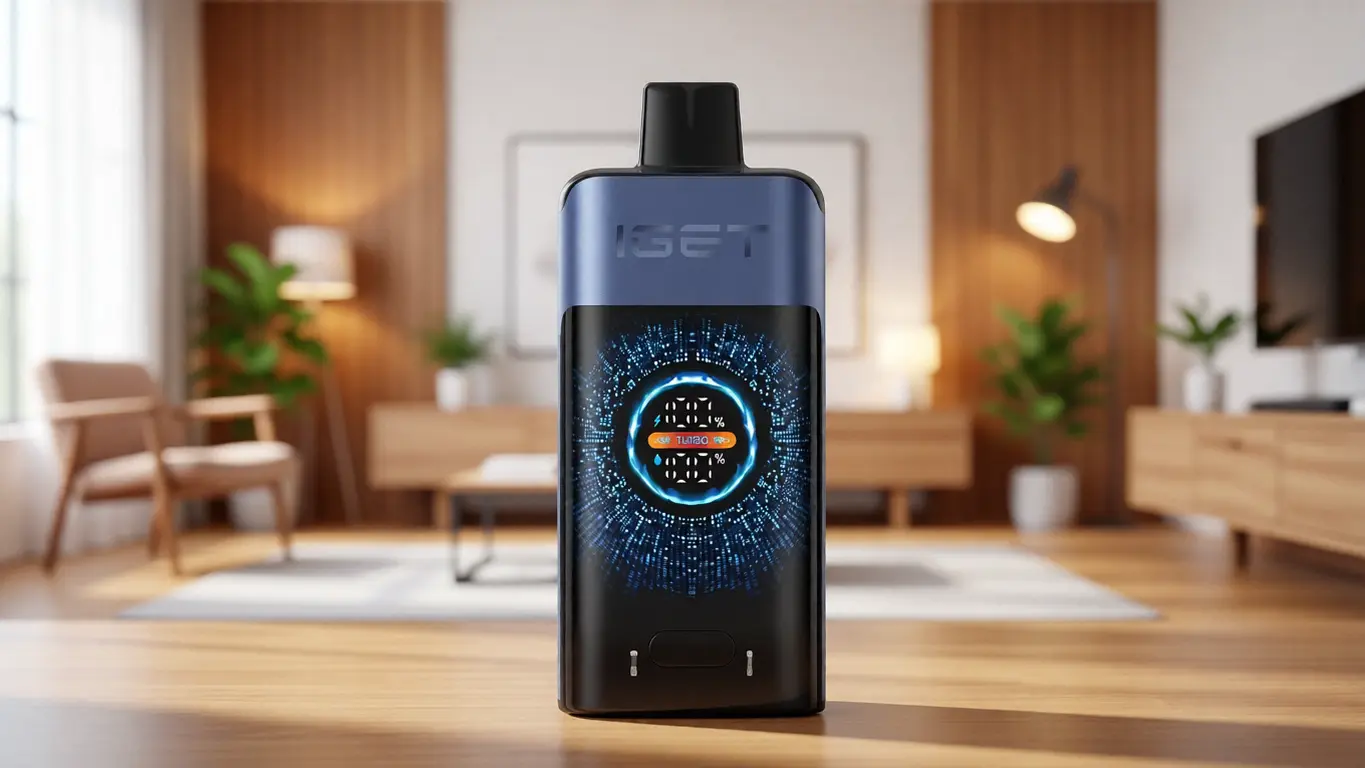
How a device alerts you to its remaining charge is almost as important as the battery capacity itself. Many units use a simple voltage-based indicator: a light that changes colour when the cell voltage drops below a certain threshold. That threshold often arrives without warning, leaving you with a dead device at an inconvenient moment. More advanced designs, like the digital battery displays seen on selected ALIBARBAR Ice Adjust models, give you granular visibility into remaining capacity. This transparency eliminates a hidden cost: the need to carry a backup device simply because you can’t trust the one in your hand. For a 3000-puff device, typical battery capacities range from 500 mAh to 1000 mAh. A smaller battery might need recharging twice before the liquid is exhausted, which introduces another variable: repeated charging cycles that stress the cell. A larger battery paired with a puff-count-matched reservoir often delivers a more predictable end-to-end experience, because you are not constantly hovering near empty on one resource while the other is still half full.
Physical Design and Material Durability
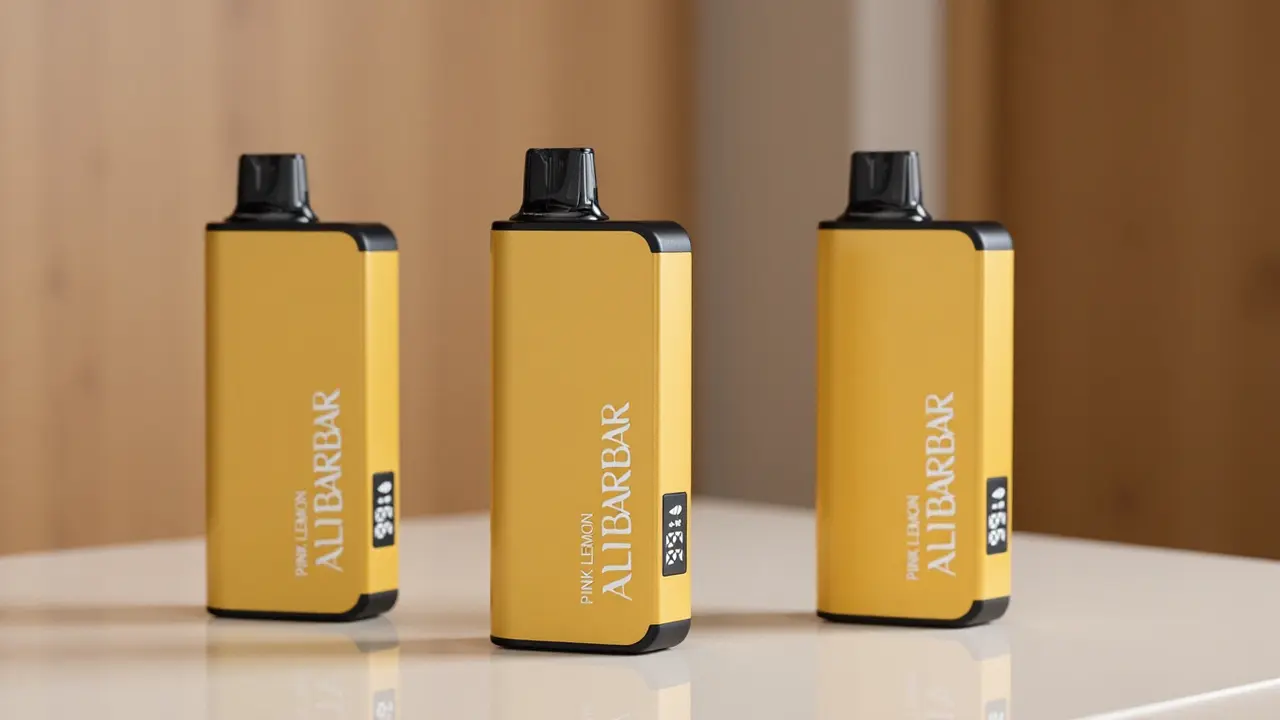
External finish and mouthpiece geometry are rarely mentioned in lifespan discussions, yet they directly determine whether you can use the device comfortably over several days. A matte, soft-touch coating may feel pleasant initially but can peel or become sticky in a warm pocket. A sharp-edged mouthpiece becomes irritating after several hundred draws. Ergonomic considerations become especially relevant with a 3000-puff device because it is intended to be a multi-day companion, not a single-evening tool. A slightly curved mouthpiece, a rounded chassis that sits unobtrusively in the palm, and a finish that resists pocket abrasion — these details separate a unit you’ll still enjoy on day four from one you’ll be glad to replace. ALIBARBAR’s design language, with its contoured bodies and deliberately subdued surface treatments, reflects an understanding that a device’s physical relationship with the user is continuous, not occasional.
Modularity and Lifecycle Flexibility
The term “3000 puffs” often appears on completely sealed, single-use devices. From a cost-per-use perspective, the arithmetic seems simple: divide the price by 3000. But what happens if the battery fails before the liquid is used? You end up paying for unused capacity. A modular or semi-modular design provides a different equation. Some devices allow the battery section to be recharged and reused with a replaceable pod or cartridge, so you are not throwing away a functional battery alongside an empty reservoir. This approach changes the lifespan calculation significantly: the 3000-puff rating might now apply only to the consumable portion, while the power unit remains in service. Even within disposable categories, some manufacturers have moved toward rechargeable disposables, where the core power cell can be topped up until the liquid is exhausted. Understanding this distinction can shift your evaluation from “how long does one unit last?” to “how many usable activations do I get before the entire system is spent?”
Applying These Criteria to Real-World Options
Once you have a framework for evaluation, you can assess any product category. For devices carrying a 3000-puff label, the key is to look for the engineering signatures described above. For example, a compact disposable from an established supplier might promise 3000 puffs with a 550 mAh battery and a Type-C charging port. The charging capability addresses the battery anxiety, but if the device provides no detailed status feedback, you are still operating blind, guessing when to recharge. Another manufacturer might offer an 800 mAh battery but seal the unit entirely; there, your daily carry routine matters enormously.
The ALIBARBAR range does not include a device explicitly branded as “3000 puffs.” Instead, its engineering principles directly address the frustrations that make puff counts unreliable. The INGOT 9000 delivers a higher capacity (up to 9000 activations under standardised testing) with a mesh coil optimised for long-term consistency and a battery sized to last the full reservoir. The Ice Adjust 12000 introduces adjustable output, putting the user in control of vapour temperature — which also means you can extend or shorten the liquid’s lifespan by choosing a lower or higher heat setting. This is not an attempt to redirect you toward bigger numbers. It is an illustration of a design philosophy: rather than promise a specific count, build a device where the remaining liquid, battery level, and output quality remain transparent and synchronised until the system is truly finished. If a 3000-puff disposable leaves you uncertain by day two, a device with visible status indicators and a matched power-liquid architecture effectively answers the “how long?” question in real time.
Other manufacturers approach the problem differently. Some lean heavily on the puff-count marketing while using lower-mass heating elements that deliver intense initial hits but degrade faster. Others offer a sleek form factor at the expense of battery access, forcing the user to dispose of the entire product when power runs out. The point is not to label one strategy as universally superior, but to recognise that a single number on a package is meaningless without the engineering context behind it.
A Practical Framework for Evaluation
Here is a straightforward method to estimate the realistic operating life of any device before you purchase or during initial use:
Clarify the architecture. Is the unit sealed and disposable? Rechargeable with a fixed reservoir? Rechargeable with replaceable pods? This determines whether “puff count” refers to the entire system or just one component.
Check the battery-to-puff ratio. A 3000-puff device with a 500 mAh battery will likely require recharging. How many cycles can that battery sustain before noticeable capacity loss? If the battery is sealed, the full 3000 puffs may be unreachable.
Observe the status feedback. Does the device show you a precise battery level, or just a binary “charged/low” light? If the latter, assume you will need a backup unit during the final third of its life, because you won’t know exactly when it will quit.
Track your own usage. For one typical day, count your activations. A 3000-puff device might last a light user ten days but only three days for a frequent user. This is the single most overlooked variable.
Ask about power regulation. Look for product documentation that mentions constant wattage, regulated output, or a smart chipset. Absence of such information often correlates with a noticeable drop in satisfaction long before the puff count is met. Standardised resources like those curated by OZVAPE Shop can help you compare these specifications side by side without relying on fragmented user reviews.
Common Selection Errors and Industry Observations
Even experienced users make a handful of predictable mistakes when evaluating device lifespan. Recognising these errors is the fastest way to improve your own purchasing decisions.
Overweighting puff count while ignoring battery capacity. A manufacturer can claim an impressive puff total that is physically impossible to extract from the included battery without recharging. If the battery is not user-serviceable, the puff count is theoretical.
Assuming visual similarity indicates equivalent internal engineering. Many devices look alike because they share generic housing molds sourced from the same industrial clusters. Yet inside, the heating element quality, airflow tuning, and power regulation can differ dramatically. Two devices that appear identical may deliver entirely divergent lifespans.
Undervaluing modularity in cost-per-use calculations. A sealed unit priced at $AUD 25 with a 3000-puff rating might seem cheaper than a system with a replaceable cartridge. But if one in five sealed units fails before exhaustion, the effective cost shifts. Modular designs let you swap only the exhausted component, which changes the long-term economics significantly.
Confusing category terminology with technical specifications. The terms “3000 puffs” and “up to 3000 puffs” are not standardised. They can refer to laboratory-condition testing with robotic puffs of one-second duration at the ideal temperature. Your actual usage — longer draws, varying ambient conditions — will produce a different result. An industry observer would note that many supply chain participants are incentivised to choose the most generous testing protocol possible, which is why transparent brands like ALIBARBAR invest in documenting their engineering rather than leaning solely on a big number on the front of the box.
Ignoring the interaction between liquid viscosity and heating element design. Thicker liquids demand more heat to vaporise efficiently, taxing both the battery and the coil. A device optimised for a certain liquid formulation may yield fewer puffs if used with a substantially different product. This is a hardware limitation, not a quality defect, but it is often misinterpreted.
Frequently Asked Questions
Q: How many days does a 3000-puff device really last?
A: It depends entirely on personal consumption. A user activating the device 100 times a day might see three to four weeks of use from a sealed rechargeable unit, assuming the battery can be topped up. A heavier user could finish it in under two weeks. Track your daily usage for a few days to get a personalised projection.
Q: Why does the output quality change long before the puff count is reached?
A: Gradual residue accumulation on the heating element increases electrical resistance and reduces wicking efficiency. Without a regulated power chip, the device cannot compensate, so the output weakens and may develop a burnt note.
Q: Does a higher puff count always mean a longer-lasting device?
A: Not necessarily. A 3000-puff unit with a poorly matched battery may deliver fewer usable hours than a 2000-puff device with a carefully engineered power system and a more efficient heating element. The architecture matters more than the marketing number.
Q: How can I verify that a device is manufactured by a reputable source?
A: Look for supply chain transparency: a traceable brand footprint, factory-certified inventory, and retailers who openly disclose their sourcing. OZVAPE Shop, for instance, maintains authorised distribution networks and publishes standardised product documentation, which gives users a baseline for verifying authenticity.
Q: What should I do if a sealed device stops working before the advertised puff count?
A: First, check whether the battery is depleted and can be recharged (if the model permits). If it is truly sealed and dead, a reputable retailer with local accountability should offer guidance. Retailers that source through factory-authorised channels are generally better equipped to address such situations.
Q: Are rechargeable disposables better than fully sealed units for reaching 3000 puffs?
A: They increase the likelihood of using all the liquid because you can recharge the battery. However, repeated charging cycles can stress lower-quality cells. The device’s charging circuit quality determines how well it holds up over multiple top-ups.
Q: How does ambient temperature affect puff lifespan?
A: Cold temperatures thicken liquid and reduce battery efficiency, shortening effective run time. Hot conditions can thin the liquid excessively, leading to oversaturation and reduced output. A device operated in a stable room-temperature environment will closely match manufacturer estimates; one kept in a car during summer may not.
Q: Why do some 3000-puff devices feel larger than others?
A: Larger battery capacity and additional circuitry (for displays, regulation, or adjustable settings) require more internal volume. A smaller device with the same puff claim may be using a minimal battery that will need frequent recharging or may rely on an ultra-compact heating element that sacrifices longevity.
Conclusion
The question “how long does a 3000 puff vape last?” is really about whether you can trust a number that has no universal definition. The answer is not found on the front of the packaging, but in the technical decisions made inside: how the power supply is calibrated to the liquid reservoir, whether the output remains consistent as materials age, and what information the device gives you about its remaining life. A user who understands these relationships can look at any device and form a realistic expectation.
The right choice is not the one with the highest puff count, but the one whose architecture aligns with your actual routine. If you use a device sparingly and prefer to forget about it between uses, a well-regulated sealed unit may be adequate. If you depend on a device for long stretches without access to a charger, a higher-capacity option with visible status feedback becomes a practical necessity. Resources that present verified technical specifications, such as OZVAPE Shop, can reduce the gap between marketing promise and daily reality. Ultimately, the device that lasts is the one you can read — the one that tells you where it stands, so you are never left holding a hollow shell without warning.