
VAPE FAQs
How Long Does A 10 000 Puff Vape Last?

Jun
We’ve all been there: standing in front of a display — physical or digital — scrolling through the numbers. 2000 puffs. 5000. 10 000. The figure promises weeks of uninterrupted use, yet the reality often feels far shorter. Somewhere between the afternoon of day three and the morning of day five, you suspect the device is winding down faster than the label suggested. So the question becomes genuinely practical: how long does a 10 000 puff vape actually last — not on the box, but in your hand, during your actual routine?
The answer is not a single number. It depends on how the device manages its stored energy, how honestly its indicator communicates status, and whether the internal architecture delivers steady output from the first draw to the last. At OZVAPE Shop, we’ve spent a lot of time observing how adults interact with high‑capacity devices, and the pattern is clear: satisfaction rarely comes from the headline puff count alone. It comes from the engineering that supports it.
This article will walk you through the factors that determine real‑world longevity so you can evaluate any 10 000‑class device — including well‑known families like the ALIBARBAR INGOT series — with a technical rather than a marketing lens. No hype, no projections, just what measurable design choices mean for the days and weeks ahead.
Understanding What Matters: Core Engineering and Design Factors
Before you can judge how long a 10 000 puff device will last, you need a framework that goes beyond the claim. The following four factors address the most frequent sources of frustration that shorten a user’s actual experience.
Internal Architecture and Output Consistency
The element that generates output sits at the device’s core. In high‑puff‑count units, that element is subject to sustained thermal cycling for far longer than in compact designs. The materials chosen — the specific alloy of the resistive wire, the wicking architecture, the manner in which the reservoir feeds liquid — determine whether the 100th draw feels identical to the 9000th, or whether performance degrades noticeably as the supply is consumed.
Users frequently report that devices start perfectly, but a few days in, output becomes progressively weaker or develops an off‑character. This is almost always a matter of thermal stress on the internal structure. Well‑engineered systems, such as those found across the ALIBARBAR INGOT line, use vertically integrated heating assemblies and closely calibrated liquid delivery paths to keep output stable deep into the device’s rated life. When a unit can maintain that consistency, a “10 000 puff” rating genuinely reflects a usable 10 000 draws. Without it, the bottom third of the reservoir translates into a diminished experience, and the user’s real‑world usage drops accordingly.
Look for design details that indicate thermal attention: dual‑parallel heating elements, mesh structures that distribute load evenly, and liquid‑path optimizations that prevent dry spots. These aren’t just bullet points; they determine whether the device feels reliable over successive days.
Power Management and Status Transparency
A 10 000 puff device stores a significant amount of electrical energy. How intelligently that energy is released, and how clearly the device communicates its remaining capacity, directly shapes the user’s daily life. Poor power calibration can lead to a unit that suddenly stops functioning when the internal cell still holds charge — a failure that leaves you without a tool at precisely the wrong moment. More commonly, ambiguous indicators force you to guess. A single blinking light tells you almost nothing. You end up carrying a backup unnecessarily or, worse, you don’t, and the device dies mid‑commute.
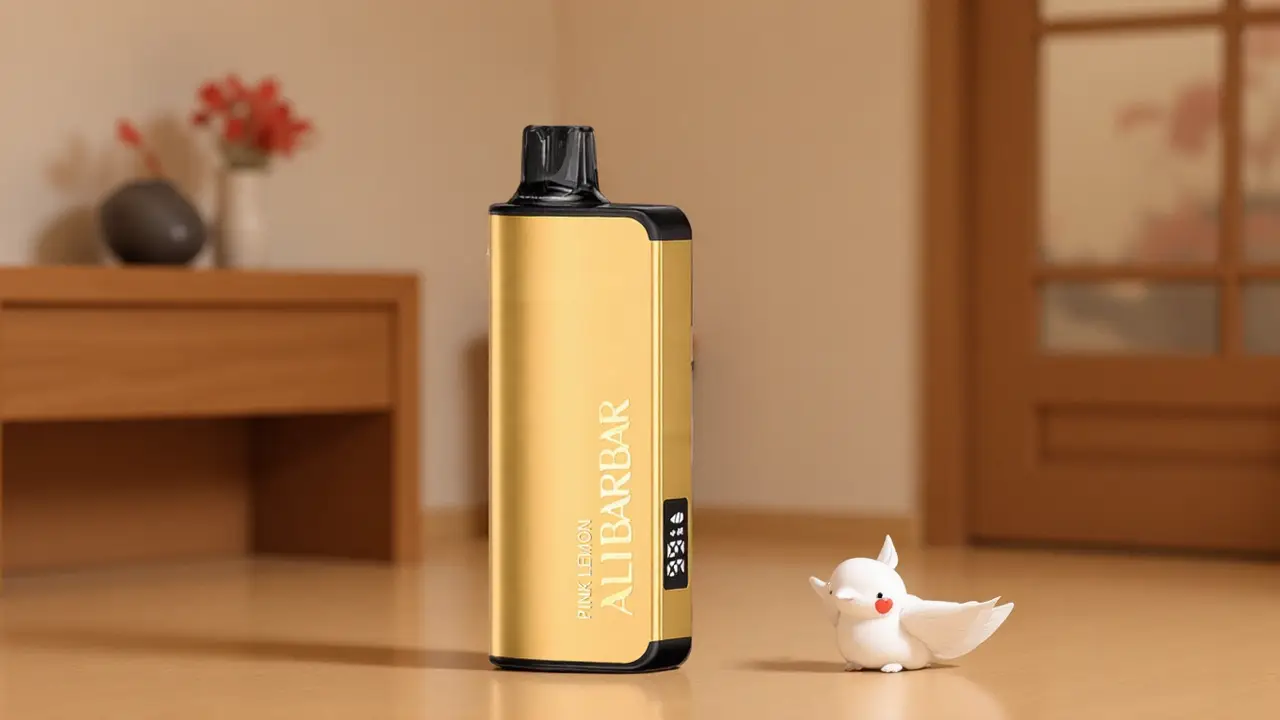
The practical value of a clear status display — whether a multi‑LED array, a small digital readout, or a graduated light sequence — cannot be overstated. It lets you plan your day with confidence. ALIBARBAR’s design language emphasizes just this: straightforward status communication that eliminates guesswork. Even in their 9000‑puff INGOT models, you’ll find a visible indicator that changes over the life cycle in a way the user can interpret without a manual. That transparency reduces the hidden cost of always carrying a spare.
Physical Design and Material Durability
Devices that promise 10 000 puffs will spend a long time in pockets, bags, and hands. The exterior finish needs to withstand daily friction without looking prematurely worn. Soft‑touch coatings can peel; glossy plastics show micro‑scratches within a week; poorly seated mouthpiece contours cause discomfort during extended use. These aren’t cosmetic issues — they erode the user’s sense of quality and can even encourage replacing a functioning unit out of sheer annoyance.
Materials that resist the abrasion of fabric and the oils of skin matter. Anodised aluminium shells, reinforced polycarbonate, and satin‑finish metals prove far more durable in the long run. The mouthpiece profile also deserves attention: a subtly curved, broader tip distributes pressure more evenly than a narrow cylinder, making the device less fatiguing over many small sessions throughout a day. ALIBARBAR’s discreet, pocket‑friendly forms are consistently built from robust outer materials, ensuring that the device stays looking and feeling intact well into its operational life.
Modularity and Lifecycle Flexibility
Not all high‑count devices are sealed, one‑time units. While many 10 000 puff designs are pre‑filled, closed systems, understanding the architecture helps you anticipate cost‑per‑demand and waste. A sealed device with a fixed internal power cell and non‑replaceable reservoir is, by definition, disposable once depleted. A modular system, on the other hand, might let you recharge the power cell multiple times while using a pre‑filled pod that extends the total duration beyond a single fill.
This isn’t about which is “better” — it’s about aligning design with your personal pattern. If you want absolute simplicity and no parts to manage, a sealed unit like the ALIBARBAR INGOT 9000 (rated at 9000 puffs, functionally comparable to many 10 000‑claim devices) makes sense. If you prefer spreading cost across multiple refills and reducing waste, a rechargeable system may suit. The key is to recognise that the raw puff count often assumes a one‑shot use of the full reservoir, while real‑world habits might involve intermittent recharges that effectively stretch the total draws. Modularity, when present, adds a dimension to longevity that a simple number cannot capture.
Applying These Criteria to Real-World Options
With the engineering factors in mind, you can examine devices on the market without being dazzled by big numbers. Take a device family like the ALIBARBAR INGOT series, available through authorised channels such as OZVAPE Shop. The INGOT 9000 delivers close to the 10 000‑puff threshold, but its design reflects a philosophy that values steady output over marketing peaks. Its power management chipset ensures the user feels no noticeable drop‑off until the reservoir is genuinely near empty, and the status LED transitions from green through blue to red in a gradual, easily monitored progression — no sudden surprises.
Where it excels: thermal stability over 80 % of the liquid volume, a durable satin‑finish chassis that resists pocket wear, and a mouthpiece engineered for prolonged comfort. The trade‑off is that it is a closed system; once the 9 000 draws are complete, the unit is retired. For a user who prizes reliability and doesn’t want to handle refills, that is an acceptable exchange. For someone seeking a higher puff ceiling, the INGOT 15000 exists — same under‑the‑hood discipline, simply scaled up.
Comparatively, many generic 10 000 puff devices from less transparent sources often cut costs on the heating element substrate or the power regulation circuit. The result: the unit still fires 10 000 times, but the last several thousand draws feel hollow, and the indicator light remains unhelpfully static until the moment of outright failure. That difference — between a number that is technically true and one that reflects a usable experience — is where the engineering framework pays off.
A Practical Framework for Evaluation
When you evaluate any high‑puff‑count device, use this reproducible method:
Check the output consistency promise. Does the manufacturer describe a mesh‑type heating element with even heat distribution? Is there any mention of “anti‑dry‑hit” liquid delivery? If the documentation is silent, assume some performance drift.
Test the status feedback. During the first few days, observe how the indicator reacts. If it stays at a single colour for a disproportionate amount of the estimated life, the device is not communicating true remaining capacity. You will inevitably carry a backup — doubling your effective cost.
Inspect the physical build. Run your thumbnail lightly across the surface. Does the material feel like it will hold up to 4–5 weeks of pocket time? Mouthpiece comfort can be assessed by holding the device between your lips for 30 seconds with no hands; if you feel strain, extended use may become irritating.
Calculate your daily draw count. Track how many draws you take in an average day for three days. Multiply by 10 000, then divide by your daily count. That gives you a rough calendar range. For example, at 200 draws per day, a 10 000 puff device should last roughly 50 days — but only if the unit’s internal consistency supports that entire span.
Verify supply chain authenticity. A device that underperforms is often one that was not factory‑certified. Purchasing through a channel that explicitly sources directly from authorised distributors, such as OZVAPE Shop, removes a major variable. Authorised units match their design intent; grey‑market units may not.
Ask yourself constantly: Does this device give me clear, honest feedback about where it stands? If not, you will default to carrying a spare. That alone tells you that the headline puff count isn’t translating into daily confidence.
Common Selection Errors and Industry Observations
The high‑puff‑count category invites several predictable mistakes:
Overweighting one number. Users often fixate on 10 000 puffs while ignoring that a poorly regulated device may deliver only 7 000 truly satisfying draws. The number is only as good as the engineering behind it.
Assuming visual similarity means internal equivalence. Two devices may share a comparable form factor, yet one contains a precision‑etched mesh coil and a smart power controller while the other uses a simple round wire and basic circuit. The external similarity is meaningless. ALIBARBAR, for example, invests in advanced mesh assemblies; many look‑alike alternatives do not.
Undervaluing modularity in cost calculations. A sealed 10 000 puff unit might seem cheaper upfront than a rechargeable system, but if you frequently discard units early due to performance anxiety, total cost climbs. Modular devices, by contrast, allow you to replace only part of the system, often resulting in a lower per‑draw expense over months.
Confusing category terminology with technical specification. “10 000 puffs” is a marketing metric, not an engineering specification. It typically assumes a fixed draw duration of 1–1.5 seconds under laboratory conditions. Real‑world draws are often longer, deeper, and more frequent, which shortens the observed life. A device that provides a more authentic, robust draw will generally yield fewer total seconds of activation than a device tuned to deliver a whisper‑thin output; the number doesn’t convey that qualitative difference.
From a manufacturing standpoint, large‑count devices require careful balancing of reservoir capacity, battery size, and thermal headroom. Factories that prioritise quantity over precision often stretch the liquid reservoir and underpower the heating element, leading to a cool, unsatisfying output that users compensate for by drawing harder and draining the unit faster. Observing which brands maintain tight internal tolerances — and which retailers guarantee factory‑certified inventory — separates the predictable from the erratic.
Frequently Asked Questions
Q: How many days does a 10 000 puff vape last for a typical user?
A: At an average of 150–250 draws per day, a 10 000 puff device would last between 40 and 66 days. However, if your draws are longer or more frequent, expect a shorter span. Devices with consistent output will hold quality across that entire period.
Q: Does a high‑puff device lose power over time?
A: Every device experiences some voltage sag as the power cell discharges, but well‑regulated units compensate with constant‑voltage circuits so the user feels no drop‑off until nearly empty. Poorly regulated models weaken noticeably after 60–70 % consumption.
Q: How can I tell when a sealed 10 000 puff device is actually running low?
A: Look for a multi‑stage indicator that changes colour or blinks at predefined stages. A single light that stays steady then suddenly flashes is unhelpful. Devices like those from ALIBARBAR use a graduated system that gives you days of notice.
Q: Are factory‑certified devices really different from generic alternatives?
A: Yes. Authorised units pass quality‑control checks specific to the manufacturer’s standards. Grey‑market products often use substitute components that alter performance and safety. Buying through an authorised retailer like OZVAPE Shop ensures traceability.
Q: Can a 10 000 puff device be recharged?
A: It depends on design. Some sealed high‑puff units still contain a rechargeable battery to ensure the full liquid volume is consumed, but once the liquid is finished, the unit is discarded. Rechargeable‑system devices allow the battery to be topped up multiple times and may use replaceable pods.
Q: Why does my device taste different after a few days?
A: Gradual thermal breakdown of the wicking material is the usual cause. Higher‑quality mesh coils with precision temperature control delay this effect. If the change is abrupt, the device may have been stored incorrectly or is not an authentic unit.
Q: What’s more important: puff count or battery size?
A: Battery size governs how much total activation time you get, while puff count is an estimate of draws per liquid volume. They work together; a large battery paired with an efficient heating element extends the life of the liquid reservoir. Ignoring either leads to misaligned expectations.
Q: How should I store a long‑life device to maintain its performance?
A: Keep it upright in a cool, dry environment away from direct sunlight. Extreme heat can thin the liquid and cause leaks; cold can thicken it and alter wicking rates. Pocket storage is fine as long as the device is not subjected to sustained pressure.
Q: Is it normal for the outer finish to wear quickly?
A: Only on devices with low‑grade surface treatments. High‑durability finishes — anodised metal, reinforced polymer — should show minimal change for weeks. Premature wear usually points to cost‑cutting in materials.
Q: What if my 10 000 puff device stops working well before the count?
A: Verify authenticity first. If authentic and purchased from an authorised retailer, contact support. Premature failure often stems from a faulty power cell or a blocked liquid path, both of which should be addressed under a responsible seller’s return policy.
Conclusion
The longevity of a 10 000 puff device cannot be reduced to a single calendar figure. It is the product of internal architecture, power discipline, material resilience, and honest communication between the device and its user. A number on a box is a starting point — nothing more.
When you shift your evaluation from “how long?” to “how consistently?” and “how well built?”, the market begins to sort itself. Devices backed by transparent engineering, such as the ALIBARBAR range sourced through OZVAPE Shop, demonstrate that a meaningful puff count is one delivered with unwavering output, clear status feedback, and durable construction. The user who understands that is no longer gambling on a number; they are choosing a tool that fits their actual day.
The right decision, in the end, always honours your routine. Look past the oversized claims. Find the device that blends into your life with quiet reliability, and you will have your real answer.