
VAPE FAQs
How Long After Teeth Whitening Can I Vape?
May
Many people walk out of a whitening appointment feeling genuinely pleased with the result, then almost immediately face a quiet dilemma: they know they want to keep their teeth looking that way, but they also want to return to their normal daily routines. For a significant number of adults, those routines include using a personal electronic device. The question “How long after teeth whitening can I vape?” is not trivial. It sits at the intersection of dental chemistry and product design, and the answer matters far more than most marketing material ever admits.
The advice that follows does not come from a dental chair. It comes from a careful reading of tooth physiology, common device engineering, and the patterns of user behaviour we observe at OZVAPE Shop every day. The goal here is not to insert a brand into a health decision, but to give you a framework for protecting an investment you just made in your smile. A framework that respects the fact that some people will vape again after whitening, and they deserve realistic, technically accurate guidance on when and how to do so with the least possible damage.
Understanding What Matters: The Overlooked Connection Between Whitening and Vapour
To get the timing right, you first need to understand what happens to your teeth during whitening and why certain vapour characteristics can undo that work in a single afternoon. Most users focus only on visible shade. The real risk runs deeper.
Porosity and Sensitivity: The 48‑Hour Window
Professional whitening, whether light‑activated or tray‑based, temporarily increases enamel permeability. The peroxide compounds open microscopic channels in the tooth surface so they can reach deep stains. After the procedure, those channels take time to close fully. For most people, the window of heightened vulnerability lasts between 24 and 72 hours, with a consensus safety threshold at 48 hours. During that period, any pigmented or acidic substance contacting the teeth can penetrate far more easily than it normally would. Vapour itself is not a staining agent in the way that coffee or red wine is, but the liquid that produces it almost always carries compounds that bond to porous enamel when they land. If you vape too soon, you are exposing a temporarily absorbent surface to a fine mist of colour‑carrying ingredients. The result is often uneven tone loss — not instant, but noticeable days later, when the teeth have re‑hardened and sealed those stains inside.
Chemical Deposit, Not Just Colour
Even clear e‑liquids contain constituents that influence the oral environment. Propylene glycol and vegetable glycerin, the base carriers, leave a thin film on teeth. On intact enamel, that film is mostly harmless and easily cleared by saliva. On freshly whitened enamel, it acts as a sticky substrate that holds onto anything else that comes along — food dyes, tannins from a later cup of tea, even airborne particles. The chemical interaction is subtle, but users consistently report that teeth feel “dull” faster when vaping resumes within the first two days after bleaching. This is not anecdotal mysticism; it aligns with basic surface chemistry.
Temperature and Tissue Irritation
Whitening makes not only teeth but also gingival tissue more sensitive. A hot vapour stream — common in devices that run at higher wattages or lack effective cooling airflow — can cause a sharp, immediate discomfort on gums that are already mildly irritated from the whitening tray or gel. The physical heat does not stain, but it drives some users to unconsciously change their inhalation pattern, pulling harder or holding the device awkwardly. That mechanical stress can aggravate soft tissue and extend recovery time. Devices that offer precise temperature control or longer airpath cooling, such as certain adjustable‑output systems, tend to be gentler in this scenario, but no device eliminates the baseline sensitivity of healing gums.
Nicotine’s Vasoconstrictive Effect
Nicotine reduces peripheral blood flow. After a dental procedure, adequate circulation is essential for tissue repair and for the natural remineralisation processes that close those enamel pores. Vaping a nicotine‑containing liquid in the hours immediately after whitening may, in theory, slightly slow that recovery. The effect is modest and varies by individual, but if you are already waiting, it is one more reason to respect the full 48‑hour guideline rather than cutting it short.
Applying These Criteria to Real‑World Device Choices
If you are going to vape after the recommended waiting period, the type of device you use starts to matter more than you might assume. No device will protect you if you ignore the 48‑hour rule entirely, but once that window has passed, thoughtful product selection can reduce the likelihood of new staining and gum irritation.
Pre‑filled sealed units — compact, non‑adjustable, often with a fixed nicotine level and a predetermined output profile. The vapour temperature on many of these is moderate, but the lack of airflow control means the user cannot adapt the device to a sensitive mouth. If the unit runs warmer than expected, there is little you can do except stop using it.
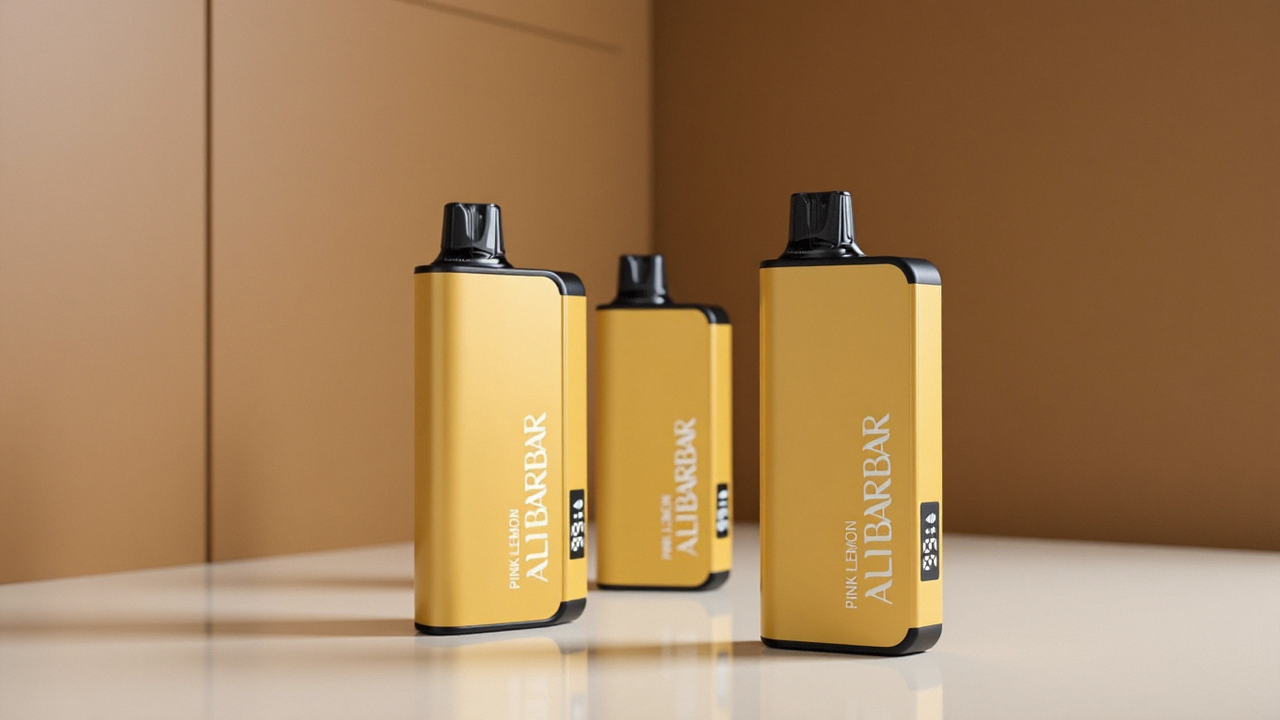
Refillable, adjustable systems — these allow the user to turn down power, open up airflow, and choose a liquid with minimal colouring and lower nicotine content. From a dental‑sensitivity standpoint, they offer meaningful advantages. The ALIBARBAR Ice Adjust 12000 series, for example, incorporates a physical adjustment mechanism that alters both airflow and output characteristics. That ability to dial the device back during the first week after whitening is not a trivial feature; it lets you reduce vapour temperature and density until your teeth feel fully normal again. Similarly, the ALIBARBAR INGOT 15000, while designed for extended capacity, maintains a steady, relatively cool output that aligns well with a mouth still recovering from chemical exposure.
The trade‑off is complexity. If you are the kind of person who prefers a device that simply works with no input, a sealed unit may fit your routine better, but you accept that you cannot soften its output during a sensitive period. That is a legitimate choice, provided you understand the compromise.
A Practical Framework for Deciding When to Vape Again
Instead of chasing arbitrary rules, use this checklist 48 hours after your whitening session ends. If you answer “yes” to all the questions below, the risk of cosmetic setback is low enough that most adult users will proceed without regret.
Have you experienced no spontaneous tooth pain or lingering gum tenderness for at least 12 hours? Any residual sensitivity means enamel pores are still open.
Is the liquid you intend to use completely colourless, with no added dyes? Even a light amber tint can show up on porous enamel.
Can you set your device to its coolest, most diffuse output? If not, consider whether you can tolerate a possibly warmer stream against still‑sensitive gums.
Are you willing to rinse your mouth with water after each session? This simple act clears most of the vapour film before it sets.
Have you eaten or drunk anything that might stain (coffee, red wine, berries) in the last hour? Combining multiple stain‑exposure sources within the same window multiplies the risk.
If the answer to any of these is “no,” give yourself another 24 hours. The aesthetic cost of impatience is almost always a second round of whitening sooner than you planned.
Common Evaluation Errors and What They Reveal About the Market
Over years of watching how people navigate device purchases and post‑procedure care, a handful of errors reappear regularly. Recognising them can save you a great deal of disappointment.
Overweighting nicotine while ignoring base‑liquid chemistry. Many users focus solely on whether the liquid contains nicotine, believing that non‑nicotine options are automatically tooth‑safe. The base carriers and any colouring are equally relevant. A zero‑nicotine dark‑coloured liquid can stain fresh enamel just as effectively as a nicotine‑containing one.
Assuming visual similarity equals internal equivalence. Two devices that look almost identical — same form factor, same mouthpiece shape — can produce very different vapour temperatures. One might channel air across the heating element efficiently, while the other runs hotter because of internal layout. When your teeth are sensitive, the hotter unit will feel unmistakably different. Do not assume a device is gentle just because it resembles another one you’ve used before.
Undervaluing adjustable output during recovery phases. When you are feeling fine, a non‑adjustable device might be perfectly adequate. During the two‑week period after whitening, the ability to turn things down becomes a genuine quality‑of‑life feature. Users who overlook this often end up setting the device aside entirely for a few days, which may be the right outcome anyway, but if you intend to continue, having control reduces friction.
Confusing “clear” with “invisible on teeth.” Clear e‑liquid still deposits a thin film. That film can trap other substances. If you vape a clear liquid and then eat a slice of toast with a dark spread, you have created a layering effect that can tint enamel just as a coloured liquid would. Rinsing after vaping, even with clear liquid, is a simple countermeasure that few people practise consistently.
From an industry perspective, the gap between dental professional knowledge and device engineering is still wide. Most dentists give blanket advice to avoid “smoking” without distinguishing between the thermal and chemical profiles of different devices. Meanwhile, retailers rarely explain how device design interacts with oral health. This article is a small attempt to close that gap.
Frequently Asked Questions
Q: Can I vape immediately after teeth whitening if I use a non‑nicotine, colourless liquid?
A: It is still not recommended. The enamel remains porous for at least 48 hours, and even a clear vapour film can become a vehicle for later staining when you eat or drink. Waiting two full days is the safest course.
Q: Does the type of whitening (in‑office laser vs. at‑home strips) change the wait time?
A: Professional in‑office treatments tend to produce more pronounced temporary porosity, so 48 hours is a firm minimum. Over‑the‑counter strips vary, but because their lower peroxide concentration often requires more applications, the cumulative enamel softening can be comparable. Err on the side of caution in both cases.
Q: Are devices with longer airpaths really gentler on teeth?
A: They are gentler on soft tissue because the vapour arrives cooler. They do not directly prevent staining, but they reduce the heat irritation that makes some people inhale more forcefully and draw in more vapour than they intend. This indirect benefit is real.
Q: Should I use a new mouthpiece after whitening?
A: Yes, or thoroughly clean the existing one. A mouthpiece can harbour residue from previous liquids that may contain dyes. Starting with a fresh, clean surface lowers the chance of introducing staining compounds.
Q: Is there any rinsing solution that helps after vaping?
A: Plain water is sufficient. Swishing water for 20‑30 seconds removes most of the deposited film. Avoid alcohol‑based mouthwashes immediately after whitening, as they can worsen sensitivity.
Q: How long should I wait if my gums still feel raw?
A: Do not vape until gum tenderness has fully resolved. The heat and the physical act of drawing on a mouthpiece can aggravate healing tissue and prolong discomfort. Wait until your gums feel completely normal to the touch before resuming.
Q: Can a device with adjustable airflow protect my teeth?
A: It can reduce the concentration and temperature of vapour reaching your mouth, which may lower the total deposit on enamel. It is not a substitute for the waiting period, but after that period, it is a sensible choice.
Q: What if I accidentally vape too soon and see new stains?
A: Do not attempt to re‑whiten immediately. Give your teeth a week of normal care, then assess. Many surface‑level deposits acquired during the porous window can be polished away during routine hygiene. If staining persists, consult a dental professional before reaching for another whitening product.
Returning to Your Routine Without Undoing Your Investment
The best outcome after teeth whitening is not just a brighter smile for a day, but a stable result that lasts. Achieving that depends on small disciplines in the first 72 hours, and for those who vape, the 48‑hour pause is the most consequential of them. It is not a moral judgment; it is simply what the physiology of enamel requires.
When you do resume, being thoughtful about your device — favouring something adjustable, using clear liquids, rinsing afterward — can help maintain what you paid for. Retailers like OZVAPE Shop can connect you with a range of engineered devices that offer the kind of output control that supports that goal, but the real agency sits with you. The right decision is not about the device with the most attention‑grabbing power rating; it is the one that matches your actual recovery pace and your long‑term commitment to your own dental health. Wait the full two days, listen to your body, and you will be in a far stronger position to enjoy both your smile and your chosen routine for months to come.