
VAPE FAQs
How Does Charging A Vape Work?
Aug
Why Vape Charging Frustrations Persist
A user looks at a small light on a device and has no clear understanding of how long it will take to charge, how many cycles the internal cell can endure, or whether the charger plugged into the wall will quietly degrade the battery over time. They plug in, wait, and unplug when the light changes colour — or simply when they remember. This ambiguity is not a minor inconvenience; it chips away at confidence. It forces people to carry backup devices they should not need. It leads to unexpected failures during a long day away from a power source.
The frustration is not caused by the absence of technology. Most modern portable devices contain sophisticated power management circuitry that could communicate far more than a binary red/green signal. The frustration exists because the engineering choices that govern charging behaviour are rarely explained to the people who depend on them. This article is a structured examination of how charging actually works in personal vaporiser devices — not from the perspective of a marketer celebrating features, but from the viewpoint of an analyst who wants you to understand what is happening inside the hardware so you can make choices that align with your daily reality. When specifications are presented clearly and sourcing is transparent, a platform like OZVAPE Shop can serve as a reliable reference point for comparing these technical details across a full product catalogue.
Understanding What Matters: Core Engineering and Design Factors
A device’s charging system is not a standalone accessory; it is deeply intertwined with the battery architecture, thermal management, and overall lifecycle economics. Evaluating only the shape of the charging port ignores the elements that determine whether a device will still perform reliably three months into daily use.
Internal Architecture and Output Consistency
The cell inside most portable devices is a lithium-ion polymer pouch or cylindrical cell, usually operating between 3.0V and 4.2V. Charging is managed by a dedicated integrated circuit that controls current and voltage in stages. A well-configured charging controller follows a constant-current/constant-voltage profile, tapering the current as the cell reaches its upper voltage threshold. Poorly calibrated or undersized controllers can overshoot the voltage termination point, accelerating capacity fade, or they may allow trickle charging beyond the safe cutoff, generating heat that permanently increases internal resistance.
Why this matters for the user: devices that degrade prematurely often do so because the charging logic was treated as an afterthought. Someone who vapes consistently throughout the day may notice that after a few months, the device delivers noticeably less active time per charge. That is not imagination; it is chemistry being pushed beyond its designed tolerances. Recognising a well-engineered thermal management system means looking for evidence of over-temperature monitoring, timed charge termination, and cell-specific voltage calibration — details that responsible manufacturers document in their engineering briefs but that low-cost assemblers rarely confirm.
Power Management and Status Transparency
The relationship between the power source and the device is often overlooked. A charger rated at 2A will not necessarily deliver 2A to the device; the charging IC negotiates current based on the cell’s state of charge, temperature, and the incoming voltage stability. Cheap USB power adapters with poor ripple suppression can confuse negotiation protocols or cause the charging IC to retreat to a lower, safer current setting, extending charge time significantly.
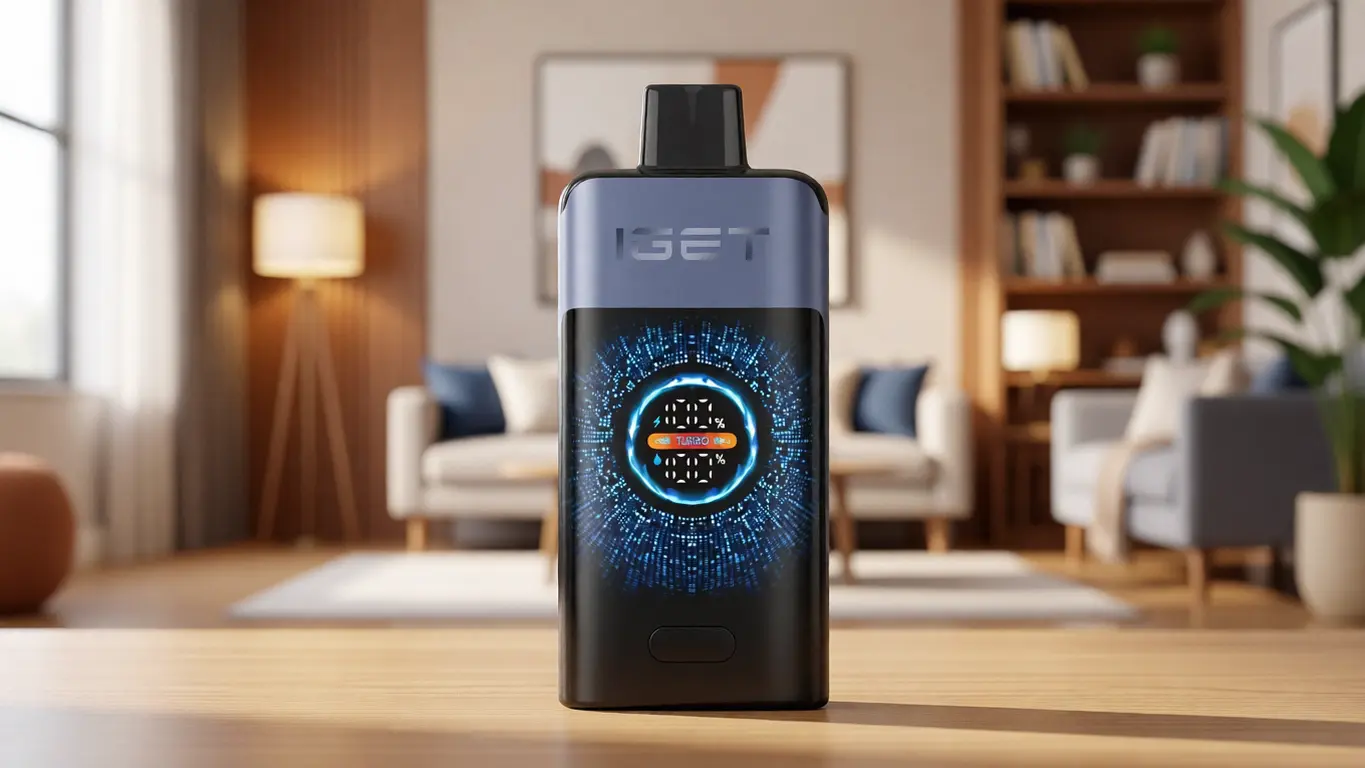
The practical value of clear, informative status indicators cannot be overstated. A device that shows only a single LED that shifts from red to blue at completion reveals nothing about whether the battery is at 20% or 80%. A device that uses a multi-step or percentage-based readout allows the user to make decisions — “I have enough charge for a short trip, I don’t need to wait” — that directly influence portability and convenience. The hidden cost of status ambiguity is the nearly universal behaviour of carrying a backup device, which doubles the user’s upfront investment and ongoing charging overhead. Good power management is a hardware function; good status transparency is an interface choice. When both are present, the user operates with knowledge instead of anxiety.
Physical Design and Material Durability
Charging ports endure more mechanical stress than almost any other component on a handheld device. Micro-USB connectors, still common in many entry-level units, have a thin retention structure that loosens after repeated insertion cycles and can accumulate debris that prevents full engagement. USB-C is mechanically more robust, but not all USB-C implementations are created equal. Many budget designs omit the full 24-pin specification, using only the power and ground lines, which can create compatibility issues with certain cables and chargers.
Beyond the port itself, the surrounding chassis material matters. A metal frame around the connector resists cracking better than un-reinforced polymer. Devices that place the port on the bottom of the unit often subject the connection to bending stress during top-heavy use while plugged in — a scenario that can fracture solder joints over time. Mouthpiece contour and grip also play a role: a device that can be used comfortably while charging must have a cable path that does not interfere with the user’s hold.
Modularity and Lifecycle Flexibility
The most fundamental divide in charging design separates sealed-unit devices from those with user-replaceable cells. A sealed device simplifies mechanical construction and allows for a smaller overall footprint, but it ties the entire product’s lifespan to that of the internal battery. Once the cell’s capacity degrades below the user’s tolerance, the entire device is discarded. This is not inherently a design flaw; it is a cost-management trade-off that makes sense for users who prefer to pay a lower upfront price and accept a finite operational life.
Devices with external charging capability — whether through removable 18650, 20700, or 21700 cells — decouple the battery from the device. The user can rotate cells, replace them when performance drops, and charge them on a dedicated external charger that typically offers more precise control than an onboard circuit. The downside is added complexity: the user must handle cells safely, monitor wraps for tears, and invest in an external charger. The lifecycle economics favour heavy users who would otherwise cycle a sealed device past its optimal capacity within six to nine months. Understanding this trade-off is essential because no single approach is universally superior; the right choice hinges entirely on how, and how often, a person uses their device.
Applying These Criteria to Real-World Options
To ground these engineering concepts in observable products, it helps to examine how different device families handle charging. The ALIBARBAR INGOT 9000 and INGOT 15000 series, for instance, represent a sealed-unit philosophy with integrated USB-C charging. Both devices prioritise simplicity: a single port, a status indicator that communicates charging progress through a multicolour LED sequence, and a cell sized to match the intended consumption volume of the prefilled reservoir. The charging circuit is calibrated to a specific cell specification, and because the manufacturer controls both the battery and the power-management firmware, there is less risk of the mismatch that can occur when a third-party builder pairs a random cell with a generic charge controller. However, the trade-off is that once the internal cell reaches the end of its service life, the entire unit needs to be responsibly recycled. That is a legitimate design decision for users who value grab-and-go simplicity over long-term modularity.
Other categories — such as pod-mod systems with removable coils and higher battery capacity — sometimes allow pass-through operation, where the device can be used while charging. This feature demands a more sophisticated power-path management circuit that separates charging current from the output load, preventing the cell from being simultaneously charged and discharged at high current rates, which would accelerate degradation. Not all devices that claim pass-through actually implement it safely; some merely allow the device to fire while a charger is connected, drawing current directly from the charger and bypassing the cell, but this places the full output demand on a charging IC that may not be rated for continuous load. A device engineered for true safe pass-through will explicitly document this in its technical specifications. The absence of such documentation is a red flag.
Users who need a device that can sustain heavy daily use across months may find that a modular system with a replaceable 18650 cell and an external charger is the more durable and cost-effective path. The initial outlay is higher, but the per-use cost drops significantly over time, and the user gains control over charging parameters — choosing a slower charge rate to extend cell longevity, for example. The engineering principles described in Section 2 apply regardless of product category; what changes is how each device family prioritises certain characteristics over others.
A Practical Framework for Evaluation
The following methodology can be applied to any device you are considering. It does not require disassembly or specialist knowledge — only a willingness to look past marketing claims and ask specific questions.
Identify the charging protocol and port type. Is it USB-C? If so, does the manufacturer specify whether it supports USB Power Delivery or only basic 5V charging? A device that advertises “fast charging” without specifying the supported protocols is making a claim that cannot be verified before purchase.
Document the stated charge time and battery capacity. Divide the capacity (in mAh) by the charge time (in hours) to estimate the average charge current. Compare this to the cell’s recommended charge rate (typically 0.5C to 1C for LiPo cells). A 1500mAh cell charging in 30 minutes would be pulling 3A, or 2C — feasible but aggressive. Does the device have the thermal design to handle that? If the answer is not obvious from the product listing, it probably does not.
Observe the status feedback. Power on the device from a known low state and note how many distinct stages the indicator shows. A device that displays only “low” and “full” leaves you guessing for the majority of the charge cycle. A device that gives four or more stages, or a percentage readout, allows you to plan. Ask yourself: if this device provided no status feedback at all, how would my daily routine change? If you would reflexively reach for a second device, the feedback is insufficient.
Inspect the port and surrounding materials. Look for reinforcing metal, a snug plug fit, and a location that does not interfere with use while connected. If you can, research whether replacement USB-C boards or port assemblies are available for this model; that indicates whether the manufacturer considers the port a serviceable component.
Evaluate the lifecycle trade-off. Calculate the expected number of full charge cycles before the battery reaches 80% of its original capacity. Lithium-ion cells typically achieve 300–500 cycles under lab conditions, but real-world heat and discharge depth reduce that number. A sealed device you charge daily will likely show noticeable capacity drop within 12–18 months. If that timeline is unacceptable, a device with a removable cell is the only alternative that avoids complete replacement.
Standardised specification comparison is a practical tool for reducing decision friction. At OZVAPE Shop, technical details are presented in a consistent format so that charge time, capacity, and port type can be compared across different device families without hunting through disparate listings.
Common Selection Errors and Industry Observations
Error 1: Overweighting charge speed while ignoring cell longevity. Manufacturers know that “fast charge” is a powerful headline. A device that reaches 80% in 20 minutes can tempt a buyer who is tired of waiting. But sustained high-rate charging generates internal heat that the cell’s electrolyte cannot dissipate quickly, accelerating solid-electrolyte interface growth. The result is a battery that charges quickly but ages quickly. Users who keep a device for months, not weeks, benefit from a moderate charge rate, even if it adds a half-hour to the process.
Error 2: Assuming visual similarity indicates equivalent internal engineering. Two devices with externally identical USB-C ports may have completely different charge controllers. One may incorporate over-voltage, over-current, and short-circuit protection on both input and battery sides; the other may be a simple linear regulator. Externally, they look the same. The industry offers little visual differentiation, so the only reliable recourse is to look for explicit protection-circuit documentation in the product description or to trust sources that audit these specifications.
Error 3: Undervaluing modularity in cost-per-use calculations. A sealed device priced at $30 that lasts nine months of daily charging costs roughly $3.30 per month, not counting the inconvenience of a deteriorating battery in the final quarter. A modular device with a $10 replaceable cell that lasts an equivalent period costs the initial device purchase plus a new cell every year. Over two years, the modular approach often proves cheaper, yet many buyers focus only on the upfront ticket price. Charging is not a one-time event; it is a recurring interaction that shapes the total cost of ownership.
Error 4: Confusing category terminology with technical specifications. Words like “smart charging,” “intelligent battery management,” and “fast charge” lack standardised definitions in this market. A “smart” charger could mean anything from a basic voltage cutoff to a full fuel-gauge integrated circuit. The industry does not enforce consistent terminology. The only protection against confusion is to seek out specific, verifiable specifications — charge IC part number, protocol support, discharge temperature cut-off thresholds — or to purchase through channels where these details are not obscured.
From an industry-level perspective, the charging subsystem has become a key differentiator among mid-tier and premium devices, but it remains the most opaque element for consumers. Manufacturers who invest in high-quality Texas Instruments or Richtek power management ICs rarely publicise those component choices because the average buyer does not recognise them. Conversely, assemblers who use the cheapest available circuitry have no incentive to draw attention to what is missing. This asymmetry of information means that user frustration — devices getting hot while charging, inconsistent charge times, rapid battery degradation — is often a direct consequence of component-level decisions made at the procurement stage, invisible to the person holding the finished product.
Frequently Asked Questions
Q: Is it safe to leave a device charging overnight?
A: A well-designed device with a proper charge termination circuit will stop charging once the cell is full. However, if the charge controller fails to terminate correctly, prolonged trickle charging can generate heat and stress the cell. Without knowing the specific IC inside your device, the safest practice is to unplug when charging is complete.
Q: Can I use a fast-charge wall adapter with any device?
A: Only if the device explicitly supports the fast-charge protocol used by the adapter. Connecting a USB Power Delivery adapter to a device that only expects 5V will usually result in the adapter defaulting to 5V output, but incompatibilities can arise if the adapter uses non-standard negotiation. Stick to the manufacturer’s recommended input.
Q: Why does my device sometimes charge slowly even with the same cable and adapter?
A: The charging IC may be reducing current due to temperature. If the device is warm from recent use or exposure to direct sunlight, the protection circuit limits charge rate to prevent overheating.
Q: How many times can I recharge a sealed device before the battery degrades?
A: Typical lithium-ion cycle life is 300–500 cycles to 80% capacity in laboratory conditions. Real-world conditions — deep discharge, high temperatures, aggressive charge rates — can reduce that number significantly. Daily users may notice reduced runtime after 12–18 months.
Q: What is pass-through charging, and is it safe?
A: True pass-through separates the charging current path from the output path, allowing the device to operate without stressing the battery. Not all implementations are equal; safe designs specify this capability and include thermal regulation. If a manufacturer makes a pass-through claim without technical detail, treat it with caution.
Q: Does charging via a computer USB port damage the device?
A: Computer USB ports typically supply 500mA (USB 2.0) or 900mA (USB 3.0), well within most devices’ acceptable range. The risk is not damage but very slow charging. However, avoid using unpowered hubs or ports that may deliver inconsistent voltage.
Q: My device has no charge indicator; how do I know when it’s done?
A: In the absence of an indicator, you are forced to rely on guesswork. Some devices stop drawing current when full, but without a readout you cannot be certain. This is a significant usability gap that often leads users to overcharge or undercharge.
Q: Can I replace the battery in a sealed device when it wears out?
A: Generally not, as the device is constructed without user-serviceable ports. Opening it requires tools and soldering skills, carries safety risks, and voids any warranty. If long-term battery replaceability matters, choose a device designed with removable cells.
Q: Why do some devices get hot while charging?
A: Heat is a byproduct of current flow and voltage conversion inefficiency. A well-designed thermal path dissipates this heat safely. Excessive heat can indicate a poorly matched charger, a failing battery, or a charge controller that is not regulating current efficiently.
Q: How can I verify that a device’s charging safety features are genuine?
A: Look for third-party certifications (CE, RoHS, FCC) and specific component mentions from the manufacturer. Alternatively, purchase from a source like OZVAPE Shop that validates supply-chain authenticity, because counterfeit or cloned devices often omit the protection circuitry that legitimate units include.
A Measured Perspective on Charging Decisions
Charging is not merely a convenience feature bolted onto a device; it is the rhythm around which the device’s entire usability is structured. The person who understands their charging system — its speed, its feedback, its thermal behaviour, and its lifecycle implications — is the person who arrives at work with a ready device and returns home without having carried a second one “just in case.” The person who ignores these details ends up managing two devices instead of one and absorbing the cumulative cost of premature replacements.
Informed users make better decisions. They recognise that a sealed, fast-charging unit might be ideal for occasional weekend use but a poor match for daily commutes. They understand that a removable-battery device with a dedicated external charger offers the longest cost-effective service, even if it requires more hands-on involvement. They value technical transparency because it is the only reliable defence against market noise.
For those who want to examine specifications side by side — charge times, battery capacities, port types, and modularity options — OZVAPE Shop provides a structured catalogue where these details are not hidden behind vague marketing language. A clear specification table is not a sales pitch; it is a practical instrument that lowers the effort required to make a sound choice.
The right device is the one that fits your actual routine — your travel distances, your access to power, your tolerance for carrying backups. No amount of feature advertising can substitute for an honest self-assessment of those practical realities. Once you understand how charging works, you are no longer choosing based on claims; you are choosing based on alignment. That is the difference between buying a device and investing in a solution.