
VAPE FAQs
How Does A Vape Work?
Jun
How Does a Vape Work?
Many people purchase a portable electronic device based solely on its appearance or a headline capacity figure, only to discover later that the unit behaves unpredictably, loses performance after moderate use, or simply stops working sooner than expected. The discomfort isn’t always about the device failing outright — it’s about the small, accumulating frustrations that arise when a user doesn’t understand what is happening inside the device and therefore cannot anticipate its behavior. When you rely on a tool throughout a long day or during travel, that uncertainty translates into carrying unnecessary backups, second‑guessing when it will need replacement, and a general sense that the product wasn’t designed with your actual routine in mind.
This article explains, in plain technical terms, the core engineering that drives any modern portable electronic vapor device. By the end, you will be able to look at a product specification sheet and spot the design decisions that lead to dependable performance — and those that leave you guessing. For anyone evaluating the current ALIBARBAR range, including models like the INGOT 9000, INGOT 15000, and Ice Adjust 12000, this framework provides a way to match a device’s architecture to your own daily demands. OZVAPE Shop has structured its product information around these same principles, so understanding how the device works is the first step toward making a choice that won’t let you down.
Understanding What Matters: Core Engineering and Design Factors
Every portable vapor device shares a fundamental operational blueprint: a power source delivers energy to a heating element, which converts a consumable substance into an inhalable aerosol. Differences in how each component is implemented determine whether the device becomes a reliable daily tool or a source of irritation. The four areas below address the most common user frustrations directly.
Internal Architecture and Output Consistency
At the heart of the device is the atomizer assembly — a combination of a wicking material and a resistive heating element. The wick draws the consumable liquid toward the coil, where it is vaporized. The geometry and material quality of that coil dictate how evenly and consistently the device performs from the first activation to the last.
Devices that use mesh coils (a grid‑pattern heating surface) distribute thermal energy more uniformly than traditional round‑wire coils. This reduces the likelihood of localized overheating, which can cause a burnt taste or degrade the consumable prematurely. In practice, a well‑designed mesh architecture means that puff number 800 should feel nearly identical to puff number 80, assuming adequate liquid supply. ALIBARBAR engineers have standardized mesh‑type heating across the INGOT and Ice Adjust series to preserve that consistency throughout the device’s rated life. When inspecting any product, you can look for evidence of a large‑area heating surface and a wicking system that maintains full saturation even when the device is used in quick succession.
Why this matters: users consistently report that performance drops off in the final third of a device’s capacity. That degradation usually traces back to a heating element that cannot maintain stable temperature once the wick begins to dry out non‑uniformly.
Power Management and Status Transparency
Devices are powered by integrated lithium‑ion cells. The sophistication of the power management circuit determines not only how many activations you get but also whether the output voltage remains steady as the battery depletes. A poorly calibrated system will deliver strong vapor when fully charged and progressively weaker output afterward, leaving the user uncertain about remaining life.
Status feedback is the other half of the equation. The difference between a single‑color LED that simply lights up and a multi‑stage indicator that communicates battery level or operational readiness is enormous in daily use. ALIBARBAR’s current devices incorporate visual cues that tell you at a glance whether the unit is functioning, whether the power reserve is low, and whether any protective measures (like short‑circuit protection) have been triggered. This transparency directly eliminates the habit of carrying a second device “just in case,” because you have enough information to trust the primary unit.
The hidden cost of ambiguous status indicators is not just inconvenience — it’s that users prematurely discard devices that still have usable life, or worse, rely on a device that fails without warning during a critical moment. Good power management and honest feedback are not luxury features; they are basic prerequisites for a device to earn its place in your pocket.
Physical Design and Material Durability
The outer shell and mouthpiece endure constant friction, pressure, and exposure to skin oils. Surface treatments vary widely. Anodized aluminum alloys, for example, resist scratching and retain their color far longer than painted plastic housings. The ALIBARBAR INGOT 9000 uses a matte‑finish alloy body that holds up to daily pocket carry without showing wear for the intended lifespan of the device.
Ergonomics are equally important. A mouthpiece that tapers gently and offers a natural lip feel reduces fatigue during extended use. Conversely, sharp edges or overly narrow tips create pressure points. The Ice Adjust 12000 model incorporates a streamlined duckbill‑style mouthpiece that matches the contour of human lips, making it comfortable even when used repeatedly over many hours. When evaluating any device, run your thumb over the seams and coating: if it feels insubstantial in your hand, it will likely look worn within a week.
Beyond aesthetics, consider how the device resists pocket lint and moisture ingress. A well‑sealed USB‑C port (where applicable) and a drip‑tip that seals tightly against the body are indicators of product‑level thoughtfulness that separate a device built for real life from one designed only for a showroom shelf.
Modularity and Lifecycle Flexibility
Device architectures fall along a spectrum: fully sealed single‑use units, rechargeable units with a fixed internal reservoir, and systems with replaceable componentry. Each structure aligns with a different set of priorities.
Sealed devices like the ALIBARBAR INGOT 9000 and INGOT 15000 emphasize simplicity — no charging, no maintenance, no decisions beyond activation. They suit users who want absolute reliability without having to manage cables or refills. However, the trade‑off is that once the consumable is exhausted, the entire unit is replaced.
On the other end, the Ice Adjust 12000 offers a rechargeable battery while maintaining a sealed consumable reservoir. This middle‑ground design extends the device’s working life across multiple days, even for frequent users, without introducing the complexity of separate pods or tanks. The rechargeability also addresses a common frustration: a device that still contains consumable but has a depleted battery is effectively useless. By allowing users to top up the power cell, the device ensures that the consumable can be used to its full capacity.
Understanding this spectrum helps align a purchase with your personal tolerance for engagement. If you never want to think about charging, a high‑capacity sealed unit makes sense. If you prefer to keep one device running throughout a week, a rechargeable option lowers per‑day cost and reduces waste.
Applying These Criteria to Real-World Options
The ALIBARBAR product line illustrates how different design choices serve distinct user profiles without forcing anyone to accept unnecessary compromises. Rather than ranking devices, we can look at each series through the lens of the framework above.
INGOT 9000 – This is a compact, self‑contained unit designed for users who value discretion and no‑hassle operation. Its internal mesh coil delivers consistently smooth output across a 9000‑activation rated life, and the alloy body resists wear. Because it is sealed, there is no charging port to protect or power cycle to manage. It appeals to those who want a device that disappears into a pocket and delivers predictable results from beginning to end. The trade‑off, naturally, is that once the internal reservoir is empty, disposal is the only option.
INGOT 15000 – Building on the same engineering platform, the 15000 model extends capacity significantly while preserving the sealed, maintenance‑free architecture. The larger reservoir and optimized power delivery curve mean the device stays consistent for a longer period, making it suited to users with extended daily routines or those who prefer to replace their device less frequently. The heating element is proportionally scaled to maintain the same thermal stability, so the vapor quality does not thin out as the consumable depletes.
Ice Adjust 12000 – This device introduces a user‑adjustable output control, allowing the individual to set the level of menthol‑like cooling sensation independently of the base vapor output. From an engineering standpoint, this requires a more complex air‑flow management system: separate pathways blend the primary aerosol with a cooling agent stream without diluting vapor density. The rechargeable battery and USB‑C charging port make it ideal for users who want to keep the same device active over several days. Status LEDs indicate both battery level and the selected cooling mode, so there is never any ambiguity about how the device is configured. The mouthpiece ergonomics have been refined for longer sessions, reflecting the expectation that this unit will be used more intensively than a single‑session sealed device.
For context, other commonly available device families approach these same challenges with different priorities. Some competitors prioritize ultra‑compact form factors at the expense of consumable visibility, while others offer replaceable pods that reduce long‑term cost but require periodic cleaning. The right choice always circles back to your daily habits: a rechargeable adjustable device is not inherently better than a simple sealed unit — it just matches a different daily rhythm.
A Practical Framework for Evaluation
When you compare devices, applying a structured checklist prevents emotional decisions influenced by packaging or a single impressive number. Use these five diagnostic questions:
Heating element design: Does the manufacturer specify mesh or coil geometry? If not, assume a basic round‑wire assembly that may not maintain consistent vapor quality toward the end of its life.
Power status feedback: Does the device show you its battery level or operational state with more than a simple glowing indicator? If the feedback is absent, how will you know when to replace or recharge it before it fails at an inconvenient moment?
Material integrity: What is the body made of, and has the surface been treated? A device that feels “soft” or has visible plastic mold lines will likely scratch and degrade quickly under pocket carry.
Lifecycle match: Is the device sealed, rechargeable sealed, or pod‑based? Write down how many days you want a device to last before replacement or maintenance. Match the architecture to that number, not to the highest puff claim.
Consistency reassurance: Are there any design features (like mesh heating, optimized wicking, regulated output) that specifically address performance decay? If the brand makes no mention of these engineering points, the user is gambling on output stability.
Using a standardized specification comparison — such as the side‑by‑side details available through OZVAPE Shop’s product pages — reduces the noise and helps you focus on the engineering attributes that actually shape daily satisfaction. The goal is not to find a perfect device but to find one whose compromises you can live with comfortably.
Common Selection Errors and Industry Observations
After years of observing how adults choose and then evaluate their devices, several patterns of avoidable error stand out. Recognizing them can save you from repeating the same cycle of initial enthusiasm followed by quiet disappointment.
Overweighting puff count – A higher number on the box does not translate to a proportionally better experience if the heating element degrades halfway through. A device rated at 5,000 activations with a stable output may serve you better than a device rated at 10,000 that produces thin, unsatisfying vapor for the last 3,000 activations. Look for evidence of consistency architecture, not just a headline figure.
Assuming visual similarity indicates equivalent internals – Many devices on the market share a common cylindrical or rectangular shape but differ radically in coil material, wicking system, and power management. Two units that look nearly identical can perform entirely differently because one uses a mesh heating surface and the other a simple Kanthal wire. OZVAPE Shop’s practice of publishing detailed internal specifications for each ALIBARBAR model is a deliberate countermeasure against this confusion.
Undervaluing modularity in cost‑per‑use calculations – A slightly more expensive rechargeable device that lasts through its entire consumable load can actually cost less per activation than a cheaper sealed unit that you discard with usable liquid still inside because the battery died. Factor charging capability into your cost analysis, not just the upfront price.
Confusing marketing terminology with technical specifications – Terms like “smooth,” “cool,” or “adjustable” can describe anything from air‑flow engineering to a simple physical switch that changes nothing about the heating output. In the Ice Adjust 12000, for instance, the cooling adjustment alters a separate mentholated air stream — a genuine engineering feature — but not every product that claims adjustability offers a meaningful difference. Ask what exactly is being adjusted and how.
From a supply‑chain perspective, the market is shaped by a handful of large manufacturing clusters. The difference between a device that earns long‑term trust and one that generates complaints often comes down to whether the brand invests in their own in‑line quality testing rather than relying solely on the factory’s standard inspection. ALIBARBAR’s documented quality protocols — including batch‑level performance validation and traceability from assembly to distribution — reflect an understanding that reliability cannot be inspected in at the end; it must be designed into the process.
Frequently Asked Questions
Q: How does the heating element actually create vapor?
A: An electrical current passes through a resistive metal mesh or coil. The resistance generates heat, which rapidly raises the temperature of the consumable liquid absorbed in the wick. When the liquid reaches its boiling point, it transitions into an aerosol composed of microscopic droplets. The design of the airflow path then channels that aerosol toward the mouthpiece.
Q: What does the “puff count” rating really mean?
A: It indicates the estimated number of standardized two‑ to three‑second activations the device can deliver before the consumable is exhausted or the battery can no longer heat the coil adequately. Actual numbers vary with usage style — longer draws reduce the total count, while intermittent use with breaks between puffs may extend it. The rating is a comparative benchmark, not an absolute guarantee.
Q: Why do some devices lose flavor or vapor volume toward the end?
A: This commonly occurs because the wick can no longer deliver liquid to the heating element fast enough after the reservoir has been partially depleted, causing the coil to overheat the remaining liquid. Mesh‑style heating elements, like those in the ALIBARBAR INGOT series, mitigate this by distributing heat more evenly and maintaining effective wick contact across a larger surface area.
Q: Are ALIBARBAR devices rechargeable?
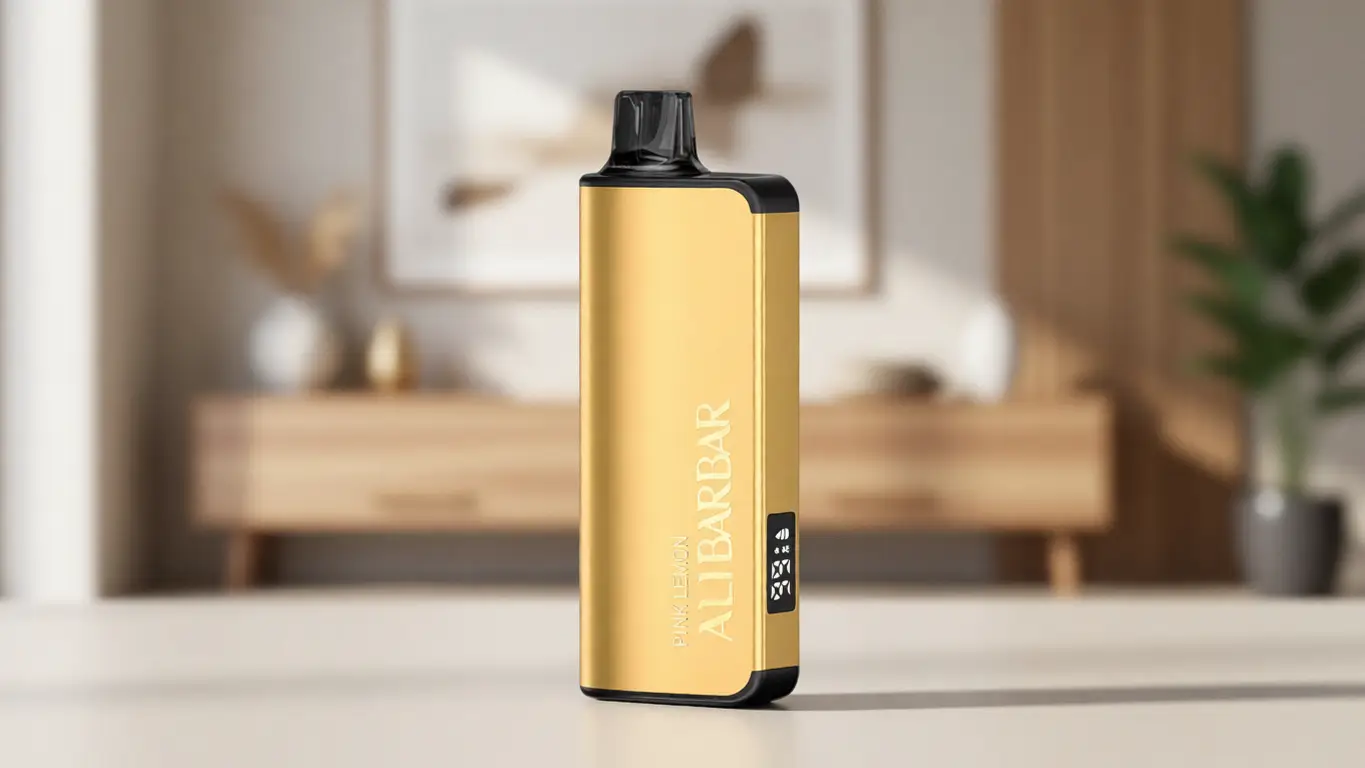
A: It depends on the model. The INGOT 9000 and 15000 are sealed units and are not rechargeable; they are designed to be used until the consumable and battery are both spent. The Ice Adjust 12000 features a USB‑C rechargeable battery, allowing you to replenish power without discarding the device before the consumable is used up.
Q: How can I verify that I have an authentic ALIBARBAR product?
A: Genuine units carry a unique verification code on the packaging. You can enter this code on the manufacturer’s authentication portal. Purchasing from an authorised retailer like OZVAPE Shop ensures that the device has moved through the proper distribution chain without tampering or substitution.
Q: What should I do if my device stops working before the rated puff count?
A: First, check the LED indicators if your model has them — a blinking light may signal protection mode, a depleted battery, or a connection issue. If the device is rechargeable, ensure the charging port and cable are functional. If the problem persists, contact the retailer from whom you purchased it. OZVAPE Shop has a documented claims process that respects the user’s time and focuses on resolution.
Q: Is a device with a bigger puff count always better?
A: Not necessarily. A device that maintains stable vapor quality throughout its rated life is more valuable than one with a higher number that degrades early. When comparing, look for design elements that support consistency — like mesh coils or regulated output — alongside the puff rating.
Q: Can I store the device in my pocket safely?
A: Devices with a durable outer shell (such as anodized aluminum) and a sealed construction handle pocket carry well. Avoid placing loose metal objects like keys or coins in the same pocket, as they can scratch the finish. The ALIBARBAR INGOT bodies are designed to withstand typical pocket friction without significant wear over their service life.
Q: How does the adjustable cooling on the Ice Adjust 12000 work?
A: The device contains a separate mentholated component that is blended into the airflow at user‑selected levels without interfering with the primary heating circuit. The adjustment dial changes the proportion of this cooling agent, offering a differentiated sensation that does not alter the nicotine delivery or base vapor production.
Q: What’s the most objective way to choose between a sealed and a rechargeable device?
A: Track your typical weekly usage pattern. If you never want to think about charging and are comfortable replacing the entire unit when it’s done, a sealed device is simpler and often more compact. If you find yourself throwing away devices that still have consumable but a dead battery, a rechargeable model will likely reduce waste and lower your effective per‑activation cost.
Conclusion
A portable electronic vapor device is, at its most essential, an exercise in thermal and fluid engineering packed into a handheld format. The difference between a product that fades into frustration and one that quietly delivers day after day lies not in marketing promises but in choices about heating geometry, power regulation, feedback clarity, and structural materials. Once you know what to look for, you can strip away the noise and evaluate any device on its engineering merits.
OZVAPE Shop has built its product curation around this exact premise: that adult users deserve transparent information and factory‑certified inventory they can trust. By presenting the full ALIBARBAR family with detailed technical documentation and a local support infrastructure, the shop reduces the guesswork that so often leads to disappointing purchases. The right device is the one that fits seamlessly into your actual routine — not the one that makes the loudest claims. Understanding how these tools work restores control to you, the user, where it belongs.