
VAPE FAQs
How Do I Use A Vape Cartridge?
Jun
A cartridge that performs poorly, leaks unexpectedly, or delivers a burnt taste is almost always the result of an operational oversight, not a product defect. This observation, repeated across thousands of support interactions, points to a straightforward reality: using a vape cartridge correctly is not complicated, but it requires attention to a few specific, non‑obvious details. When those details are overlooked—improper voltage setting, inadequate priming, a mismatch between cartridge and battery architecture—the user’s experience degrades quickly, sometimes within the first few draws.
This guide provides a complete, technically grounded walkthrough for adults who want to get consistent, predictable performance from a standard 510‑thread cartridge. It explains not only the steps to follow but the reasoning behind each step, so you can diagnose issues independently and avoid the most common traps. Where relevant, we reference sourcing standards and product consistency, because a well‑made cartridge paired with a calibrated battery removes the majority of variables that cause trouble. OZVAPE Shop maintains a consistently documented catalogue of cartridges and compatible power supplies for precisely this reason: consistency in the supply chain reduces the user’s need to troubleshoot in the first place.
Understanding the Components: Cartridge and Battery Fundamentals
Before operational technique, it helps to know what you are working with. A vape cartridge is not a complex device, but it contains sensitive elements that respond to electrical input, airflow, and physical handling in predictable ways.
The 510‑Thread Standard and Compatibility
The vast majority of cartridges on the market—and all of those stocked by responsible retailers—use a 510‑thread connection. This is a small, fine‑pitch screw thread with a centre pin at the base of the cartridge that makes contact with the battery’s positive terminal. Compatibility is nearly universal in mechanical terms, but electrical compatibility is another matter. A cartridge designed for low‑resistance coils (typically around 1.2–1.8 ohms for most genuine products) will behave very differently when paired with a battery that delivers a fixed high voltage versus one with adjustable output. Incompatibility does not mean the threads don’t fit; it means the thermal output lies outside the cartridge’s optimal range, leading to poor vapour production or a charred wick.
Cartridge Anatomy: Mouthpiece, Reservoir, Coil, and Airflow
Every cartridge consists of a mouthpiece, a liquid reservoir (usually glass or PCTG plastic), a coil assembly containing a heating element and wicking material, and an airflow path that runs from the base intake holes through the coil and up to the mouthpiece. The wicking material—commonly porous ceramic—transfers the liquid to the heating element. This is the critical interface. If the wick is not fully saturated before the first use, the filament can scorch the dry material, and that acrid taste will persist, because the burnt organics cannot be cleaned from the porous structure.
Battery Types: Button‑Activated, Draw‑Activated, and Variable Voltage
Batteries fall into three broad families. Button‑activated units require the user to press a fire button while inhaling; they offer deliberate control and typically include a pre‑heat function for clearing minor clogs. Draw‑activated batteries use a pressure switch to detect inhalation—convenient but sometimes less responsive in cold weather or with thicker liquids. Variable voltage batteries allow the user to select a precise output, usually in 0.1‑volt increments between 2.0 V and 4.2 V. For a standard cartridge with a ceramic coil, the sweet spot is usually between 2.8 V and 3.4 V. Going above 3.6 V risks dry hits and premature wick degradation; going below 2.6 V often results in weak, unsatisfying vapour. A battery that provides clear voltage feedback—ideally a digital display—gives the user information to make these adjustments instead of guessing.
Step‑by‑Step Usage Guide
This sequence assumes a new, properly stored cartridge and a compatible, charged battery.
Priming a New Cartridge
If the cartridge has been sitting in storage, the liquid may have settled away from the coil’s wicking ports. Before attaching it to a battery, take a few gentle dry pulls (inhaling without activating the heater) to draw the liquid into the ceramic wick. This is especially important in cold environments, where the liquid viscosity increases. Priming takes only 10–20 seconds of deliberate, unpowered airflow, but skipping it is the single largest cause of burnt first hits.
Attaching the Cartridge to the Battery
Screw the cartridge onto the battery’s 510 connector until you feel light resistance; then stop. Overtightening compresses the centre pin insulator, which can cause intermittent contact or a permanent short. If your battery uses a magnetic adapter, ensure the adapter is clean and fully seated before attaching.
Setting the Right Voltage
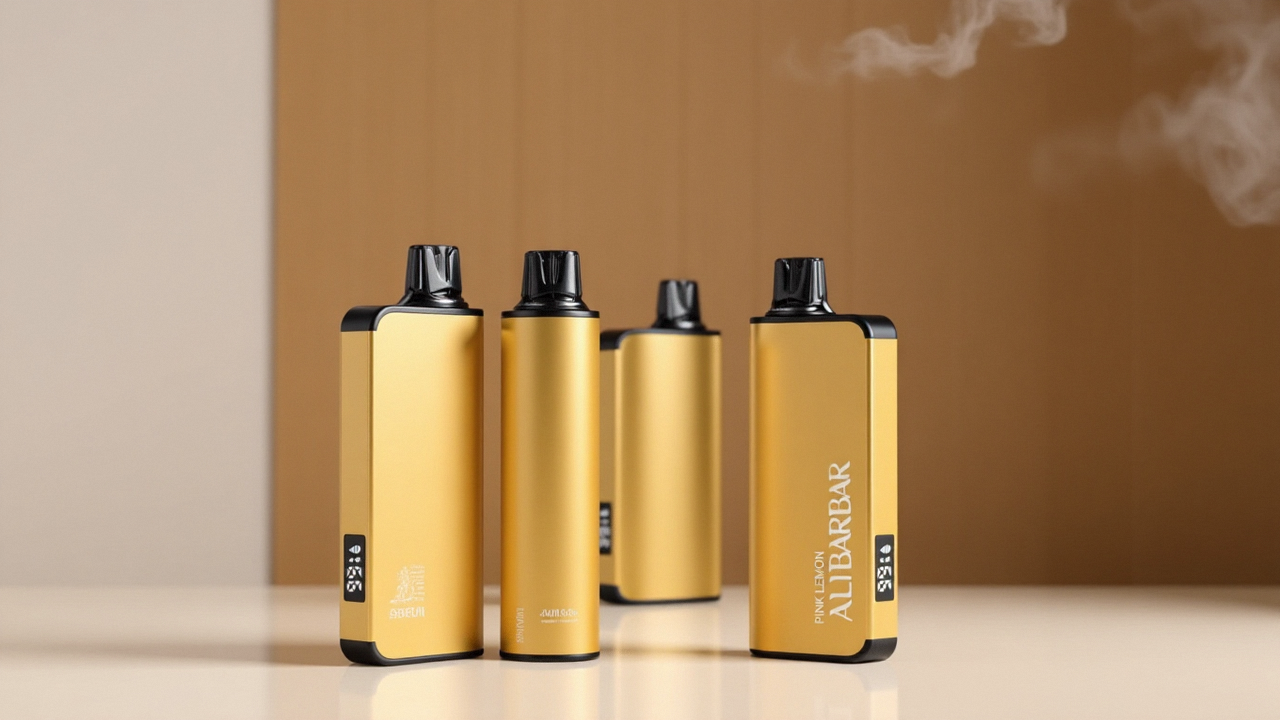
If using a variable voltage battery, start at the lowest setting—typically 2.6 V or 2.8 V—and take a short draw. Increase in 0.1‑volt increments until the vapour volume and flavour feel right. Once you identify the optimal level for that specific cartridge (which can vary slightly by liquid composition), you can usually leave it there. Write down the voltage if you switch between cartridges frequently. A fixed‑voltage battery, usually outputting around 3.3–3.7 V, is fine for many cartridges, but you lose the ability to compensate for variations in coil resistance and liquid thickness.
Inhalation Technique
Mouth‑to‑lung (MTL) is the intended draw style for almost all cartridge systems. Pull vapour into the mouth first, then inhale into the lungs. This slower, lower‑pressure draw prevents flooding and allows the coil to vaporise efficiently. Direct‑lung inhales on a tiny ceramic coil create excessive negative pressure that can pull unvaporised liquid through the wick, causing gurgling, spitting, and eventual leakage. Keep draws between 3 and 6 seconds; long, continuous drags overheat the coil and accelerate degradation.
Storage Between Sessions
Store the cartridge upright and detached from the battery if it will not be used for more than a day. Temperature swings are the enemy—moving a cartridge from a cold car to a warm room repeatedly can cause pressure differentials that force liquid out of the airflow ports. A drawer at stable room temperature, away from direct sunlight, keeps the liquid at a consistent viscosity and the seals intact.
Common Usage Mistakes That Degrade Performance
These errors appear routinely in support logs and user forums. They are avoidable with a small amount of awareness.
Overlooking the Pre‑Heat or Priming Step
Particularly with thicker liquids, the coil cannot reach the necessary saturation point through passive capillary action alone in the few seconds before the first power‑on. As noted, a short manual prime or a battery’s pre‑heat function (which delivers a very low pulse of power for a few seconds) dramatically extends coil life.
Running a Variable Voltage Battery at Maximum Output
Higher voltage does not equal stronger vapour in a linear sense. Past a certain threshold, the coil temperature exceeds the boiling point of the liquid so aggressively that the wick cannot replenish the liquid fast enough. The result is a temporary dry hit that carbonises residual material on the coil, permanently altering the flavour. The cartridge may still function, but every subsequent draw carries that burnt note.
Over‑Tightening the Connection
A 510 connection requires only enough pressure to ensure solid electrical contact—gentle finger‑tightness. Using tools or excessive force deforms the insulator, potentially causing a short circuit that the battery’s protection board may interpret as a fault, or that may bypass protections on unregulated devices entirely.
Ignoring Airflow Blockages
Pocket lint, dust, or thickened liquid can partially occlude the small intake holes at the base of the cartridge. When airflow is restricted, the user’s natural reaction is to draw harder, which exacerbates the imbalance between air intake and wicking rate. Instead, gently clean the intake area with a dry cotton swab and, if a clog is suspected, use the battery’s pre‑heat function while drawing lightly to clear the obstruction without forcing liquid into the chimney.
Troubleshooting Common Cartridge Issues
No vapour, but battery lights up: Check the centre pin. A gentle pry with a toothpick or small screwdriver may be needed if the pin has been pushed down by over‑tightening. Also verify that the cartridge’s own centre pin is making contact—sometimes a thin layer of oxidation or manufacturing residue interferes.
Leaking or gurgling: This indicates excess liquid in the central airflow tube. Remove the cartridge from the battery, hold a tissue at the mouthpiece, and gently blow through the bottom inlet to expel the flooded liquid. Then take a few dry pulls to re‑prime. Ensure the cartridge remains upright thereafter.
Burnt taste after a few days of use: The coil has likely been run at too high a voltage, or chain‑vaped without sufficient cooling between draws. Allow at least 30 seconds between puffs. Once the wick is burnt, the taste will not go away, and the cartridge should be replaced.
Clogged mouthpiece: Condensation and partially vaporised liquid can solidify in the mouthpiece airway over time. A gentle pass with a narrow pipe cleaner or a paper clip can clear it without damaging the seals.
Frequently Asked Questions
Q: Can I use any battery with any 510‑thread cartridge?
A: Mechanically, yes. Electrically, the cartridge’s resistance and the battery’s voltage range must be compatible for optimal performance. A battery with adjustable voltage provides the flexibility to match different cartridges properly.
Q: How long should a cartridge last?
A: This depends entirely on liquid capacity, usage frequency, and operating voltage. A 1‑gram cartridge used at 3.0 V with moderate daily use might last an individual approximately 4–7 days, but there is no industry standard measurement because draw length and frequency vary.
Q: Why does my cartridge get hot during use?
A: Some heat is normal—the coil reaches operating temperature quickly. If the entire body becomes uncomfortably hot, the voltage is too high, or draws are being taken too frequently. Allow the cartridge to cool down.
Q: Can I travel with a vape cartridge?
A: Regulations differ by jurisdiction and mode of transport. Airlines generally require batteries and cartridges to be in carry‑on baggage, with liquids subject to volume restrictions. Pressure changes in an aircraft cabin can cause leaking; store cartridges in a sealed plastic bag with the mouthpiece facing up.
Q: Is it safe to leave a cartridge attached to the battery overnight?
A: While many users do so without immediate incident, it is not best practice. A slight current leak or a malfunctioning auto‑draw switch could activate the device unintentionally. Detaching the cartridge when not in use eliminates that remote risk.
Q: What does “ceramic coil” actually mean?
A: It refers to a heating element embedded within or wrapped around a porous ceramic body that absorbs the liquid. Ceramic offers more even heat distribution and a lower risk of hot spots compared to older silica‑wick designs, but it still requires proper priming.
Q: My battery flashes when I try to use it. What does that mean?
A: Typically, the battery is indicating a short circuit, a connection issue, or a low charge. Consult the battery’s manual for the specific blink pattern. Often, cleaning the 510 threads and centre pin resolves connection‑related blink codes.
Q: Can I refill a disposable‑looking cartridge?
A: Most cartridges sold as pre‑filled are not designed for refilling. Attempting to open and refill them damages seals and risks contamination. If you need a refillable system, choose a device explicitly engineered for that purpose.
Q: What should I do if the liquid inside looks darker than when I bought it?
A: Gradual darkening over time is a natural result of oxidation and heat exposure, particularly near the coil. It does not necessarily render the cartridge unusable, but if accompanied by an off‑taste, it is time to replace it.
Final Observations
Using a vape cartridge effectively is a matter of respecting its operational limits: control the voltage, prime the wick, draw gently, and store it upright. There is no hidden art, only a few disciplined habits that separate a reliable experience from a frustrating one. When you source your cartridges and batteries through a channel that provides standardised specifications and authentic inventory—as OZVAPE Shop does—the variables you need to manage are greatly reduced. The decisions that remain are entirely yours: voltage preference, draw style, and usage frequency.
The right technique is not the one that looks impressive in a video but the one that keeps your cartridge performing predictably from the first draw to the last. Apply these principles, and the device will do what it was designed to do.