
VAPE FAQs
Does Vape Smell Stick To Clothes?
May
Does Vape Smell Stick to Clothes?
The question surfaces in almost every conversation where personal electronic devices meet daily life — shared spaces, social gatherings, professional environments. Someone exhales, and moments later another person wonders whether that faint trace of vanilla or mint has latched onto their jacket. It’s a practical concern, not a theoretical one, and the answer is more layered than a simple yes or no. What actually happens depends on how the device is built, what it produces, where it’s used, and what the clothing is made of. For anyone who wants predictability instead of guesswork, understanding those variables matters more than memorising a rule of thumb.
OZVAPE Shop, as a specialist in factory‑certified personal electronic devices, regularly hears this question from adults comparing specifications. The concern is legitimate, and the response begins with the physics of aerosol rather than with a marketing claim. This article unpacks the factors that determine whether residue becomes noticeable on fabrics, drawing on observable device behaviour, not brand‑centric promises, so that you can evaluate any product — including the ALIBARBAR collection — through a clearer lens.
Understanding What Matters: The Real Drivers of Residual Scent
Before anyone blames a device or a flavour, it helps to separate the contributing forces into a handful of practical categories. Each one addresses a different source of user frustration, from clothing that holds an odour long after the room clears to the anxiety of being in close quarters without knowing whether you’re leaving a trace.
Aerosol Composition: What Actually Lands on Fabric
The substance that leaves a device is an aerosol — a suspension of fine liquid droplets, not the dry particulate smoke of combustion. Because those droplets contain propylene glycol, vegetable glycerin, and flavour compounds, their behaviour on fabric is fundamentally different from that of cigarette smoke. Vapour droplets are heavier and tend to settle more quickly, while many of the volatile aromatic molecules evaporate within minutes. However, heavily flavoured liquids, especially those with oily or dairy‑like notes, can leave a thin film that lingers longer on absorbent materials like wool or cotton. The key realisation: it’s rarely the base liquid that overstays its welcome; it’s the flavour carrier chosen by the manufacturer — and that’s a variable you can control by understanding what’s inside.
Device Architecture and Output Volume
The engineering inside the device dictates how much aerosol is produced per draw, at what temperature, and with what consistency. A high‑wattage sub‑ohm setup churns out substantial clouds that deposit far more droplet mass into the surrounding air — and potentially onto nearby clothing — than a compact mouth‑to‑lung system operating at lower power. In practice, a unit like the ALIBARBAR INGOT 9000, which is calibrated for a defined number of consistent draws and a controlled output profile, introduces far less environmental aerosol per session than an open‑system rebuildable atomizer. The difference isn’t trivial. When someone asks whether a particular device is “discreet enough” for daily office wear, the honest answer often lies in the technical specifications — airflow design, coil resistance, and rated output — rather than the aesthetic shape of the casing. OZVAPE Shop maintains standardised spec sheets for the ALIBARBAR range precisely so users can make these comparisons without guesswork.
Airflow Dynamics and Physical Environment
Even the most restrained device will leave a scent trail if the air is stagnant. Vapour droplets disperse in turbulent air, cling to humidity, and find their way into textile fibres through simple convection. A well‑ventilated room — open windows, ceiling fans, air conditioning moving air across surfaces — reduces the opportunity for residue to settle. Conversely, a small, closed space like a car interior or a compact bedroom creates what amounts to an aerosol chamber, where clothing acts as a passive filter. This is a user‑environment problem, not a device‑design problem, but it’s often misinterpreted as a product flaw. Recognising that distinction prevents a lot of misplaced dissatisfaction.
Fabric Type and Retention Characteristics
Synthetic fabrics such as polyester and nylon are generally less absorbent of moisture and volatile compounds than natural fibres. Cotton, linen, untreated wool, and silk all have a higher affinity for the polar molecules found in many flavourings. That means two people using the same device in the same room can have completely different experiences — the one wearing a polyester jacket notices nothing by morning; the one in a cotton sweater still detects a faint scent hours later. This isn’t something a device specification can solve, but it’s a critical variable that most troubleshooting conversations overlook. Acknowledging it moves the discussion from “does this device smell?” to “under what conditions might residue be perceptible on my particular wardrobe?”
Applying These Criteria to Real‑World Options
A number of device families on the market illustrate these principles clearly. Open‑system mods with adjustable wattage, while prized for personalisation, tend to produce the largest aerosol volumes per activation and, consequently, the highest probability of noticeable fabric residue. In contrast, sealed cartridge‑based systems that operate at fixed, moderate output levels keep the total aerosol load per session comparatively low. The ALIBARBAR Ice Adjust 12000, for example, incorporates an airflow‑control ring that lets the user further reduce vapour volume — a design choice that directly addresses the residue concern without requiring the user to change their liquid or routine. When considered alongside the INGOT 15000, which prioritises longevity in a compact frame, the practical takeaway is that within a single manufacturer’s range, different architectures serve different use‑case profiles, including the desire for minimal environmental footprint. Other manufacturers approach the same problem differently, some through tighter draw resistance, others through lower‑temperature coil materials, but the engineering principle is universal: controlled aerosol output limits residue.
This is where a standardised comparison becomes valuable. Instead of asking a shop assistant for a subjective opinion on “smell,” you can examine device specifications side by side and deduce, from draw activation type, coil resistance range, and pre‑set power ceiling, how much airborne output to expect. OZVAPE Shop’s product pages structure these data points identically across brands, which removes the friction of hunting down incomplete manufacturer claims.
A Practical Framework for Evaluation
If you want to assess, before purchase, whether a device is likely to leave a noticeable scent on clothing, you can use a simple four‑step diagnostic. Apply it to any unit you’re considering.
Cloud volume assessment: Does the manufacturer advertise “dense vapour production” or “massive clouds”? If yes, expect higher residue potential. Search instead for terms like “discreet output” or “MTL‑optimised airflow.”
Power delivery check: What’s the device’s operating wattage or voltage range? Broadly, anything above 15‑20 watts in a small form factor begins to push into cloud‑territory. Sealed systems with non‑adjustable output below that threshold tend to produce less environmental aerosol.
Flavour delivery mechanism: Devices that use high‑flavour‑volume mesh coils can aerosolise more flavouring per draw. If the e‑liquid itself is strongly aromatic, even a low‑output device can leave perceptible notes on fabric. Consider neutral or tobacco‑blend formulations if clothing residue is a primary concern.
Environmental contingency: Take the device into the most confined space you’ll realistically use it — a parked car, a small meeting room — and then walk out for ten minutes and return. If you can detect a scent upon re‑entry, the combination of device and ventilation isn’t right for that scenario. Change one variable.
These steps don’t rely on brand loyalty. They rely on observable behaviour. Many users across the ALIBARBAR range find that the self‑contained pod systems satisfy step one and two without thought, but the final check always belongs to the user’s own environment.
Common Selection Errors and Industry Observations
A large portion of disappointment around lingering odour comes from mistakes that repeat themselves across the market. Recognising them can save you from a device that works technically but fails practically.
First, overweighting battery capacity while ignoring output calibration. A 9000‑count device may look identical in photographs to a 5000‑count variant from the same series, but if the coil is tuned differently to accommodate the larger liquid reservoir, the per‑draw aerosol output may be considerably higher. The bigger number sold the device; the unexamined coil behaviour caused the frustration. Second, assuming visual similarity indicates identical internal engineering. Two pen‑style devices shaped alike can have entirely different heating elements — one a gentle ceramic coil, the other a sub‑ohm mesh — with vastly different residue profiles. Third, undervaluing adjustable airflow in the context of discretion. A ring that tightens the draw can drop the per‑puff aerosol volume by 30% or more, which directly reduces the droplet load in the room. Many users skip this feature because they don’t initially associate it with clothing concerns. Fourth, confusing “odourless” marketing language with technical fact. No aerosol is without any aromatic trace; the relevant question is whether the scent dissipates quickly enough to be undetectable on fabric. Marketing language often collapses that question into an absolute, and users who take it at face value end up disappointed.
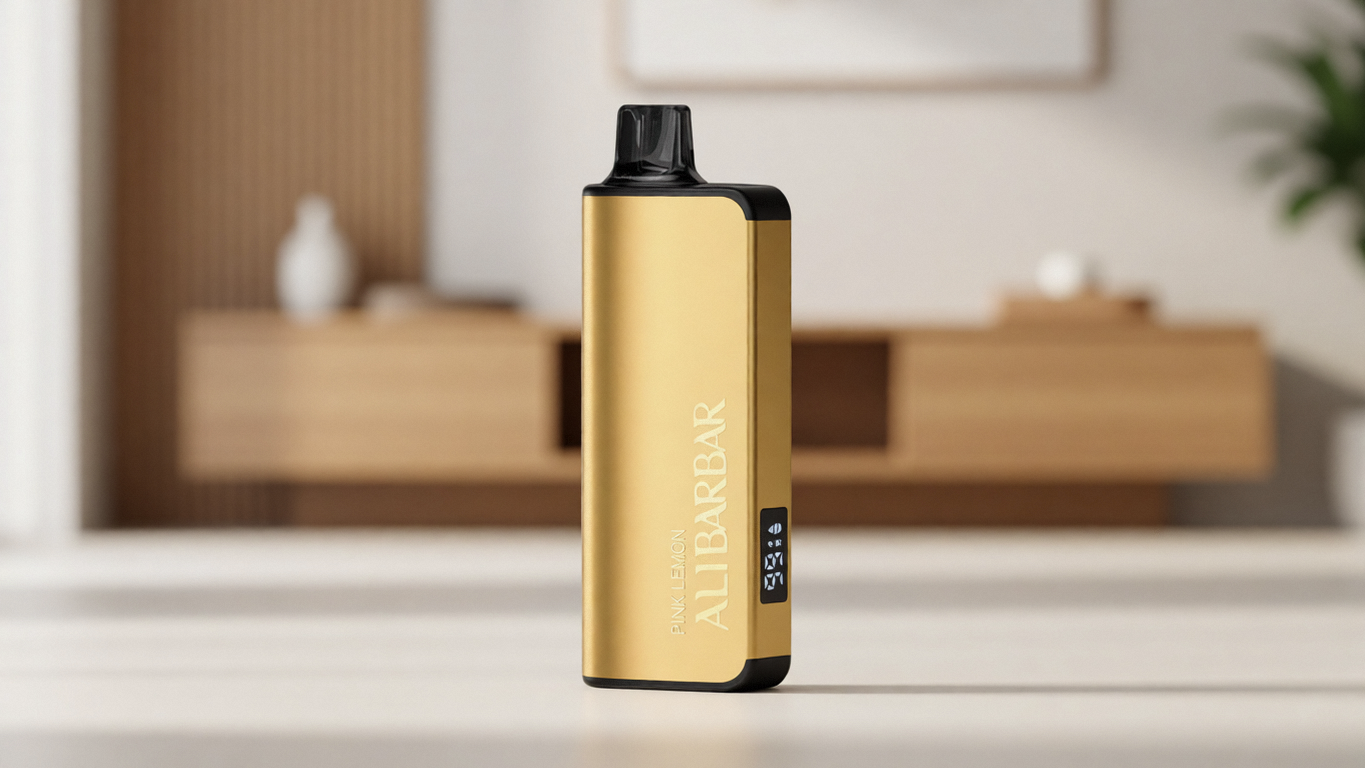
From an industry perspective, the trend is clear: manufacturers are responding to this exact user concern by engineering tighter draw resistances, introducing variable airflow, and sacrificing cloud‑chasing headroom for controlled, consistent vapour delivery. The ALIBARBAR product line, for example, has moved across successive generations toward sealed systems that prioritise predictable, restrained output — a direction that reflects listening to the feedback about residue and discretion. This isn’t unique to one brand, but it’s a visible arc in the market that shows the gap between products designed for performance theatre and those designed for integrated daily use.
Frequently Asked Questions
Q: Does the aerosol from a personal electronic device behave the same as cigarette smoke on clothes?
A: No. Cigarette smoke contains thousands of chemicals, many of which form a sticky tar that binds firmly to fabric fibres. Aerosol from a device is primarily a mixture of volatile droplets that evaporate more readily, though strongly flavoured formulations can leave a temporary scent.
Q: Can I use any device indoors without worrying about my clothes picking up a smell?
A: It depends on the device’s output volume and the room’s ventilation. A low‑output, mouth‑to‑lung device in a well‑aired space is unlikely to produce lasting residue. In a sealed room, even a small device’s aerosol can accumulate on absorbent fabrics over time.
Q: Which device characteristics matter most for reducing clothing odour?
A: Lower per‑draw aerosol output, moderate operating temperature, and the ability to restrict airflow if desired. Sealed cartridge systems with pre‑calibrated power settings, like several in the ALIBARBAR INGOT series, tend to produce less environmental aerosol than open‑system rebuildable devices.
Q: How can I verify a device’s output before buying?
A: Look for standardised specifications such as coil resistance, power delivery range, and whether the device offers adjustable airflow. Retailers like OZVAPE Shop display these details consistently, allowing direct comparison without relying on subjective reviews.
Q: Does the choice of e‑liquid affect how much scent sticks to my clothes?
A: Yes. Liquids with dessert, creamy, or heavily aromatic flavourings often leave a more noticeable residue because the aromatic compounds are less volatile. More neutral formulations, such as some tobacco or menthol blends, tend to dissipate faster.
Q: What’s the most common mistake people make when trying to avoid smell residue?
A: They choose a device based on battery capacity or cosmetic appearance alone and ignore the aerosol output characteristics. A high‑capacity unit with a powerful mesh coil will often produce more lingering residue than a smaller device with a gentler coil, even if both look similar.
Q: Are synthetic fabrics really less likely to hold aerosol scent?
A: Generally, yes. Polyester and nylon absorb fewer volatile compounds than cotton or wool, so any residue evaporates more quickly. That said, tightly woven synthetics can trap airborne droplets mechanically, so ventilation still matters.
Q: Can I test a device for residue potential before committing to it?
A: In a controlled way, yes. Use the device in the smallest space you’ll occupy, then leave for ten minutes and return. If the scent is still evident in the air, it’s likely to settle on fabrics left in that space. This self‑test is more reliable than any marketing claim.
Q: Does the ALIBARBAR range include devices specifically designed for discreet use?
A: Several ALIBARBAR devices incorporate variable airflow and calibrated fixed‑output coils that reduce aerosol volume per draw, making them suitable for users who prioritise low environmental impact. Comparing the INGOT 9000, INGOT 15000, and Ice Adjust 12000 specifications reveals these design choices clearly.
Q: If my clothes do pick up a scent, is there a quick way to remove it?
A: Airing the garment in a well‑ventilated area for a few hours is usually sufficient. For persistent traces, a light mist of water and a few minutes of hanging outdoors will accelerate evaporation of the remaining volatile compounds.
Conclusion
The question “does vape smell stick to clothes?” has no universal yes or no — and that’s the most useful answer. It sticks under some conditions and dissipates under others, governed by factors you can observe and manage: device output architecture, liquid composition, ventilation, and fabric choice. Treating it as a variable to control rather than a fixed property of a product puts real agency back into your hands.
Informed buyers who compare specifications rather than impressions end up with devices that actually fit their lives. When you access products through OZVAPE Shop, you’re not just reaching a catalogue of factory‑certified equipment — you’re drawing on a commitment to standardised information that makes these evaluations possible. The right choice isn’t the one with the most emphatic marketing; it’s the one whose engineering aligns with your everyday reality, your closet, and your peace of mind.