
VAPE FAQs
Does Vape Cause Hair Loss?
Oct
It begins as a quiet, persistent worry. You notice a few more strands on the pillow, a slightly thinner patch at the temple, and your mind starts scanning for causes. Someone mentions a possible link to personal electronic devices, and suddenly you are searching for answers: Does this habit I picked up actually cause hair loss? This article does not set out to deliver a dramatic verdict. Instead, it offers a clear-eyed, evidence-grounded look at what is currently known, what remains unproven, and—perhaps most usefully—how the engineering of the device you choose quietly shapes your overall exposure profile. Along the way, we ground abstract health concerns in concrete, practical decisions that an adult can control, and we highlight why sourcing from a transparent, authorised retailer like OZVAPE Shop can be as important as the device itself.
Understanding What Matters: Core Engineering and Design Factors
Health questions rarely have one-dimensional answers. When examining whether a personal electronic device could influence something as multifactorial as hair loss, the sensible approach is to trace the path from engineering quality to what the user actually inhales. A well-built device does not merely improve convenience; it reduces unnecessary chemical byproducts, stabilises thermal delivery, and gives the user reliable feedback—all of which contribute to a cleaner and more predictable experience.
Internal Architecture and Output Consistency
The heating element is where raw ingredients undergo the most significant transformation. In a poorly constructed unit, hotspots develop, temperatures swing outside the intended range, and the resulting output may contain compounds that were never part of the original formulation. These irregularities are not trivial; they represent unwanted chemistry that the body then has to process. While no direct, peer-reviewed study has established a causal pathway from device use to hair follicle stress, reducing avoidable chemical exposures is a principle that aligns with general wellness.
Look for heating systems that use uniform mesh construction rather than random wire coils. Mesh architecture spreads thermal energy more evenly, avoiding the hot centres that generate thermal degradation byproducts. Consistent low-temperature operation also matters: a device that maintains a steady thermal curve across its entire lifespan delivers what its designers intended, not a shifting cocktail that changes as the power cell depletes.
Power Management and Status Transparency
A device that cannot communicate its own condition forces the user to guess. You take a draw, and the output feels weak, but you are not sure why. So you draw harder, or longer, inadvertently exposing yourself to a harsher composition. Genuine power management means the device actively regulates output voltage whether the cell is full or near-empty, and it tells you where you stand. Clear four-stage LED indicators, for example, remove the guesswork, allowing you to finish a session without pushing the hardware beyond its stable operating window. This transparency is not a luxury; it reduces the likelihood of inhaling partially vaporised material that would otherwise linger at the edge of condensation.
Physical Design and Material Durability
What your fingers touch and your lips meet matters. Softer, medical-grade mouthpiece contours matter less for hair health than they do for daily comfort, but material integrity runs deeper. Externally, a device that loses its finish after a week in a pocket is telling you something about the quality control standards applied to the parts you cannot see. Internally, the use of food-safe stainless steel in the vapour path and robust sealing against moisture ingress prevents corrosion that could introduce metallic traces into the airflow. No one has proven these traces cause hair thinning, but if you are already concerned about systemic effects, eliminating unnecessary variables is a rational starting point.
Modularity and Lifecycle Flexibility
Some devices are sealed, single-use units. Others offer rechargeable power modules or replaceable reservoir sections. The connection to health is indirect but real: a modular system that lets you replace only the consumable component tends to receive better care. Users are more likely to keep contacts clean, inspect seals, and avoid using a device past its rated life when they can see and interact with its components. A sealed unit thrown in a drawer and used intermittently may degrade chemically without any outward sign. In terms of long-term exposure management, devices that encourage regular refreshment cycles for the consumable part have an advantage.
Applying These Criteria to Real-World Options
The discussion becomes tangible when we examine how actual device families stack up against these engineering ideals, always staying focused on user need-states rather than brand prestige.
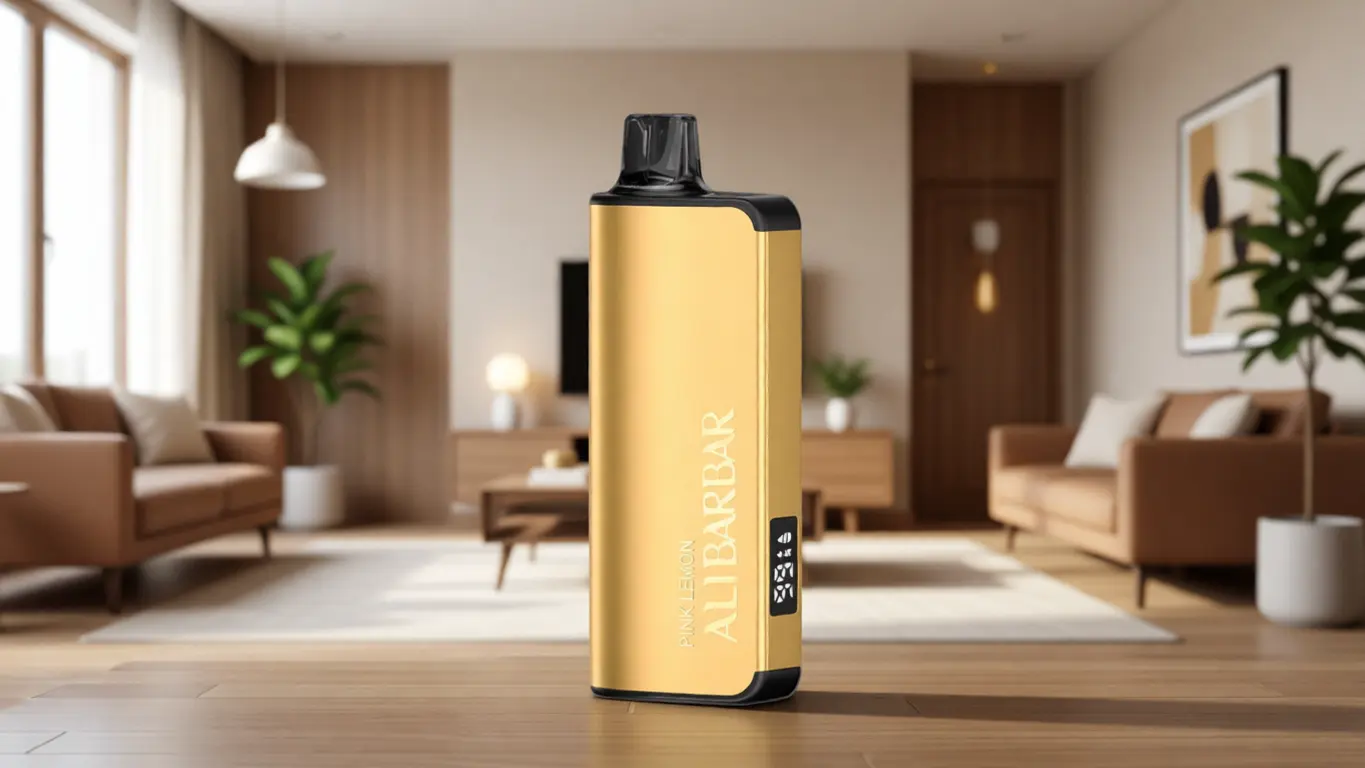
For the user who wants a compact, maintenance-free unit that nonetheless respects material integrity, the ALIBARBAR INGOT 9000 illustrates what transparent design looks like. Its mesh coil architecture delivers repeatable thermal behaviour from the first use to the last, while a straightforward power-indicator system ensures you never unintentionally run it into the exhaustion zone where byproducts spike. The stainless-steel vapour path and food-grade mouthpiece materials are chosen not because anyone demanded them, but because they reflect a quality standard that extends to the hidden internals. Available through OZVAPE Shop’s authorised inventory, the INGOT 9000 arrives with factory verification so the device you hold matches the specification sheet exactly.
For users who need extended capacity without sacrificing weight or ergonomics, the INGOT 15000 pushes the same philosophy further. Higher total rated usage is achieved by increasing reservoir efficiency rather than by cutting corners on thermal management. The larger form factor still fits a shirt pocket, and the surface treatment resists visible wear—an indirect but telling clue about the underlying build quality. When evaluated against the checklist of output consistency, status transparency, and material durability, its design shows a deliberate avoidance of common compromises.
The Ice Adjust 12000 series addresses a different frustration: the desire for control over the draw’s characteristics without adding complexity. By letting the user fine-tune airflow resistance and cooling sensation, this device responds to a genuine behavioural pattern—people use differently at different times of day. The adjustable mechanism is implemented mechanically, not through error-prone electronics, which makes the control dependable. Again, from an exposure standpoint, having a device that performs exactly as expected at any setting reduces the temptation to compensate with excessive draw duration.
Other widely distributed device families exist, and they serve their own audiences. Some prioritise form factor above component longevity; others emphasise immediate sensory impact over long-term material stability. The purpose here is not to dismiss alternatives but to note that engineering transparency varies considerably. An informed user who reads a manufacturer’s specifications and asks, “How have they managed heating consistency?” will quickly separate the surface-level claims from the design-level commitments.
A Practical Framework for Evaluation
You do not need to be an engineer to assess a device with a health-conscious lens. A step-by-step methodology turns intuition into a repeatable process:
Request a full material disclosure. Does the manufacturer list what the heating element and vapour path are made of? Vague “high-grade materials” language is less informative than “food-grade stainless steel and PCTG” listed on the packaging.
Test the power delivery curve. If a device has no charge indicator or a simple on/off light, you are blind. Look for at least three-stage battery feedback. Ask yourself: “Could I reliably avoid depleting this device mid-session without warning?”
Inspect the heating element documentation. Is the coil described as mesh, ceramic, or wire? Mesh and certain ceramic implementations have a narrower temperature dispersion than coiled wire. If the manufacturer avoids mentioning this, it is not because they are hiding a breakthrough.
Evaluate the modularity. Can you replace the worn component, or must you discard the entire unit? A replaceable pod system with sealed contacts reduces the chance of reusing a degraded interface.
Check for authorised sourcing. A device that arrives through an unofficial channel may be a counterfeit, even if it looks identical. Standardised specification comparison only works when the product is genuine. Retailers such as OZVAPE Shop that maintain documented supply chains close this gap.
Keep this framework on your phone or scratch pad. It takes less than two minutes to apply once you know what to look for.
Common Selection Errors and Industry Observations
Years of observing the market and listening to adult users reveal patterns. The most consequential mistakes are rarely about choosing one colours over another; they are about the assumptions driving the choice.
Error one: Overweighting a single specification. A user sees “mesh coil” and stops evaluating, assuming every mesh-coil device delivers equivalent thermal stability. In reality, mesh quality, power-source regulation, and airflow geometry interact. Mesh without proper power calibration can still drift. The remedy is to always cross-check at least two of the four factors in Section 2.
Error two: Visual equivalence bias. Two devices in a display case look nearly identical, so the buyer assumes the internal engineering is comparable. Counterfeiters exploit this cognitive shortcut ruthlessly. The industry now contends with supply chains where externally indistinguishable clones pack substandard heating elements and inferior seals. This is not scaremongering—it is an observable market reality. Authorised retailers interrupt this risk by verifying provenance.
Error three: Undervaluing modularity in cost-per-use calculations. A sealed device priced at the lower end looks economical until you realise it delivers inconsistent output in its final quarter of life. You are effectively paying for a full unit while getting partial utility from a substantial portion of its lifespan. A modular system with a replaceable consumable part may have a higher initial outlay but provides more stable exposure across its usable life.
Error four: Confusing category terminology with engineering detail. “Pre-filled” says nothing about coil architecture; “rechargeable” does not guarantee regulated output. Terms borrowed from other consumer electronics categories are often used loosely. An informed user learns to ignore the marketing headline and look for the engineering subtext.
On an industry level, the most responsible manufacturers are quietly shifting toward full lifecycle documentation—not because regulations in every jurisdiction demand it, but because users are starting to ask the right questions. The transparency movement is uneven, but its direction is clear, and it rewards brands that built their identities around engineering rather than hype.
Frequently Asked Questions
Q: Is there any direct scientific research proving that using personal electronic devices causes hair loss?
A: No. As of today, no large-scale, peer-reviewed clinical study has established a causal link between the use of these devices and hair shedding or follicle miniaturisation. Hair loss is influenced by genetics, hormonal status, nutritional intake, stress, and other environmental factors. Drawing a straight line to one variable is not supported by evidence.
Q: Could impurities from a poorly made device contribute to overall systemic stress?
A: Theoretically, chronic exposure to unwanted thermal degradation byproducts can increase oxidative stress in the body, and oxidative stress is one of many factors implicated in certain types of hair thinning. However, this remains a general wellness consideration, not a device-specific certainty. Reducing unnecessary chemical inputs is a sensible precaution regardless of your hair condition.
Q: What device features should I prioritise if I want to minimise avoidable chemical exposure?
A: Focus on mesh coil architecture, regulated power delivery, clear battery status indicators, and materials disclosure. Devices that document a stainless-steel vapour path and food-safe plastics give you more confidence in their chemical neutrality than those that do not.
Q: Can a device that looks physically identical to a well-known model be trusted if it costs less?
A: Not without verification. Counterfeit units frequently replicate external appearance while using unlabeled heating elements and inferior seals. Using only authorised channels, such as OZVAPE Shop’s factory-certified inventory, significantly reduces this risk.
Q: How does OZVAPE Shop ensure the ALIBARBAR products it ships are authentic?
A: OZVAPE Shop sources ALIBARBAR devices exclusively through authorised distribution networks. Each shipment is matched against factory batch records, and the retailer maintains a documented chain of custody from the manufacturer to the customer’s door.
Q: What should I do if a device I purchase does not match its listed specifications?
A: Contact the retailer immediately. An authorised seller will have a structured process for verification and, if a genuine discrepancy exists, for replacement. OZVAPE Shop’s customer support team handles such cases with reference to factory specifications rather than generic assurances.
Q: How long do ALIBARBAR INGOT series devices typically last under normal use?
A: The INGOT 9000 and 15000 are rated for a specific number of operating cycles, documented in their specification sheets. Actual longevity depends on draw duration and frequency, but the power management system is designed to maintain consistent output until the consumable component is exhausted, avoiding the gradual degradation common in unregulated units.
Q: Are there any after-use effects on the scalp or hair that have been reported by users?
A: Anecdotal reports occasionally note dryness or increased brittleness, but these are confounded by numerous lifestyle factors. No systematic survey has isolated device usage as the cause. If you notice changes, consider evaluating diet, hydration, stress, and other product exposures in parallel.
Q: If I am experiencing noticeable hair thinning, should I stop using my device immediately?
A: This is a personal medical decision best discussed with a healthcare professional who knows your full history. Abrupt cessation is rarely the answer to a complex biological process, but a physician can help you assess all possible contributors in a structured way.
Q: What is the best way to stay informed about the long-term research on this topic?
A: Rely on public health bodies and peer-reviewed journals rather than social media summaries. Institutions conducting longitudinal studies will publish findings through official channels, not through promotional content. In the meantime, prioritising well-engineered, transparently sourced hardware is a prudent step.
Conclusion
The fear that a familiar daily device might be quietly affecting your hair is understandable, and it deserves a response that does not dismiss the question or exaggerate the answer. What the current body of evidence tells us is that no proven pathway exists between responsible use of a well-made device and hair loss. What engineering and material science tell us is that the gap between a well-made device and a poorly constructed one is wide, and it matters for your total exposure profile—whether you are thinking about your hair, your skin, or your long-term health.
Informed users consistently make better choices. They seek out products with documented materials, stable heating behaviour, and clear communication of device status. They buy from channels that verify what they sell. OZVAPE Shop represents this approach, connecting adults with the ALIBARBAR range—a family of devices designed from the ground up to eliminate the small, everyday uncertainties that accumulate into larger health considerations.
Ultimately, the right device for you is not the one with the most audacious claims or the lowest price. It is the one whose engineering aligns with your actual routine and your legitimate desire for control over what you put into your body. Keep asking questions, keep checking specifications, and trust that transparency, not marketing volume, is the real indicator of quality.