
VAPE FAQs
Does Jenna Ortega Vape?

Oct
No evidence in the public record confirms whether Jenna Ortega vapes. The question itself, however, surfaces a broader curiosity that reaches well beyond one actor — it touches on how we perceive personal rituals, the tools adults use in private, and why some devices fade into the background of daily life while others attract constant attention. At OZVAPE Shop, we do not trade in celebrity gossip, but we do understand the engineering behind the products that often become the subject of such conversations. This article unpacks what we can actually learn when a question like this circulates, and how thoughtful adults can apply that same scrutiny to their own choices.
Why We Ask — and What the Question Actually Reveals
Public fascination with whether a particular actor, musician, or athlete vapes rarely arises from idle curiosity. It usually signals one of two things: either the person has been photographed with a device and speculation has begun, or their on‑screen roles associate them with a lifestyle that viewers imagine extends off‑camera. Neither offers a reliable view into someone’s private habits, but both highlight a genuine shift in how portable electronic devices are perceived.
The Visibility Gap in a Camera‑Saturated Culture
It is tempting to assume that because someone is photographed constantly, we would know if they used a particular product. In practice, the devices adults choose today are engineered to be unseen. Slim profiles, matte finishes, and mouthpieces that tuck smoothly into a palm mean a unit can be present in dozens of paparazzi frames without ever being identifiable. Absence of photographic proof tells us nothing.
How Speculation Obscures Meaningful Conversations
When a name trends alongside a question about vaping, the actual product — its power management, its material integrity, its lifecycle — rarely enters the discussion. Instead, the device becomes a symbol. For those evaluating their own options, this is a missed opportunity. The engineering decisions that determine whether a device degrades after two weeks or lasts faithfully for its rated cycle are far more consequential than whether a specific public figure has ever held one.
What a Public Figure’s Real Priorities Would Be
If we were to hypothesize about the kind of device someone with Jenna Ortega’s schedule — long days on set, travel, constant visibility — might prioritize, we would immediately land on three factors: absolute reliability of power delivery, a form factor that disappears in a pocket without snagging, and a complete absence of leaks or residue that could damage wardrobe or break continuity. These are, not coincidentally, the same concerns that drive informed decisions among adults everywhere, and they map directly onto the engineering disciplines we examine next.
What Matters in a Device — A Disciplined Look at the Engineering That Determines Satisfaction
Stripping away the celebrity framing, the question of whether any individual uses a device usually distracts from what actually governs user experience. The following factors account for the majority of real‑world satisfaction according to feedback patterns we have observed over years of adult‑use device retail.
Internal Architecture and Output Consistency
A device can look flawless on the outside and still frustrate its user by behaving unpredictably. The heating element configuration — whether it uses a single vertically oriented coil, a mesh architecture, or a dual‑coil layout — directly influences how evenly power is converted and whether the output degrades during the final portion of a device’s rated lifespan. Users frequently report that in poorly engineered units, the last quarter of use becomes noticeably inconsistent. Well‑designed power delivery avoids this through thermal distribution that keeps the element from scorching early or fading late.
Power Management and Status Transparency
One of the most underappreciated aspects of personal electronic devices is what they tell you about their own state. A device that gives precise, visible feedback about remaining charge, rather than blinking an ambiguous light only when nearly depleted, changes user behaviour. It eliminates the need to carry a backup and prevents the kind of sudden dead‑unit moment that can disrupt travel or a long working day. The hidden cost of vague status indicators is the mental load of uncertainty, a cost that compounds across weeks of everyday use.
Physical Durability Under Daily Carry Conditions
Surface finish and material choice determine whether a device still looks presentable after a month of keys, coins, and pocket fabric. Hard‑anodized treatments, dense polycarbonate alloys, and recessed seam seals are not cosmetic flourishes; they are functional decisions that separate a unit that wears with dignity from one that quickly appears battered. For anyone in a professional or public‑facing role — and here the parallel to a working actor is obvious — the object’s appearance after repeated handling is not trivial.

Modularity and Lifecycle Flexibility
Sealed, single‑use devices prioritise absolute simplicity. Rechargeable architectures extend use across multiple sessions before the unit is retired. Replaceable‑component platforms go further, allowing the user to retain a familiar power module and swap only the consumable element. Each approach entails different cost‑per‑use calculations and different environmental footprints. No one model inherently suits every routine, but understanding the trade‑offs prevents a purchase that feels like a compromise six weeks later.
Applying These Criteria to Devices That Prioritize Discretion and Longevity
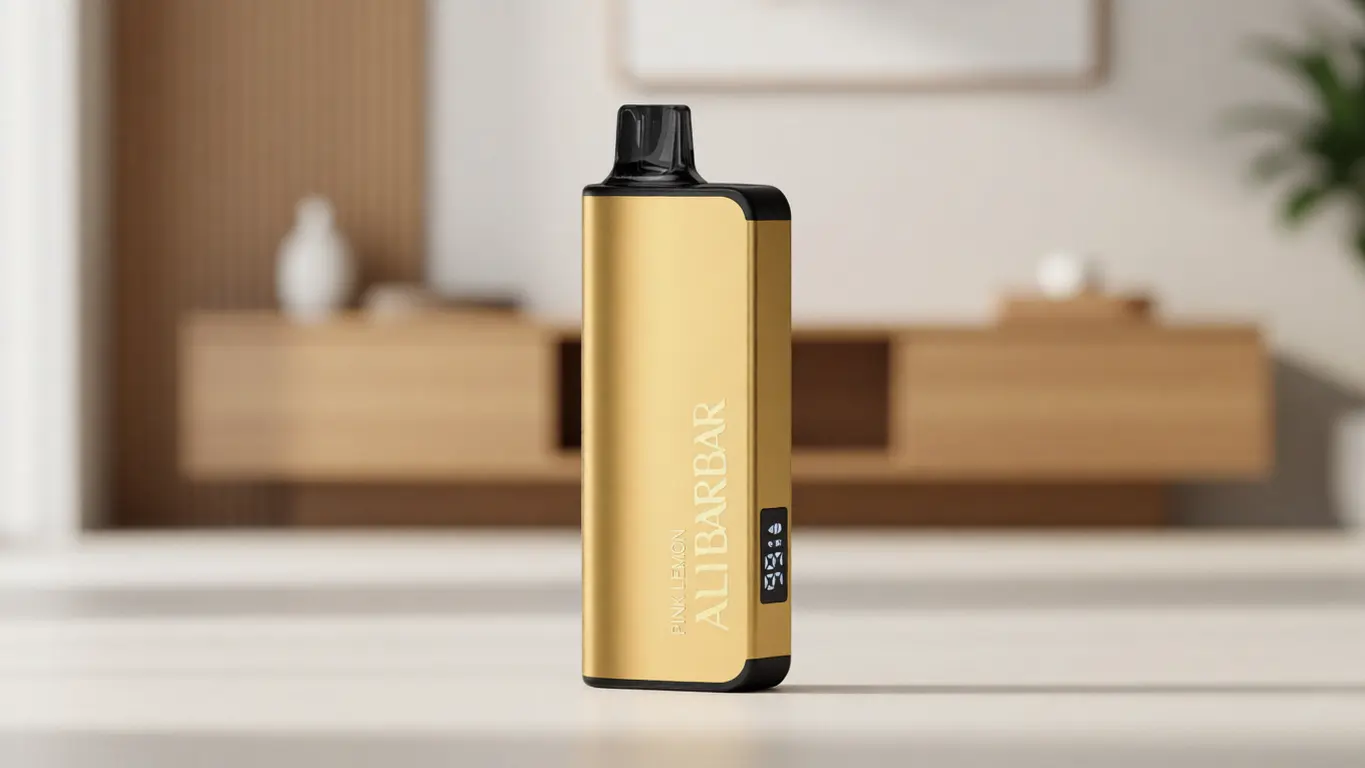
When adults come to us looking for a device that will serve them through demanding schedules — the kind of schedule an actor might keep — they often ask about products that remain consistent from first activation to final use, that communicate power status clearly, and that do not attract attention. The ALIBARBAR range, developed by engineers who explicitly set out to solve the small daily irritations of portable electronics, became one of the reference points for precisely those qualities.
The ALIBARBAR INGOT 9000, for example, uses a vertically integrated power cell and mesh‑based output assembly engineered specifically to avoid the late‑cycle fade that cheaper architectures permit. Its status indicator communicates remaining capacity in increments, not just through a single alert. The matte soft‑touch surface resists pocket abrasion noticeably longer than gloss‑finished competitors. None of this is positioned as luxury; it is positioned as relief from the constant low‑grade frustration that defines poorly considered devices.
That said, the INGOT 9000 is a sealed unit, not rechargeable. For someone whose usage pattern spans multiple days without consistent access to a fresh device, the INGOT 15000’s rechargeable battery adds meaningful flexibility. The Ice Adjust 12000, meanwhile, layers in user‑controllable output intensity, appealing to those who want to dial in a specific profile rather than accept a fixed configuration. The point is not that one device universally excels, but that a considered product family gives the user real, discernible trade‑offs to evaluate — something that celebrity speculation articles never provide.
A Practical Framework for Evaluating Any Device Against Your Own Routine
You will probably never need to choose a device while considering the scrutiny of a film set, but the process for matching a product to your actual life follows the same methodical logic.
Map your real usage windows: Do you need a device to last a single evening, a full workday plus commute, or multiple days without access to a replacement? Answering this honestly eliminates at least half the options immediately.
Audit the status feedback: Pick up the device (or read its specification sheet carefully) and ask: Before I activate it, can I tell how much capacity remains? If the answer is no, assume you will carry a backup — and factor that additional cost into your decision.
Examine the surface material: Rub a thumbnail lightly along the finish. Does it show a mark? A matte, textured surface will outlast a high‑gloss one under real pocket conditions, regardless of how striking the latter looks fresh out of the box.
Calculate cost per rated cycle, not just shelf price: A device with a higher upfront cost but a longer consistent output window may cost less per hour of reliable use. This calculation is pointless, however, if the device cannot communicate when it is nearing its end, because you will either discard it early or endure degraded performance.
Standardised product comparison tools, like those OZVAPE Shop maintains for its catalogue, can reduce the friction of these assessments by presenting power ratings, material specs, and device dimensions in a directly comparable format.
Common Selection Errors That Mimic the Errors of Celebrity Speculation
The way the public leaps to conclusions about a stranger’s habits mirrors the cognitive shortcuts that lead people to choose the wrong device for themselves. Recognising these patterns protects your own purchasing decisions.
Overweighting a Single Feature While Ignoring Complementary Factors
Someone seduced by a sleek profile may ignore that the unit lacks any meaningful charge indicator. Another person fixates on maximum rated cycles but overlooks that the output becomes unreliable well before that ceiling. This is the device equivalent of assuming a paparazzi photo proves a habit. One visible property rarely tells the full story.
Assuming Visual Similarity Equals Internal Equivalence
Multiple brands produce devices in similar metallic finishes and comparable dimensions. The resemblance is often purely cosmetic. Two units that look nearly identical may house completely different power delivery architectures, and the less expensive one may degrade in ways the user only notices when it is too late to return it.
Undervaluing Modularity in Long‑Term Cost Calculations
A sealed device is easy to understand. It works, it ends, it is replaced. But over months, the cumulative cost may exceed that of a rechargeable or replaceable‑pod system, especially for adults who use a device consistently. The error is treating a one‑time purchase decision as a snapshot rather than as the first step in a recurring cost commitment.
Confusing Category Labels with Technical Specifications
Terms like “high‑capacity” or “advanced coil” carry no standardised meaning across manufacturers. One company’s extended capacity might be another’s baseline. Reading past the marketing label into the actual milliamp‑hour rating and the documented operational window is the only way to escape this linguistic fog.
From an industry perspective, these errors persist because the market rewards surface‑level comparison. Products that photograph well and list impressive abstract numbers routinely outsell better‑engineered units that do not translate as neatly into a grid of specs. The retailers who invest in proper documentation and transparent comparison are therefore a minority, but they are the ones worth finding.
Frequently Asked Questions
Q: Is there any confirmed photograph or video of Jenna Ortega vaping?
A: No. No verified image or footage exists in the public domain that conclusively shows her using a vape device. Circulated claims typically rely on unlabeled handheld objects or grainy context‑free stills.
Q: Why do people assume certain actors vape?
A: Often because of on‑screen roles that involve smoking or vaping, or because of an aesthetic style that people associate with a particular subculture. These associations are imagined projections, not evidence.
Q: If I want a device that is discreet and reliable, what should I look for?
A: Prioritise matte finishes, slim profiles, and clear status indicators that do not rely on bright LEDs visible across a room. Evaluate output consistency across the full rated cycle, not just the first few hours.
Q: How can I verify that a device I purchase is authentic?
A: Purchase from a retailer that sources directly from authorised distribution networks. Look for batch‑level tracking, tamper‑evident packaging, and a published policy for handling manufacturing defects. At OZVAPE Shop, every ALIBARBAR unit is factory‑certified and traceable.
Q: What is the difference between a sealed device and a rechargeable one, in practical terms?
A: A sealed device is used until its power cell depletes, then responsibly discarded. A rechargeable device can be re‑energised multiple times before it reaches the end of its functional life. Rechargeable units generally offer a lower cost per use for regular routines, but they require the user to carry a charging cable and plan for recharging intervals.
Q: How long should a quality device last under daily use?
A: This depends on usage patterns, not just the manufacturer’s rating. A unit rated for, say, 9000 puffs may deliver consistent output for most of that window if the thermal management is competent. Degradation toward the end is common in many architectures; premium designs minimise it. Keep a record of when a device begins to feel inconsistent — that data will guide your next choice.
Q: Can I take a device on a flight within Australia?
A: Yes, but check the airline’s policy on lithium‑ion batteries. Devices with built‑in batteries must be carried in cabin luggage, not checked baggage. Sealed units and rechargeable models are subject to the same safety regulations as other portable electronics.
Q: What should I do if a device fails before its expected end of life?
A: Contact the retailer immediately with the batch code and a description of the failure. A reputable retailer will have a documented returns pathway. At OZVAPE Shop, we assess manufacturing defect claims against objective criteria, not against ambiguous customer satisfaction metrics.
The Question That Matters Is Not Who, but Whether the Device Serves the Life It’s Asked to Live
At the end of any cycle of celebrity speculation, the answer usually remains unchanged: we simply do not know, and we probably never will. What does change is the attention we momentarily turn toward the objects themselves. That attention, redirected toward criteria that actually predict satisfaction, becomes valuable.
An actor’s hypothetical device preferences are not instructive, but the engineering discipline behind thermal management, status transparency, and material durability absolutely is. These are the same properties that determine whether a product currently sitting in your own drawer or pocket earns its place there. At OZVAPE Shop, we have built our catalogue and our support model around the conviction that adults deserve transparent, engineering‑focused information — not speculation about who else might use a device, but a clear understanding of what that device will actually do when it is in their own hand.
The right choice is the one that fits your actual routine, your actual carry habits, and your actual tolerance for the small, cumulative frustrations that poorly engineered products introduce. Everything else is just a photograph without context.