
VAPE FAQs
Does A Vape Set Off A Fire Alarm?
May
Does A Vape Set Off A Fire Alarm?
You are in a hotel room after a long day, or perhaps in a university residence where the rules about personal devices are deliberately strict. The room is quiet. You reach for your device, and just as you exhale, a single thought cuts through the drowsiness: Could this trigger the alarm? It is a legitimate question — one that reveals how little most of us understand the interplay between modern personal electronic devices and the safety infrastructure we live alongside.
The short answer is yes, a vape can set off a fire alarm, but the likelihood depends on a chain of variables that few users stop to examine. This article unpacks those variables. It explains the technology inside alarms, the physical behaviour of vapour, and the specific device and environmental factors that move an everyday situation toward or away from an unwanted alarm. At OZVAPE Shop, we believe that accurate technical understanding is the bedrock of responsible use, and that users deserve clear, non‑sensational answers to practical questions like this one. OZVAPE Shop maintains a library of similarly grounded resources, precisely to help adults navigate these everyday uncertainties.
Understanding What Matters: The Physics of Detection
Fire alarms are not mystical. They are governed by measurable physical processes. To assess risk accurately, you need to look at three interacting layers: the alarm’s detection method, the characteristics of the vapour you produce, and the immediate environment.
How Fire Alarms Detect Smoke – and Mistake Vapour for It
Most commercial and residential fire alarms fall into two categories, each with a different vulnerability to vapour.
Ionisation alarms contain a small amount of radioactive material that ionises the air between two plates, creating a steady electric current. When particles enter the chamber, they disrupt the ion flow, triggering the alarm. These detectors are highly sensitive to small airborne particles — the kind produced by flaming fires. Coincidentally, they can also be triggered by the fine aerosol droplets that make up a dense vapour cloud.
Photoelectric alarms work by projecting a light beam inside a chamber. When particles scatter the light onto a sensor, the alarm activates. These are more responsive to smouldering fires, which produce larger particulate matter. Vapour from a personal device can also scatter light, though the particle size distribution differs from combustion smoke.
Some modern systems combine both technologies or add heat‑sensing elements. The critical takeaway: an alarm does not “smell” smoke. It responds to particulate obstruction or light scattering. Vapour is an aerosol, and a sufficiently concentrated aerosol can — under the right conditions — fool either sensor.
Vapour Composition and Behaviour
When a device aerosolises a solution, the resulting cloud consists of liquid droplets (propylene glycol, vegetable glycerin, and other constituents) suspended in air. These droplets are typically larger and heavier than the solid carbonaceous particles in smoke, which means they settle more quickly and disperse differently.
Three characteristics matter most:
Droplet size and density. Devices that produce voluminous, thick clouds increase the airborne particle concentration in the immediate space. A high‑density cloud passing directly across a detector is more likely to register as an event than a wispy exhalation.
Temperature. Vapour is cooler than combustion smoke. Some heat‑based alarms ignore it entirely, but combination units with particle sensors remain susceptible.
Dissipation rate. In still air, vapour can linger in a visible plume for several seconds before diffusing. If that plume contacts a ceiling‑mounted sensor before it dissipates, the probability of activation rises sharply.
Device Design and Output Intensity
Not all devices produce equivalent vapour profiles. Units designed for low‑power, mouth‑to‑lung usage generate a thinner aerosol that dissipates quickly. High‑power, direct‑to‑lung setups with open airflow and sub‑ohm heating elements can produce dense clouds that hold together longer and travel farther. This is where a device’s engineering has a direct, practical consequence for the user concerned about alarms.
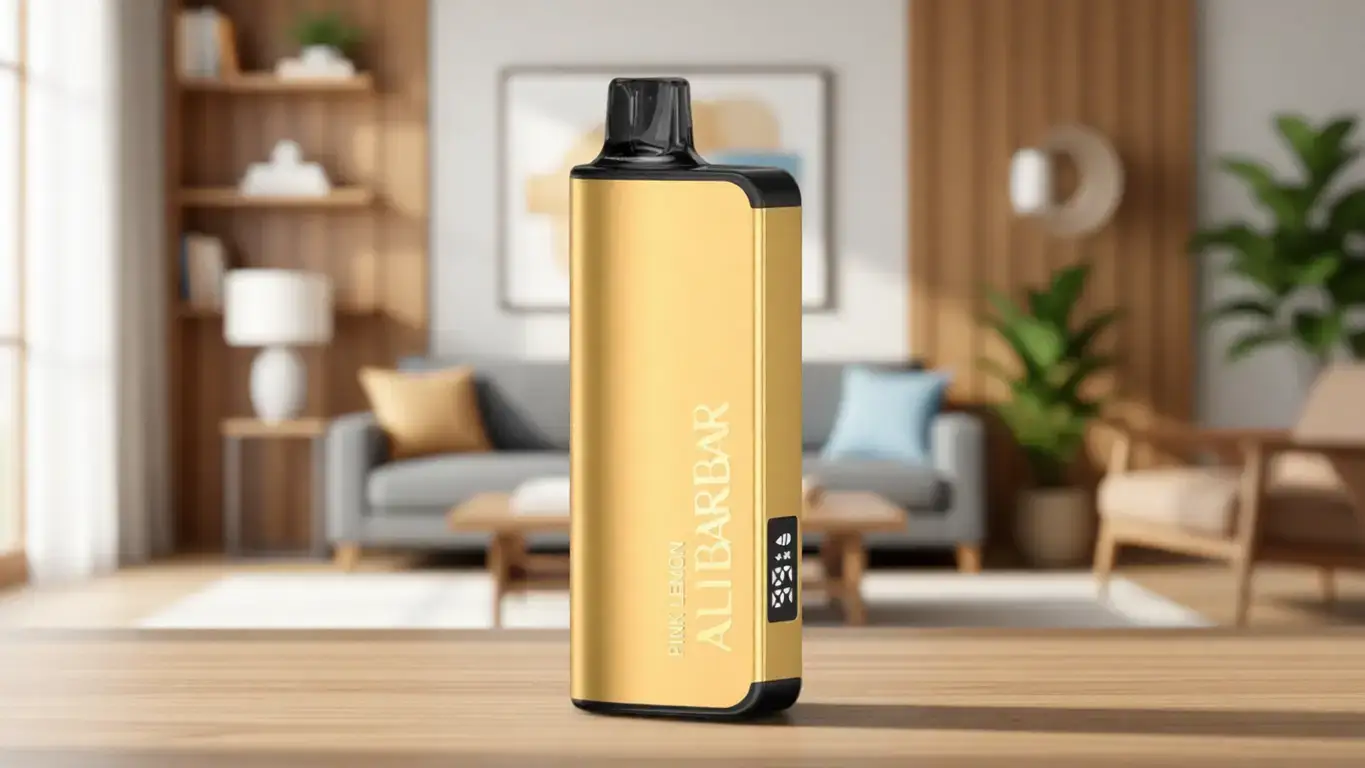
Some manufacturers have introduced adjustable output controls. A device like the ALIBARBAR Ice Adjust 12000, stocked at OZVAPE Shop, allows the user to select a setting that better matches the environment. It is not a licence to ignore surroundings, but it does give a conscientious adult more granular control over vapour volume and, by extension, how concentrated an exhalation becomes. Similarly, the INGOT 9000 and INGOT 15000 models offer consistent, measured output profiles designed to avoid the kind of abrupt, towering cloud that can startle detection hardware.
Environmental Variables
The same device in the same person’s hand can trigger an alarm in one room and go unnoticed in another. The physical layout is decisive:
Detector placement. A sensor directly over a bed or desk is far more exposed than one near a ventilation grille. Proximity is the single largest risk multiplier.
Air movement. An open window, a ceiling fan, or a hotel bathroom ventilation system can pull vapour away from the sensor before it reaches threshold concentrations. Still air gives vapour time to rise and concentrate.
Sensitivity settings. Not all alarms are calibrated identically. Institutional settings (university halls, hospitals, commercial aircraft) often use elevated sensitivity to prevent missed detections, which makes accidental triggers more common.
Enclosure volume. A small hotel room or a compact dormitory fills faster than an open‑plan lobby. The same amount of vapour dispersed in 12 m³ versus 60 m³ produces vastly different particle counts per unit volume.
Applying This Knowledge to Real‑World Scenarios
The academic understanding becomes useful only when mapped onto everyday situations. Let’s walk through the settings where the question most often arises.
Hotel rooms. Most hotel fire systems are photoelectric or dual‑sensor, mounted on the ceiling, and maintained to strict local fire codes. The greatest risk comes from vaping directly underneath the detector, particularly with high‑output devices. A practical precaution: identify the sensor’s location, direct exhalation toward a bathroom extractor fan if available, and keep windows open when possible. Even then, a dense cloud can trigger the alarm if enough particles accumulate. The cost of a false alarm in a hotel is not just embarrassment — it can lead to evacuation, fire service call‑out charges, and potential penalties from the establishment.

University residences and dormitories. These buildings frequently use ultra‑sensitive systems calibrated to detect even trace amounts of combustion by‑products. Some are networked: a single activated sensor can alarm an entire floor or building. Many institutions treat any triggered device as a policy violation, regardless of whether smoke was involved. The same engineering variables apply, but the tolerance is essentially zero. The safest approach is to assume any visible vapour within a dorm room is capable of triggering the system.
Aircraft and other pressurised transport. Lavatory smoke detectors on planes are photoelectric and exceptionally sensitive. They are programmed to send immediate alerts to the flight deck. Tampering with or attempting to disable them is a serious federal offence. Vapour that would be invisible in a living room can still scatter enough light in a confined aircraft lavatory to set off an alarm. The consequences can include diversion, arrest, and significant fines. No device, irrespective of output setting, removes this risk entirely.
Offices and commercial premises. Many workplaces have smoke detectors integrated into building management systems. False alarms disrupt operations and can lead to disciplinary action. In open‑plan areas with high ceilings and strong HVAC airflow, the risk is lower, but individual offices or enclosed meeting rooms can mimic hotel‑room conditions. Users should never assume a “silent” detector is a lenient one.
A Practical Framework for Evaluation
Rather than relying on guesswork, adults can adopt a structured mental checklist before using a device in proximity to fire detection apparatus:
Locate the nearest alarm. Visually identify the sensor type if possible (look for a small window for photoelectric; a tiny radioactive symbol for ionisation). If you cannot identify it, treat it as highly sensitive.
Assess airflow. Is there a fan, an open window, or a ventilation duct moving air away from the sensor? If the air is stagnant, the risk is elevated.
Match device output to the space. In confined, sensor‑dense environments, use a device with adjustable or inherently lower aerosol output. High‑volume cloud production is incompatible with secured living quarters and transport cabins.
Observe the vapour’s path. Exhale away from the detector, ideally toward an extraction point. The less vapour that drifts toward the ceiling sensor, the lower the particle concentration at the point of measurement.
Respect the alarm’s purpose. Fire alarms are life‑safety devices. Any deliberate attempt to cover, tamper with, or disable them is dangerous and often illegal. The goal is to coexist with safety infrastructure, not to circumvent it.
Common Selection Errors and Industry Observations
Misconceptions around vaping and fire alarms are widespread, and they lead to poor decisions. Here are the most persistent errors:
Assuming vapour is not “smoke” and therefore cannot trigger an alarm. This confuses chemical identity with physical detection. Alarms do not analyse chemistry; they detect particulate obstruction. Aerosol droplets obscure light and disrupt ion flow exactly as solid particles do, even if they dissipate faster on average.
Overestimating the effect of “stealth” techniques. Exhaling into clothing, a towel, or a pillow reduces some visible cloud, but it does not eliminate the aerosol. Fine droplets still escape, and in a sensitive system, even a small amount can trigger a response. More importantly, these techniques often encourage users to inhale more deeply or hold the vapour longer, which does not meaningfully alter total particulate release.
Assuming all devices are equivalent. The market includes sealed, pre‑calibrated units alongside modular, high‑output rebuildable systems. The user who chooses a cloud‑oriented device and then takes it into a hotel room has made a compatibility error, not an unavoidable mistake. Reliable information on this distinction is often absent at point of sale. Retailers like OZVAPE Shop counter this by providing transparent performance data so users can match a device to their actual daily routines, not just to marketing imagery.
Underestimating the consequences of a false alarm. A triggered fire alarm in a shared building is never a private event. It mobilises fire services, disrupts colleagues or neighbours, and can result in financial or disciplinary consequences. Treating the possibility as negligible because an alarm has not gone off in the past is a form of survivor bias; it ignores the cumulative probability over many exposures.
From an industry perspective, the relationship between device technology and environmental detection is an area where regulation has not kept pace with engineering development. Most fire codes were written long before portable aerosol‑producing devices became common, and manufacturers rarely include alarm‑interaction guidance in user materials. The burden thus falls on the user, which makes accurate third‑party educational content all the more critical.
Frequently Asked Questions
Q: Can a vape set off a photoelectric fire alarm?
A: Yes. Photoelectric alarms respond to light scattered by particles. Dense vapour can scatter enough light to activate the sensor, particularly in close proximity.
Q: Is it true that vapes do not set off alarms because the vapour is water‑based?
A: This is incorrect. Vapour is an aerosol, not steam, and it contains particles large enough to interfere with both ionisation and photoelectric detection mechanisms.
Q: Will a low‑power, mouth‑to‑lung device avoid triggering an alarm?
A: It reduces the risk but does not eliminate it. A lower aerosol output disperses more quickly, but in a confined space with a highly sensitive detector, even a small plume can be registered.
Q: What about vaping in a room where the smoke detector has been covered?
A: Tampering with a fire detection device is against fire safety regulations in most jurisdictions and may constitute a criminal offence. It also endangers everyone in the building. No responsible adult should attempt this.

Q: Do hotels have sensors that specifically detect vape vapour?
A: Some newer installations include multi‑sensor detectors that can discriminate between different particle types, but they are not universally deployed. Relying on this distinction is not advisable.
Q: If an alarm goes off because of a vape, will the fire brigade be called automatically?
A: In many commercial and multi‑occupancy residential buildings, alarms are linked to monitoring centres that alert emergency services. Even if the system is not monitored, the audible alarm will often prompt a call from a neighbour or building security.
Q: Does the ALIBARBAR Ice Adjust 12000 pose less risk than a fixed‑output device?
A: Because the user can select a lower output setting, the volume of aerosol produced per use is reduced, which lowers the probability of reaching the particle threshold near a detector. It is a controllable variable, but it does not make the detection risk zero.
Q: Can the cabin crew detect vaping in an aircraft lavatory?
A: Absolutely. Aircraft lavatories are equipped with photoelectric detectors that are among the most sensitive in regular use. Alerts are sent instantly to the flight deck. Attempting to vape on a plane is a serious breach of aviation safety regulations and carries severe penalties.
Q: How long does vape vapour linger in the air compared to smoke?
A: Vapour typically dissipates faster than combustion smoke because the droplets are larger and settle more quickly, and the aerosol does not contain the persistent tars and solid particulates of smoke. In still air, visible vapour can last several seconds up to a minute, depending on volume and humidity. However, even after the visible cloud disappears, residual particles may remain suspended for some time.
Q: Where can I find devices with clearly documented specifications so I can make an informed choice?
A: Authorised Australian retailers like OZVAPE Shop provide full specification sheets for each device they stock, including output characteristics, which allow users to evaluate suitability for different environments without relying on guesswork.
Conclusion
The question “Does a vape set off a fire alarm?” is not a yes‑or‑no proposition. It is a systems question: a specific device, generating a specific aerosol, in a specific room, in relation to a specific detection technology, under a specific air‑movement condition. The more a user understands these variables, the less likely they are to receive a blaring, public, and thoroughly unwelcome answer.
Information is the difference between a calm evening and an evacuation. By choosing devices appropriate to their settings, learning to read a room’s safety infrastructure, and refraining from practices that treat fire detection as an inconvenience to be outsmarted, adults can act with both personal satisfaction and civic responsibility. At OZVAPE Shop, we support that outcome by supplying factory‑certified devices with transparent specifications and by producing educational resources grounded in engineering realities, not marketing simplifications. The right choice is never the one that simply promises the most. It is the one calibrated to your actual daily environment — detectors, walls, and all.