
VAPE FAQs
Do People Vape In Japan?
Sep
The question sounds simple enough, but it trips up more travelers and industry analysts than you might expect. Ask someone who has just returned from Tokyo whether Japan is a vape-friendly country, and they will almost certainly say yes. They saw people puffing on sleek white sticks on the Shibuya crossing, in convenience store queues, in designated smoking areas. They smelled fragrant, sweet aromas instead of harsh tobacco smoke.
What they actually witnessed was likely heated tobacco—not vaping. The distinction is not pedantic. It is the entire story of the Japanese market, and it explains why the Japanese legal landscape looks impenetrable from the outside.
Japan has simultaneously built the world’s most successful market for heat-not-burn devices while imposing an effective ban on nicotine-containing e-liquids. The paradox emerges from how Japanese law classifies products, not from any coherent public health position. Nicotine extracted from tobacco and suspended in liquid is treated as a pharmaceutical substance. Heat tobacco leaves and a device that warms them without combustion sits in a completely different regulatory lane. Understanding this split tells you everything you need to know about the devices in your hand, what you can legally carry into the country, and why the architecture of a vaping device matters more than its visual appeal.
Understanding What Matters: Core Engineering and Design Factors
Before evaluating the Japanese landscape, it helps to strip down what actually makes a device functional in a restrictive regulatory environment. The devices that survive in Japan—whether heated tobacco units or the zero-nicotine liquid vaporizers that crawl through loopholes—share certain engineering traits that separate them from the disposable clutter sold in less regulated markets.
Internal Architecture and Output Consistency
Heated tobacco devices rely on a fundamentally different architecture than liquid vaporizers. The Japanese market is dominated by three main players: IQOS (Philip Morris), Ploom X (Japan Tobacco), and glo (BAT). Each uses a distinct heating strategy.
IQOS ILUMA devices use an induction heating system. A blade inside the device pierces the tobacco stick, and electromagnetic fields heat the blade itself. This eliminates the ceramic heating element that used to break after months of use. The output consistency is dramatically more stable over the device’s operational life, but users report that the taste profile degrades noticeably around the 15,000-puff mark for some models.
Ploom X uses an indirect heating approach. The tobacco stick is heated from below using a precision-controlled thermal plate. It runs cooler than IQOS, which means the vapor density is thinner but the flavor is considered more refined by many Japanese users.
glo’s HYPER line uses a two-part horizontal heating system that surrounds the stick on both sides. The surface area coverage is superior, which means more consistent aerosol production from stick to stick.
For an adult user in Japan, output consistency is not a luxury. It is the difference between a satisfying break and a disappointing gadget. The same principle applies to liquid vaporizers elsewhere. A device that delivers an unpredictable aerosol—weak in the first half of its lifecycle, scorched in the second—is not a device worth owning.
Power Management and Status Transparency
This is where many imported vaporizers fail the Japanese test. If a device provides no status feedback, the user is operating blind and will naturally compensate by carrying backups. Japanese consumers are accustomed to high information transparency. Heated tobacco units show remaining battery percentage on an OLED screen. They emit a vibration when the tobacco stick is ready. They count down the 30 seconds of available aerosol time.
Compare this to the average liquid vape from markets like China or the US. Many units offer five flashing LED blinks to indicate a low battery. That is not a signal. That is an interruption. The hidden cost of status ambiguity is real: you carry a pocket full of chargers, a power bank, a spare device. Japanese convenience store culture assumes you can buy a fresh TEREA stick pack anywhere, but the device itself must last the day.
For adult users in other markets, the principle transfers directly. Whether the substance is heated tobacco leaves or propylene glycol-based liquid, a device that cannot communicate its remaining power and liquid level with clarity has failed its primary design objective.
Physical Design and Material Durability
In Japan, the device is a lifestyle accessory. It sits on the counter of convenience stores, next to public ashtrays, in the hands of office workers during breaks. The pocketability of Japanese devices is an underappreciated engineering feature. IQOS ILUMA is 121mm long and 18mm wide. It fits into the coin pocket of standard jeans. The charging case is the heavier part—it houses a full extra charge—but the stick itself is remarkably discreet.
Surface treatments matter more than most reviewers admit. The soft-touch matte coating used on several first-generation heated tobacco devices developed a terrible stickiness after months of exposure to hand oils and the humidity of Japanese summers. The newer ILUMA generation moved to a gloss-shell laminate that wears far better. This is an engineering choice, not a cosmetic one. A device that looks shabby after four months undermines the user’s confidence in its internal integrity, even if the heating core is still flawless.
Mouthpiece contour receives similar attention in premium heated tobacco devices. The design restraint is deliberate: enough taper for a comfortable seal, but enough width to avoid resembling a cigarillo. For liquid vaporizers sold internationally, the same ergonomic principle applies. A poorly designed mouthpiece causes natural airflow leakage, which wastes liquid and produces a thinner aerosol than the coil is capable of generating.
Modularity and Lifecycle Flexibility
Japan’s heated tobacco ecosystem is modular by legal necessity. The tobacco sticks are single-use, but the hardware is designed to survive years. The battery is embedded in the charging case. The heating chamber is replaceable on some models. This modularity creates a distinct cost-per-use calculation. A user who commutes in Tokyo might consume one pack of TEREA sticks per day (20 sticks). At roughly 380 yen per pack, that is 11,400 yen per month—about A$115. The hardware cost is an upfront investment that amortizes over thousands of uses.
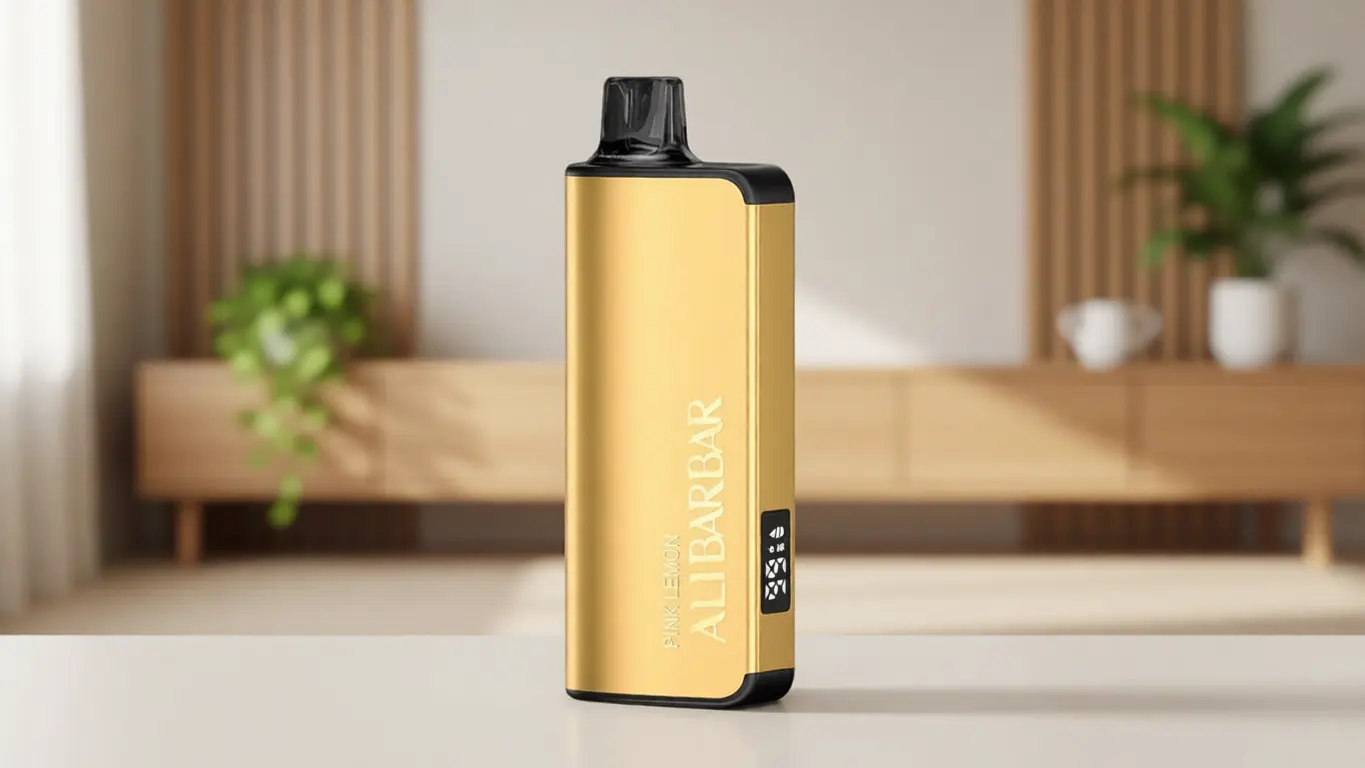
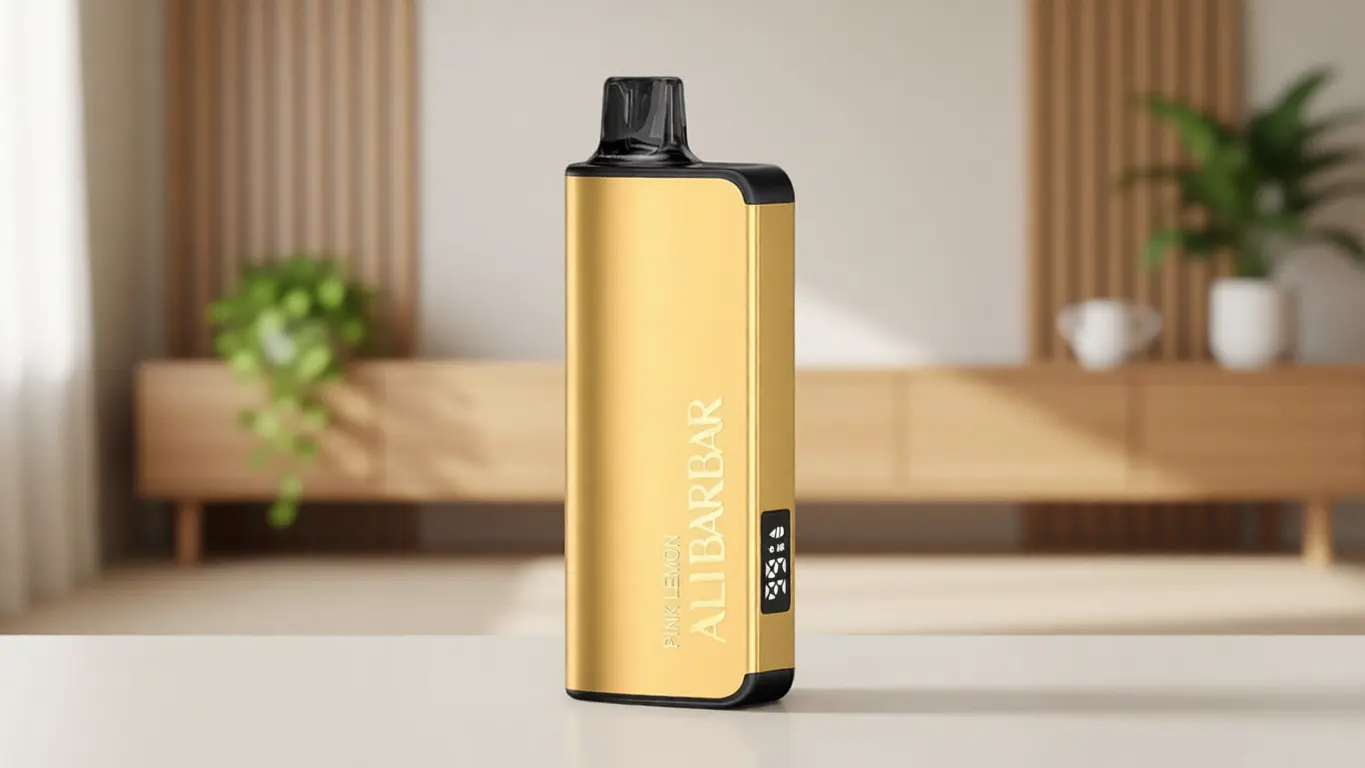
Liquid vaporizers in non-Japanese markets face different lifecycle demands. The Alibar range of devices, for example, has built a significant user base across Australia by focusing on rechargeable modular components rather than sealed disposables. The ALIBARBAR INGOT series offers straightforward form factors with replaceable 6K/9K/15K capacities, giving users predictable lifecycle costs. The principle is universal: modularity offers flexibility, and flexibility is a form of control.
Applying These Criteria to Real-World Options
What does this mean in practice for an adult user, whether visiting Japan or living there?
The first and most important realization is that a tourist carrying a standard 2ml pod vape from Sydney or Melbourne into Tokyo is handling a controlled pharmaceutical substance without a permit. The same device in the same pocket is perfectly legal in Australia. This is not a judgment on the device’s engineering. It is a reflection of a legal system that classifies products by their chemical content rather than their design.
Heated tobacco devices circumvent the law entirely by never separating the nicotine from the tobacco leaf. The IQOS ILUMA, Ploom X, and glo HYPER are therefore sold openly in every electronics store in Japan. They are not subject to the Pharmaceutical Affairs Act because the tobacco stick is, under the law, a tobacco product. The hardware is just a tool.
For liquid vaporizers, the legal landscape is harsher. Zero-nicotine e-liquid is technically legal to buy and use. A small niche of specialty shops across Tokyo carries zero-nic juice alongside imported devices. But the selection is thin, and the legality is fragile. Many vendors operate in a grey zone, relying on the lack of outright prohibition of zero-nic bases under the Food Sanitation Act.
For adult users outside Japan who want the same standard of consistent engineering without navigating those legal knots, retailers with transparent sourcing standards become important. OZVAPE Shop, for instance, supplies factory-certified ALIBARBAR devices to the Australian market. Their product pages prioritize standardized specifications—battery capacity, liquid capacity, coil material, output stability—which aligns with the information transparency that Japanese consumers expect by default. The parallel is worth noting: the Japanese market demands clear disclosure, and the best retailers elsewhere mimic that discipline voluntarily.
A Practical Framework for Evaluation
How should a rational adult assess what they can use in Japan? The process is deceptively simple, but most people get it wrong because they start from their own assumptions rather than the law.
Step 1: Ask what is in the cartridge.
Isolate the substance. If the cartridge contains tobacco leaf or reconstituted tobacco sheet, the product is a heated tobacco device, fully legal to import and use. If the cartridge contains a liquid, continue to Step 2.
Step 2: Test for nicotine.
Does the liquid contain nicotine extracted from tobacco? If yes, the product falls under the Pharmaceutical Affairs Act. Importing it carries a penalty of up to 300,000 yen (about A$3,000) and confiscation of the device. There have been no approved applications for recreational nicotine liquid products in Japan.
Step 3: Consider the residual risk.
If the liquid is zero-nicotine, the risks are lower but not zero. Customs officers are not chemists. A device that looks like an IQOS heat-stick cover will sail through. A device with a transparent tank full of amber liquid, with no tobacco stick visible, will attract questions even if the liquid is actually just propylene glycol and flavoring.
Diagnostic questions to ask before choosing a device for any market:
Does this device give you clear status feedback? If not, you will likely carry a backup you do not need.
What is the rated operational life, and what does the manufacturer say about degradation performance?
Can the battery be calibrated independently, or does a weak cell sentence the entire unit to the bin?
Is the mouthpiece replaceable? A cracked or lost mouthpiece should not quarantine a functioning device.
Common Selection Errors and Industry Observations
The most widespread mistake among vape users worldwide is overweighting one specification while ignoring its complementary factors. A disposable device might advertise 15,000 puffs, but if the battery dies before the liquid runs dry, the published puff count is a fantasy. In the Japanese context, a heat-stick device might have superb flavor, but if the user is a pocket-carry commuter who needs three charges per workday, the charge case capacity invalidates the design.
A second error involves assuming that visual similarity indicates equivalent internal engineering. The cheap heated tobacco devices smuggled out of Chinese factories look superficially similar to an IQOS ILUMA. Inside, they contain a simple resistive coil wrapped in cotton, which burns the tobacco inconsistently and delivers polycyclic aromatic hydrocarbons at levels that defeat the entire purpose of heat-not-burn. The Japanese industry recognizes this risk, which is one reason the domestic market is dominated by only a handful of brands with sophisticated thermal management.
A third error, particularly relevant to travelers, is confusing category terminology with technical specifications. A tourist sees “vape” written on a heated tobacco storefront and assumes their 3ml liquid vape is acceptable. It is not. The word “vape” in Japanese retail discourse almost exclusively refers to heat-not-burn products. The TSEA (Tobacco Institute of Japan) has actively lobbied to keep liquid vaporizers out of the mainstream conversation, and they have succeeded. Liquid vaping is marginal, confined to specialist web stores and back-alley shops. The published statistics about Japan’s “vape” market are, in reality, statistics about heated tobacco.
Industry observation: The Japanese market was effectively captured by the tobacco industry because the regulatory classification made it inevitable. Philip Morris, Japan Tobacco, and BAT all saw the Pharmaceutical Affairs Act as an opportunity. They pivoted their engineering budgets entirely toward heat-not-burn, leaving the liquid vaporizer segment to wither. This is a lesson in how legal classification can reshape industrial competition. For companies like ALIBARBAR that built successful liquid vaporizer product lines in regulated-but-permissive markets like Australia, the Japanese model represents a cautionary case study rather than a roadmap.
Frequently Asked Questions
Q: Is vaping illegal in Japan?
A: It depends on what you call vaping. Heated tobacco products are legal and sold everywhere. Liquid vaporizers containing nicotine are illegal to sell and import. Zero-nicotine liquid devices operate in a legal grey zone, technically unregulated for personal use but subject to confiscation at customs if an officer considers them pharmaceutical in nature.
Q: Can I bring my vape from Australia to Japan?
A: You can bring a heated tobacco device and its tobacco sticks. You cannot bring nicotine e-liquid, even in a device. Customs routinely inspects checked luggage and carry-on for liquid nicotine. If found, the liquid is confiscated, and you may face a fine of up to 300,000 yen.
Q: What happens if I am caught with a nicotine vape in Japan?
A: The immediate consequence is confiscation of the device and liquid. Depending on the quantity, police may become involved. Small quantities for personal use typically result in a warning and destruction of the product. Larger quantities—say, a bottle of 30mg nicotine salt—can attract criminal penalties because the substance is classified as an unapproved pharmaceutical.
Q: Are zero-nicotine e-liquids legal in Japan?
A: Yes, in principle. They are treated as food-sanitation-adjacent products and are not prohibited at the federal level. In practice, the market is small, and many convenience stores simply do not stock them. Specialty vape shops in Tokyo, Osaka, and Fukuoka carry a limited selection.
Q: What exactly is an IQOS?
A: IQOS is a heat-not-burn device, not a vape. It heats a specially designed tobacco stick to around 350°C without combustion. The resulting aerosol contains nicotine and tobacco flavor but significantly fewer combustion by-products than cigarette smoke. It is subject to the Tobacco Business Act, not the Pharmaceutical Affairs Act.
Q: Why do so many Japanese people use IQOS instead of vapes?
A: Because IQOS and its competitors (Ploom X, glo) are legal, easily accessible in convenience stores, and heavily marketed. Liquid vaping was effectively starved of a distribution channel by the pharmaceutical classification. This is a structural consequence of the law, not a consumer preference borne from product testing.
Q: Can a tourist use a heated tobacco device in Japan?
A: Yes. There is no prohibition on tourists using heated tobacco products. Designated smoking areas in most cities accommodate both cigarettes and heat-not-burn sticks. Some restaurants and bars in Tokyo even have specialized heat-not-burn sections.
Q: Is it safe to buy vape devices from random online stores?
A: The risk depends on the supply chain. A retailer that publishes standardized specifications, including battery chemistry, coil resistance, and intended liquid viscosity, is more trustworthy than a store that merely lists puff counts. Look for explicit warranty terms and an identifiable company entity. Retailers like OZVAPE Shop that distribute factory-certified product lines (e.g., ALIBARBAR INGOT series) offer documentation that eliminates most speculative guesswork.
Q: What should a responsible adult do if they want to vape in Japan without breaking the law?
A: Switch to a heat-not-burn device for the duration of your stay. It is the only reliable, legal, and broadly supported option. Leaving your liquid vaporizer at home avoids the risk of confiscation and the associated legal apparatus. Respect the distinction between heated tobacco and liquid aerosol.
Conclusion
The Japanese market confuses outsiders because it dismantles the simplistic categories we use at home. It is not a country that banned vaping. It is a country that classified nicotine liquid as a pharmaceutical, and let the tobacco industry fill the vacuum with a different product category. Heated tobacco succeeded in Japan not because it tastes better or costs less, but because it fits the legal architecture.
For the adult user, the lesson is almost philosophical: the physical device is less important than the legal path that delivers it to your hand. In Australia, a rechargeable liquid vaporizer like the ALIBARBAR series—with transparent capacity ratings and replaceable components—fulfills a predictable purpose for adult consumers via regulated retailers. In Japan, that same device would be an underground commodity.
The engineering principles of thermal management, power transparency, ergonomic durability, and modular flexibility are constant across markets. Only the legal expression of those principles changes. A thoughtful adult evaluates the device, but also evaluates the channel through which they access it. Retailers such as OZVAPE Shop that maintain honest, documented inventory remove one layer of uncertainty from an already complicated decision.
Ultimately, the right choice is rarely the flagship product or the highest-spec unit. It is the device that aligns with your routine, your legal context, and your tolerance for ambiguity. Japan demonstrates that the same hardware can be a legal nuisance in one country and a cultural staple in another. That is worth remembering the next time you see someone puffing a white stick and assume you know what it is.