
VAPE FAQs
Do I Have To Take Vape Out Of Carry On?
Oct
The Air Travel Question: Do You Really Have to Take Your Vape Out of Carry-On?
If you’ve ever stood in a security line, laptop half-out of your bag, patting your pockets for loose change, you’ve likely had the same thought while holding a sleek, discreet vape device: “Do I actually need to pull this out too?” The short answer is yes — in most countries, for most devices, you do. But the longer answer involves battery chemistry, airport screening protocols, and a surprising amount of design engineering that you’ve probably never considered.
This guide is written for adult travellers who want to get through security without fumbling, understand why the rules exist, and avoid the panic of an unexpected confiscation. You’ll learn not just the regulations, but the reasoning behind them — and how to choose a device that makes the whole process easier. If you’re in the market for a new device before your next trip, we’ll also touch on how different designs handle air travel differently. (And if you’re looking for a place that actually explains specifications instead of just selling them, OZVAPE Shop is a useful reference point — more on that later.)
Understanding What Matters: Core Engineering and Safety Factors
When a security officer asks you to remove your vape from your carry-on, they aren’t being picky. The request is rooted in how these devices are built. The lithium batteries inside them are subject to specific rules because of the energy they store. But the design of the device also plays a role in how smoothly the screening process goes — and in whether your device makes it to your destination at all.
Let’s break down the engineering factors that matter most when you’re travelling.
Internal Architecture and Output Consistency
Every vape contains a heating element – usually a coil – powered by a lithium battery. The way these components are arranged inside the device affects more than just the quality of the experience; it affects how safely the device can be handled when shaken, thrown into a bin, or subjected to the pressure changes of an aircraft cabin.
Well-engineered devices isolate the battery from the heating chamber, use reinforced connections, and often include a sealed body that prevents leaks. This matters in travel because a device that leaks e-liquid into its own circuitry can behave unpredictably. A device that has poor internal insulation could potentially short-circuit under vibration.
You can’t see inside a sealed unit, but you can infer a lot from its thermal management. Devices that maintain consistent performance until the very end of their charge cycle are generally better built than those that degrade noticeably as the battery depletes. That consistency is a sign that the power delivery circuit is calibrated properly – which also means the battery is being drained in a safe, controlled way. For air travel, this is exactly what you want: a battery that doesn’t overheat or surge unexpectedly.
Power Management and Status Transparency
The single most important thing you need to know before approaching a security checkpoint is whether your device is likely to be inspected. And that often comes down to how much information the device gives you.
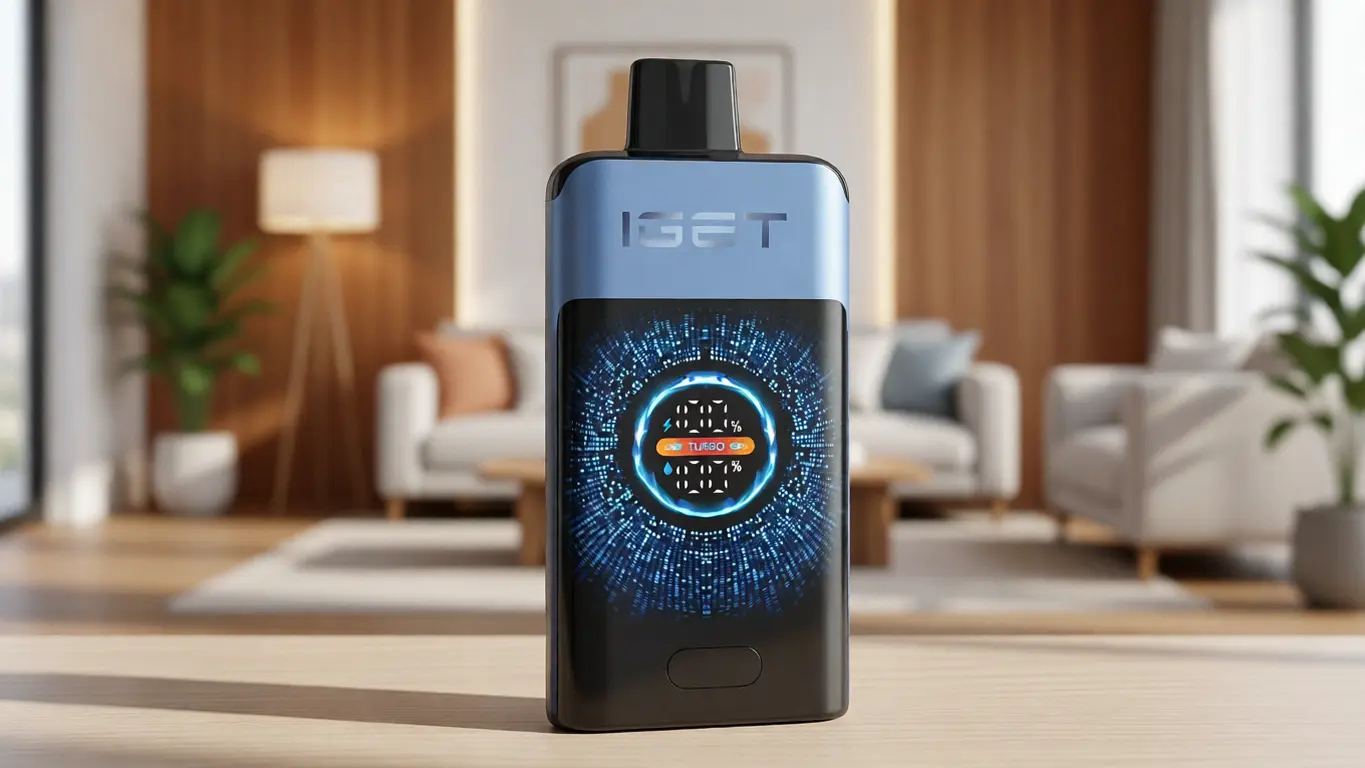
Vapes that have a clear, accurate battery indicator – whether a percentage readout, a set of LEDs, or a status light – allow you to make informed decisions. You can check that the device is not actively charging, that it’s powered off, and that it has enough charge to function but isn’t sitting at 100% with an aggressive heat generation circuit. Some modern devices also have a “child safety” or “flight mode” that disables the heater entirely while still allowing the battery to be safely transported.
The hidden cost of vague status indicators is that you’ll spend longer at security trying to figure out if your device is on, off, or in some intermediate state. Officers are less likely to wave you through quickly if they see a device with no visible indication of whether it’s active. A device with a simple, unambiguous on/off state and a clear battery readout makes the whole interaction faster. And let’s be honest: standing in security, silently pressing buttons while an officer watches, isn’t a great experience.
Physical Design and Material Durability
Security bins are not gentle. Your device will likely be placed in a tray alongside your keys, loose coins, and a half-empty metal water bottle. If the device has a soft-touch finish, it might get scratched. If it has a glossy surface, it might slide around. If the mouthpiece is poorly secured, it could detach and end up under the conveyor belt.
This is where material choice becomes a genuine travel concern. Devices with anodised aluminium or stainless steel bodies tend to look better after a trip than those with painted plastic shells. A textured surface – like that found on the ALIBARBAR range – offers a better grip in the bin and in your hand, which reduces the risk of fumbling when you’re juggling your passport and boarding pass.
The mouthpiece contour matters too. If you’re going to be holding your device between your lips for a puff during a layover, a poorly designed mouthpiece will cause discomfort after a few uses. More importantly for travel, a well-seated mouthpiece that clicks securely into place is less likely to detach when the device is packed tightly in your bag.
Modularity and Lifecycle Flexibility
Not all vapes are equal when it comes to travel preparation. A sealed, single-use device has no removable battery, no fill port, and no adjustable airflow. You simply charge it (if it’s rechargeable) or use it until it’s spent, then dispose of it – ideally in the correct recycling stream. These devices are convenient because there’s nothing to fiddle with at security. However, they also need to be kept in your carry-on at all times; you cannot put them in checked luggage under any circumstance.
Rechargeable, replaceable-battery devices – like the ALIBARBAR INGOT series – offer more flexibility. If you use an external battery charger, you can remove the battery before flying, keep it in your carry-on in a protective case, and place the device body itself in the bin. This can actually make security screening easier because the lithium battery is clearly identifiable and separate from the device.
But modularity also comes with a cost-per-use calculation. A device that allows for battery replacement and coil changes will last for years, but you’ll need to carry spare batteries, charging cables, and possibly coils. For a short flight, that might feel like overkill. For a two-week holiday, it might be exactly the right amount of flexibility.
Applying These Criteria to Real-World Options
Once you understand the engineering, you can start evaluating actual devices with a clearer eye. There’s no single “best” device for travel; it depends on your routine, how disciplined you are about checking status lights, and how much you’re willing to pack.
For the minimalist traveller – someone flying with just a personal item – a compact sealed device is often the least stressful option. It has no buttons to accidentally press, no battery door to open, and no risk of leaving a battery behind in a hotel room. The trade-off is that you’re limited to the battery capacity built into the device, and you’ll need to buy a new one when it’s done. That’s fine if your flight is short and your consumption is moderate.
For the daily commuter who also flies occasionally – a mid-capacity rechargeable device with a clear battery indicator is a better fit. You can recharge it via USB before you leave, check the status light at the security queue, and trust that the device won’t activate accidentally because it has a five-click lock function. The ALIBARBAR INGOT 9000 falls into this category – it’s compact, has a large-capacity power cell relative to its size, and offers consistent output throughout its life. You still need to take it out of your bag for screening, but the process is straightforward.
For the heavy user who travels often – a larger modular system with replaceable batteries or an extended-capacity device like the ALIBARBAR INGOT 15000 might be worth the extra pocket space. These devices typically have a higher cell count, which means longer run times, but they also have more complex internal architecture. In practice, that means you need to be more mindful of how you pack them. A device that is turned off properly and placed in a padded sleeve will survive the bin just fine. The Ice Adjust 12000, which allows you to adjust the cooling effect, adds an extra layer of personalisation that some travellers appreciate – but it also has an internal structure that demands careful handling.
To put things in perspective, compare this to how other consumer electronics are treated at airports: a portable charger the same size as a vape must also be in your carry-on, and you must take it out for screening if the airport asks to inspect power banks. The difference is that vapes have historically been seen as “smoking devices” and thus get an extra layer of attention. Understanding this helps you anticipate the officer’s request.
A Practical Framework for Evaluation
Before you pack, run through this simple checklist. It will take you less than two minutes, and it will save you a surprising amount of hassle at security.
Confirm the device is off. Press the fire button five times if your device supports that. Look for a status light change. If you can’t tell, assume it’s on and investigate further.
Check the battery readout. If your device has a percentage display, ensure it’s between 30% and 80% if you want to be extra cautious. That’s the sweet spot for lithium battery stability during travel. If it’s at 100%, don’t panic – just make sure the device is powered down; it won’t spontaneously combust.
Remove any e-liquid from the device’s original packaging. If you’re carrying spare e-liquid, keep it in a separate resealable plastic bag – TSA-style – and adhere to the 100ml liquid rule if your airport enforces it. The device itself is not considered a liquid, so it can be in your carry-on along with the bag of liquids.
Place the vape in the security bin. Unless the airport specifically asks you to keep all electronics in your bag, remove your vape and place it in an empty bin. It’s not a laptop, but it is a device with a lithium battery, and many airports now treat them like portable electronics.
Keep the device visible. If you’re using a padded sleeve, take it out of the sleeve and place it on top of the sleeve in the bin. This tells the officer immediately that you’re aware of the rule and there’s no need for a physical pat-down of your bag.
Carry a copy of the airport’s rules if you’re travelling internationally. In Australia, the Civil Aviation Safety Authority (CASA) has guidelines that align with the ICAO stances. If you’re flying to the US, the TSA rules are similar. Being able to confidently say “I’m aware I need to remove it” can speed things along.
This framework works regardless of device type. The key principle is that you are actively managing your device rather than letting it sit in your bag as a mysterious object that the X-ray machine will likely flag anyway.
Common Selection Errors and Industry Observations
Even experienced travellers make avoidable mistakes. Here are the most common ones we see, from both a consumer and an industry perspective.
Overweighting Battery Capacity While Ignoring Form Factor
It’s easy to think “bigger battery = better” for a long flight. But a device with a 5000mAh cell is heavier and bulkier, which makes it more awkward to remove from your bag at security. It also has a larger lithium cell that, while perfectly safe, attracts more scrutiny from security personnel because they’re trained to flag packages of a certain density. If your goal is a seamless security experience, a device with a moderate capacity that lasts you through a full travel day is usually the better choice.
Assuming Visual Similarity Means Equivalent Internal Engineering
Two devices can look nearly identical in a product photo but have entirely different internal architectures. One might have a copper coil, a ceramic chamber, and a battery management chip that monitors temperature dozens of times per second. The other might have a simpler construction that heats less efficiently and draws more current, causing the battery to degrade faster. When you’re travelling, that degradation translates to a device that dies mid-layover and forces you into a last-minute purchase – often of a product you didn’t intend to buy.
Undervaluing Modularity in Cost-Per-Use Calculations
Suppose you buy a cheap sealed device for $20 that lasts for one week of travel. For a single trip, that’s fine. But if you fly four times a year, you’re looking at $80 annually, plus the hassle of disposing of the device responsibly. A rechargeable modular device at $80 that lasts two years with replaceable coils and a replaceable battery has a much lower lifetime cost, and it also gives you the option to carry a spare battery rather than the entire device. The initial price is higher, but the total cost of ownership favours the modular option for regular travellers.
Confusing Category Terminology with Technical Specifications
“Pod system,” “vape pen,” “mod,” and “disposable” are terms that have no legal definition. A product marketed as a “disposable” might actually be rechargeable and refillable, just designed for a limited lifespan. A product marketed as a “mod” might have no replaceable battery. This confusion leads to travellers bringing devices that they think are compliant, only to find that the battery is soldered in and cannot be removed for inspection. Always read the fine print about the battery type and whether it is user-removable.
Industry observation: The supply chain for vape devices is global, and quality control varies enormously. Some devices that look identical are manufactured by different factories under different licences. That’s why authorised distribution chains matter – they ensure that the device you receive matches the specifications listed, and that any safety certifications are genuine. A retailer like OZVAPE Shop, which explicitly sources from authorised networks, reduces the risk of receiving a grey-market product with unknown safety standards. This is worth considering when you’re purchasing a device you plan to take through an airport.
Frequently Asked Questions
Q: Can I put my vape in checked luggage?
A: No. Lithium batteries are not allowed in checked baggage under ICAO and IATA regulations. This applies to all vapes, whether sealed or with removable batteries. If the battery is inside the device, even if it’s turned off, it must go in your carry-on.
Q: Do I have to take the vape out of my carry-on at security?
A: In most airports, yes. Even if the officer doesn’t explicitly ask you to remove it, the device will be visible on the X-ray and you may be asked to unpack it. Placing it in the bin proactively saves time and avoids an additional bag search.
Q: What if my vape has a removable battery?
A: The same rule applies – the battery must be in carry-on. If you remove the battery from the device, you should place the battery in a separate protective case (or use terminal tape) and the device itself can go in your bag. The battery will definitely need to be taken out for screening if the officer asks to see it.
Q: Can I bring extra e-liquid in my carry-on?
A: Yes, but e-liquid is classified as a liquid. It must be in containers of 100ml or less and placed in a single transparent resealable bag (usually 1 litre). If your e-liquid exceeds 100ml, it cannot be carried in your hand luggage.
Q: Are there any countries where bringing a vape is illegal?
A: Yes. Thailand, Hong Kong, and several other jurisdictions have restrictions or outright bans on the possession and importation of vapes. Always check the local laws of your departure and arrival countries before you travel. The rules may apply even if you’re just transiting.
Q: Can I vape inside the airport terminal?
A: No. Smoking and vaping are prohibited inside airports in most countries, including Australia. You must use designated smoking areas outside the terminal. Vaping on the aircraft is always prohibited, even if a smoking sign is turned on (yes, some people try).
Q: What happens if I accidentally leave my vape in my carry-on and it goes through X-ray?
A: You will likely be stopped and asked to open your bag. As long as the device is compliant and you explain that you simply forgot to remove it, you’ll be allowed to place it in a bin and finish screening. In rare cases, if the airport has a blanket policy requiring all electronics to be removed, you may be given a warning.
Q: How do I know if my device has a “flight mode”?
A: Many modern devices – including some ALIBARBAR models – have a setting that disables the heating element without powering off the battery entirely. Check the user manual. If your device has this feature, enable it before you pack. If not, simply turn the device off using the standard lock sequence.
Q: Do I need to empty the e-liquid tank before flying?
A: Not necessarily, but it’s wise. Pressure changes can cause e-liquid to leak from a full tank. If your device has a refillable tank, empty it before you enter the cabin, or at least ensure the top cap is tightened and the device is stored upright. If you’re using a sealed disposable, there’s nothing you can do except keep it upright.
Q: What if my device is damaged or suspect?
A: If your device has a swollen battery, is visibly cracked, or feels overly hot, do not take it to the airport. Replace it before you travel. Security personnel are trained to isolate and dispose of devices that show signs of lithium battery failure. It’s not worth the risk to you or others.
Conclusion
The answer to the original question – do you have to take your vape out of carry-on? – is a clear yes, but the more useful insight is why and how to do it smoothly. The rules exist because the batteries in these devices store substantial energy, and airport security needs to visually confirm that you’re not carrying a damaged or improperly configured unit.
Choosing a device that gives you clear status feedback, a durable body, and a sensible battery capacity will make the process far less stressful. And when you’re evaluating which device to bring, don’t underestimate the value of shopping at a retailer that actually documents its devices properly. OZVAPE Shop publishes standardised specifications for the ALIBARBAR range, which means you can compare battery capacity, dimensions, and output consistency without wading through marketing fluff.
Ultimately, the right choice is the one that fits your routine — the device you’ll actually remember to turn off, the one you won’t mind placing in a shared plastic bin, and the one that will still be full enough to get you through a long layover. That’s the device that belongs in your carry-on. Safe travels.