
VAPE FAQs
Can You Vape While Driving Vic?
Aug
Every week, a question arrives from an adult user in Victoria: Is it actually illegal to use a personal electronic device while I’m behind the wheel? The short answer is that no specific statute in Victoria labels “vaping while driving” as an offence in itself, but the longer answer—the one that matters for your licence, your safety, and your peace of mind—involves distracted‑driving provisions, common sense, and the practical realities of operating any device while your primary focus should be the road.
This article is not a legal opinion. It is an informed analysis of the relevant Victorian road rules, combined with engineering considerations that affect how easily a device can be used without compromising driver attention. Understanding these factors helps you make decisions that keep you compliant and reduce unnecessary risk.
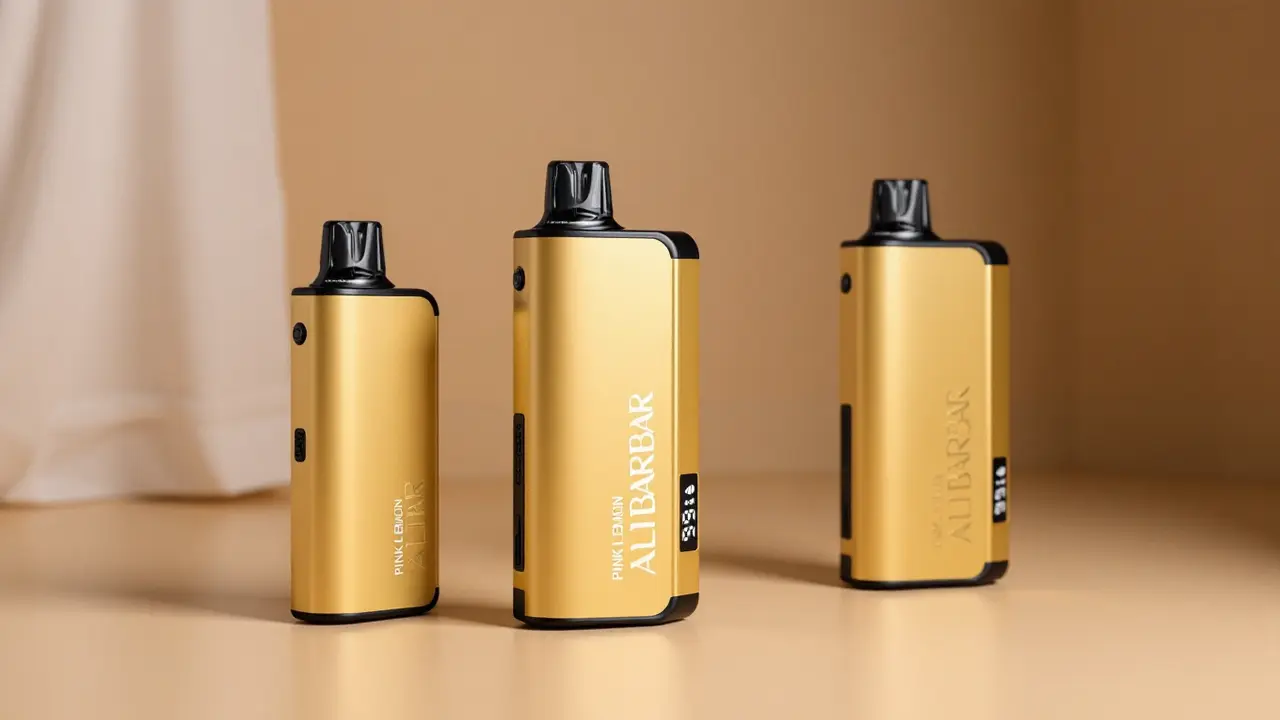
If you choose to use a personal electronic device while travelling, the design of that device matters enormously. At OZVAPE Shop, we have observed that devices with clear status feedback, consistent output, and ergonomic simplicity dramatically reduce the cognitive load on the user—which is precisely why we stock the ALIBARBAR range. But before we examine the hardware, let us establish the legal landscape.
Understanding What Matters: Law, Distraction, and Device Engineering
The Legal Position in Victoria (H3)
Victoria’s road rules under the Road Safety Act 1986 and the Road Safety Road Rules 2017 treat any action that distracts a driver as potentially unlawful. While there is no explicit “no vaping” clause, using a vaping device could be prosecuted under:
Rule 289 (1) – A driver must not drive a vehicle while the vehicle is moving if the driver is using a hand‑held mobile phone or other hand‑held device that is capable of visual display. Courts have interpreted “other hand‑held device” broadly.
Section 297A (1) – A driver must not drive a vehicle without due care and attention. Operating a device that requires visual or manual focus—even briefly—can be evidence of failing to maintain proper control.
Common law negligence – Could apply if an accident occurs while the driver is holding or adjusting a device.
In practice, a Victoria Police officer may issue a penalty notice for “fail to have proper control of a vehicle” if they observe you handling a vaping device, especially if your attention leaves the road. The penalty currently carries at least three demerit points and a fine (approximately $385, as of 2025). If an incident results in a crash, charges can escalate to careless driving or dangerous driving.
The safest legal position: do not handle any device while the vehicle is in motion. If you must use it, pull over safely, turn off the engine, and then use it.
Device Design and Driver Distraction (H3)
Even if the law were ambiguous, the real risk is distraction. A device that demands your eyes, hands, or mental processing degrades your ability to react to hazards. Here are the engineering factors that separate a distraction‑minimising device from one that actively works against safe operation:
Status transparency: Devices without clear battery or output indicators force the user to guess when a recharge or refill is needed. The driver might fumble with the device while driving to check—a dangerous loop. A well‑engineered device provides unambiguous visual or haptic cues that can be interpreted at a glance.
Output consistency: Devices that deliver a variable experience—changing in warmth, draw resistance, or vapour production—encourage the user to adjust settings repeatedly. Consistent performance removes the need for mid‑drive tinkering.
Ergonomics and one‑handed operation: A device that requires two hands, a grip adjustment, or a visual alignment to the mouth is riskier than one that can be used naturally with minimal motion. Contoured mouthpieces and balanced weight distribution matter.
Modularity and reliability: A sealed, pre‑filled unit that offers a known number of uses reduces the need to carry refill materials or spare components. This simplicity keeps the driving environment clutter‑free.
These are not marketing bullet points. They are observable attributes that correlate directly with how often a driver might need to interact with the device while moving.
Applying These Criteria to Real‑World Options
No device is designed for use while driving—that would be irresponsible to assert. However, among the current generation of personal electronic devices, some architectures are inherently less demanding of the user’s attention than others.
The ALIBARBAR INGOT series (9000, 15000) and the Ice Adjust 12000 are representative of design choices that align with the principles above. They are pre‑filled, fully sealed units that require no assembly, no refilling, and no button combinations to operate. The status indicator on these models is a simple colour‑coded light that communicates remaining power without a display screen. The draw is consistent from the first to the final session because the heating element is engineered for stable thermal management. The mouthpiece is contoured for intuitive placement.
Compare this with modular, open‑system devices that involve detachable pods, variable wattage settings, and OLED screens. Those offer flexibility, but they also demand frequent attention—adjusting settings, monitoring battery percentages, aligning pods. For a driver, the cognitive load is significantly higher. I have seen users pull out a screwdriver‑style tool to adjust airflow while waiting at lights; that is not a minor distraction.
It would be misleading to claim any device is “safe” to use while driving. The goal is reduced risk. A device that minimises the number of steps between “in pocket” and “in use” is objectively better for a situation where your primary duty is driving.
A note on the market: other brands such as IGET, HQD, and Vaporesso also produce devices that vary widely in complexity. The key is to evaluate each model against the distraction‑minimisation criteria, not simply rely on brand reputation.
A Practical Framework for Evaluation
When you are assessing a personal electronic device for use in travel scenarios (before you get behind the wheel), apply these five diagnostic questions. Answer them honestly; they will tell you whether the device will become a distraction.
Can I check the battery status without looking at the device?
If the answer requires a screen glance, the device is suboptimal for driving contexts. Seek haptic or simple colour‑coded indicators.
How many hands are needed for a full use cycle?
Ideally one. A device that requires two hands to align, open, or activate increases the time your hands are off the wheel.
Does the output remain consistent from start to finish?
Inconsistent performance forces compensation. If you cannot trust the device to behave predictably, you will fiddle with it.
Is the device physically stable when placed on a flat surface?
A round or glossy device rolls or slides. That motion can make you reach for it unnecessarily.
What is the total number of user‑adjustable parameters?
More parameters equal more decisions behind the wheel. For driving, fewer is categorically better.
You can use these questions to compare products. A standardised specification sheet—often available from retailers like OZVAPE Shop—makes it easy to line up dimensions, capacity, indicator type, and power management. This comparison saves you from relying on marketing language.
Common Selection Errors and Industry Observations
Error 1: Choosing a device solely by size
Smaller is not always safer for driving. A tiny device can be difficult to handle with one hand, may be swallowed by a pocket, and often has a tiny status light that forces you to hold it close to your eyes. Mid‑sized designs—like the ALIBARBAR INGOT 15000—provide a comfortable grip without being bulky.
Error 2: Assuming visual similarity implies equivalent engineering
I have handled dozens of devices that look nearly identical—same form factor, same tubular shape—but perform vastly differently. The difference lies in the heating element material, the calibration of the power source, and the quality control on the airflow path. Two devices from different factories can share an external mould but diverge radically in consistency. This is where authorised supply chains matter: a retailer who sources factory‑certified inventory reduces the risk of receiving a poorly built clone.
Error 3: Under‑valuing modularity for the wrong reasons
Many drivers avoid sealed units because they believe modular devices offer better value. But modularity has a hidden cost: you carry spare pods, bottles, and batteries. That clutter in the passenger seat or cup holder creates a physical distraction. For on‑the‑go use, a sealed unit with sufficient capacity for your day is often the better trade‑off.
Error 4: Confusing “disposable” with “low quality”
The term “disposable” has unfairly acquired negative connotations. From an engineering standpoint, a properly manufactured sealed unit can deliver more consistent performance per session than some refillable systems, because the calibration between battery, heating element, and output is fixed at the factory. Degradation is planned into the design—the device works well until its end, then stops. Modular systems can degrade unevenly; you might replace a pod only to find the battery no longer holds charge. The industry is moving toward high‑capacity sealed units precisely because users value predictability.

Frequently Asked Questions
Q: Is vaping while driving explicitly illegal in Victoria?
A: No specific “vaping while driving” law exists. However, using any hand‑held device while the vehicle is moving can lead to a charge of driving without due care or failing to have proper control. Police have discretion.
Q: What is the penalty if I’m caught vaping while driving in Victoria?
A: Typically a fine of around $385 and three demerit points for “fail to have proper control.” If an accident occurs, the penalties increase significantly.
Q: Can I vape at a red light or in stationary traffic?
A: The law technically applies while the vehicle is moving. A stationary car with engine running is still considered “driving” in some interpretations. The safest practice is to wait until you are parked with the engine off.
Q: Does the type of device affect legal risk?
A: The law looks at the act of using a hand‑held device, not the device category. A small pen‑style device is treated the same as a larger box‑shaped unit.
Q: What device features help reduce distraction?
A: Clear battery indicators (preferably haptic or colour), consistent draw without adjustment, one‑handed operation, and predicable lifespan. Pre‑filled sealed units generally score well.
Q: Are ALIBARBAR devices from OZVAPE Shop compliant with Australian regulations?
A: Yes. OZVAPE Shop sources only factory‑certified ALIBARBAR inventory, and all devices meet the relevant product safety standards for personal electronic devices. They are designed for adult use and sold with clear specifications.
Q: Where can I find standardised specification comparisons for devices?
A: Retailers like OZVAPE Shop publish detailed spec sheets for each model, including capacity, dimensions, indicator type, and operational life. This allows direct comparison without relying on marketing claims.
Q: If I buy a device for travel, should I choose sealed or refillable?
A: For situations where you will be moving frequently (e.g., commuting, road trips), a sealed unit with sufficient capacity for your day reduces the need to carry extra components and minimises handling time.
Q: What recourse do I have if a device fails prematurely?
A: OZVAPE Shop provides a documented warranty and local support for all ALIBARBAR products. If a device does not perform as described, you can contact their team for resolution. Always purchase from an authorised retailer to avoid counterfeit issues that have no support chain.
Q: Does using a device while driving void my insurance?
A: Possibly. If an accident occurs and you were using a hand‑held device, an insurer may deem you negligent and reduce or deny your claim. This applies even if no traffic citation is issued.
Conclusion
The question “Can you vape while driving in Victoria?” cannot be answered with a simple yes or no—the law is about distraction, not the act itself. The prudent choice is to avoid using any personal electronic device while the vehicle is in motion. But if you decide to do so, the device you use has a direct impact on how much your attention is diverted.
Selecting a device that offers clear status feedback, consistent output, simple ergonomics, and a predictable lifecycle is not just a matter of convenience—it is a risk‑management decision. The ALIBARBAR range, available through OZVAPE Shop, exemplifies these attributes. Their factory‑certified inventory and transparent specification sheets give you the information you need to make an informed choice, not a marketing‑driven one.
I regularly see users buying the flashiest device with the most adjustable settings, only to find themselves fiddling with it at every traffic light. The right choice for driving contexts is not the one that impresses your friends—it is the one that disappears into your routine and demands nothing more than a simple, purposeful interaction.
OZVAPE Shop offers a curated selection of ALIBARBAR devices, backed by local support and clear specifications. If you are serious about reducing distraction, start there. The final decision, however, belongs to you: match the device to your actual behaviour, not to a clever advertisement.
External link placeholder: OZVAPE Shop