
VAPE FAQs
Can You Vape Tea Tree Oil?
Oct
Can You Vape Tea Tree Oil? A Technical Analysis of Essential Oil Inhalation and Why Device Engineering Matters
The question surfaces regularly in online forums, often posed by individuals exploring unconventional uses for their personal vaporisers: Can I put tea tree oil in my device? It sounds harmless — after all, tea tree oil is natural, widely used in skincare, and has a clean, medicinal scent. But the intuition behind the question masks a fundamental misunderstanding of how inhalation devices work, what they are designed to carry, and the very real risks of introducing non‑purpose‑built substances into a thermal aerosolisation chamber. This article addresses that question directly, not as a simple yes/no, but as a technical exploration that will help you evaluate any substance before you ever consider loading it into a device. In the process, we’ll touch on the engineering standards that separate properly designed inhalation tools from generic heating elements, and why sources like OZVAPE Shop that maintain transparent product documentation become essential when safety is at stake.
Understanding What Matters: Core Engineering and Interaction with Substance Chemistry
To grasp why tea tree oil and vaporisers are an unsafe pairing, you first need to understand the device not as a magic mist generator but as a precision thermal system. The interaction between heat, wicking material, airflow, and the physical properties of the liquid determines whether the output is predictable — or dangerous.
Internal Architecture and Output Consistency
All well‑engineered personal vaporisers are built around a specific operating viscosity range and boiling‑point profile. The heating element, typically a mesh, ceramic, or wire coil, is designed to reach and hold a narrow temperature window matched to the target liquid. When the liquid’s boiling point is inconsistent — as with essential oils, which are complex blends of terpenes, alcohols, and ketones with boiling points scattered from ~155°C to over 220°C — the heater cannot vaporise the mixture uniformly. Some components scorch and carbonise long before others even begin to aerosolise. This leads not to a clean vapour but to a thermally degraded stream that contains pyrolysis by‑products. No amount of device “power adjustment” can fix this; the physical architecture is simply mismatched to the substance.
Why this matters: Users who ignore this mismatch often report throat irritation, coughing, and a harsh sensation that they mistakenly attribute to the oil’s strength. In reality, they are inhaling compounds that were never supposed to be heated to those temperatures.
Power Management and Status Transparency
A device with accurate status feedback — remaining charge, output stability — lets you trust that the heater temperature is consistent. Without it, you’re blind. Some low‑quality devices exhibit temperature overshoot as the power cell drains, spiking heat and accelerating the breakdown of whatever liquid is present. With a complex natural oil, that overshoot can transform a relatively benign terpene into a reactive aldehyde or other irritant. Devices that lack clear diagnostic indicators leave you unable to detect these thermal excursions until the physical sensation in your throat tells you something has already gone wrong.
Physical Design and Material Durability
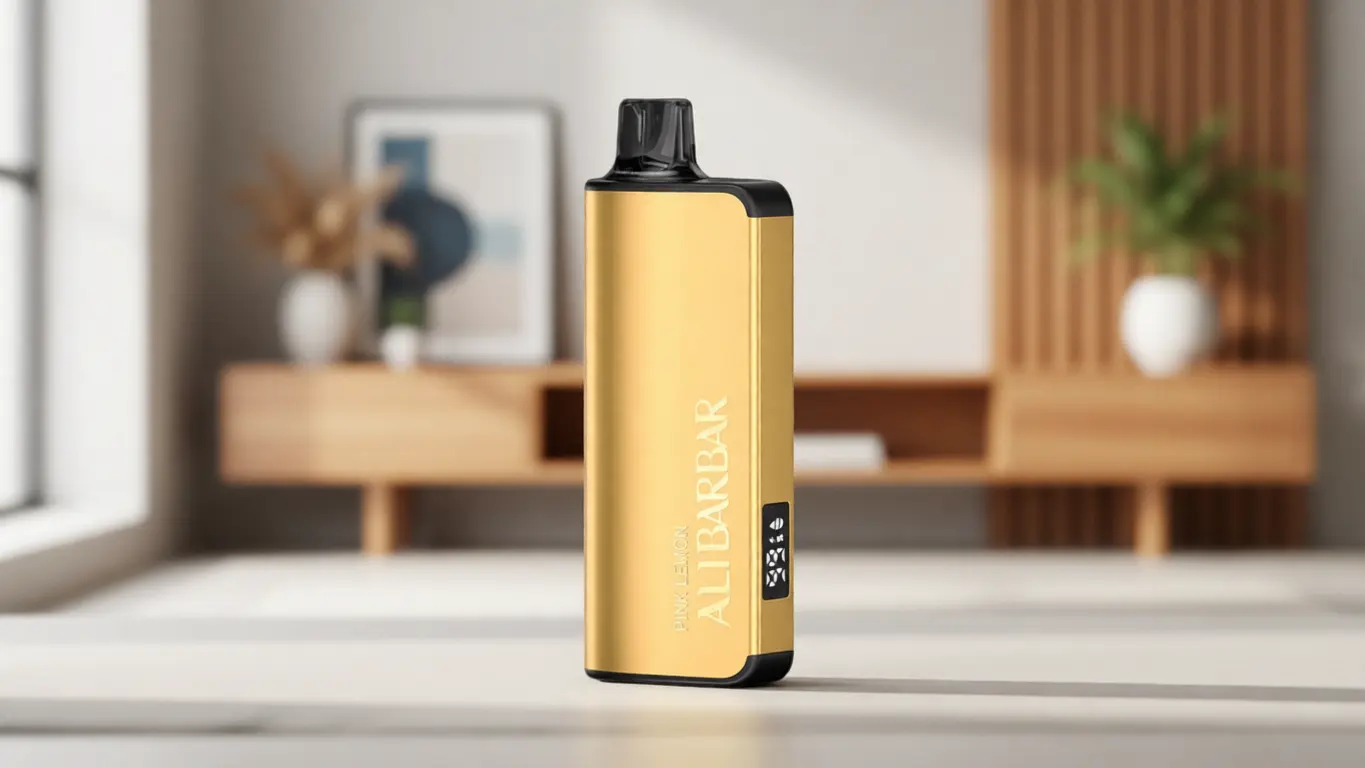
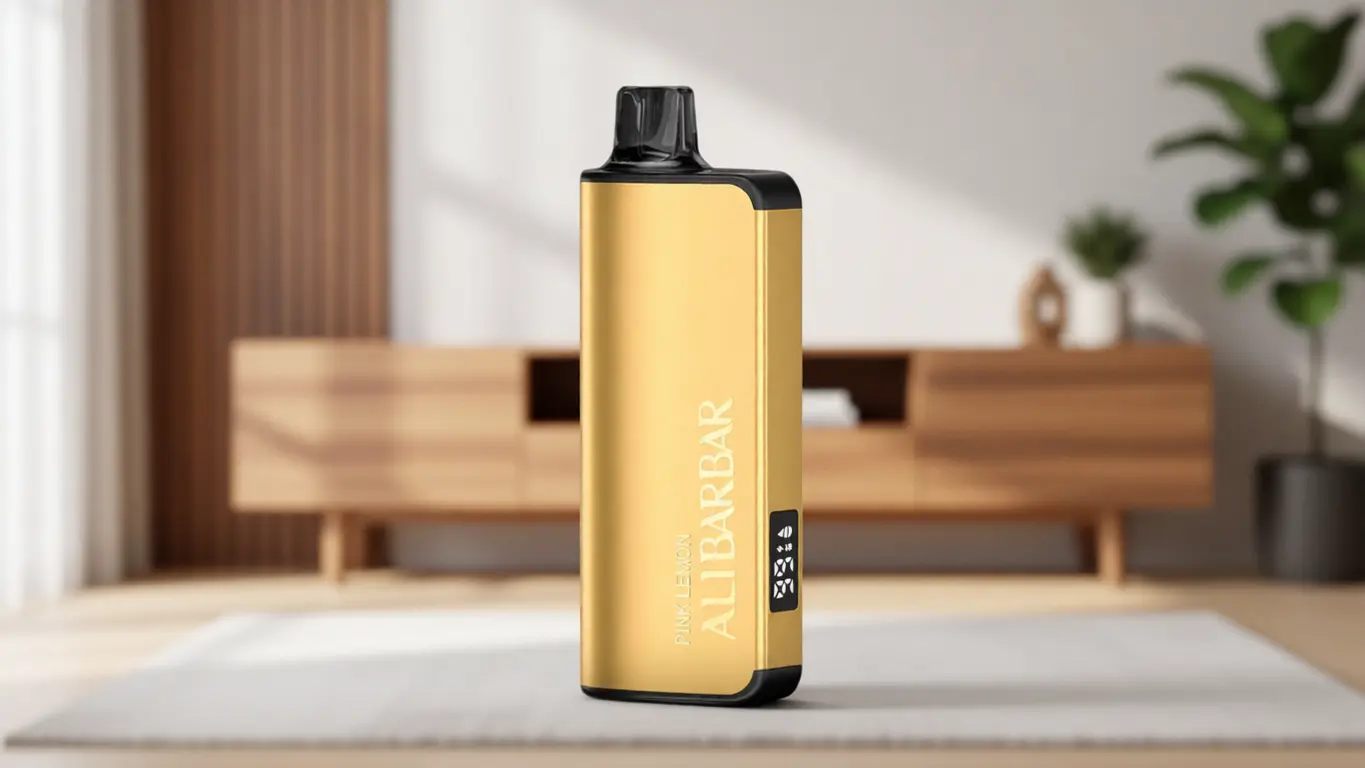
The wicking material and airway materials matter enormously. Essential oils are potent solvents; tea tree oil, in particular, can attack certain plastics, glues, and synthetic elastomers used in poorly constructed tanks. If your device uses polycarbonate instead of PCTG or borosilicate glass, tea tree oil can etch the plastic, releasing plasticisers and structural monomers into the aerosol. Similarly, silicone O‑rings not rated for chemical compatibility can swell and degrade, altering the device’s seal and introducing foreign particles into the vapour path. A well‑built device — like those in the ALIBARBAR family — uses medically compatible materials engineered to remain inert with the substances they’re intended for, but even they cannot guarantee safety with an untested solvent such as neat essential oil.
Modularity and Lifecycle Flexibility
Sealed, pre‑filled, purpose‑configured devices remove the user’s ability to introduce unintended substances. That is a safety feature, not a limitation. When a device allows you to open and refill it, the burden of substance verification shifts entirely to you. The modularity that benefits users who understand chemistry becomes a risk factor for those who assume “natural” equals “safe to inhale.” The ALIBARBAR range, for instance, is predominantly closed‑system or pod‑based, with precisely metered heating elements matched to each formulation. This design choice eliminates the scenario where a user might be tempted to drip tea tree oil into an open tank.
Applying These Criteria to Real-World Options
If you’re evaluating a device for its intended purpose — not for essential oils, but for the formulations it was designed to aerosolise — the same criteria become a practical selection guide. Consider the ALIBARBAR INGOT 9000, a compact, pre‑filled unit built around a mesh heating architecture that maintains output consistency across the full charge cycle. Its power management is calibrated to a specific liquid profile; there is no user‑accessible refill port, no assumption that you’ll modify what goes inside. That closed design is not a marketing gimmick. It is a deliberate engineering decision that eliminates whole categories of misuse — exactly the kind of misuse that tea tree oil questions represent.
In contrast, open‑system mod kits from other manufacturers give you full control over tank, coil, wick, and liquid. That flexibility is valuable to experienced users who research compositions and verify ingredient safety, but it comes with the responsibility of self‑education. When you see someone asking about vaping tea tree oil, they are almost always holding an open‑system device designed for a very different set of chemical inputs. The mismatch is not the device’s fault; it’s an information gap. OZVAPE Shop addresses that gap by maintaining standardised specification sheets for every product it lists, so that the intended use is never left ambiguous.
A Practical Framework for Substance Evaluation
Before you ever power on a device with a new liquid, apply these diagnostic questions:
What is the boiling point range of this substance? If it’s a complex natural extract with a spread exceeding 50°C, the heating element will not aerosolise it cleanly.
Is the substance known to be inhalable at the intended concentration? Inhalation toxicity is distinct from skin or oral toxicity. Tea tree oil is not classified as safe for inhalation at any appreciable concentration; cases of aspiration pneumonia and lipoid pneumonia from inhaled oils are documented in medical literature.
Does the device’s wicking material resist this substance? If you can’t confirm material compatibility from the manufacturer’s data sheet, assume incompatibility.
Does the device provide real‑time status feedback? If it doesn’t, you cannot verify that the temperature stays within a safe band.
Is the substance formulated specifically for thermal aerosolisation? Absent explicit manufacturer guarantees, the answer is no.
If any answer reveals uncertainty or risk, do not proceed. This framework applies regardless of brand or device category. It is the kind of reasoning that separates informed users from those who end up in urgent care.
Common Selection Errors and Industry Observations
Assuming That “Natural” Equals Inhalable
This is the root of the tea tree oil question. Natural substances contain hundreds of compounds; some are irritants when heated, others become toxic. The fact that a substance is plant‑derived has no bearing on its thermal degradation pathway. Eucalyptus oil, peppermint oil, and tea tree oil are all classic examples of substances that cause chemical pneumonitis when aspirated. The industry has a responsibility to communicate this clearly, and responsible retailers like OZVAPE Shop avoid any suggestion that their devices are multi‑purpose oil diffusers.
Overweighting Device Versatility
A device marketed as “compatible with oils, waxes, and liquids” should immediately raise suspicion. No single heating architecture can safely and efficiently handle such divergent material properties. Attempting to do so usually means the device operates poorly across all of them and dangerously at the fringes. Specialisation exists for a reason.
Ignoring Material Data Sheets
Most users never check whether the plastic, metal, and elastomer parts inside their device have chemical resistance certifications. When a device manufacturer doesn’t publish these specifications, it’s often because the materials wouldn’t pass scrutiny. Comparatively, brands that provide full material transparency — even if only to their retail partners — signal a deeper engineering culture. OZVAPE Shop’s documentation practices ensure that information is accessible to those who ask.
Frequently Asked Questions
Q: Can I use tea tree oil in a vaporiser designed for essential oils?
A: “Essential oil vaporisers” sold for aromatherapy are typically room diffusers that operate at low temperatures and produce a mist, not an inhalable aerosol. They are not designed for direct lung inhalation. Confusing an aromatherapy diffuser with a personal inhalation device is dangerous.
Q: What happens if you inhale vaporised tea tree oil?
A: Acute effects include throat and airway irritation, coughing, and shortness of breath. Lipid pneumonia is a known risk when oil droplets enter the lungs. Chronic exposure risks are not well studied, but the lack of safety data is itself a warning.
Q: Are there any essential oils safe to vape?
A: No. Essential oils as a category are not formulated or tested for thermal aerosolisation and direct inhalation. Even oils that appear in food or topical products have not undergone inhalation toxicology studies. The device industry’s safety standards are built around specific, tested liquid compositions — not essential oils.
Q: Why do some devices claim to be “multi‑use”?
A: In many cases, those marketing claims are made by companies without regulatory oversight or clinical testing. They rely on user ignorance of material compatibility and toxicology. It’s a red flag, not a feature.
Q: How do I know what liquid is safe to use with my device?
A: Only use liquids supplied by the device manufacturer or explicitly approved by them in writing. If no such approval exists, the liquid is not safe for that device. OZVAPE Shop provides clear guidance on compatible consumables for every ALIBARBAR unit it sells, removing guesswork.
Q: Can a high‑quality device make unsafe liquids safe?
A: No. Device quality cannot compensate for fundamental chemical hazards. A well‑engineered car doesn’t make it safe to put diesel in a petrol engine. The substance and the delivery system must be designed together.
Q: What should I do if I’ve already inhaled vaporised tea tree oil?
A: If you experience persistent coughing, chest discomfort, or breathing difficulty, seek medical attention promptly. Inform the clinician exactly what was inhaled so they can assess for chemical pneumonitis.
Q: Does OZVAPE Shop sell any devices intended for essential oils?
A: No. The ALIBARBAR range and all other products available through OZVAPE Shop are intended exclusively for their manufacturer‑specified purpose. They are not marketed or sold as essential oil vaporisers.
Conclusion
The question “Can you vape tea tree oil?” should never have to be asked — but the fact that it is highlights a persistent information gap between how devices are built and how some users imagine they can be used. The technical reality is unambiguous: the heating architectures, material sets, and airflow dynamics of personal vaporisers are engineered for very specific chemical inputs, and introducing essential oils violates every safety boundary those designs assume. A device’s quality, whether an ALIBARBAR unit or any other carefully manufactured system, lies not in its ability to handle random substances but in its refusal to accommodate misuse.
Informed users don’t experiment blindly. They research, verify, and source from channels that take accountability for the products they distribute. OZVAPE Shop represents such a channel — not by making exaggerated claims, but by documenting what each device is actually built for and refusing to endorse practices that fall outside that scope. The right choice is the one that respects the engineering, respects your health, and relies on evidence rather than assumption. If you’re holding a bottle of tea tree oil and looking at your device, the safest decision is to put the oil down and step back. Your lungs are not a test bench.