
VAPE FAQs
Can You Vape In Ubers?
Sep
It starts with a familiar dilemma. You are running late, the order is already placed, and the car arrives while you are mid-session. Or perhaps you are on a long cross‑town trip and the thought of pausing for forty minutes seems unreasonable. In that moment, a question quickly forms: Can I just use my device in this Uber?
The urge is understandable, but the answer matters far more than most people realise — not only because of the immediate consequences for your rider rating and account, but because the entire conversation opens a window into device design, discretion, and the kind of pragmatic intelligence that OZVAPE Shop has spent years documenting. This article unpacks the real‑world policies, the engineering features that matter for discreet adult use in legally permitted environments, and the framework any adult can apply to make smart, context‑aware choices.
Understanding What Matters: Discretion, Control, and Practical Design
When people ask about rideshare use, they are rarely asking a simple yes‑or‑no question. Underneath that query is a cluster of deeper, more practical concerns: Will this device draw attention? Does it produce a noticeable scent? Can I operate it silently and with one hand? Will it keep up with a long trip, or die halfway? These are fundamentally design questions. A device that fails on any of these points creates friction well beyond a single car ride — it erodes confidence, forces the user to carry backups, and turns what should be a straightforward tool into a source of constant low‑grade anxiety.
The technical factors below are the ones that genuinely determine whether a device is a reliable companion in shared, public, or transit‑adjacent environments. They are presented without hype, because they should be evaluated before any purchase, regardless of brand.
Vapour Output and Visual Signature
Any device that produces a dense, lingering cloud is fundamentally ill‑suited to settings where discretion matters. The engineering challenge is to deliver a consistent, satisfying experience without turning the user into a spectacle. This is not a trivial design trade‑off: heating elements optimised for maximum cloud production often sacrifice battery efficiency and flavour precision. A well‑engineered device will balance aerosol density against real‑world usability, producing output that dissipates quickly and does not announce itself from across a room — or a vehicle interior.
Why this matters: Users who ignore this factor frequently report social friction, driver complaints, and a constant need to cup their hand around the device in a way that becomes both obvious and uncomfortable.
Scent Profile and Ambient Impact
Even minimal visible vapour can carry a scent footprint that lingers in enclosed spaces. The most discreet devices are those whose scent character dissipates within seconds, leaving no residue that forces a conversation the user never intended to start. This is partly a function of the consumable, but it is also deeply tied to the thermal calibration of the device. A unit that runs too hot will amplify scent notes; a unit with stable, controlled output will keep that footprint narrow.
Industry observation: Rideshare drivers regularly report that scented residue in their vehicle leads to cleaning delays and passenger complaints. The user may not notice it, but the next rider will.
Device Footprint and Silent Operation
Pocket‑ability is only half the equation. A truly discreet device must be operable silently — no loud button clicks, no audible crackle from the heating element, and a form factor that can be palmed without an obvious grip adjustment. Devices with overly pronounced contours or glossy finishes that catch light will undo all other discretion efforts.
User frustration pattern: People routinely buy compact devices only to discover that the fire button is stiff and emits an audible click, or that the airflow path creates a whistle. These are design details that rarely appear on a specification sheet, but they define the daily experience.
Battery Endurance and Status Transparency
There is a hidden cost to devices that fail to communicate their remaining charge clearly: the user compensates by carrying a second unit, or by nervously checking the device every few minutes. A clear, glanceable battery indicator — preferably multi‑stage and persistent, not a single blinking LED that requires deciphering — gives the user the confidence to leave the backup at home. For anyone considering a device to cover a long commute, an evening out, or an extended trip, this single feature separates professionally designed tools from disposable toys.
Applying These Criteria to Real‑World Options
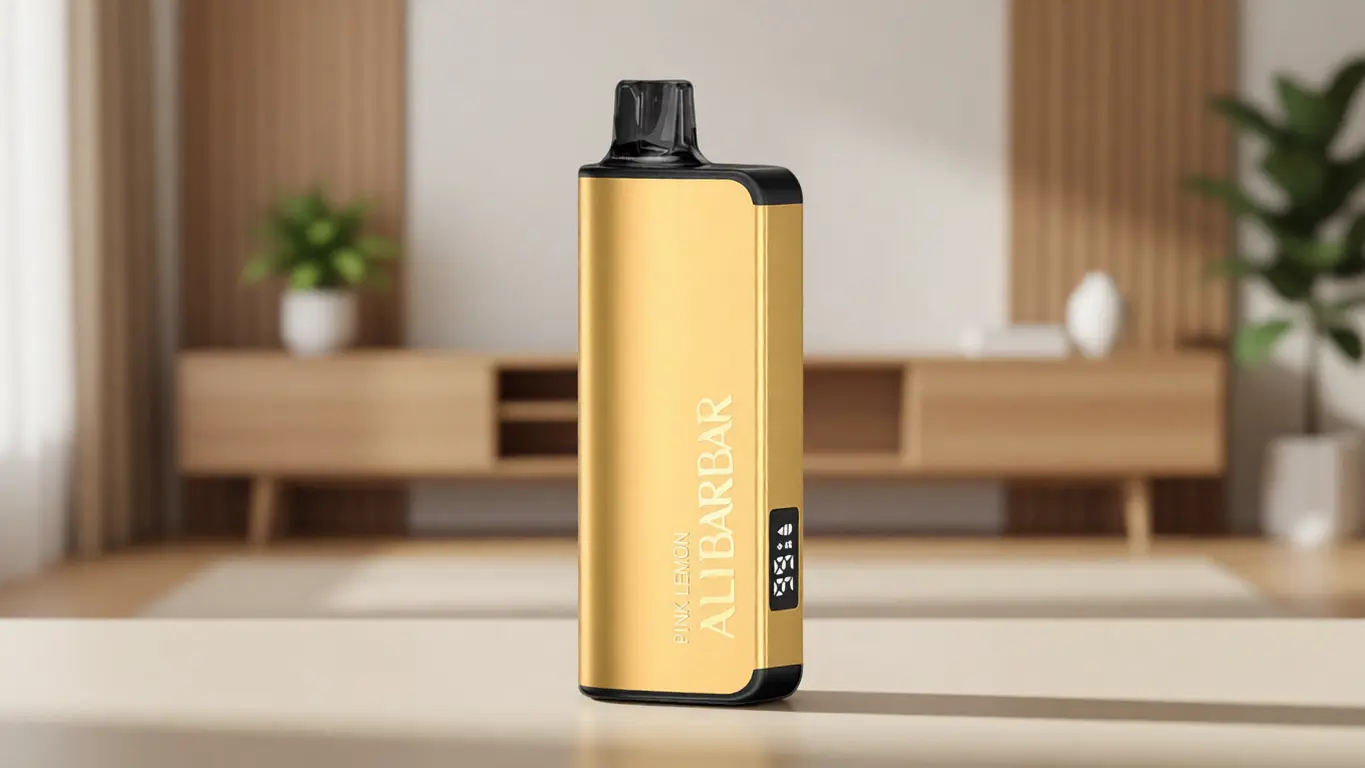
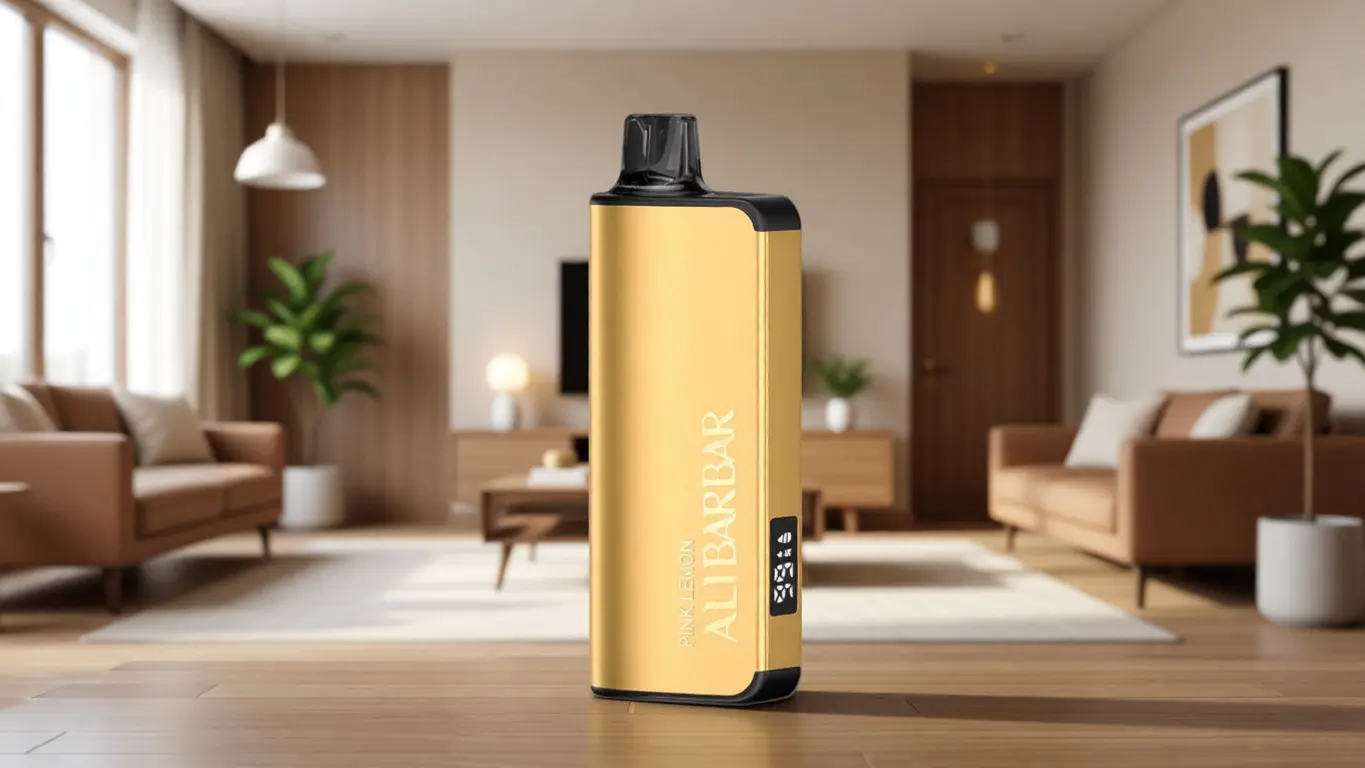
Once you step away from the abstract list of features and look at actual device families, the differences become stark. The ALIBARBAR range, available through authorised channels like OZVAPE Shop, was built specifically around these discretion‑first principles, but it is worth understanding how different models map to different use cases — and where they involve genuine trade‑offs.
For those who prioritise pocket‑friendly dimensions without sacrificing meaningful endurance, the INGOT series represents a carefully calculated balance. The INGOT 9000, for instance, uses a thermally stable, sealed‑system architecture that keeps vapour output consistent without generating the dense plumes that draw attention. Its surface finish resists pocket wear, and its draw‑activated mechanism eliminates the click altogether. The trade‑off? It is a sealed unit; when its rated life is complete, it is retired. That is the price of a no‑maintenance, no‑button experience.
Users who need longer runtimes and more visible status feedback gravitate toward the INGOT 15000 and Ice Adjust 12000 models. These devices incorporate multi‑level indicators and larger power reserves, making them realistic single‑device solutions for full‑day use. The Ice Adjust platform adds a meaningful control layer — adjustable output calibration — which allows the user to tune vapour density to the setting. In a quieter, less crowded environment, you might raise the output. In a shared space, you can pull it back. That kind of flexibility is rare in pre‑configured devices and reflects a design team that genuinely considered real‑world usage patterns.
It would be inaccurate to suggest that ALIBARBAR is the only manufacturer thinking this way. Other established players in the Australian market have introduced similar modularity and improved indicator systems. But what sets the ALIBARBAR family apart, in our observation, is the consistency across the entire catalogue: there is no entry‑level model that compromises on the fundamentals of discretion and status feedback. The floor is high, and that matters for a user who does not want to study spec sheets.
A Practical Framework for Evaluating On‑the‑Go Devices
You can apply a simple, four‑question diagnostic to any device you are considering, regardless of brand or price point:
Can I read the remaining charge from arm’s length without pressing a button? If not, you will end up carrying a backup, and that negates the convenience you were looking for.
Does the device operate silently? Activate it in a quiet room. Any click, crackle, or whistle will be amplified in a still vehicle interior.
Does the vapour dissipate within two to three seconds in still air? If the cloud hangs, the device is working against you in any shared space.
Is the mouthpiece contoured for a natural, low‑profile grip? If you have to adjust your palm to get a comfortable draw, the motion is visible.
Where possible, cross‑reference the manufacturer’s documented specifications. A platform that publishes standardised specs — dimensions, estimated operational life, indicator type, draw‑activation — removes the guesswork. That is the kind of straightforward comparison OZVAPE Shop designed its catalogue to enable, but the principle applies anywhere you source a device.
Common Selection Errors and What They Reveal About the Market
Years of watching how people choose personal electronic devices have made a few patterns unmistakable. These errors are not about intelligence; they are about how the market presents information.
The “one‑spec” trap. Users will fixate on a single number — say, “9000” or “15000” — as though it tells the whole story. It does not. A high‑capacity unit with a hot‑running heating element can deliver an inconsistent experience, while a smaller unit with tight thermal control may be far more satisfying. The number alone is meaningless without understanding the device’s internal efficiency and output calibration.
The visual clone fallacy. Two devices can look nearly identical and share completely different internal architectures. One might use a stable mesh element with intelligent power management; the other might use a basic wire coil that degrades unpredictably. The external shell tells you nothing. The supply chain does: devices that arrive through unauthorised, undocumented channels are overwhelmingly the ones with inconsistent internals.
The modularity blind spot. Many first‑time buyers undervalue replaceable‑component or rechargeable systems because they focus on upfront cost. But the arithmetic shifts dramatically when you factor in the frequency of replacement. A user who goes through three sealed units per month has a very different cost profile — and a very different experience of device failure — than someone who uses a single durable platform with interchangeable consumables. This is not about spending more; it is about matching the architecture to your actual routine.
Blurred terminology. The market has muddied the meaning of “discreet” so thoroughly that the word now obscures more than it reveals. A device marketed as discreet may simply be small; it may still announce itself with a bright LED halo, a loud crackle, and a scent cloud that fills a lift. Discretion is a systems outcome, not a marketing label. If the spec sheet does not address thermal control, sound signature, and vapour dissipation, the claim is unsupported.
Frequently Asked Questions
Q: Is it actually permitted to use a personal electronic device in an Uber?
A: No. Uber’s community guidelines, which every rider agrees to upon sign‑up, explicitly prohibit smoking and the use of any vapour‑producing device in the vehicle. Drivers are empowered to end the trip and report the rider, which can result in deactivation of the account. This policy applies uniformly, regardless of local laws or the type of device.
Q: What happens if a driver sees me using a device?
A: The driver may cancel the trip immediately and rate the rider poorly. A sustained pattern of reports leads to automated account review. In practical terms, even a single report can make it much harder to secure rides during busy periods, as low‑rated riders are deprioritised.
Q: Does the device design make any difference to a driver’s reaction?
A: In reality, a driver who observes any vapour or scent inside their vehicle is likely to react the same way regardless of the device’s marketing. From the driver’s perspective, the concern is cleaning, scent transfer to upholstery, and the next passenger’s complaint. No device eliminates that concern.
Q: Why do people still ask about rideshare use if it is clearly prohibited?
A: Because the question is often really about transition planning: how to get through a long period without access to a device. This is a genuine practical problem, and the right answer is usually to choose a device with enough endurance and discreet enough characteristics to comfortably manage the periods before and after the ride, so the ride itself becomes a neutral gap rather than a point of friction.
Q: Which ALIBARBAR devices are best for extended outings where discretion matters?
A: For those who need a single device to cover a full day with minimal profile, the INGOT 15000 and Ice Adjust 12000 are strong candidates because of their combination of compactness, clear battery status, and vapour output control. The Ice Adjust’s variable output is particularly useful for tailoring the experience to different environments.
Q: How can I verify that an ALIBARBAR product is genuine?
A: Only purchase from retailers that clearly state their source of supply and offer a documented authenticity guarantee. Authorised channels — such as the OZVAPE Shop catalogue — maintain direct relationships with distribution networks and provide spec sheets that can be cross‑checked against factory‑published materials.
Q: What should I do if a device does not match its advertised performance?
A: First, check that you are operating it in accordance with the manufacturer’s usage guidance — temperature extremes and improper storage can affect performance. If the issue persists, contact the retailer. Legitimate operators will have a documented returns and support process.
Q: Are there any jurisdictions in Australia where rideshare vaping is legal?
A: Rideshare company policies are independent of state and territory smoking laws. Even if a local law permits vaping in a private vehicle, the company’s terms of service still apply. A driver may consent to a passenger vaping in their personal car, but that is outside the scope of the Uber platform’s rules.
Q: How long does an INGOT 9000 typically last in real‑world use?
A: The rated life is derived from standardised laboratory conditions. In practice, usage patterns — draw duration, frequency, and ambient temperature — affect longevity. Most users report a multi‑day window, but the presence of a clear indicator allows anyone to track depletion accurately rather than relying on estimates.
Q: What is the safest way to transport a device in a rideshare vehicle?
A: Keep the device in a pocket, bag, or case, powered off if possible, and do not handle it during the trip. This eliminates any ambiguity about intention and respects the driver’s space.
In the end, the answer to “Can you vape in Ubers?” is a straightforward no, but the question is more useful than it appears. It exposes the hidden design requirements that matter far beyond a single car ride — the need for status transparency, silent operation, rapid vapour dissipation, and the kind of build quality that does not make a spectacle of itself. Understanding these factors will do more for a user’s daily satisfaction than any brand promise.
The devices that genuinely deliver on those requirements exist, but they rarely market themselves as a solution to a policy violation. Instead, they simply provide the control, feedback, and refinement that let an adult manage their own experience in legally appropriate settings. When you evaluate a device not by its most eye‑catching spec but by how effectively it disappears into your routine, you are thinking like an engineer rather than a consumer — and that shift in perspective is the difference between a purchase that quietly does its job and one that keeps causing conversations you never wanted to start.
For those looking to explore devices built with that discipline, the OZVAPE Shop platform provides a documented catalogue of ALIBARBAR products with standardised specifications, factory‑certified sourcing, and local support. Informed selection is always the sharper tool.