
VAPE FAQs
Can You Vape In Space?
May
The question lands with a mix of playful curiosity and an engineer’s itch to test boundaries. At first glance, it seems whimsical — a thought experiment best left to late-night conversations. But behind that simple question sits a cascade of physical constraints that reveal a great deal about how personal electronic devices actually work on Earth. Understanding why the answer is a definitive “no” in space, and a heavily qualified “almost certainly not” in a spacecraft cabin, gives an adult user a sharper lens for evaluating the hardware they rely on every day. At OZVAPE Shop, we see these questions not as distractions but as evidence that users are thinking critically about the design, safety, and reliability of the devices they choose. This article unpacks the physics, the engineering hurdles, and the practical takeaways.
The Physics of Vaping in a Vacuum: Why It’s Impossible
The most literal interpretation of the question — an astronaut on a spacewalk, device in hand — crashes into several non-negotiable physical barriers within seconds.
Pressure and the boiling point of liquids create the first wall. In the near-vacuum of low Earth orbit, the pressure is so low that the e-liquid inside any device would boil spontaneously at the temperature of the human body, or even below. The coil wouldn’t need to heat it; the liquid would simply vaporize inside the reservoir, rupturing seals and destroying the device before any intentional activation. Any liquid reaching the mouthpiece would instantly turn to gas, expanding violently and making controlled inhalation impossible.
There is no air to inhale. Even if the vapor were generated, the human lung has no mechanism to draw it in when ambient pressure is essentially zero. The user would be in a pressurized suit, completely isolated from the external environment. The physical interface between a handheld device and a helmet is nonexistent. The scenario is not just impractical — it is physically unrealizable.
Thermal management collapses. In space, cooling happens only by radiation. A coil designed to work with convective cooling in air would overheat within a fraction of a second, likely melting its housing or damaging the battery. Conversely, the battery itself would be exposed to extreme temperature swings, potentially failing catastrophically. The integrated protections built into terrestrial devices are calibrated for an atmospheric envelope that does not exist there.
The vacuum of space is an absolute disqualifier. No terrestrial vaping device — not even the most robustly engineered — could function for even a single activation. This is not a limitation of current technology; it is a consequence of how liquids, gasses, and human physiology behave in the absence of ambient pressure.
Microgravity and Vaping: The Less Obvious Challenges
Inside a spacecraft like the International Space Station, the environment is far friendlier. There is breathable air, comfortable temperature, and atmospheric pressure close to sea level. Yet microgravity introduces a cascade of problems that would render any conventional handheld device non-functional and potentially hazardous.
Fluid Behavior and Wick Saturation
On Earth, gravity pulls e-liquid downward. In a bottom-coil device, that means the wick stays saturated as long as there is liquid in the reservoir. In microgravity, surface tension becomes the dominant force. Liquid clings to walls, forms floating blobs, and refuses to travel where the wick expects it to be. A cotton wick that relies on capillary action alone, without a gravitational assist, could starve the coil even when surrounded by liquid. The result: dry, overheated hits, thermal degradation of the coil, and inconsistent output. Conversely, if liquid manages to reach the coil but does not vaporize completely, it would pool unpredictably, causing spit-back and potential clogging.
Battery and Electronics Safety
Lithium-ion cells are already sensitive to thermal stress and physical damage. In microgravity, the lack of natural convection means heat generated by the coil and battery stays trapped near its source. Thermal management systems in typical portable devices — often just passive heat dissipation through the casing — would be effectively useless. The battery could enter thermal runaway at a far lower threshold, with no airflow to carry away heat. The sealed cabin environment amplifies the consequences of any battery failure, making even a small incident unacceptable.
Exhaled Vapor Management
On Earth, exhaled vapor rises, dilutes, and disperses. In microgravity, it lingers in a persistent cloud. The ISS employs high-efficiency particulate air filters and air circulation systems designed for known contaminants, but oily vegetable glycerin and propylene glycol droplets are not a normal part of that filtration load. Over time, residue could coat sensitive equipment, optical lenses, and thermal control surfaces. NASA and other space agencies prohibit any activity that introduces unapproved particulate or aerosolized compounds into the cabin atmosphere for exactly this reason. A single session would trigger environmental alarms.
Lessons for Terrestrial Device Design
The space question may be extreme, but it illuminates the very same failure points that frustrate users on solid ground. A device that leaks when tilted, that delivers dry hits when the wick can’t keep up, that overheats during a long session, or that fails to communicate its remaining battery life is, in essence, succumbing to design shortcomings that mirror those microgravity challenges — albeit in a far less forgiving form.
Here on Earth, gravity works in our favor, but orientation still matters. Fluid dynamics remain a central engineering problem. ALIBARBAR’s product range offers a practical case study in mitigating these risks through disciplined design. The INGOT 9000 and INGOT 15000, for instance, employ a sealed oil compartment with a multi-layer barrier that isolates e-liquid from the airflow path except through the precisely tuned mesh coil. This architecture prevents leakage even when the device is carried upside down in a pocket all day. The coil itself uses a vertical mesh structure that promotes rapid, even wicking regardless of angle — a quiet engineering feat that users don’t need to think about, but that sharply reduces dry-hit complaints.
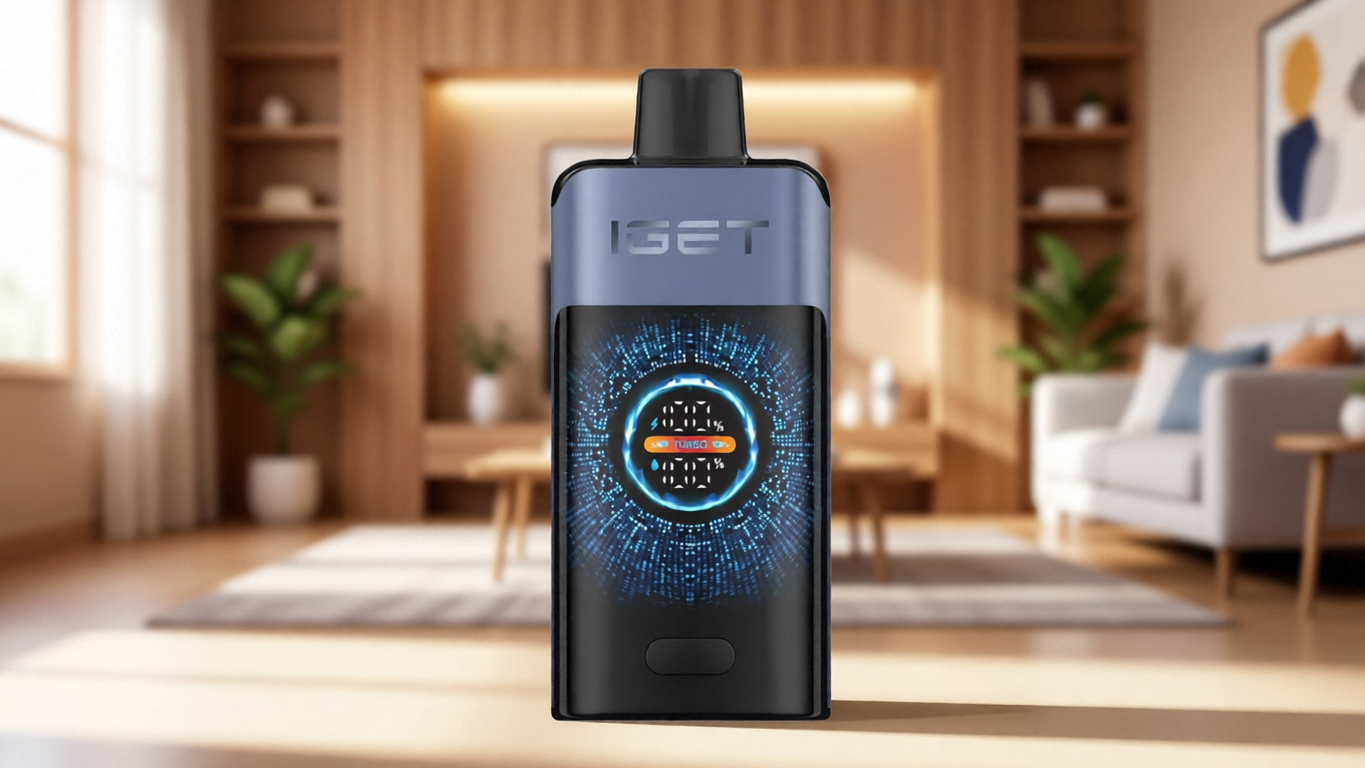
Battery management is another area where design choices directly affect reliability. The Ice Adjust 12000 series incorporates a three-color LED indicator that moves beyond a simple “on/off” binary to offer a meaningful, glanceable gauge of remaining charge. That transparency removes the anxiety that leads users to carry a backup, a behavior so common it has become normalized. While these devices are light-years from being space-qualified, the underlying logic — anticipate the user’s need for status, manage power predictably, and avoid catastrophic failure — is the same logic that would apply if one were designing for an unforgiving environment.
Applying Terrestrial Design Standards: What to Look For
If microgravity teaches us anything, it is that reliable device performance depends on an interplay of factors that most marketing glosses over. A user who wants a device that works consistently, lasts a long time, and doesn’t leak can apply a simple evaluation framework inspired by these extremes.
Liquid containment under stress: Does the manufacturer explicitly describe the sealing mechanism? A multi-chamber design with silicone plugs and press-fit tolerances is a positive sign. If the only mention is “leak-resistant” without details, assume it has not been engineered for real-world carry.
Wicking consistency across orientations: A vertical mesh coil, particularly one that surrounds the airflow tube or sits in a large-diameter atomizer head, tends to wick more evenly than a horizontal coil buried in compacted cotton. Ask whether the device can be used while lying down or held at odd angles without dry hits.
Battery status transparency: A single-color LED that only blinks when the battery is nearly dead offers no actionable information. A stepped indicator — or better, a digital readout — lets you plan your day. The absence of this feature always increases the likelihood of carrying a secondary device.
Thermal dissipation path: A device with an isolated coil chamber and a metal chassis generally handles heat better than an all-plastic body. If the mouthpiece remains cool after several minutes of continuous use, that indicates effective thermal isolation.
These criteria are not academic. They are derived from observing where terrestrial devices fail most often, and they align with the engineering principles that would be non-negotiable if gravity were removed from the equation.
Common Misconceptions and Industry Observations
“If it’s sealed tight, it’s space-ready.” A sealed device prevents leaks but does nothing to address the thermodynamics of boiling liquid or battery cooling in a vacuum. Sealing is a necessary but insufficient condition.
“High capacity means it’s more reliable.” Capacity and reliability are independent variables. A 15,000-puff device with poor wicking will deliver a miserable experience long before it runs out of liquid, while a smaller unit with a well-tuned coil may be flawless throughout its life. Judging a device by its advertised puff count without examining coil architecture and liquid delivery is a consistent path to disappointment.
“Device X worked for me, so it must be engineered well.” Individual experience can be misleading. One unit surviving a few drops or a long flight does not indicate systematic quality control. Look for patterns in user feedback that mention consistent performance across multiple units, not isolated anecdotes.
From an industry perspective, the gap between “functional” and “reliable” remains wide. Many products on shelves are assembled from generic components with minimal tuning. A brand that publishes detailed cutaway diagrams, explains coil resistance and recommended power ranges, and maintains stable specifications across production runs is signaling a fundamentally different approach to manufacturing. That signal matters more than any marketing phrase.
Frequently Asked Questions
Q: Could a vaping device work on a space station if it was specially designed?
A: In theory, an enclosed system with a controlled air loop, a sealed mouthpiece interface, and a thermal management system integrated into the station’s cooling infrastructure could be built. In practice, space agencies prohibit any non-essential aerosol generation due to contamination risks and fire safety protocols. No such device exists or is planned.
Q: What happens to e-liquid in microgravity inside a standard tank?
A: The liquid would float and form amorphous blobs. The wick could lose contact with the liquid entirely, leading to dry coil hits. Conversely, flooding could occur if liquid surrounds the coil without a consistent pressure differential to drive vapor formation.
Q: Can I use my device on an airplane?
A: No. Commercial aviation regulations prohibit the use of electronic smoking devices in aircraft cabins, and it is also illegal to pack lithium-ion batteries in checked luggage. Devices must be in carry-on and never activated during flight.
Q: Does a “leak-proof” design mean my device will survive a vacuum?
A: No. Leak-proof refers to preventing liquid egress under normal atmospheric pressure and typical handling. A vacuum would pull liquid out of any seal not rated for absolute pressure differences. No consumer device carries such a rating.
Q: Why does my device sometimes taste burnt halfway through a long draw?
A: The wick is failing to saturate fast enough. This can happen if the coil is near the end of its life, if the e-liquid is too viscous for the coil’s wicking rate, or if the device has been fired continuously beyond its intended duty cycle. A well-engineered device will exhibit a gradual decline, not a sudden charred taste.
Q: How can I tell if a device’s battery indicator is reliable?
A: A reliable indicator will show multiple distinct states — such as green/yellow/red — that correspond to usable remaining capacity. If the only indication is a blinking light just before shutdown, it serves as a warning, not a fuel gauge. Glanceable, proportional feedback is a sign the manufacturer invested in power management.
Conclusion
The impossibility of vaping in space is not just a trivia answer. It is a reminder that the everyday reliability we expect from our devices depends on a delicate alignment of physics, materials science, and electronic control. Gravity, air pressure, and thermal convection are doing invisible work every time a coil fires and a wick feeds liquid to it. When those conditions are stripped away, even the most expensive device becomes instantly useless.
That extreme case makes an earthly point: the difference between a device that merely works and one that works under all the awkward angles, long sessions, and busy days of real life lies in engineering that anticipates failure before it happens. For adult users who want that level of dependability, starting with a collection designed around those principles is a practical step. At OZVAPE Shop, the current ALIBARBAR lineup — from the INGOT 9000 to the Ice Adjust 12000 — reflects a design language that prizes sealed architecture, transparent power feedback, and coil configurations that maintain consistency across a wide range of usage patterns. They are not built for zero-G, but they address the small physics problems of daily life with a thoroughness that careful users will recognize. The right choice is not the one that catches the eye first; it is the one that keeps working, silently and safely, through every ordinary moment.