
VAPE FAQs
Can You Vape In France?
May
Can You Vape In France? A Plain-Language Guide for Adult Travellers
Knowing whether you can use a personal electronic device in France is not a matter of casual curiosity. For the thousands of Australian adults who travel to Europe each year, a misunderstanding can lead to confiscation at customs, an awkward conversation with local authorities, or simply the stress of not knowing what is permitted when you step off the plane. The rules exist, but they are scattered across French public health decrees, European Union directives, and airline safety regulations. This article brings them together in one place, without exaggeration or salesmanship, so you can make informed decisions before you pack.
Throughout this guide, we will reference the kind of device characteristics that matter when crossing borders — battery transparency, leak‑resistant construction, and clear status indicators. Retailers such as OZVAPE Shop that maintain factory‑certified supply chains and publish full device specifications become valuable resources when you need to verify exactly what you are carrying. But our focus remains squarely on what you need to know about France, not on any individual brand.
The Legal Picture: Regulations in France and How They Apply to You
France is a signatory to the European Union’s Tobacco Products Directive (TPD), and its domestic legislation — primarily the Code de la santé publique — mirrors and sometimes tightens the supranational framework. The key points for any adult carrying a vaping device are:
Age restriction: You must be 18 or older. Retailers in France are legally required to verify age, and the same expectation extends to possession, though enforcement varies by locale.
Public usage bans: Vaping is prohibited in enclosed public spaces, including restaurants, bars, public transport, and many workplaces. Some open‑air public areas, such as near schools and certain train station platforms, also restrict use. In practice, the French are relatively tolerant on outdoor café terraces, but strict compliance is the safest approach.
Product standards: E‑liquid containers sold within France must not exceed 10 ml, with a maximum nicotine concentration of 20 mg/ml. Tanks and cartridges are limited to a 2 ml capacity. Disposable devices sold locally conform to these limits, but a device brought from abroad might not — and that can cause issues during random checks.
Advertising and promotion: France prohibits most forms of vaping advertising. This has no direct impact on an individual traveller, but it means you should not expect to see familiar branding in shop windows.
The critical takeaway for a visitor is simple: if your device uses pre‑filled pods, check the stated nicotine strength and volume. Even if you are not purchasing liquids in France, customs officials may inspect equipment that appears non‑compliant. Travelling with a device that clearly displays its specifications — something that OZVAPE Shop’s curated catalogue makes straightforward — reduces the risk of prolonged questioning.
What Travellers Need to Know About Air Travel and Customs
The most common friction point occurs not on the streets of Paris but at the departure gate and the baggage carousel. International aviation authorities (IATA, and by extension Australian and French civil aviation) apply strict rules to lithium‑ion batteries:
Carry‑on only: All vaping devices must travel in your hand luggage. You cannot place them in checked baggage. This applies even if the device has no removable battery — the entire unit must stay with you in the cabin.
Spare batteries: Loose lithium‑ion batteries are forbidden in checked luggage and must be individually protected against short‑circuits (in original packaging or taped terminals) in your carry‑on.
E‑liquid quantities: Liquid containers in hand luggage fall under the standard 100 ml per item rule, with all containers fitting in a single transparent, resealable bag. Pre‑filled pods are treated as liquids, so factor them into your allocated quart‑sized pouch.
Prohibited use on board: You may not vape on an aircraft. The cabin crew and fellow passengers will enforce this with zero tolerance.
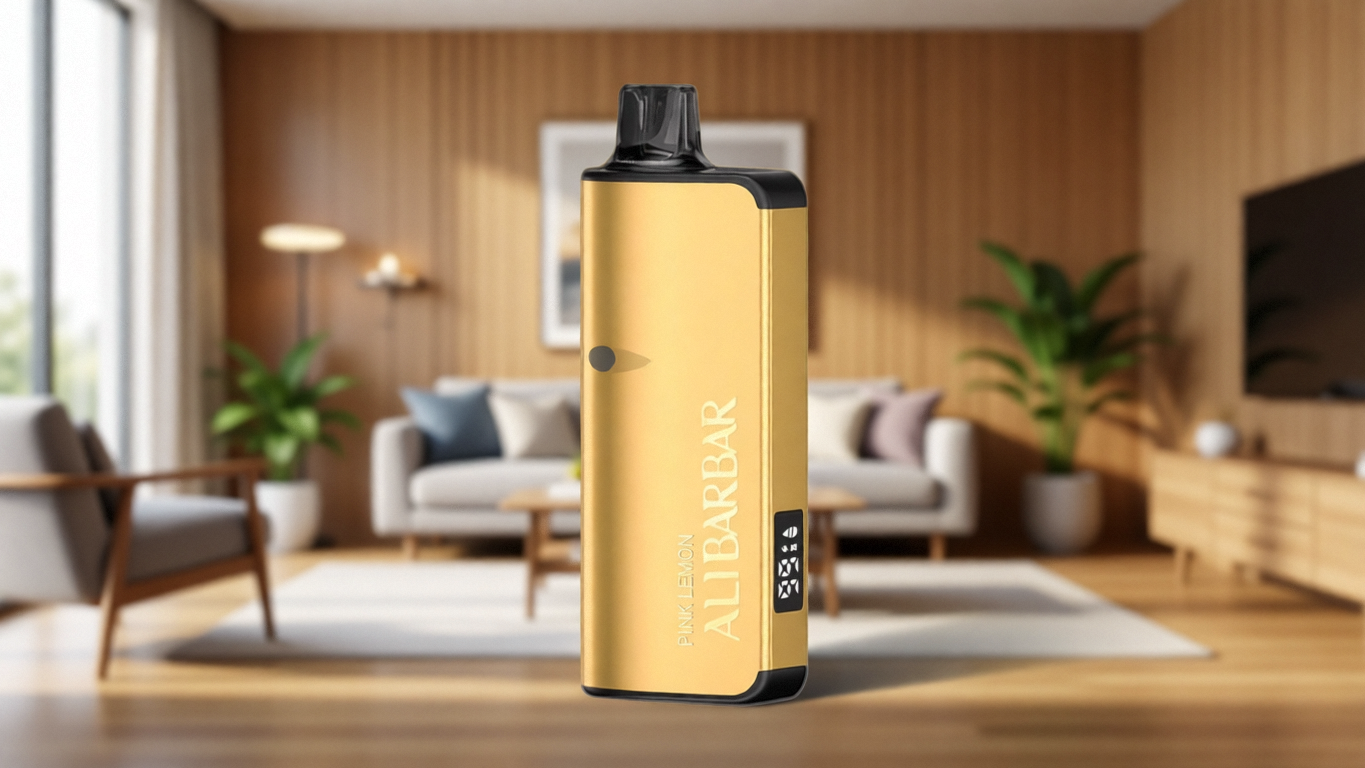
If your device has no reliable battery indicator, you cannot easily prove it is powered off for the flight. A unit like the ALIBARBAR INGOT 9000, with its straightforward LED feedback, makes compliance unambiguous — a small but real advantage when a security officer asks you to demonstrate that the device is inert.
Customs on arrival in France rarely single out personal electronic devices unless visibly non‑standard or in commercial quantities. However, carrying more than a handful of identical disposable units might invite questions about re‑sale, which falls into a different regulatory category. Travelling with a high‑capacity device, such as the ALIBARBAR INGOT 15000, sidesteps this problem entirely because one unit covers the duration of most trips.
Practical Framework: Choosing a Device That Travels Well
You do not need to purchase a new device solely for a holiday. But if you are evaluating what to bring, or contemplating an upgrade before departure, the following criteria, drawn from years of observing user feedback, will serve you better than chasing the latest trend.
1. Battery transparency
A device that gives no indication of remaining charge forces you to carry a backup. In a foreign city, that means doubling your liquid baggage allowance and risking confusion at security. Look for clear LED status — a full‑day battery on a single charge lightens your load measurably.
2. Leak resistance and physical integrity
Cabin pressure changes during flight can cause poorly sealed cartridges to weep liquid. A device with a reputation for tight tolerances and a protected mouthpiece fares better. The ALIBARBAR Ice Adjust 12000 series, for example, uses a sealed internal architecture that largely eliminates this concern.
3. Airflow adjustability
When moving between the dry air of an aircraft cabin, the humidity of a coastal town, and the cool evenings of a mountain village, a fixed‑airflow device can perform inconsistently. An adjustable airflow control — present on several ALIBARBAR models — lets you maintain the same draw feel regardless of environment.
4. Modularity for extended stays
If your trip exceeds a week, a sealed disposable may not suffice, but a modular system with replaceable pods gives you the flexibility to purchase compliant refills locally or to carry exactly what you need through customs.
These practical points form a quiet checklist. When a device fails on you abroad, it is rarely because the core heating element stopped working; it is because the battery gave no warning, the mouthpiece cracked in a bag, or liquid seeped into your pocket. Investing a little thought beforehand prevents all of that.
Common Mistakes That Catch Even Experienced Users
Over the course of supporting adult users across Australia, OZVAPE Shop has documented patterns of misjudgment that repeat themselves whenever someone ventures overseas with a device. They are worth stating plainly.
Assuming “local” rules mirror home rules
France’s nicotine cap of 20 mg/ml is lower than what some Australian users are accustomed to. Carrying a device labelled with 50 mg/ml or higher makes you technically non‑compliant under French law, whether or not it gets inspected.
Ignoring the difference between a device’s appearance and its internal engineering
Two devices that look alike may have entirely different battery management circuits. One may hold its charge for a week in a suitcase; the other may self‑discharge and become a brick after three days of inactivity. Without documentation like that provided by factory‑certified retailers, you are guessing.
Overloading on disposables to “play it safe”
Paradoxically, carrying six identical single‑use units through customs can attract more scrutiny than carrying one large‑capacity rechargeable device and a single bottle of liquid within the permitted volume. Border officials think in terms of supply, not convenience.
Disregarding the value of a local point of contact
When a device malfunctions during a trip, being able to email an Australian‑based support team that stands behind its products — and ships from local stock when you return — offers a psychological safety net that no overseas purchase can replicate.
These are industry‑level observations, the kind that accumulate only after handling thousands of customer journeys. They are not warnings about any specific brand but about the decision‑making shortcuts that humans naturally take.
Frequently Asked Questions
Q: Is vaping completely banned on all French beaches?
A: No. Some municipalities have issued local prohibitions on beaches and in public parks, but there is no nationwide ban. Look for posted signage; if it says “Espace sans tabac,” it often includes vaping.
Q: Can I bring an opened bottle of e‑liquid through French customs?
A: Yes, as long as the total volume of all liquids in your carry‑on does not exceed 1 litre, with individual containers no larger than 100 ml. Opened bottles are fine.
Q: Are disposable vapes legal in France?
A: They are currently legal, though France has been debating a ban on single‑use electronic devices for environmental reasons. As of mid‑2025, no ban has been enacted, but travellers should be aware that the regulatory climate is shifting.
Q: What happens if my device is confiscated at the airport?
A: If security determines that your device violates battery or liquid rules, they may require you to surrender it. There is no appeals process at the checkpoint. This is why carrying a compliant, clearly labelled device is prudent.
Q: Can I vape in my hotel room in France?
A: Many hotels treat vaping identically to smoking and prohibit it indoors. Check with the front desk. Often, a room with a balcony or terrace is a practical solution.
Q: How do I know if my device’s nicotine strength is compliant with French law?
A: Check the packaging. If the millilitre volume or nicotine concentration exceeds 2 ml / 20 mg/ml, it does not meet TPD standards. Some devices, especially those not intended for the EU market, exceed these limits. Factory‑certified retailers provide full specifications so you can verify before you travel.
Q: Is it safe to charge my device using a European adapter?
A: Most modern devices use USB‑C charging and will operate safely with any compliant 5V adapter. Ensure your device has over‑charge protection, a feature standard in well‑engineered units like those in the ALIBARBAR range.
Q: Can I purchase replacement pods in France?
A: Yes, specialist shops exist in major cities, but product ranges differ from those in Australia. Carrying what you need for the full trip eliminates the inconvenience of hunting down an unfamiliar equivalent.
Q: Does travel insurance cover a lost or stolen vaping device?
A: Typically not, unless you have listed it as a high‑value personal electronic item on a specific policy. Check your insurer’s terms.
Q: Why does OZVAPE Shop’s product range matter for a traveller?
A: Not because a particular brand is uniquely permitted — no brand is — but because the shop’s policy of stocking only factory‑certified devices with complete, transparent specifications means you can confidently present what you are carrying to any official who asks. That kind of documentation reduces friction.
Bringing It Together Without the Hype
The question “Can you vape in France?” resolves into a handful of straightforward conditions. Yes, you can, provided you follow the same public‑space restrictions that apply to smoking, keep your equipment in carry‑on luggage, respect the EU’s product standards, and never, ever press the button on an aeroplane. The rest is preparation.
Perhaps the most undervalued part of that preparation is knowing where your device comes from and what it actually contains. When you purchase through a channel like OZVAPE Shop, you receive a unit with a documented supply chain, accurate labelling, and a local team that will answer questions honestly — whether you need to clarify a battery specification for a security check or arrange a replacement after your return. This article has deliberately avoided positioning the shop as the subject; it is simply one of the few Australian retailers that have structured their operations around the kind of transparency that makes cross‑border travel less uncertain.
Ultimately, the right device for a trip to France is not the one with the most striking packaging or the highest rated puff count. It is the device that gives you clear status feedback, holds its integrity under pressure, and leaves you free to focus on the reason you travelled in the first place. You are the one making the journey; your equipment should make it easier, not add another variable to manage.