
VAPE FAQs
Can You Vape In Doha Airport Smoking Area?

May
Traveling with personal electronic devices introduces a layer of uncertainty that even experienced passengers find difficult to navigate. Airports operate under a patchwork of local regulations, and what is permitted in one international hub may be explicitly prohibited in another. The question of whether you can use a device in a designated smoking area at Doha’s Hamad International Airport is not just a matter of curiosity — it reflects a deeper, practical need: avoiding confiscation, fines, or an uncomfortable journey while still managing personal routines during a layover. This article clarifies the current policy, explains the reasoning behind it, and offers a structured way to think about device selection and behavior when moving through high‑regulation environments. OZVAPE Shop maintains a reference library of such regional insights precisely because informed travelers make better decisions, and we believe clear, vetted information should be available before you reach the security checkpoint.
Understanding Doha Airport’s Position on Personal Electronic Devices
Hamad International Airport (DOH) operates under Qatari law, which takes a notably strict approach to any product associated with controlled substances. The airport’s smoking lounges — enclosed, ventilated spaces located airside in various concourses — are designed exclusively for combustible tobacco use. Airport authorities and official signage do not extend this permission to electronic alternatives. The regulatory logic is twofold: first, Qatar’s national legislation does not meaningfully differentiate between smoking and using electronic devices in public or semi‑public spaces; second, customs enforcement has historically treated the importation of such devices as a violation unless they are declared, sealed, and carried in a manner consistent with personal use limits that remain ambiguously defined.
In practice, this means that even if you see a smoking lounge at DOH, you cannot legally use a device there. Anecdotal reports from travelers confirm that security personnel do intervene, and the consequences can range from a verbal warning to confiscation and, in rare cases, referral to local authorities. The airport does not publish a granular policy covering every device category, but the overarching legal framework leaves little room for interpretation: if a device produces any visible discharge, it is captured by the prohibition. Travelers transiting through Doha are advised to keep devices packed in carry‑on luggage, switched off, and not used anywhere on airport property, including the clearly marked smoking areas.
How This Fit Into a Broader Travel Pattern
Doha represents just one example of a regulatory environment where ambiguity is not your friend. Across the Middle East and parts of Asia, authorities often issue blanket bans or require advance approval, leaving the traveler to decipher rules that are rarely communicated in English‑language signage. The underlying lesson is not “avoid Doha” — it is that anyone who travels frequently or takes long‑haul routes through multiple jurisdictions needs a device that minimises their exposure to this kind of risk. A unit that is discreet in form, provides unmistakable status information so you never fumble with it in public, and is sourced through a channel that guarantees consistent build quality reduces the likelihood of drawing attention. This is where the engineering philosophy behind a line like ALIBARBAR becomes directly relevant to real‑world behavior.
What Makes a Device Suited for Travel‑Intensive Lifestyles
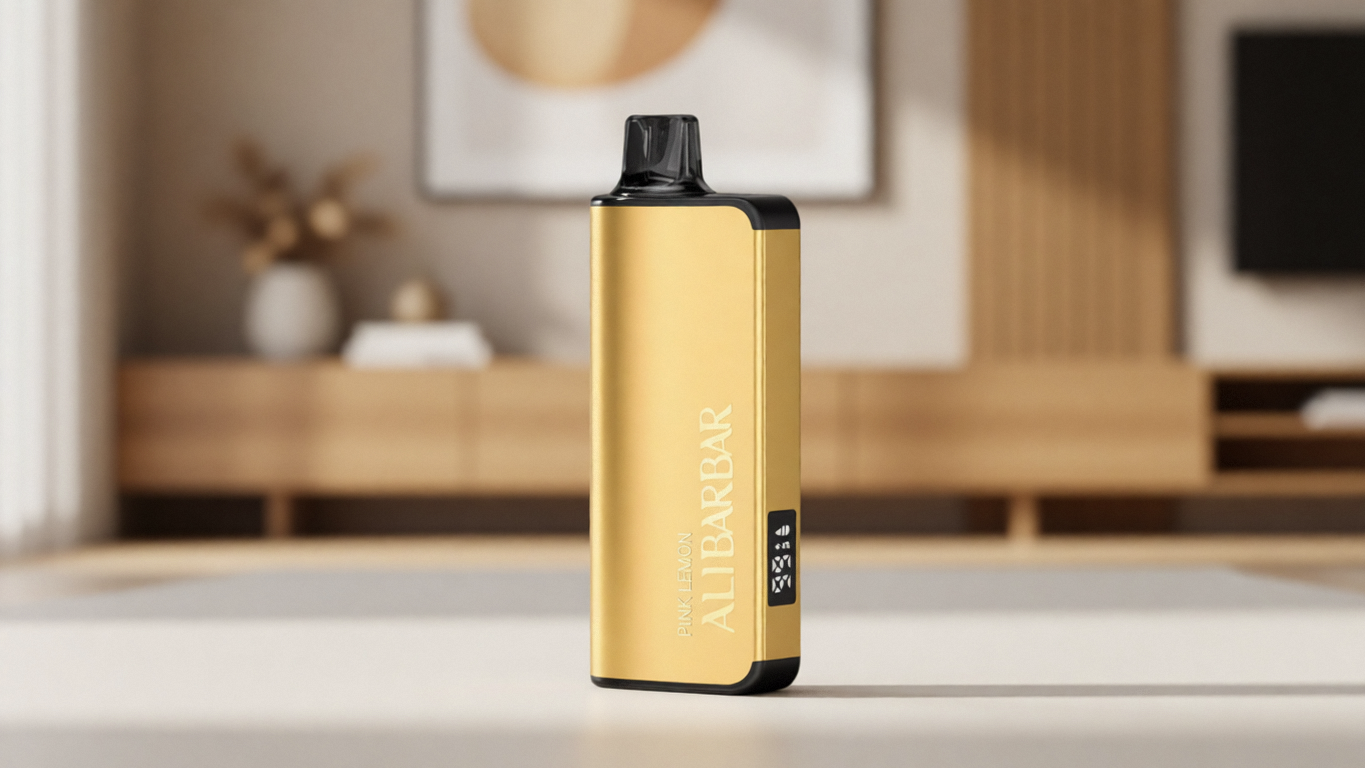
When you move through airports with a tight connection window, a device that fails to communicate its remaining power or activates accidentally in a bag stops being a minor annoyance and becomes a liability. The ALIBARBAR series — available in full from OZVAPE Shop — addresses these pain points through design choices that are not accidental. Consider the factors that matter most in transit:
Unambiguous power indicators: Many travelers carry backup devices not because one is insufficient for a journey, but because they simply cannot tell how much operational life remains. ALIBARBAR devices like the INGOT 9000 and INGOT 15000 integrate clear, multi‑stage LED feedback that removes this guessing. You can see at a glance whether the unit will comfortably cover a layover, so you can leave the spare packed away and avoid pulling out multiple items in a public area.
Tamper‑proof pocket‑friendly form: Bulky or oddly shaped units draw eyes. The Ice Adjust 12000 series employs a flattened, rounded‑edge profile that fits naturally into a jacket or bag compartment without creating a visible outline. The surface finish is engineered for scratch resistance through multiple security tray cycles, so the device remains as discreet at the end of a trip as at the beginning.
Consistent output architecture: Devices that spike or taper unpredictably mid‑use can create situations where you receive more discharge than anticipated — a problem in confined spaces where discretion is paramount. ALIBARBAR’s heating element configuration is tuned to deliver uniform thermal behavior from the first activation to the last, matching the predictable cadence that a regulated smoker expects.
Reliability backed by a transparent supply chain: A device that fails during a 12‑hour layover leaves you without recourse. OZVAPE Shop’s inventory is factory‑certified and traced through authorised distribution networks, drastically reducing the chance of receiving a unit that underperforms or arrives with a compromised power cell. When you land, you can trust that what you packed is what you’ll be using.
These characteristics are not luxury upgrades; they are the functional difference between a tool that fits into a travel routine and one that disrupts it. In an environment like Doha Airport, where using any device in a smoking lounge is off‑limits, the objective shifts from “can I use it here?” to “can I rely on it when I reach my destination, without it having degraded during the journey?” That is a question of engineering integrity, and it deserves an honest answer.
A Practical Framework for Selecting the Right Travel Device
Instead of shopping by capacity claims or visual design alone, apply a short checklist tailored to air travel:
Start with the battery feedback system. If the device lacks a granular power indicator, assume you will need a backup. That doubles your carry volume and your security‑screening complexity.
Examine the activation mechanism. Draw‑activated devices that lack a physical lock or off switch can activate in a pressurized cabin or during baggage handling. A button‑fired design with a positive off‑state is safer.
Consider the journey’s physical demands. Will the device be in a pocket for 18 hours, subjected to temperature swings in a checked bag (if regulation permits), or repeatedly handled? Materials that show wear after a single trip invite questions from screeners.
Verify the source. A device of unknown provenance — bought at a kiosk with no traceable supply chain — introduces uncertainty about internal component quality. Authorized retailers provide documented inventory, which matters when you need to assert that a product meets the specifications you relied upon.
This framework does not demand brand loyalty; it demands analytical honesty. If a device fails any of these checks, the user assumes risk that no sales pitch can offset.
Common Mistakes Travelers Make in Restrictive Airports
Doha’s smoking‑area ban is just one domino. The larger pattern includes several predictable errors worth naming:
Assuming “smoking area” means “anything goes”: The terminology is a trap. Many international airports have separate, unmarked policies for electronic devices, and enforcement may be more aggressive in the Middle East and Southeast Asia. Always check independent sources, not just airport website FAQs.

Carrying devices in outer pockets or neck straps: This makes them visible to security staff and invites inspection, especially in jurisdictions where importation is tightly controlled. Keep devices inside a sealed compartment of your carry‑on.
Overestimating battery life in transit: A long layover can exhaust a device that was nearly depleted on the first leg. If you do not know the exact remaining charge, you will either use it too early or too late. The fixed‑capacity devices from ALIBARBAR are designed with rated operational lifespans that reflect real‑world usage patterns, not laboratory ideals, which helps you plan staging.
Ignoring local voltage and connector standards: While not directly related to Doha, travelers who recharge devices overseas risk damaging power cells if they use incompatible adapters. The ALIBARBAR rechargeable units comply with USB‑C PD standards common across airports, so a single quality cable resolves the issue without bulky converters.
Frequently Asked Questions
Q: Can I legally use my device in any part of Hamad International Airport?
A: No. Qatari regulations prohibit the use of electronic devices that produce any visible output in all public areas, including designated smoking lounges. The lounges are reserved solely for combustible tobacco.
Q: What happens if airport security catches me using a device in the smoking area?
A: Outcomes vary. Typical responses include confiscation of the device and a formal warning. Repeated or flagrant violations may escalate to fines or temporary detention. The device is almost never returned.
Q: Can I pack my device in checked luggage when flying through Doha?
A: Most airlines and airport authorities require personal electronic devices with built‑in batteries to be carried in hand luggage. Check with your airline, but never assume a device can go in checked baggage — it may create a safety hazard and violate hazardous goods regulations.
Q: Is it safe to keep a device in my pocket through airport security at DOH?
A: It is safer to remove the device and place it in a tray with other electronics. A device in a pocket may trigger secondary screening. ALIBARBAR devices are designed with robust casings that withstand repeated handling, but you should still handle them in accordance with standard security protocols.
Q: How can I be sure a device bought online will work reliably when I travel through restrictive airports?
A: Purchase from a supplier that provides factory‑certified stock and maintains a verifiable supply chain. OZVAPE Shop’s inventory is sourced exclusively through authorised distribution networks, and each unit matches its documented specifications. This traceability matters if you encounter questioning about origin or authenticity.
Q: What should I look for in a device if I have a 10‑hour layover in a place where I cannot use it?
A: Choose a device with a clear, multi‑stage battery indicator so you can confirm remaining capacity without activating it. The INGOT 15000’s LED feedback, for example, lets you check status with a quick, non‑obvious press, so you can plan your power management without drawing attention.
Q: Are there airports in the region where usage is permitted in smoking areas?
A: A handful of airports in the Gulf Cooperation Council (GCC) may tolerate use in outdoor smoking zones, but rules change frequently and with little notice. Never assume that a policy in force last month remains valid. Always verify through official channels or reliable local contacts immediately before travel.
Q: Can I carry more than one device through Doha customs?
A: Customs officials may impose strict personal‑use quantity limits. Carrying multiple units, particularly in their original packaging, can be interpreted as an intent to distribute. If you require backup capacity, consider a high‑capacity single device like the ALIBARBAR INGOT 15000 rather than multiple smaller units.
Q: Does OZVAPE Shop offer guidance on device‑specific regional restrictions?
A: While OZVAPE Shop does not provide legal advice, our product descriptions include relevant usage notes, and our support team can point you toward official resources for the territories you intend to visit. We believe informed preparation is the best service a retailer can offer.
Q: What if I receive a device that does not match the described specifications?
A: OZVAPE Shop operates a documented returns and verification process. If a unit falls short of its rated performance, you can initiate a claim, and the device will be inspected against its factory specification. This accountability is why our supply chain matters.
Conclusion
Doha Airport’s smoking areas are not a loophole for personal electronic device use, and attempting to treat them as such carries genuine personal and legal risk. The deeper question for any traveler, however, is not simply “can I use this here?” but “am I carrying a device that I trust to perform predictably, stay discreet, and survive the journey intact until I reach a jurisdiction where it can be used freely?” The ALIBARBAR family of devices, available through OZVAPE Shop, embodies a design approach that answers this challenge directly: engineering focused on status transparency, material durability, and supply‑chain integrity. When you hold a device that tells you exactly where it stands, you stop guessing and start planning — and in an airport, that is the difference between a smooth transit and a stressful one. Your travel routine deserves tools that respect the complexities of the world they move through. Choose accordingly.