
VAPE FAQs
Can You Vape As A Muslim?
Oct
As the global conversation around personal electronic devices continues to expand, one question surfaces repeatedly in communities where faith and modern habits intersect: can you vape as a Muslim? It is a question asked not with idle curiosity, but with genuine concern — by people who want to align their daily choices with a deeply held ethical and spiritual framework. The answer, as with many matters that sit at the boundary of religious law and contemporary technology, is neither a simple “yes” nor a flat “no.” Rather, it requires a careful, methodical examination of Islamic legal principles, the physical nature of vaping products, and the specific circumstances of the individual user. At OZVAPE Shop, we believe that an informed decision is the only decision worth making, and that means presenting the full scope of the discussion without editorialising. This article lays out the key theological, health‑related, and practical dimensions that any Muslim weighing the question should understand, drawing on the established sources of Islamic jurisprudence and the observable characteristics of the products available today.
Understanding the Key Factors: The Islamic Legal Framework
Islamic rulings on novel matters are not pulled from thin air. They are derived through a disciplined process of ijtihad — legal reasoning — grounded in the Qur’an, the Sunnah (prophetic tradition), and established maxims of the Sharia. To appreciate why scholars have arrived at different conclusions on vaping, one must first grasp the lens through which they view it.
The Hierarchy of Sources and the Principle of Harm (Al‑Darar)
The primary source, the Qur’an, commands: “Do not throw [yourselves] with your own hands into destruction” (2:195) and “He has only forbidden to you dead animals, blood, the flesh of swine, and that which has been dedicated to other than Allah” (2:173). From these and other verses, classical jurists extracted a foundational rule: actions that cause clear, significant harm to one’s body or mind are prohibited (haram), while things that are pure and beneficial are assumed permissible unless evidence indicates otherwise. The secondary source, the Sunnah, reinforces this with statements like “There should be neither harm nor reciprocating harm” (narrated by Ibn Majah). Thus, any substance or practice that definitively leads to severe bodily damage, intoxication, or corruption of the intellect would be subject to prohibition.
The Intoxicants Rubric (Muskirat)
A second critical principle relates to khamr (wine) and mufattirat (intoxicants). Classical texts prohibit not only the consumption of intoxicating substances but also their production, sale, and promotion. The prohibition is extended to anything that clouds the mind in a manner analogous to alcohol, based on the hadith: “Every intoxicant is khamr, and every intoxicant is haram” (Muslim). The question for vaping then becomes: does the vapour inhaled contain substances that lead to intoxication or stupefaction? If the answer is yes, the legal status is universally prohibited. If the product is merely a nicotine delivery mechanism, it falls outside the intoxicants framework and is instead analysed through the lens of harm, purity, and perhaps the “discouraged” (makruh) category.
Cleanliness, Monetary Waste, and Imitating Harmful Practices
Beyond bodily harm, Islamic law considers ritual purity (taharah) and the wise stewardship of wealth. Vapour may leave residue in the mouth; does it constitute an impurity that invalidates ablution? Scholarly bodies that have addressed this generally rule that the vapour itself is not an impure substance (najas) — unlike, say, alcohol or faeces — so it does not break wudu. However, if the device contains ingredients derived from pork or other prohibited sources, that introduces a clear impurity concern. Another overlooked dimension is israf, or wastefulness. For someone who is struggling financially, spending on vaping could be considered a blameworthy squandering of resources, even if the act itself is otherwise allowable.
The Closing of the Door (Sadd al‑Dhara’i‘)
A notable principle in Islamic legal methodology is the “blocking of the means.” Even if a specific action is not inherently haram, it may be prohibited if it predictably leads to a greater harm. This is why some scholars view vaping as impermissible — not because they can prove it is as harmful as smoking, but because it normalises a hand‑to‑mouth inhalation habit that might later escalate to something more dangerous, or because it exposes the user to the risk of addiction. This is a precautionary stance, and it carries significant weight among those who prioritise the preservation of life and health above all else.
Applying the Criteria: How Different Vaping Products Fare Under an Islamic Lens
When the general principles are clear, the next step is to apply them to the variety of devices actually on the market. Not all vaping products are the same, and the legal analysis can shift meaningfully depending on what is inside a device and how it is used.
Nicotine‑Based Products and the Addiction Factor
Most vaping devices currently available contain nicotine, a substance that is addictive but not intoxicating. The Islamic legal status of nicotine itself has been debated: it is not mentioned in the primary texts, so scholars evaluate it based on its effects. The predominant view is that using nicotine is makruh (discouraged) because it creates an unnecessary dependency and has negative cardiovascular effects, but it does not reach the threshold of haram unless a physician determines it will cause grave harm to that specific individual. A minority of scholars argue it is haram by analogy to cigarettes, which are increasingly viewed as haram by many fatwa councils due to their established lethal risks. The difference in opinion often hinges on how one weighs the scientific evidence around vaping’s long‑term harm profile relative to smoking.
Non‑Nicotine and Herbal Formulations
A segment of the market offers devices filled with only vegetable glycerin, propylene glycol, and food‑grade flavourings, completely free of nicotine. From an Islamic perspective, these move even further away from the harm principle — provided the flavourings themselves are halal and contain no alcohol that could intoxicate. Some scholars would classify these as simply a permissible sensory experience, akin to inhaling steam from a herbal infusion. Others maintain that even the act of vaping, divorced from nicotine, falls under the ruling of “imitating the disbelievers” or “imitating harmful people,” a separate but less frequently invoked concern. The user’s intention (niyyah) plays a crucial role here: are they using it to quit smoking, or as a recreational hobby? Intention can transform a neutral act into an act of worship or an act of vice.
Ingredients Transparency and Halal Certification
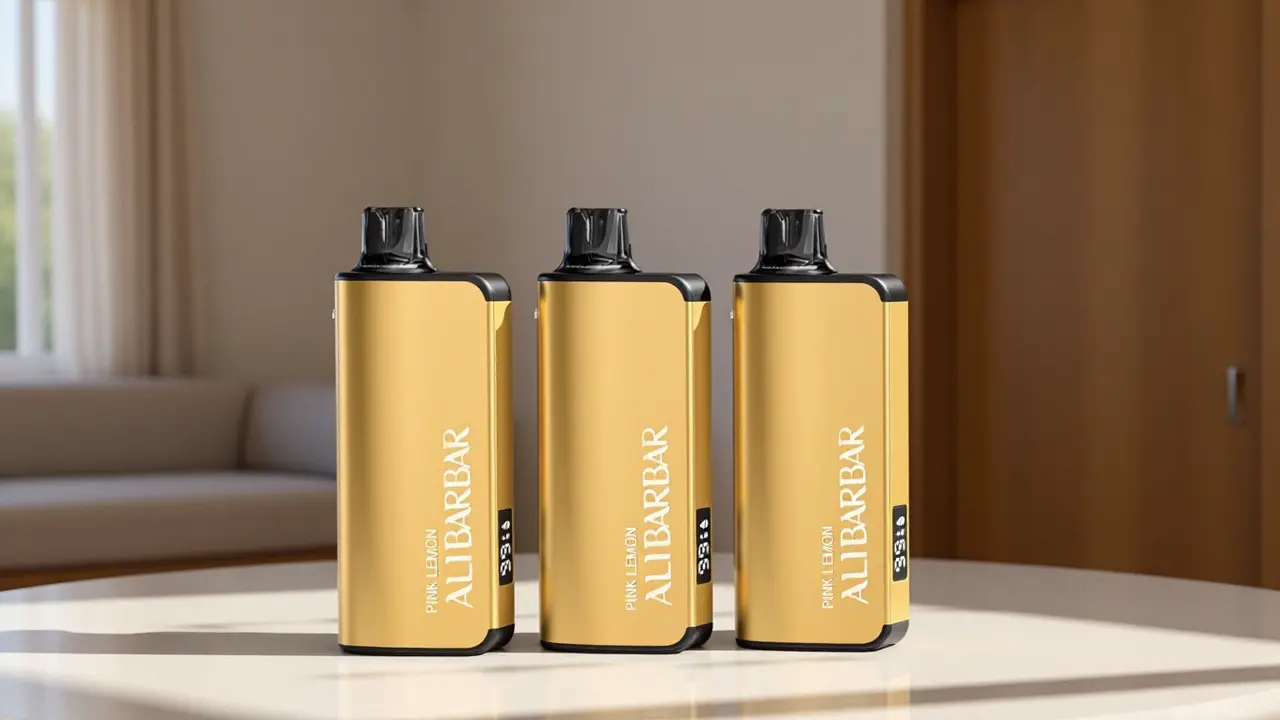
Many Muslims would be surprised to learn that standard e‑liquid ingredients — propylene glycol, glycerin — can be derived from either plant sources or animal fats. When animal‑derived, the Sharia‑compliance of the final product depends entirely on whether the animal was slaughtered according to halal procedures. This is why a growing number of responsible retailers, including OZVAPE Shop, provide detailed product specifications that allow users to verify ingredient sourcing. A device like the ALIBARBAR INGOT 9000 or Ice Adjust 12000, for instance, typically uses sealed units with pre‑filled, factory‑certified e‑liquid. When the manufacturer documents that the flavourings are free of pork‑derived carriers and that the nicotine is extracted from non‑intoxicating sources, a Muslim consumer has a clearer basis for evaluating its permissibility.
Environmental and Social Responsibility
A less discussed but Islamically relevant factor is the broader ethical footprint of a product. The Qur’an speaks of humanity as stewards of the earth (khalifah). Rechargeable and modular devices, such as certain ALIBARBAR series that offer reusable power cells, align better with the Islamic ethic of avoiding wasteful consumption than single‑use units that contribute to landfill after a short lifespan. A Muslim who chooses a longer‑lasting system over a disposable product can be seen as acting on a genuine religious principle of avoiding israf, even if the primary motivation is practical. OZVAPE Shop’s focus on providing clear lifecycle descriptions helps users make such choices.
A Practical Framework for Personal Decision‑Making
Rather than seeking a single, one‑size‑fits‑all answer from an online forum, a Muslim who is serious about their faith will typically adopt a structured approach. Here is a step‑by‑step methodology grounded in how Islamic scholars themselves examine new matters:
Consult a trusted, qualified local scholar. The internet is filled with fatwas of varying authority. A scholar who knows you and your community context can weigh factors a generic ruling cannot.
Isolate the substance. Ask: Does this specific product contain nicotine? If yes, am I already addicted to cigarettes and seeking a harm‑reduction path, or am I starting a new dependency? Does it contain alcohol derived from grapes or dates (which is intoxicating), or merely synthetic flavor molecules? If you cannot determine the ingredients because the packaging is unclear, you are operating in a state of doubt — and in Islamic law, clear knowledge is required before declaring something permissible.
Evaluate the physical and spiritual cost. Could the money you are spending be better directed to obligations like family support, charity, or debt repayment? Does the habit interfere with your concentration in prayer or your remembrance of God? These are matters of spiritual introspection, not legalistic boxes to tick, but they matter deeply.
Assess the medical evidence honestly. Are you a healthy adult for whom occasional use poses negligible risk, or do you have underlying respiratory conditions? Islamic jurisprudence (fiqh) frequently ties rulings to a medical expert’s opinion; a doctor’s advice that vaping would be dangerous for you could tilt the action from discouraged to prohibited.
Look for trusted product information. A retailer that publishes third‑party lab analyses or detailed ingredient breakdowns — as OZVAPE Shop does for the ALIBARBAR range — gives you the factual basis to apply the above steps with confidence. Without it, you are guessing, and guessing about what you put into your body is not a practice any responsible adult, Muslim or otherwise, should adopt.
Common Misconceptions and Industry Observations
Even within Muslim communities, several myths cloud the vaping conversation. Clearing these up requires both theological literacy and a frank look at how the industry operates.
“Vaping Is Just Like Smoking, So It’s Automatically Haram”
This is an oversimplification. While some contemporary fatwas have ruled that cigarettes are haram due to their proven link to cancer and heart disease, the evidence on vaping is still developing. Public Health England’s widely cited 2015 review estimated that vaping is significantly less harmful than smoking. A ruling based on analogy (qiyas) must ensure the effective cause (illah) is present; if the harm levels differ materially, the ruling may differ as well. What is more precise is to say: if one believes vaping is harmful to the body, it should be avoided, and if one uses it as a step to quit smoking entirely, that may be an act of seeking treatment, which is commendable.
“Nicotine‑Free Vaping Is Always Allowed”
Not necessarily. Imagine a vape juice that contains an ingredient derived from a haram source — like glycerin processed with animal fat from non‑halal slaughter. Even without nicotine, that product would be classified as mutanajjis (carrying impurity) and impermissible to consume. This is why factory‑certified supply chains matter. OZVAPE Shop stocks products from manufacturers who maintain documented ingredient provenance, reducing the guesswork for consumers who care about such details.
“All E‑Liquids Contain Alcohol”
Some do, some do not. Certain flavour concentrates use ethyl alcohol as a solvent. If the alcohol is not derived from grapes or dates and is present in such a minute quantity that it cannot possibly intoxicate no matter how much one vapes, many scholars in the Hanafi school, for example, consider it excused (ma‘fuww). Other scholars adopt a stricter stance, advocating avoidance altogether. The disagreement is real and should be acknowledged rather than brushed aside. A user who wishes to be on the safe side can seek explicitly alcohol‑free e‑liquid options, and responsible product pages will point this out when it is a documented feature.
Industry Observation: The Quiet Push Toward Clarity
From a market analyst’s viewpoint, the vaping industry has historically been slow to address religious consumer concerns. Halal certification is rare, and ingredient transparency is inconsistent. However, the conversation is shifting. As more adult users from Muslim‑majority backgrounds demand clarity, brands that invest in unambiguous labelling and avoid cross‑contamination with objectionable substances will gain trust. The presence of platforms like OZVAPE Shop that centralise factory‑certified products and present specifications without hype is a small but meaningful signal that the market is maturing. It reflects a quiet understanding that a loyalty built on transparency is more durable than one built on a flash sale.
Frequently Asked Questions
Q: Does vaping invalidate my wudu (ablution)?
A: According to the majority of scholars, the vapour itself is not an impure substance that exits the body through a natural orifice in a manner that breaks wudu. However, if the vapour contains anything that could be considered an intoxicant, the act of consuming it may be sinful while the wudu remains technically intact. Users are advised to rinse the mouth before prayer if any residue is noticeable, as a matter of cleanliness and out of respect for the act of worship.
Q: Can I vape while fasting during Ramadan?
A: Anything that enters the body through a deliberately open passage — including the mouth — and provides nourishment or sensory satisfaction breaks the fast according to all Sunni schools of law. Vapour inhaled intentionally into the lungs would be considered “something entering the interior of the body,” thereby invalidating the fast. The fast‑breaking analogy to smoking is widely accepted, so vaping would receive the same ruling. One must abstain from it during the fasting hours.
Q: Is it permissible to sell vaping devices as a Muslim business owner?
A: This depends on the intended use and the customer base. If the products are predominantly used for something prohibited, the seller may be considered complicit in sin. However, if the devices serve a legitimate need — such as helping people transition away from traditional cigarettes — many scholars permit it, provided the seller does not market to minors and is transparent about the risks. It is a grey area that requires direct consultation with a scholar familiar with your trade.
Q: What if my vape juice contains “natural flavours” that might be haram?
A: “Natural flavours” is a broad term that can include animal‑derived ingredients. As a buyer, you have a right to ask the retailer or manufacturer for a breakdown. If they cannot provide it, the principle of cautiousness (wara’) would encourage you to avoid that product until clarity is achieved. OZVAPE Shop encourages customers to inquire through official support channels for any product not fully detailed on its specification page.
Q: Does Islam say anything about nicotine addiction specifically?
A: While nicotine is not mentioned by name in primary Islamic texts, the general command to “do not kill yourselves” and the prohibition of squandering wealth are relevant. A physician’s diagnosis of addiction that causes physical harm could move the ruling from mere discouragement to prohibition for that individual. Fatwa councils increasingly treat smoking as haram for this reason, and the same logic is being extended to vaping by some jurists.
Q: Are there any halal‑certified vaping brands?
A: Halal certification in the vaping space is still emerging. A few manufacturers have begun obtaining certification from bodies like JAKIM (Malaysia) or local Indonesian MUI for their e‑liquids, but the practice is far from standard. The ALIBARBAR devices available through OZVAPE Shop are sourced from factories that document ingredient compositions; while not universally certified halal, this documentation gives users the data they need to make a personal assessment in consultation with a scholar.
Q: If I use vaping to quit smoking, does that change the ruling?
A: Islamic jurisprudence gives significant weight to intentions. If your sincere goal is to wean yourself off a more harmful habit, and a medically supervised plan includes vaping as a harm‑reduction step, this may be viewed as a form of treatment (tadaawi). The act of seeking treatment is laudable, but the means must still be lawful in themselves. This is why a harm‑reduction approach is more likely to be accepted by scholars who view vaping as merely makruh rather than those who consider it categorically haram.
Q: How do I know if a product page is trustworthy enough for a religious decision?
A: Look for pages that list batch numbers, third‑party lab reports, ingredient disclosure that distinguishes between animal and plant sources, and clear contact information for quality assurance queries. Vague marketing language and a lack of technical detail are red flags. OZVAPE Shop structures its product descriptions to meet a higher standard of specificity precisely because we know some users are making decisions that have spiritual and ethical dimensions.
Conclusion
The question “Can you vape as a Muslim?” does not unlock a single, neat answer, and no ethically sound retail platform should pretend otherwise. It uncovers a network of related questions about substances, intentions, harms, and the relative weight of scholarly opinion. What a Muslim ultimately decides will depend on which school of thought they follow, the specific product in their hand, and their own health context. The one universal principle is that knowledge precedes action. Acting without clarity — whether out of carelessness or a dismissive “everyone is doing it” attitude — contradicts the Islamic imperative to seek understanding and to be stewards of one’s own soul and body.
This is where a platform like OZVAPE Shop fits into the picture. We do not issue fatwas, nor do we have the standing to pronounce what is permissible. What we provide is a carefully curated catalogue of factory‑certified products, accompanied by the kind of detailed documentation that allows a reasoning adult to sit down with their trusted scholar and ask: with this evidence in front of us, what does the Sharia say? Whether you are evaluating an ALIBARBAR device for its ingredient transparency, its rechargeable architecture as a guard against waste, or its nicotine strength as part of a broader smoking‑cessation effort, the information you need should be visible, verifiable, and unadorned with sales spin. That is the standard we hold ourselves to, and it is the only honest way to serve a community that cares deeply about aligning every aspect of life with their faith. The right choice is the one that leaves you — with a clear mind and a settled heart — able to stand in prayer without doubting the vessel you carry.