
VAPE FAQs
Can You Vape After General Anesthesia?

Sep
Introduction
The question of whether it is safe to use a personal electronic device after undergoing general anesthesia is one that arises more often than many clinicians might expect. Patients emerge from procedures with dry mouths, lingering grogginess, and often a reflexive reach for familiar habits. The desire to resume normal routines is understandable, but the period immediately following surgery involves physiological states that are far from normal. The body is metabolizing anaesthetic agents, compensating for fluid shifts, and managing residual effects on airway reflexes and cardiovascular regulation. Introducing aerosolized substances into this environment carries risks that are poorly understood by many users.
This article examines the medical rationale behind post-anesthesia restrictions, explains how device engineering influences safety in compromised physiological states, and provides a framework for making informed decisions—whether you are recuperating at home or planning ahead for a future procedure. OZVAPE Shop exists to supply technically sound devices to adult users, but our commitment to education means we must first address the contexts in which any device use should be deferred.
Understanding What Matters: Core Engineering and Design Factors
Internal Architecture and Output Consistency
The heating element configuration in any portable device determines how reliably it delivers a consistent dose with each activation. After anesthesia, the body’s ability to compensate for variability is diminished. A device that outputs unevenly—starting cold, surging mid-draw, tapering unpredictably—places additional cognitive and physiological load on a system that is already working to restore homeostasis. Well-engineered thermal management, such as ceramic-core heating elements with tight resistance tolerances, minimizes this variability. The ALIBARBAR range, for instance, uses precision-wound coils embedded in a porous ceramic matrix that stabilizes thermal transfer across the full operational life of the device. This consistency is not a luxury; it becomes a safety-relevant feature when the user’s sensory feedback mechanisms are blunted by residual anaesthesia.
Power Management and Status Transparency
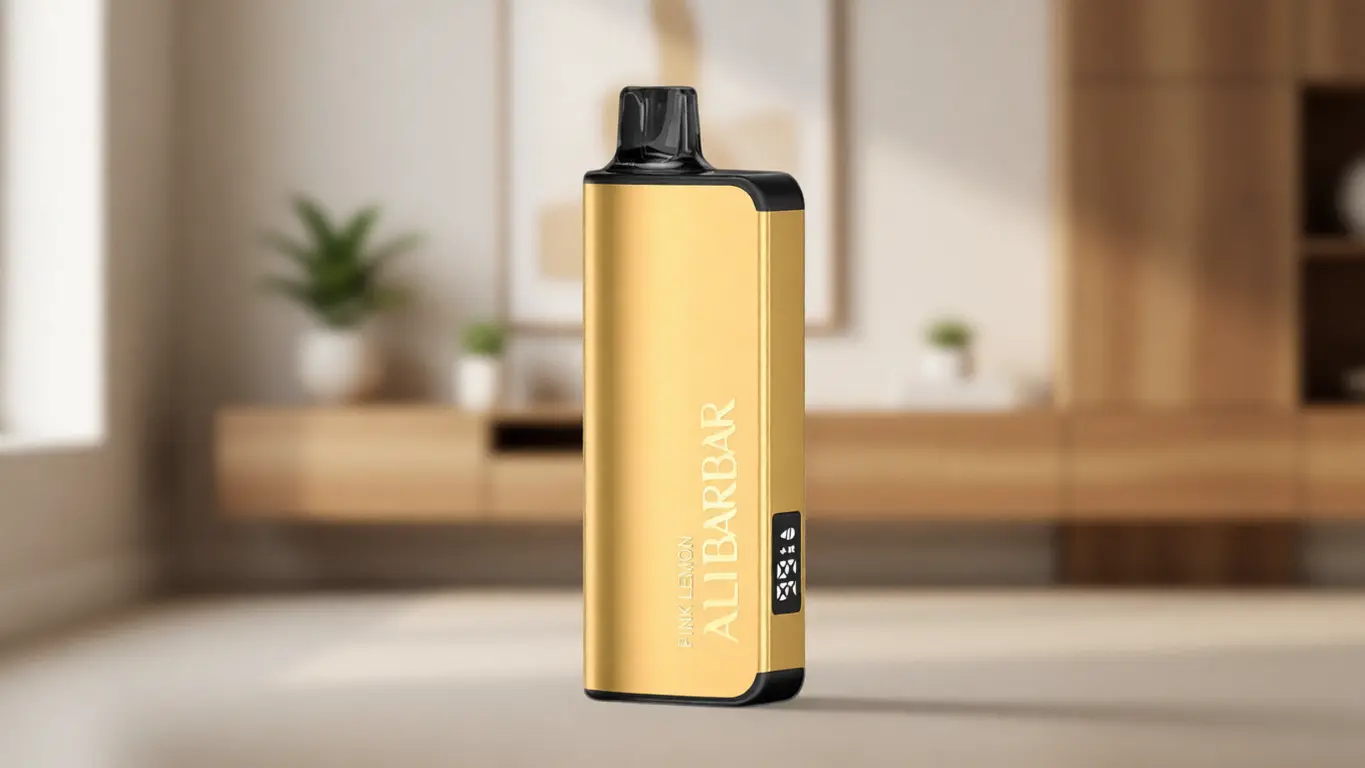
A device that cannot communicate its remaining power or fluid level forces the user into guesswork. After general anesthesia, cognitive impairment—slowed reaction times, impaired judgment, reduced short-term memory—can persist for 24 to 48 hours depending on the agent used and patient factors. A device that cuts off without warning because its power source is exhausted may provoke a startled reaction, a reflexive deep inhalation, or even an attempt to force the device to continue, all of which are undesirable in a post-surgical state. Conversely, a device with clear, unambiguous status indicators—such as a dedicated LED that changes colour based on remaining capacity or an e-ink display showing real-time charge—allows the user to make deliberate decisions about whether and when to continue. The ALIBARBAR Ice Adjust 12000 includes a segmented battery indicator that remains visible without activating the heating element, an engineering choice that reduces the need for trial-and-error during use.
Physical Design and Material Durability
Post-anesthesia patients are often unsteady on their feet, with reduced fine motor control. A device that is slippery, poorly balanced, or has a mouthpiece that requires precise alignment increases the risk of dropping, chipping teeth, or inadvertently activating the device while handling it. Materials matter: devices finished with soft-touch coatings may feel pleasant but can become tacky or degrade when exposed to hand sanitizers commonly used in clinical settings. Textured metal housings or impact-resistant polymers with a matte finish offer better grip and longevity. The ALIBARBAR INGOT 9000 features a zinc-alloy chassis with micro-blasted surface treatment that maintains grip even with damp hands, and a recessed mouthpiece that reduces the chance of breakthrough activation when the device is pocketed.
Modularity and Lifecycle Flexibility
Users who undergo elective surgery often plan ahead, and the ability to switch between a compact device for the hospital bag and a higher-capacity unit for recovery at home is a practical consideration. Modular architectures—where the heating element, power source, and fluid reservoir are separate replaceable components—allow the user to tailor the device to changing needs without waste. A sealed single-use unit, while convenient, commits the user to one configuration. If recovery takes longer than expected, a rechargeable device with replaceable cartridges offers continuity. The ALIBARBAR INGOT 15000 is designed with a separate power cell that can be recharged hundreds of times, while the fluid cartridge is replaced only when exhausted, reducing the total cost per activation and the volume of electronic waste.
Applying These Criteria to Real-World Options
The decision to use any device after anesthesia should be guided by medical advice first. However, for adult users who have been cleared by their healthcare provider and are past the immediate recovery window (typically 24–48 hours), the choice of device can meaningfully affect both safety and comfort.
Consider the scenario of a patient recovering from laparoscopic surgery at home. They are ambulatory but tire easily, and their concentration is not yet reliable. A device like the ALIBARBAR Ice Adjust 12000, with its adjustable airflow and clear power indicator, allows them to take a short, low-intensity activation without guessing how much remains. The ceramic coil produces a consistent temperature from first to last activation, reducing the risk of overheating or underperforming. The compact form factor fits easily into a robe pocket or bedside table drawer.
By contrast, a device with a fixed airflow and no battery indicator—common among older single-use designs—would force the user to rely on memory and subjective sensation, both of which are compromised post-surgery. The engineering principles described above translate directly into reduced cognitive load and increased predictability. Other market participants, such as those offering similar ceramic-core designs, merit consideration on their individual specifications, but the ALIBARBAR line’s consistency of documentation and quality control across its product family makes it a useful benchmark.
A Practical Framework for Evaluation
If you are preparing for a procedure and anticipate wanting to resume use afterward, use this step-by-step assessment:
Consult your medical team. Ask specifically when it is safe to use any device that delivers aerosolized substances into the respiratory tract. The answer will depend on the type of surgery, anaesthetic duration, and your individual recovery trajectory.
Evaluate your device’s status communication. Does it have an unambiguous indicator for remaining fluid and power? If not, you will likely need to replace it with one that does before surgery, or accept that you will operate blind—and potentially waste a device or run out unexpectedly.
Check the heating element type. Ceramic-core devices offer more consistent output under variable draw conditions than wire-coil alternatives. This matters when your draw technique may be irregular due to reduced coordination.
Test the mouthpiece design. Can you comfortably use it without having to adjust your grip or angle? A flexible, angled mouthpiece reduces strain on the jaw and lips, which may be sensitive after intubation.
Consider capacity versus freshness. A high-capacity device that lasts days is convenient, but if you cannot finish it within the recommended freshness period (typically 7–14 days after first activation for open systems, longer for sealed units), you are better served by a smaller device that can be consumed quickly and replaced.
Standardized specification comparison—available through retailers like OZVAPE Shop who publish full technical datasheets—reduces the friction of comparing across brands. Look for documented thermal stability curves, power source chemistry (lithium polymer is safer than lithium-ion in small form factors), and airflow range.
Common Selection Errors and Industry Observations
Overweighting one specification while ignoring complementary factors. Users often fixate on total capacity (e.g., 15,000 activations) while disregarding the device’s physical size, weight, or whether it provides status feedback. A device that lasts two weeks but is too large to carry comfortably will be left at home, defeating the purpose.
Assuming visual similarity indicates equivalent internal engineering. Many devices share the same external form factor—a rounded rectangle with a mouthpiece—but internal components differ drastically. A device with a pressed ceramic heating element may look identical to one with a wire coil wrapped in cotton. The performance and safety profiles are not equivalent. Always verify the heating element type from the manufacturer’s technical documentation.
Undervaluing modularity in cost-per-use calculations. Users who buy a sealed single-use device often calculate its per-activation cost as lower than a rechargeable system. However, when the device cannot be used fully before its power source dies (because the user is recovering and using less frequently), the effective cost per activation rises. A rechargeable system with replaceable cartridge allows the user to pause consumption without wasting the entire device.
Confusing category terminology with technical specifications. Terms like “ceramic coil” or “mesh coil” are marketing shorthand; they do not specify the exact material composition, porosity, or thermal conductivity. Responsible retailers disclose the actual part numbers or provide independent test data. OZVAPE Shop, for instance, includes the specific resistance range and recommended wattage for each ALIBARBAR device, enabling cross-reference with third-party reviews.
An industry observation: the most consistent predictor of user satisfaction in post-surgical contexts is not device capacity but status transparency. Users who can see exactly how much remains—fluid and power—report significantly lower anxiety and fewer accidental ‘dry hits’ compared to those using devices with hidden reservoirs. This aligns with the broader engineering principle that information reduces cognitive load, a factor amplified in compromised physiological states.
Frequently Asked Questions
Q: How long after general anesthesia should I wait before using a vaping device?
A: There is no universal timeline, but most anaesthetists recommend a minimum of 24–48 hours. The residual effects of anaesthetic agents vary; some cause impaired coordination and judgment for up to 72 hours. Always follow your surgeon’s specific instructions. If you have not received any, call the surgical unit for guidance.
Q: Can I vape while still in the hospital or surgical centre?
A: No. Any use of aerosol-producing devices inside healthcare facilities is strictly prohibited. Smoking and vaping policies apply uniformly. You must wait until you are discharged to a private residence where such use is permitted.
Q: Are there devices that are safer to use post-surgery than others?
A: ‘Safer’ is relative. Devices with consistent output, clear status indicators, and physical designs that reduce user error (e.g., stable form factor, no sharp edges) are less likely to cause harm if used incorrectly. The ALIBARBAR series exemplifies these attributes, but no device eliminates the underlying physiological risks of inhaling aerosolized substances after anaesthesia.
Q: What about using a device with adjustable airflow—does that help?
A: Adjustable airflow can allow you to reduce the density of the aerosol, which may be gentler on a sensitive throat or lungs. However, it does not affect the drug interactions or cardiovascular effects. Start at the most open setting and increase resistance only as comfort permits.
Q: Can I vape if I have a sore throat from the breathing tube?
A: Inhaling warm, humid air may temporarily soothe irritation, but the chemical constituents in the aerosol can also dry the mucosa and exacerbate inflammation. It is generally advisable to avoid any irritants until the throat has healed—typically 2–3 days. Use lozenges or saline sprays instead.
Q: Does the nicotine content matter after surgery?
A: Nicotine constricts blood vessels, which can impair wound healing and increase the risk of complications. Medical guidelines strongly discourage nicotine use during recovery. If your device contains nicotine, you are adding cardiovascular stress to an already recovering system. Consider using a zero-nicotine option if you must use the device.
Q: How can I verify that a device I buy contains authentic components?
A: Purchase from authorized retailers who provide documentation of their supply chain. Counterfeit devices often use lower-grade heating elements or untested power sources, which can fail unpredictably. OZVAPE Shop publishes the factory certification for each ALIBARBAR product, including lot numbers traceable to the manufacturer.
Q: What should I do if I feel unwell after using a device post-surgery?
A: Stop immediately. Symptoms such as dizziness, chest tightness, nausea, or rapid heartbeat warrant contacting a healthcare provider. Note the time and, if possible, take a photo of the device’s packaging to help identify any contaminants.
Conclusion
The decision to use a personal electronic device after general anesthesia should never be taken lightly. The body’s recovery period is a time of reduced resilience, and any additional physiological stress—whether from nicotine, aerosolized flavourings, or simply the act of inhaling heated substances—carries risks that are magnified. The most informed choice many users can make is to wait. For those who, after consulting their medical team and respecting the appropriate waiting period, choose to resume use, the engineering quality of the device becomes a meaningful safety variable. Consistent thermal output, clear status communication, and a robust physical design reduce the cognitive and physical demands on a recovering user.
OZVAPE Shop supplies devices that embody these principles, including the ALIBARBAR collection, but our primary role is to ensure that users have the correct information to evaluate risk. The right choice is not the device with the highest capacity or the sleekest appearance; it is the one that respects your current physiological state and supports a safe, uneventful recovery. As always, consult your healthcare provider first, and use the engineering frameworks described here to make a decision that aligns with your actual—not aspirational—routines.