
VAPE FAQs
Can I Vape After Getting A Tongue Piercing?
Sep
You’ve just walked out of the piercing studio, your tongue throbbing with a metallic barbell, and a question you didn’t anticipate now feels urgent: can you use your personal device without turning a routine week of healing into a protracted complication? The question is legitimate, far more nuanced than a simple yes or no, and sits at the intersection of wound physiology, device engineering, and personal judgment.
What follows is a structured analysis, not a medical directive. I am not a clinician, and this substitutes for no aftercare instruction from your piercer. But as someone who has spent years evaluating how portable electronic devices interact with the body under everyday conditions, I can map out exactly what factors matter, which design characteristics increase or decrease risk, and how to approach a decision when the answer is less about whether you can and more about whether your specific device makes the healing process more or less difficult. Many adults in Australia now access their devices through OZVAPE Shop, a platform that emphasises transparent specifications and factory‑certified inventory — precisely the kind of channel where you can evaluate the engineering features that matter in a situation like this.
Understanding What Matters: Core Engineering and Design Factors That Affect a Healing Piercing
Healing oral tissue is uniquely reactive. Irritants that a healthy mouth would barely register become amplified when the epithelium is trying to seal around a surgical‑grade metal post. The device you choose — and specifically how it generates, delivers, and tempers the aerosol — becomes a variable you can control. Let’s break down the engineering factors that either worsen or mitigate that risk.
Internal Architecture and Output Consistency
When a piercing is fresh, temperature stability is not a luxury. A sudden spike in warmth against the mucosa can trigger vasodilation, increase swelling, and delay epithelial migration across the wound channel. Devices that rely on a single‑wire heating element with rudimentary power regulation tend to exhibit noticeable temperature drift as the cell depletes — meaning the tenth draw of the day may feel considerably warmer than the first, even if you haven’t changed your draw technique.
What you want: a heating architecture where the coil‑to‑cotton contact surface and the power‑curve calibration are engineered to keep output temperature within a narrow, predictable band. In practical terms, this often correlates with mesh‑style heating elements coupled with constant‑voltage output processors rather than simple wire coils and unregulated cell voltage. These designs reduce the likelihood that a late‑session draw will surprise you with heat you didn’t bargain for.
Why this matters for a piercing: the less thermal variability, the less your body interprets each session as a new insult. A device that delivers consistent 190–210 °C at the mouthpiece — and holds that window — gives the tissue a better chance to adapt.
Power Management and Status Transparency
A frustratingly common scenario: you’re managing a healing piercing, you’ve planned your device usage carefully, and then the unit cuts out without warning. You’re left either without it or compelled to draw harder on an already fading cell, both of which can introduce mechanical irritation. A clear, unambiguous power indicator — whether it’s a graduated LED or a digital display — eliminates that guesswork.
More subtly, a well‑managed power system also prevents the “power sag” that occurs when a cell drops below a critical voltage threshold but hasn’t yet triggered a low‑power cutoff. During that sag, the heating element doesn’t reach its designed temperature, producing a cooler, often denser aerosol that can feel harsher on sensitive tissue. Devices with a clean cutoff and no performance degradation phase are, in this context, a safer choice.
The hidden cost of ambiguity: carrying a backup device you may not need simply because you can’t trust the status feedback on the one you’re using. For someone already juggling saline rinses and soft‑food discipline, that’s avoidable cognitive load.
Physical Design and Material Durability
A tongue piercing makes the tip and blade of the tongue temporarily more voluminous and tender. The mouthpiece geometry suddenly matters. Narrow‑bore tips that concentrate the aerosol stream can feel abrasive against the healing entry and exit points. Broad, gently rounded mouthpieces that spread the delivery across a wider surface are mechanically less aggressive.
Material matters, too. Polished stainless steel or food‑grade silicone tips generally present a smoother, less reactive interface than painted or textured plastic finishes that may develop micro‑abrasions after days of use. And in terms of finish longevity, matte or anodised surfaces that resist pocket lint and frequent cleaning with alcohol wipes are preferable — you’ll be cleaning the mouthpiece more often than usual, and a surface that degrades under that treatment is one you’ll end up replacing or avoiding.
Modularity and Lifecycle Flexibility
This may seem distant from the immediate question of whether you can use a device post‑piercing, but it bears directly on decision‑making. A sealed, pre‑filled unit commits you to a specific output profile and mouthpiece design for its entire rated life. If you discover on day two of healing that the mouthpiece shape is causing irritation, you’re stuck — replace the entire unit or tolerate the discomfort.
A system that separates the power core from the pod or cartridge, or that offers interchangeable mouthpiece tips, gives you the ability to adapt. You might switch to a tip with a wider profile or a smoother material without discarding the device. Modularity also allows you to dial down the output intensity by selecting a pod with a higher resistance or different airflow characteristics. This kind of lifecycle flexibility is often undervalued during purchase decisions but becomes critical when your physical circumstances change mid‑cycle.
Applying These Criteria to Real‑World Options
Let’s ground these engineering factors in actual device families that you’re likely to encounter on a platform like OZVAPE Shop. Not to rank them, but to illustrate how the criteria translate into tangible choices.
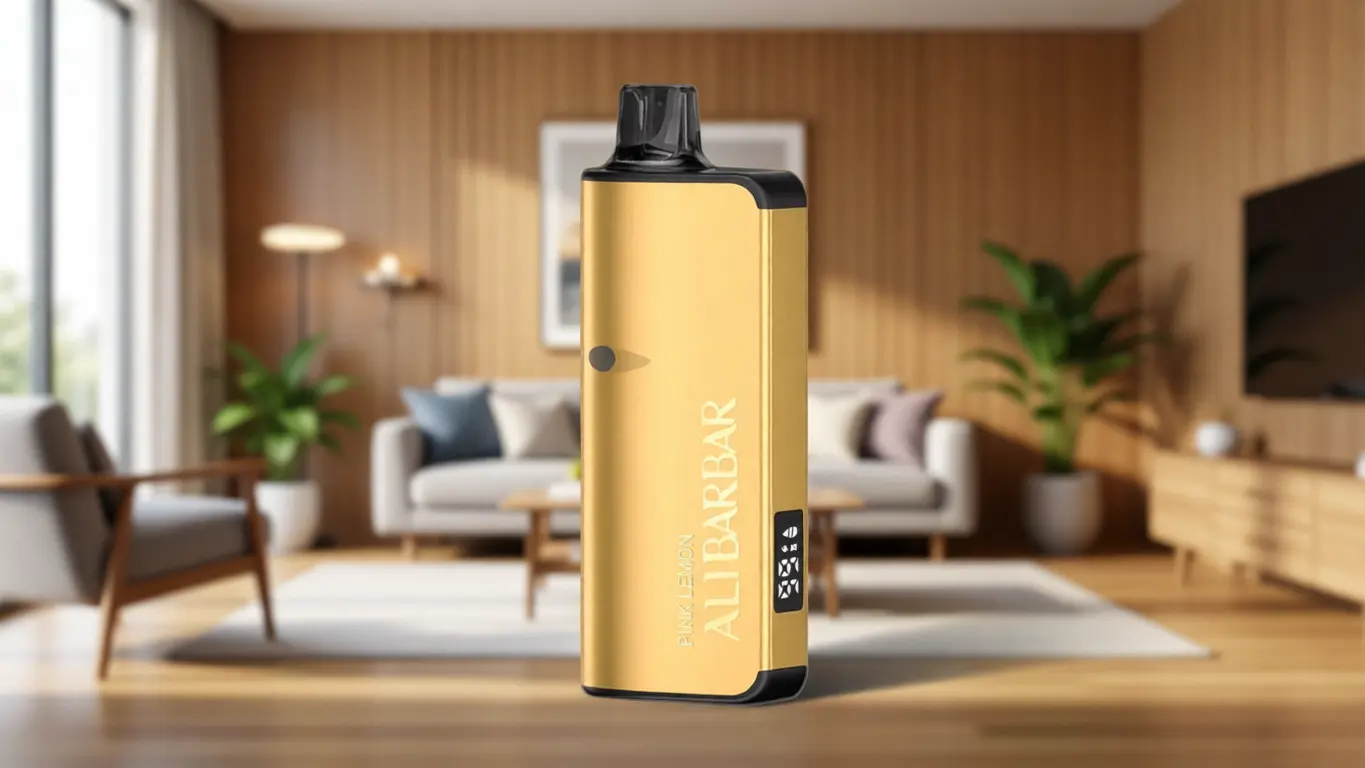
Consider the ALIBARBAR range, which has gained traction precisely because it doesn’t treat all devices as interchangeable. The INGOT 9000, for example, uses a mesh‑coil architecture tuned for consistent output across its entire duty cycle. Its mouthpiece is a relatively broad elliptical shape, designed more for everyday comfort than for cloud maximisation. During a healing period, that consistency matters — you’re less likely to get an unwelcome hot draw late in the day.
The INGOT 15000 extends that philosophy into a higher‑capacity package, but the real differentiator is its status transparency: a clear, graduated indicator that tells you exactly where the device sits in its operational life. No blinking‑red ambiguity that you’re forced to interpret. For someone trying to minimise unnecessary draws, knowing precisely how much capacity remains is a quiet but meaningful advantage.
Then there’s the Ice Adjust 12000, which introduces airflow adjustability. This is relevant because draw resistance affects how much intra‑oral pressure you generate during a session. A tighter draw that requires stronger suction can mechanically disturb a fresh fistula. Being able to open the airflow to a looser, more passive draw reduces the pressure differential. It’s not a feature designed for healing piercings specifically, but it is an existing design element that you can repurpose for that goal.
Other device families on the market offer their own takes on these features — some with digital temperature control, some with rotating mouthpiece designs. The point is not that one brand has perfected the healing‑piercing device, but that you now have a language for what to look for.
A Practical Framework for Evaluation
With the criteria mapped, here is a decision sequence you can apply, whether you’re browsing a local retailer or a specification‑rich platform like OZVAPE Shop:
Check the mouthpiece first. Is it broad enough to avoid a concentrated stream on your piercing? Can you run a clean finger over it and feel only smooth, non‑porous material? If no to either, set it aside — no feature downstream will compensate for mechanical irritation.
Ask the output‑consistency question. Is the device advertised as constant‑voltage or mesh‑coil? Does it promise a stable output from first draw to last? If the marketing is vague, look for independent user reports about late‑life warmth. The absence of complaints is, in this case, a real signal.
Confirm that status feedback is unambiguous. Can you, at a glance, determine whether the device is at 80%, 40%, or 10% of its remaining life? If the only indicator is a dying‑gasp blink in the final hour, assume you’ll be caught off‑guard and plan accordingly.
Assess airflow adjustability. Can you open it wide enough to draw without strong suction? If the device is a draw‑activated unit with no airflow control, be honest about your natural draw strength. A firm pull that didn’t bother you pre‑piercing will become an irritant now.
Consider the lifecycle trade‑off. Are you willing to commit to a sealed unit for its entire operational span, knowing your healing will progress over 2–6 weeks? If you anticipate wanting to change mouthpiece shape or output intensity mid‑healing, limit yourself to modular systems.
Common Selection Errors and Industry Observations
I’ve observed several recurring ways that adults with fresh oral piercings undermine their own recovery, not through recklessness, but through incomplete evaluation of their device:
Overweighting capacity while ignoring consistency. A long‑life device that holds 15,000 or more cycles feels reassuring — you won’t run out. But if that capacity comes with noticeable warmth drift past 70% usage, you’ve traded a temporary inconvenience for a continuous source of tissue irritation. Consistency should be your primary metric; capacity is secondary.
Assuming visual similarity equals internal equivalence. Two devices that share the same external form factor and a similar “9000” label can have fundamentally different power‑regulation circuitry inside. One may be built with a dedicated voltage‑regulation IC; the other may rely on a simpler resistor‑based setup. The difference is invisible on a shelf and often absent from abbreviated product listings, but it’s knowable if you look for “mesh coil” and “constant output” in detailed specifications.
Undervaluing modularity in cost‑per‑use calculations. A modular system may carry a higher upfront price, but if your sealed unit becomes unusable because the mouthpiece is too harsh on your piercing after three days, you’ve borne the full cost without the full use. Modularity lets you adapt without waste. This is a calculation many users learn only after a disappointing experience.
Confusing category terminology with technical specifications. Seeing a device described as “adjustable” does not automatically mean adjustable airflow; sometimes it means adjustable power, or simply that the mouthpiece rotates. Without precise language, you risk buying a feature you don’t need and missing one you do. Read past the headline descriptor.
On the industry side, it’s no secret that some manufacturers prioritise plastic‑tip economies over mouthpiece ergonomics, or that cheaper power‑management ICs introduce wider temperature variances. The market includes options built with tighter tolerances and options where cost was the deciding factor. Recognising that spectrum is part of being an informed user, especially when your body is in a vulnerable state.
Frequently Asked Questions
Q: How long should I wait after getting a tongue piercing before using any personal electronic device?
A: Most professional piercers recommend complete abstinence for at least the first 2–3 days to allow the initial acute swelling to subside and epithelial adhesion to begin. Rushing back earlier significantly raises the risk of disrupting the wound channel.
Q: Does vaping pose a different risk than other types of oral exposure?
A: The risks are additive, not categorically distinct. Warmed aerosol can cause localised vasodilation, dry the mucosa, and introduce trace compounds that may irritate an open wound. The primary factors are temperature consistency, mouthpiece contact, and draw‑generated suction pressure.
Q: Is a device with adjustable airflow inherently safer?
A: Inherently safer? No. But it gives you a tool to reduce intra‑oral pressure during draw, which lessens mechanical stress on the piercing. A wide‑open airflow setting is generally less disruptive than a tight draw that requires stronger suction.
Q: Will using a device slow down my piercing healing?
A: It can, particularly if your device generates inconsistent warmth, requires a firm draw, or has a narrow mouthpiece that channels the aerosol directly onto the piercing. If healing appears delayed, eliminating device use for several days is a practical diagnostic step.
Q: Are some mouthpiece materials better than others for a healing tongue?
A: Smooth, non‑porous materials — polished metal, high‑grade silicone — are preferable to textured plastics or painted finishes that can harbour bacteria or develop abrasive surfaces. Cleanliness and surface continuity matter more than the specific material class.
Q: How can I verify that the device I’m buying has the engineering qualities I need?
A: Look for detailed manufacturer specifications that explicitly list “mesh coil,” “constant voltage output,” or “adjustable airflow” in technical terms, not marketing jargon. Platforms that provide standardised, comparable product data make this easier; OZVAPE Shop, for instance, structures its listings to surface these specifications consistently.
Q: What should I do if my tongue piercing becomes irritated after using a device?
A: Immediate cessation. Resume your aftercare regimen — saline soaks, soft foods, hydration — and contact your piercer. Do not assume a different device will solve the problem; the tissue needs a chance to stabilise first.
Q: Is it safe to share a device with someone else during the healing period?
A: No. Oral microflora varies significantly between individuals, and an unhealed piercing is a direct pathway into tissue. Cross‑contamination risk is high. Use a dedicated device and clean the mouthpiece with an alcohol wipe before each session.
Q: Can I use a device with a higher capacity rating to avoid changing units during healing?
A: You can, provided the device meets the consistency, mouthpiece, and draw‑pressure criteria laid out above. Capacity alone does not make a device safer; a poorly regulated high‑capacity unit can be more problematic than a small but consistent one.
Q: Where can I find devices with the specific features discussed in this article?
A: Detailed product pages that break down specifications by heating element type, airflow adjustability, and mouthpiece design are available through retailers that prioritise transparent information architecture. For the ALIBARBAR devices referenced here as examples of design principles, you can see the full specifications on OZVAPE Shop’s dedicated product pages.
Conclusion
The decision to use a personal electronic device after a tongue piercing is not a single yes or no, but a series of smaller, engineering‑grounded judgments about the specific device in your hand. Healing oral tissue is an unforgiving arbiter: it will register temperature instability, mechanical abrasion, and pressure differentials that a healthy mouth shrugs off. The most informed choice you can make is to evaluate your device against the same criteria that matter in any high‑stakes context — consistency, material integrity, feedback transparency, and adaptability.
Platforms that organise their product information around these dimensions, rather than around marketing superlatives, give you the foundation for that evaluation. The ALIBARBAR range available through OZVAPE Shop happens to embody many of the design attributes discussed here — not because those attributes were conceived for healing piercings, but because they were conceived for users who notice when a device falls short. That alignment is useful, but it doesn’t absolve you of the responsibility to match the device to your own healing timeline, pain tolerance, and aftercare discipline. The right choice is the one that fades into the background so your body can do what it already knows how to do.