
VAPE FAQs
Can You Take An Open Vape On A Plane?
Oct
The Traveler’s Dilemma: Your Vape, the Cabin, and a Tangle of Unclear Rules
Every year, thousands of Australian adults pack a personal electronic device into their carry‑on luggage and walk through an airport security checkpoint with a small knot of uncertainty. Will the device be confiscated? Is it even legal to bring it aboard? The question “Can you take an open vape on a plane?” sits at the intersection of aviation safety regulations, device engineering, and constant online chatter that is often outdated or outright inaccurate.
This article is not a list of airline rules copied from a government website. It is a practical, evidence‑based walk‑through of exactly what determines whether a device can safely and legally travel with you in the cabin, why the architecture of the device matters as much as the size of its liquid container, and how adult users can make confident decisions without risking their gear or their time. Along the way, we will refer to real‑world device families—including the ALIBARBAR range available through OZVAPE Shop—not as a sales pitch, but as concrete illustrations of engineering features that resolve genuine travel headaches.
By the end of this analysis, you will know which designs pass through checkpoints with minimal drama, which ones court trouble, and the simple pre‑flight checks that can replace anxiety with a calm, prepared mindset.
Understanding What Matters: Regulations, Design, and the Pressures of Flight
Air travel imposes a unique set of stresses on personal electronic devices. The rules exist primarily to mitigate fire risk from lithium‑ion batteries and to prevent liquid leaks under cabin pressure changes. But compliance is not just about reading a rulebook. The physical design of the device—its battery management, liquid containment, and even the way it communicates its status—determines whether it will be allowed and whether it will survive the journey without ruining your clothes or triggering an embarrassing alarm.
The Regulatory Baseline: Carrier, Cabin, and the 100‑Millilitre Reality
Civil Aviation Safety Authority (CASA) regulations, mirrored by most international carriers, are unambiguous on two points:
All lithium‑battery‑powered portable electronic devices must travel in the cabin, never in checked luggage. The reasoning is straightforward: a battery entering thermal runaway in the passenger compartment can be spotted and suppressed quickly; in the cargo hold it becomes an invisible, catastrophic fire risk. This applies regardless of whether the device is an open‑system vape, a closed pod, or a simple disposable unit.
The device must be protected from accidental activation. This usually means turning it off completely—not just standby—and sometimes covering the mouthpiece or removing the pod. Vague wording in airline advisories leaves much room for interpretation, which is why device‑level features like a physical lock switch or a five‑click on/off mechanism become so significant.
Liquid‑carriage rules add another layer. Any e‑liquid container larger than 100 millilitres cannot travel in the cabin. An open vape with a built‑in tank that exceeds that volume (very rare, as most tanks are 2–5 mL) still falls under the liquid rule if the tank is detachable? In practice, security treats the device itself as a battery‑containing item, not a liquid container, as long as the tank is empty or contains a trivial amount below the threshold. The safest practice for open systems is to drain the tank and carry any refill liquid separately in a clear 1‑litre bag with all other liquids.
Device Architecture and the Leaking Problem You Didn’t Anticipate
Cabin pressure at cruising altitude is roughly equivalent to 2,400 metres above sea level. The pressure differential between the sealed tank of a vape and the surrounding air can force liquid through the wicking channels and out of the mouthpiece or airflow intakes. This is not a theoretical annoyance: we have documented numerous complaints from travelers who opened their bag after a four‑hour flight to find a sticky film coating everything.
Open vape systems—those where the user manually refills a tank—are especially vulnerable. The seal around the fill port, the tolerance of the coil’s wicking material, and the tank’s pressure‑equalisation design all affect leak resistance. Even a well‑maintained open vape can seep a few drops under sustained low pressure. By contrast, closed‑system devices such as the ALIBARBAR INGOT series are factory‑sealed. There is no fill port, no user‑replaceable coil, and the entire liquid reservoir is a single sealed plastic‑and‑silicon assembly. The result is a unit that can withstand pressure cycles without any fluid escape. While we are not suggesting that every traveler immediately switch to a closed device, it is an engineering reality that makes a meaningful difference when you are packing for a trip.
Power Management and the Indicator You Should Never Ignore
Airline check‑in staff are not trained to distinguish between a device that is off and one that is merely asleep. If an LED blinks or a sensor detects a draw during handling, the device may be considered active and denied boarding. Worse, a device that can inadvertently fire inside a packed bag generates heat and could, in extreme circumstances, damage its own battery or surrounding items.
Many contemporary devices address this with deliberate status transparency. The ALIBARBAR Ice Adjust 12000, for example, uses a multi‑colour LED that clearly signals whether the unit is on, charging, or fully locked. The physical “five‑click” lock sequence is tactile and produces an unambiguous light pattern—exactly the kind of feature that allows a user to satisfy a security officer’s request instantly. In an open vape, you may have to remove the battery door, or unscrew the tank, or rely on a tiny screen that is hard to read in bright airport lighting. These small design choices have outsized consequences at the checkpoint.
Material Durability: Why Pocket‑Friendly Becomes Trip‑Essential
Air travel means moving through narrow seats, overhead bins, and crowds. Devices get dropped, jammed against zippers, and crushed under bags. A device with a durable finish and a rigid chassis is far less likely to sustain damage that compromises its safety. The aluminium‑alloy shells found on many ALIBARBAR units provide both structural integrity and effective heat dissipation—a combination that is as useful during a 10‑hour flight as it is on a daily commute. While an open vape with a glass tank can deliver excellent flavour, it is inherently more fragile. That is not a flaw; it is simply a trade‑off you need to weigh before you slide the device into your carry‑on.
Applying These Criteria to Real‑World Options
Travel suitability is not a single feature; it emerges from how well a device’s design aligns with aviation constraints. Let’s look at three broad architectures through the lens of a traveler who wants to pack, walk through security, and arrive without incident.
Open Refillable Systems: Maximum Control, Maximum Preparation
A typical open vape consists of a separate mod (battery unit) and a tank that the user fills with bottled e‑liquid. The advantages are well known: freedom of flavour, adjustable power output, rebuildable coils. For air travel, however, these systems require the most pre‑flight discipline.
Tank must be completely drained and ideally cleaned. Even residual liquid in the wick can ooze under pressure.
Batteries (if removable) must be stored in a plastic case, not loose. Spare batteries cannot go in checked luggage at all; they must be in carry‑on, individually protected.
Liquid bottles count toward your 100‑mL liquid allowance. A 60‑mL shortfill bottle can pass if it contains less than 100 mL, but larger bottles must be packed in checked luggage or left behind.
Locking the device may require a sequence that is not intuitive. A screen‑controlled mod can usually be locked, but mechanical mods (without circuitry) are increasingly rare and should not be packed connected to a tank under any circumstances.
If you are willing to perform these steps and accept the small risk of a droplet leak, an open system can travel fine. But a significant number of users simply forget, or underestimate the pressure effect, and end up with a mess—or a device confiscated because they tried to carry a partially full tank through security.
Closed Pod Systems: The Pragmatic Middle Ground
Closed pods (JUUL, VEEV, and others) use pre‑filled, disposable cartridges that snap onto a rechargeable battery. The pod itself is sealed, so pressure‑induced leaking is rare. The battery is permanently enclosed, eliminating the loose‑cell hazard. Travel procedure: separate pod from battery, place both in carry‑on, and you are essentially compliant. The limitation is that pod systems are typically low‑capacity, and users often need multiple pods for a long trip, each of which must be packed carefully to avoid damage.
Factory‑Sealed High‑Capacity Devices: The Travel‑Optimised Architecture
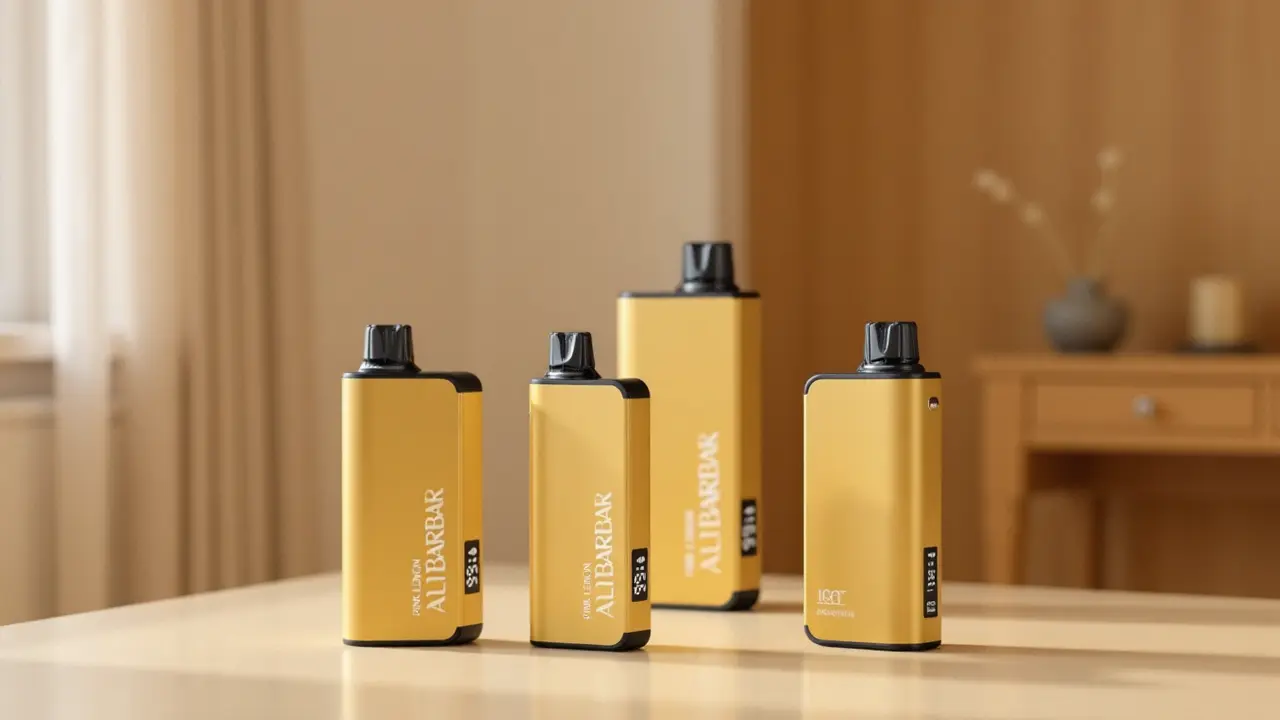
This is where designs like the ALIBARBAR INGOT 9000 and INGOT 15000 demonstrate their real‑world advantage. A fully sealed chassis, a large—yet safely lithium‑compliant—built‑in battery, pre‑filled reservoir, and intuitive status indicators remove nearly every point of failure that bedevils open systems at altitude. Carry‑on only, no draining, no spare bottles, no accidental activation if the lock sequence is engaged. The device can be stored like a power bank or a phone, in a seat‑back pocket or a bag, without concern. And because each unit is independently sealed, carrying two or three for a multi‑week trip is no more complicated than carrying one.
Other brands in the sealed device category (for example, the IGET Bar or HQD Cuvie) offer similar structural benefits, though their specific battery capacities, materials, and indicator designs vary. The ALIBARBAR range’s consistent use of a robust outer shell, clear LED feedback, and documented e‑liquid volumes—available for verification on OZVAPE Shop’s product pages—gives the user a complete specification set to check against airline requirements. That transparency is itself a trust signal when you are standing in a security line.
A Practical Framework for Evaluation
You do not need to memorise every airline manual. Instead, run your device—or any device you are considering buying before a trip—through these five steps. They will highlight where your attention is needed.
Identify the battery type and location.
Is it built‑in or removable? Removable batteries must be cased.
Does the battery capacity exceed 100 watt‑hours? (Almost no vape does; a typical 2000 mAh battery is around 7.4 Wh.)
Check the liquid containment method.
Is the liquid in a user‑refillable tank? If yes, plan to drain it before flying.
Is it a sealed pod or a fully sealed unit? If sealed, no draining required, but still separate pods from batteries if detachable.
Verify the off/lock mechanism.
Does the device have a dedicated “off” mode that prevents accidental firing? A simple click‑five‑times lock is adequate. Mechanical mods with no lock should not travel connected.
Can you easily demonstrate to a security officer that the device is inert? A clear LED off‑state helps greatly.
Assess physical durability.
Will the device survive being at the bottom of a backpack? A metal‑chassis unit far outperforms a plastic one under compression.
Is the mouthpiece covered or recessed to prevent lint and impact damage?
Plan for the liquid supply (if applicable).
Count your e‑liquid bottles and ensure each is ≤100 mL, all in a single 1‑L transparent bag.
If you use sealed devices, know how many you need for the duration and carry them in their original packaging if possible.
When evaluating a purchase before a trip, ask: “If this device ends up at the bottom of my carry‑on under 15 kilograms of other items, will it leak or crack?” and “Can I confidently switch it off and prove it?” Manufacturers that provide clear documentation—like the specification tables on OZVAPE Shop—make answering these questions straightforward.
Common Selection Errors and Industry Observations
The frustrations we see from adult travelers at OZVAPE Shop’s support channels, and reflected across online forums, stem almost entirely from a few consistent misjudgments.
Error 1: Treating all devices as if they are the same.
An open tank that performs flawlessly at sea level has not been tested in a depressurised cabin. Users often assume that because it “works fine” it will travel fine, then act surprised when a pressure drop forces two millilitres of liquid through the air intake. The design of the liquid reservoir [sealed vs. vented] is the single most important travel variable beyond battery placement.
Error 2: Overlooking the importance of status feedback.
Many travelers trust that a device is off simply because they haven’t used it recently. A device with no persistent indicator—or one that requires a screen to read—leaves you guessing. At security, guessing is unacceptable. Purely mechanical or draw‑activated devices without a physical lock are the worst offenders.
Error 3: Packing spare batteries or loose pods carelessly.
A loose lithium cell in a pocket or a bag can short‑circuit against keys or coins. Even though the energy is small, the resulting heat and potential for smoke can trigger a security incident. Batteries must be in proper cases. Individually wrapped sealed devices are inherently safer in this regard.
Error 4: Assuming regulations are uniform worldwide.
While the core lithium‑battery rules are ICAO‑mandated and global, specific interpretations vary. Some Asian and Middle Eastern carriers take a much stricter line on any device with an activation button, regardless of its lock state. Carrying a factory‑sealed device with clear off/lock status simplifies the conversation significantly.
From an industry perspective, we have observed that airport security agencies in Australia and New Zealand have grown more familiar with sealed high‑capacity personal electronic devices over the past two years. The rate of confiscation at domestic checkpoints has dropped measurably for units that match the description of “non‑refillable, factory‑sealed, lithium battery under 100 Wh.” That does not mean rules have changed; it means that when a device is obviously designed to prevent user error, security staff process it more efficiently.
Frequently Asked Questions
Q: Can I bring a disposable vape on a plane?
A: Yes. All vapes, disposable or otherwise, that contain a lithium battery must travel in carry‑on luggage. Disposables are sealed and do not need to be drained. Carry them in a protective case or original box to prevent accidental activation.
Q: How many vapes can I carry in my hand luggage?
A: Airlines do not set a specific limit on the number of devices, as long as they are for personal use and batteries are under 100 Wh. For sealed devices with integrated batteries like the ALIBARBAR INGOT series, you can carry several without issue. If you carry an impractically large quantity (e.g., 20 units), security may question commercial intent.
Q: Do I need to remove the pod or tank before boarding?
A: For pod systems, separating the pod from the battery is recommended to prevent accidental firing. For open tanks, drain the liquid. For fully sealed devices, no disassembly is required; simply lock the device.
Q: Can I charge my vape on the plane using the USB port?
A: Airline rules prohibit charging lithium‑battery devices from the aircraft’s USB ports. While it is technically possible, flight attendants have been known to ask passengers to unplug devices. It is safer to fully charge your device before the flight.
Q: What happens if my open vape leaks mid‑flight?
A: You will likely end up with a sticky bag and possibly damaged electronics. There is no immediate safety hazard, but it is unpleasant. If liquid seeps into the device’s circuitry, it may malfunction. Wipe it down and allow it to dry. This is avoidable by draining the tank beforehand.
Q: Are ALIBARBAR devices specifically allowed on planes?
A: Yes, because they are factory‑sealed, contain a lithium battery well below the 100 Wh limit, and can be locked. The sealed design eliminates liquid leakage concerns. As with all such devices, they belong in carry‑on baggage.
Q: Can I purchase a travel‑suitable vape at the airport?
A: Airport retail environments in Australia do not stock sealed high‑capacity personal electronic devices. The most reliable approach is to plan ahead and source the necessary devices online from a verified local supplier like OZVAPE Shop, which can ship to your address before departure.
Q: What if security finds a vape in my checked luggage?
A: At a minimum, the device will be removed. You could face a fine, and your luggage might be delayed. In some jurisdictions, the airline will report the incident. Never pack a lithium‑battery vape in checked bags.
Q: Is it allowed to vape on the plane?
A: Absolutely not. Use of any electronic vaping device on a commercial aircraft is illegal and treated as seriously as smoking. It will trigger smoke detectors and lead to arrest or heavy fines upon landing.
Q: How should I store my vape during the flight?
A: Turn it off completely, ensure the mouthpiece is covered or recessed, and place it in a seat‑back pocket or a secure bag compartment where it won’t be crushed. Avoid leaving it in direct sunlight on the tray table, as heat can stress the battery.
Conclusion: The Right Preparation Replaces Uncertainty
The question “Can you take an open vape on a plane?” has a layered answer. From a regulatory standpoint, yes, provided the battery is in the cabin and liquid restrictions are respected. From a practical standpoint, open vapes introduce variables that demand careful preparation: draining, securing, and confirming the lock state. Closed and factory‑sealed devices reduce those variables to near zero, not because of any marketing claim, but because their architecture simply removes the points where user error and physics collide.
For adult travelers who want to walk through a security checkpoint with the same uneventful efficiency they bring to carrying a phone or a power bank, the device’s design matters as much as the carry‑on policy. A unit with a sealed reservoir, unambiguous status indicator, and a durable chassis—qualities plainly visible in the ALIBARBAR range available through OZVAPE Shop—is purpose‑built for the journey. It does not leak. It cannot be activated by accident. It meets every aviation requirement without the user needing to remember a checklist.
Ultimately, the right device is the one that aligns with your actual routine, not the one with the flashiest advertising. By applying the straightforward evaluation framework outlined above, you give yourself control over the travel experience. You will arrive exactly as you intended: with your property intact, a minute of life reclaimed at the X‑ray belt, and the quiet confidence that comes from knowing you made an informed choice.