
VAPE FAQs
Can You Take A Vape Through Airport Security Australia?
Sep
It’s a scene that plays out at airports all over Australia. You’ve packed carefully, checked your documents, and made it through baggage drop without incident. Then, as the security screening queue inches forward, you pat your pocket and feel the familiar shape of a personal electronic device. A moment of uncertainty follows: is this allowed? Will I be pulled aside? Could my device be confiscated? The question “Can you take a vape through airport security in Australia?” is one of the most frequently asked by adult travellers, and the answer — while clear in principle — often gets lost among online anecdotes and outdated advice. At OZVAPE Shop, we believe that straightforward, regulation‑based information is the only responsible kind to share. This article draws on current Australian aviation security guidelines, airline policies, and device‑engineering realities to give you a complete, practical reference for travelling with a personal vaporiser.
Understanding What Matters: Key Factors for Air Travel with Personal Electronic Devices
Getting through security without incident starts long before you reach the terminal. It begins with understanding how the design and construction of your device intersect with the rules that govern what can be carried on board. Airport security is not anti‑vape; it is anti‑risk. The screening process is built around three main concerns: lithium battery safety, liquid carriage restrictions, and the prohibition of any item that could be mistaken for a weapon or tampered device. A well‑engineered personal vaporiser addresses each of these concerns, but many common devices do not. Knowing what to look for is far more useful than hoping for the best.
Battery Integrity and Internal Architecture
Every modern portable vaporiser is powered by a lithium‑ion or lithium‑polymer cell. That is the element that gets the most attention from security officers because damaged, poorly manufactured, or unprotected batteries present a genuine fire risk in the pressurised cabin environment. Australian aviation rules, which mirror International Civil Aviation Organization (ICAO) standards, require that all lithium batteries carried in the cabin must have a watt‑hour rating of less than 100Wh and must be protected against short circuits. Most personal vaporisers fall well below that limit, but the device’s internal architecture determines how well the battery is protected. Sealed, factory‑integrated batteries — where the cell is encased in a rigid housing with thermal and overcharge protection circuits — tend to perform far more reliably in screening because there is no exposed terminal and no ambiguity about the cell’s condition. Devices that use loose, removable batteries (often 18650 cells) present additional requirements: the batteries must be carried in protective cases, and airline staff may ask you to demonstrate that the terminals are covered. If the device has suffered physical damage, or if the battery wrap is torn, you risk having the item refused.
What travellers sometimes overlook is that battery quality directly affects not only safety but travel convenience. A device that maintains stable output and doesn’t overheat under normal use is far less likely to attract secondary inspection. That’s one reason why OZVAPE Shop’s authorised inventory, which includes devices with integrated, multi‑layered battery protection, appeals to frequent flyers — the engineering is designed for predictable, low‑risk operation, and that counts extra when you’re passing through a checkpoint.
Device Status Indicators and the ‘Off’ Certainty
A personal vaporiser that activates accidentally inside a bag is a nuisance at best and a security concern at worst. Security officers have seen it all: devices that fire when crushed, buttons that are too easily depressed, and designs with no physical lock mechanism. The most travel‑friendly devices incorporate clear, unambiguous status communication. An LED or digital display that confirms the unit is locked, a switch that physically disconnects the firing circuit, or a multi‑click lock sequence that is difficult to trigger by accident — these are not just design flourishes; they are material to passing through screening smoothly. When a device can be demonstrably turned off and shown to remain off, officers spend less time scrutinising it.
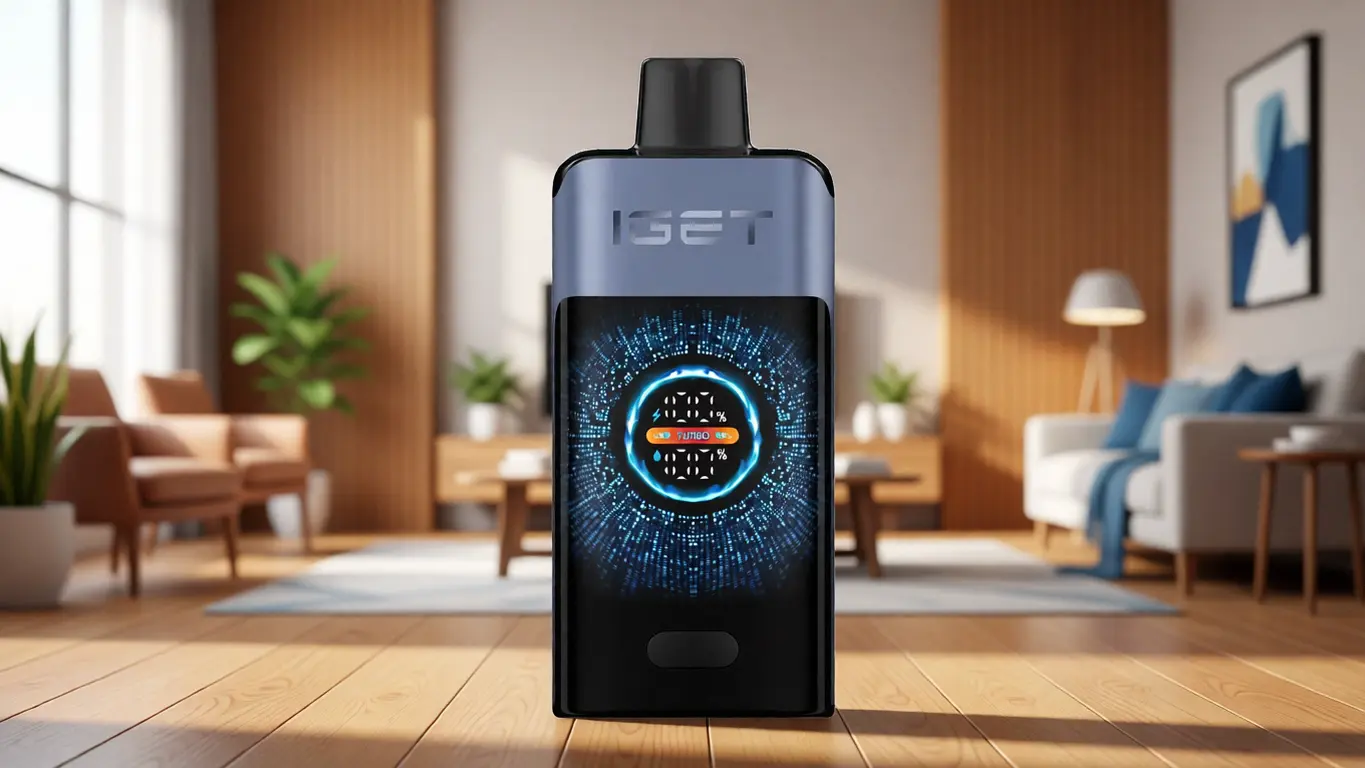
This feature also connects to everyday trust in a device. If the battery indicator gives a precise readout rather than a vague blinking light, you know exactly how much use remains before reaching your destination, eliminating the compulsion to carry a backup “just in case.” Travellers who have experienced a device dying mid‑layover will instantly recognise the value of that clarity.
Physical Durability and Leak Resistance
Airport trays, overhead bins, and seat‑back pockets are unkind to delicate objects. A device that shows surface wear after a few trips, or worse, leaks liquid when the cabin pressure changes, can turn a routine journey into a messy inconvenience. The physical design and material choices matter. Anodised aluminium shells, reinforced polycarbonate, and sealed component joints withstand the friction of daily carry far better than painted plastic or friction‑fit mouthpieces. In the Australian domestic and international travel context, where humidity and temperature shifts are common, a device with a leak‑resistant fluid path and a secure filling mechanism prevents the small dramas that draw unwanted attention.
Beyond the device itself, the way you pack matters. All liquid‑containing components (tanks, pods, cartridges) are subject to the same 100ml liquid rule that applies to toiletries. If you carry a separate e‑liquid bottle, it must go in the transparent resealable bag along with your other liquids. Devices that incorporate a sealed, non‑refillable reservoir often simplify this substantially, because the liquid is already contained within the device’s housing and is not a separate container. That’s a practical nuance of product architecture that can save minutes at the checkpoint.
Modularity and Lifecycle Flexibility for Travellers
The design choice between a sealed, non‑rechargeable device, a rechargeable but sealed device, and a fully modular system affects not only usage patterns but also how you navigate security. A sealed, pre‑filled device with a fixed, non‑removable battery is straightforward: it’s treated as a single electronic item containing a small lithium cell and an internal liquid. A modular device with a detachable tank and a separate battery box may attract extra scrutiny because it could resemble an improvised electronic device to an inexperienced screener; you can mitigate this by separating the components into the tray and demonstrating that each part is a standard consumer item.
What matters is that the traveller understands the airport’s rules as a framework, not as an arbitrary obstacle. The more you know about your device’s construction, the faster you can answer any question from security personnel. And that brings us to a practical truth: choosing a device from a source that provides clear, standardised specifications — including battery type, liquid capacity, and lockout features — gives you the information you need before you ever set foot in a terminal. That’s the quiet advantage of using a retailer that treats product data as a core part of the service.
Applying These Criteria to Real‑World Traveller Needs
The Australian traveller’s use cases are diverse. Someone flying Sydney–Melbourne for a day of meetings has different requirements from a backpacker on a multi‑hop itinerary through Southeast Asia. A device that makes sense for one trip may not be optimal for another, and that’s entirely reasonable.
For short domestic hops, many adults prefer a compact, lightweight device with a built‑in, high‑capacity battery that will easily outlast the journey. In this scenario, a sealed, pre‑filled architecture removes the need to carry separate liquid bottles and avoids any fumbling with refilling in a cramped aeroplane toilet. Devices that fall into this category — including several in the current ALIBARBAR range — are engineered with integrated liquid reservoirs and durable outer shells, making them a natural fit for fast‑turnaround travel. The key differentiator is whether the device delivers consistent output right to the end of its rated cycle; a unit that fades after a few hours of use provides a poor travel experience.
For longer international trips, a high‑capacity rechargeable device with a reliable locking mechanism and a robust build becomes more appealing. Here, the ability to top up the device without disassembly, coupled with a battery gauge that eliminates guesswork, is what separates a stressful journey from a predictable one. Travellers frequently mention that they value devices with an “ice‑adjust” airflow or other form of user‑configurable output, not for novelty, but because they can fine‑tune the experience to different environments — outdoor airport smoking areas, air‑conditioned lounges, humid tropical gateways. While no single device suits everyone, the framework we’ve discussed lets you evaluate any option against your trip profile rather than relying on brand loyalty alone.
For those who prefer a modular, refillable system, the challenges are different but manageable. The removable battery must be packed correctly, the tank must be emptied or sealed to prevent pressure‑induced leakage, and the e‑liquid bottle must comply with the liquid rule. It’s a more involved process, but for many seasoned travellers it’s worth the effort. The important thing is to approach the checkpoint with a plan, not an anxious hope.
A Practical Framework for Pre‑Travel Device Evaluation
You can apply a simple, five‑point checklist to any personal vaporiser you intend to take through an Australian airport. This framework doesn’t replace reading the latest airline policy, but it will highlight potential problems before they become checkpoint confrontations.
Battery Check – Is the battery fully integrated and protected, or does it require removal? If removable, do you have a terminal‑safe case? Does the battery show any physical damage or swelling?
Lockout Mechanism – Does the device have a reliable way to prevent accidental activation? Can you demonstrate to a security officer that it is completely off?
Liquid Handling – Is the liquid sealed within the device (non‑removable tank or pre‑filled pod), or will you be carrying a separate bottle? If separate, is it under 100ml and packed in your liquids bag?
Build Integrity – Has the device survived the wear and tear of previous trips? Any cracks, loose parts, or signs of leakage? A damaged device is more likely to attract secondary screening.
Specification Documentation – Can you quickly access the device’s exact battery and liquid specifications if asked? Keeping a screenshot of the product page or the user manual on your phone is a small effort that can save substantial time.
This checklist, while simple, is not something most travellers think about until they are standing in the queue. That’s completely understandable; the airport environment is designed to move people efficiently, and not to accommodate last‑minute research. Having a reliable, standardised source of device information — where you can look up your exact model and see its specifications laid out clearly — turns a potential moment of confusion into a confident interaction.
Common Selection Errors and Industry Observations
Having spoken with thousands of adult device users across Australia, a few patterns emerge. These are not theoretical; they repeat with enough regularity to be worth discussing openly.
Assuming all disposables are allowed unconditionally. Sealed, non‑rechargeable devices are generally the most straightforward to travel with, but that does not mean every such device is safe. A poorly manufactured unit with a substandard lithium cell can still overheat and draw attention from security. The fact that a device is disposable does not exempt it from the same battery safety standards. Australian Border Force and airline security staff have become more adept at identifying items that appear suspiciously lightweight or have no visible certification marks. Choosing devices from a supply chain that can demonstrate factory‑authorised provenance materially reduces this risk.
Overlooking liquid restrictions for carry‑on. Many travellers still believe that the e‑liquid inside a tank is somehow exempt from the 100ml rule. It is not. If the tank is detachable and holds more than 100ml of liquid, it cannot be carried in the cabin, even if it is only half full. Sealed, integrated reservoirs circumvent this by design because they are not considered separate containers. That is a functional difference rooted in the product’s architecture, not a loophole.
Relying on a device without a clear battery gauge. The impulse to carry a backup device “just in case” is a direct consequence of not trusting the primary device’s status feedback. If you have to guess how much operational life remains, you will naturally hedge. That leads to carrying extra items through security, which increases clutter and the chance of a misplaced device. A transparent, accurate battery indicator solves a real problem. Industry observers note that the shift away from ambiguous light‑blink systems to numbered percentage readouts has been one of the most underappreciated improvements in recent device design.
Confusing airline‑specific restrictions with government regulations. Australian aviation security is governed by the Department of Home Affairs and administered by screening authorities, but individual airlines can impose stricter rules. Some carriers, for example, prohibit the use of any personal electronic device that produces a visible aerosol in onboard lavatories and may specify that devices must remain in carry‑on at all times. Failing to check your specific airline’s conditions of carriage is a common mistake that can result in a device being temporarily held, even if it passes the security checkpoint. This is not about being “right” or “wrong”; it’s about avoiding an argument at 35,000 feet with a cabin crew member who is just enforcing company policy.
From an industry standpoint, the airport experience is evolving. Screening technologies are improving, and officers are receiving better training on differentiating consumer electronics from genuinely dangerous items. This is positive, but it also means that travellers who show up with poorly maintained, visibly damaged, or unidentifiable devices will stand out more, not less. The smarter approach is to walk through the checkpoint with a device that communicates its legitimacy through its design and condition.
Frequently Asked Questions
Q: Can I pack a vape in my checked baggage on an Australian domestic flight?
A: No. Under Australian aviation regulations, all personal electronic devices containing lithium batteries must be carried in the cabin, not in checked luggage. This applies to both rechargeable and non‑rechargeable devices. The only exception is if the battery is specifically installed in a device that is permitted in hold baggage, which does not apply to personal vaporisers.
Q: Will security confiscate my disposable vape if it looks like a USB stick or has an unusual shape?
A: Not if the device is a legitimate consumer product and passes the standard lithium battery safety check. Security officers are trained to recognise common electronic items, but if a device resembles something prohibited (like a lighter, a knife, or a disguised camera), it may be examined more closely. Carrying it in a way that makes it easily identifiable — in a tray with your phone, for example — reduces the chance of confusion.
Q: How much e‑liquid can I take on a plane?
A: The standard 100ml per container limit applies. If your e‑liquid is in a standard bottle, it must be no larger than 100ml and placed in your transparent liquids bag. If the e‑liquid is sealed inside a non‑removable tank or pod, the total internal volume is what matters. The safest approach is to check the device’s original liquid capacity; many pre‑filled systems hold well under 2ml, which is not a concern.
Q: Do I need to declare my vape to the security officer when going through the screening point?
A: There is no requirement to verbally declare a personal vaporiser, but you must remove it from your pocket or bag and place it in the tray like any other electronic device. Never attempt to conceal it; that behaviour is more likely to trigger a secondary inspection. If asked, answer honestly and show the officer the device’s lock status.
Q: Can I use my vape in an Australian airport terminal or on the aircraft?
A: No. All Australian airports are smoke‑free environments, and vaping is treated identically to smoking. Use is prohibited inside terminals, on the tarmac, and on board the aircraft. Most airlines explicitly state that vaping is not permitted anywhere on the plane, including in lavatories. Non‑compliance can result in fines or removal from the flight.
Q: What happens if my device is seized because the security officer thinks it’s a lithium battery hazard?
A: If a device is deemed unsafe — due to a damaged battery, exposed wiring, or a swollen cell — the officer has the authority to refuse carriage. This is rare but happens more often with devices that use unsleeved, loose cells or that show clear signs of physical impact. The decision is final at the checkpoint, so the best defence is to start with a device in good condition from a verifiable source.
Q: I’m travelling with a high‑capacity device that has a built‑in battery. Are there extra rules?
A: Devices with a lithium battery rating of up to 100Wh are permitted in carry‑on without special permission. Most high‑capacity personal vaporisers are well below 20Wh, meaning they are unlikely to trigger a watt‑hour limit. However, if the device is unusually large or heavy, screeners may ask to inspect it. Having the manufacturer’s specification sheet accessible (often available on the product page of a reputable retailer) can assist.
Q: Can I bring spare pods or coils through security?
A: Yes. Spare pods and coils are not restricted items. If the pod contains liquid, however, it falls under the liquids rule. Empty pods or dry coils present no issue. It’s wise to pack them in your carry‑on bag in a way that prevents them from being crushed, as pressure damage can cause leaks later during the flight.

Q: Are the rules different for international flights departing Australia?
A: The baseline security screening rules at Australian airports are consistent for both domestic and international departures. However, you must also comply with the destination country’s regulations. Some countries, for example, ban all vaporiser devices entirely or have strict nicotine import restrictions. Always research the laws of both your transit and destination countries before you travel.
Q: If I bought my device online, how do I prove it’s a legitimate consumer product?
A: Keep a copy of the purchase receipt or confirmation email. Many reputable sellers provide a product page with full technical specifications. Having that page bookmarked or saved can help if a security officer needs to verify the device’s battery type or capacity. A transaction record from a known Australian retailer carries more weight than an unverifiable marketplace listing.
The Real Takeaway: Information Travels Better Than Assumption
Airport security is a system built on signals. The clearer the signals you send — a well‑maintained device, a transparent locking mechanism, a grasp of the relevant rules — the less friction you encounter. What catches people out is rarely malice; it is the gap between what they assumed was permissible and what the regulations actually require. Closing that gap is a matter of preparation, and preparation is easier when you have access to accurate product information and a trusted reference point.
Choosing a device that was engineered with these travel realities in mind — and purchasing it through a channel that stands behind its specifications — does not guarantee a flawless journey, but it removes the variables you can control. OZVAPE Shop exists to provide that kind of clarity, connecting adult users with factory‑certified devices whose specs, battery characteristics, and design details are documented openly. When you’re standing in the security line, that transparency matters far more than marketing claims.
Ultimately, the right device for air travel is not the one with the most impressive features or the highest stated capacity. It is the one that fits your actual routine, holds up under real‑world conditions, and leaves you free to focus on your trip rather than on your gear. Prepare accordingly, check your airline’s policy the night before, and walk through security with the easy confidence of someone who has done the homework. That’s a travel strategy worth packing, every single time.