
VAPE FAQs
Can I Take Weed Vape On Plane?
Sep
A Traveler’s Dilemma: Navigating Device Regulations, Battery Safety, and Practical Preparedness
The question arises with predictable frequency in online forums, airport security lines, and quiet conversations among adults planning a trip: “Can I take my device on the plane?” The question itself is deceptively simple, but it conceals a dense thicket of overlapping regulations, airline policies, and technical constraints that can turn a routine journey into a stressful encounter with confiscation, fines, or even denied boarding. What makes the situation uniquely confusing is that two entirely different sets of rules apply simultaneously — rules about the substance you might associate with a device, and rules about the electronic hardware you are carrying in your pocket.
Most of the anxiety, and most of the avoidable mistakes, stem from focusing on the first set of rules while overlooking the second. A traveler who believes they have solved the legal question of destination legality may still be caught out by battery capacity limits, ambiguous status indicators, or packaging that invites unnecessary scrutiny. OZVAPE Shop regularly receives enquiries that touch on these tensions, and while no retailer can offer legal advice, we can provide the kind of technical and regulatory grounding that helps an adult make an informed, independent decision before approaching a security checkpoint.
This article is not a travel endorsement, nor a guide to circumventing law. It is a structured examination of what the regulations actually say, how airlines enforce them, what the engineering characteristics of modern portable devices mean for travel, and which practical steps substantially reduce the risk of an unpleasant outcome at the airport.
The Legal Baseline: Federal, International, and the Problem of “Weed”
Before discussing battery watt‑hours or carry‑on placement, it is necessary to address the substance question directly, because it renders many subsequent details irrelevant for a significant number of travelers.
In the United States, cannabis remains a Schedule I controlled substance under federal law. The Transportation Security Administration (TSA) operates under federal jurisdiction. TSA’s official position is that its officers are not actively searching for cannabis, but if they discover it during screening — in any form, including inside a vape cartridge or disposable device — they are obligated to refer the matter to local law enforcement. The outcome then depends on state law and the discretion of the responding officers. That uncertainty is, for many, enough reason to leave any substance‑containing device at home.
Internationally, the picture is even starker. Many countries impose severe penalties — up to and including imprisonment — for the importation of cannabis‑based products, regardless of the quantity or the format. Airports in Asia, the Middle East, and parts of Europe have recorded cases where a single cartridge in a carry‑on bag resulted in arrest upon arrival. No device, however well‑designed, is worth that risk.
The pragmatic conclusion is unambiguous: do not attempt to carry any device that contains or has contained a substance illegal at your destination or under federal law governing your flight path. The device itself, when clean, unused, and demonstrably free of controlled residue, may legally travel in your luggage under certain conditions — but only if its hardware specifications meet airline requirements.
Understanding What Matters: Airline Battery Regulations and Device Design
Even an empty device is subject to strict transport regulations because almost all modern personal vaporizers contain lithium‑ion batteries. The International Air Transport Association (IATA) and individual airlines classify these batteries as dangerous goods, and their carriage is governed by rules that have evolved significantly over the past decade.
Internal Battery Limits and the Carry‑On Mandate (H3)
The most frequently encountered restriction concerns battery capacity. Lithium‑ion batteries rated up to 100 watt‑hours (Wh) are generally permitted in carry‑on baggage without special approval. Batteries between 100 and 160 Wh may require airline approval. Anything exceeding 160 Wh is typically prohibited. The overwhelming majority of portable personal vaporizers contain batteries well below the 100 Wh threshold — often between 5 and 20 Wh — but travelers who carry older, multi‑cell, or modified devices should confirm the rating before arriving at the airport.
A second, equally important rule is that these devices must travel in carry‑on luggage. The same lithium‑ion batteries are banned from checked baggage due to the risk of thermal runaway in an inaccessible cargo hold. Airlines enforce this strictly, and a device discovered in a checked bag may be removed and not returned.
This is where transparent device design becomes a practical asset. Devices that clearly state their battery specifications on the packaging or the unit itself remove guesswork at a moment when uncertainty is costly. Users of well‑documented, commercially available devices from established manufacturers — those whose specifications are publicly accessible through retailers like OZVAPE Shop — are in a stronger position than someone traveling with an unmarked, secondhand, or modified unit.
Status Transparency and Airport Screening (H3)
An often‑overlooked travel challenge is the security officer’s need to quickly identify what an object is. A device without clear labeling, with a cryptic LED pattern, or with a shape indistinguishable from other consumer electronics invites bag‑check delays. Devices engineered with distinct, instantly readable status indicators and a form factor that communicates its purpose reduce the likelihood of secondary screening. While no design can guarantee uninterrupted passage, clarity of function is a travel advantage.
Leak‑Resistance and Cabin Pressure (H3)
Airline cabins are pressurized, but changes in altitude between ground and cruise can still cause pressure differentials that affect liquid‑containing devices. A poorly sealed reservoir may leak during flight, damaging clothing, electronics, or attracting unwanted attention from cabin crew. Devices constructed with top‑airflow architectures, secure tank seals, and materials tested for pressure variation are less likely to leak. Travelers who understand these design considerations — and can access detailed product specifications from authorized retailers — are better equipped to pack a device that stays contained from gate to gate.
Applying These Criteria to a Real‑World Trip: What a Well‑Prepared Traveler Looks For
Imagine a traveler who plans a domestic flight within a jurisdiction where the destination’s laws permit possession of an empty personal vaporizer. They have already confirmed that no prohibited substance will accompany the device. Their pre‑flight assessment now includes:
Battery verification: The device’s integrated battery is clearly marked under 100 Wh, and the airline’s website confirms no additional approval is needed.
Status visibility: The device provides unambiguous power‑level feedback, so the traveler does not need to connect it to a power source to confirm it is off.
Physical durability: The device’s exterior finish and mouthpiece design can withstand being packed in a carry‑on alongside chargers, sunglasses, and boarding passes without cosmetic damage.
Documentation access: The traveler has downloaded or can quickly pull up the product specification sheet, which confirms the battery rating and material certifications — information readily available from a transparent retailer platform.
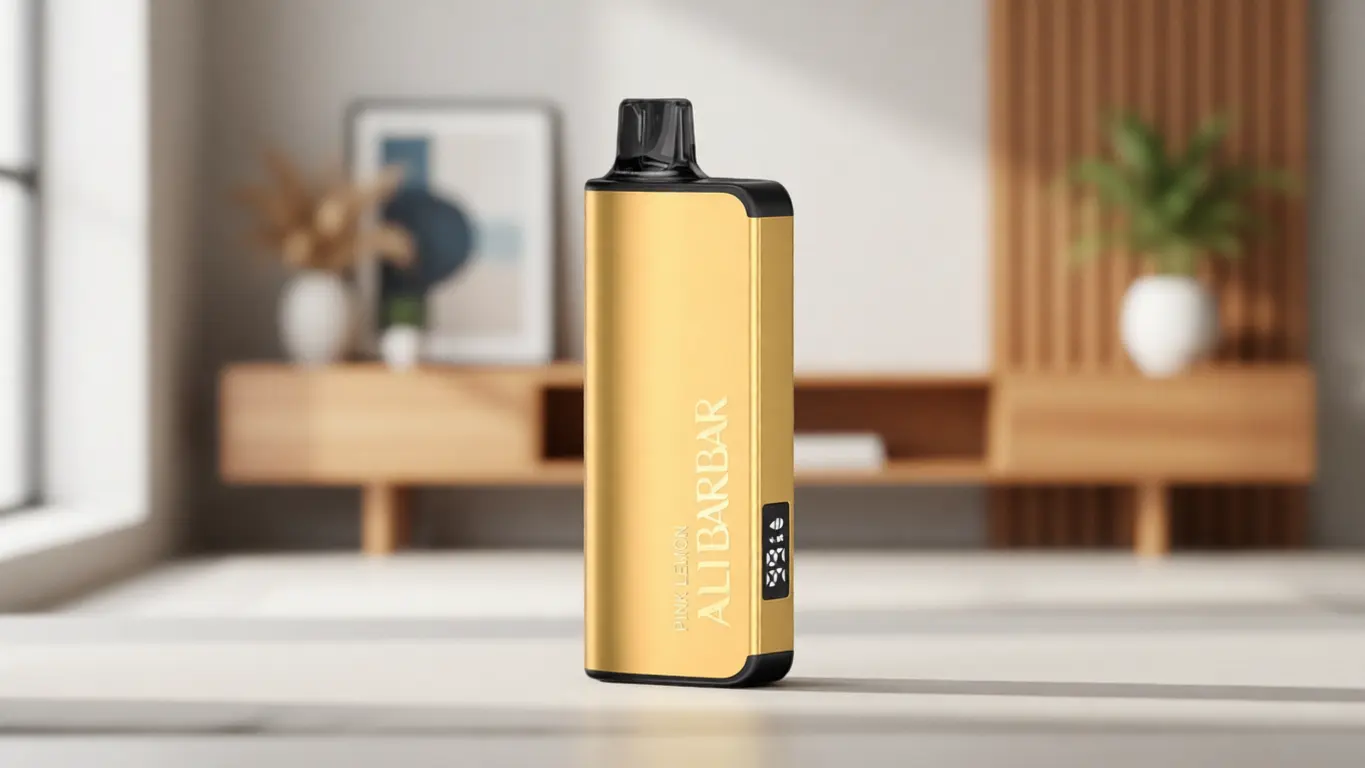
A range of current‑generation personal electronic devices — including several from the ALIBARBAR family — satisfy these requirements by design, though individual model suitability varies. What matters is not the brand name but the traveler’s ability to answer the key screening questions confidently.

A Practical Pre‑Flight Checklist
Use the following sequence at least 72 hours before departure to eliminate the most common travel‑related device issues:
Confirm destination and transit legality. This is the threshold question. If any jurisdiction along your route prohibits the device category or the substances it may have contained, do not carry it.
Check the device for any residue. A visibly clean, unused device is far less likely to trigger law enforcement referral than one that smells or shows staining.
Locate the battery specification. Look for the watt‑hour rating on the device, the original packaging, or the manufacturer’s official documentation. If you cannot find it, a reputable retailer’s product page often lists it.
Read your airline’s lithium‑battery policy. Major carriers publish their rules openly. Print or screenshot the relevant section.
Pack the device in carry‑on only. Place it in an easily accessible pouch or organizer so it can be removed during screening if requested.
Disconnect or power down. If the device has a power‑lock or off function, engage it. Devices that can be accidentally activated by pressure in a bag are a fire‑risk red flag to airline staff.
Prepare for the question “What is this?” An honest, calm, factual answer — “It’s a personal electronic device with a lithium battery, rated at [X] watt‑hours, totally empty” — is far more effective than defensiveness.
Common Mistakes and Industry Observations
Overfocusing on the substance and ignoring the battery. A traveler who has thoroughly researched cannabis law at their destination may still be turned back at security because the device itself violates the airline’s battery limit or because they packed it in a checked bag.
Assuming visual similarity equals compliance. Two devices that look almost identical may house batteries with different chemistries or capacities. Without specification verification — information that a responsible retailer provides — the traveler is guessing.
Ignoring transit countries. A flight from country A to country C may refuel in country B. If country B’s laws prohibit the device category, a diverted flight or an unexpected layover can become a legal emergency. This is a low‑probability but high‑consequence risk that experienced travelers account for.
Undervaluing documentation. In the rare event of a dispute at security, having the manufacturer’s specification sheet and the airline’s printed policy can shift a 30‑minute interrogation into a two‑minute resolution. OZVAPE Shop maintains structured product pages specifically to make this level of preparedness possible, though the responsibility to carry the documentation rests with the traveler.
Frequently Asked Questions
Q: Can I put my vaporizer in checked luggage if I remove the battery?
A: Most airlines forbid lithium‑ion batteries in checked baggage even when detached from the device. The device housing without the battery may be permitted in checked luggage, but only if completely free of residue and declared correctly. Always verify with your specific airline.
Q: What happens if TSA finds an empty vape device in my carry‑on?
A: If the device is empty and complies with battery regulations, TSA officers will typically treat it as any other consumer electronic and pass it through screening. If they suspect prior use of a controlled substance, they may refer to law enforcement, which introduces significant uncertainty.
Q: Do I need to declare my vaporizer at the security checkpoint?
A: Not routinely. Treat it like a mobile phone or laptop — remove it from your bag if the screening process requires it (for example, if it is a large electronic device), but you do not need to verbally declare it unless asked.
Q: Are disposable devices subject to the same rules?
A: Yes. Even single‑use devices contain lithium‑ion batteries and must be carried in carry‑on baggage. They must also be completely empty of any controlled substance.
Q: How can I prove to an airline agent that my battery is under 100 Wh?
A: The most reliable method is to show the original packaging, the device’s engraved specification, or a printed/downloaded product specification sheet from an authorized retailer. OZVAPE Shop product pages list battery ratings where available.
Q: Is it safe to travel with a device that uses replaceable 18650 batteries?
A: Loose lithium batteries are subject to additional rules: they must be carried in carry‑on only, terminals must be protected against short circuits (tape or individual cases), and quantity limits apply. Check your airline’s policy for loose battery carriage.
Q: Can cabin pressure cause my device to leak?
A: Yes, pressure changes can force liquid out of poorly sealed reservoirs. Choosing a device with a top‑airflow design or sealing it in a leak‑proof container minimizes risk.
Q: What if my flight is international and cannabis is legal at my destination?
A: The flight path will likely cross airspace governed by treaties and national laws where cannabis remains prohibited. International carriage of cannabis is illegal under the 1961 Single Convention, to which most nations are signatories. Do not attempt it.
Q: Where can I find accurate specifications for my device before traveling?
A: Authorized retailers that maintain up‑to‑date product databases are a practical starting point. OZVAPE Shop organizes device listings with technical details intended to support exactly this kind of pre‑travel due diligence.
Q: Can I carry a vape device internationally if it’s brand new and sealed?
A: An unused, sealed device that contains no controlled substance is generally subject only to battery transport rules. However, the traveler remains responsible for checking that the device is legal to possess at the destination and that the packaging does not make prohibited claims. Some countries ban the importation of vaping devices entirely; research is essential.
The Value of Being Over‑Prepared
None of the steps outlined above are exciting, and that is precisely the point. The traveler who is delayed at security is rarely the one who made an egregious error; it is usually someone who made a small, understandable oversight that a checklist would have caught. The difference between a seamless experience and an airport detention often comes down to having the right information at hand before it is urgently needed.
OZVAPE Shop exists to serve adult users who appreciate documented product information, authentic stock, and a no‑drama approach to after‑sales support. Whether the information you need is a battery capacity, a material safety sheet, or an honest answer about what a device can and cannot do, our platform is structured to provide it without editorial spin. While we cannot determine for you whether a particular device should travel on a particular flight, we can ensure you are not left guessing about what you are carrying.
The right choice is the one that matches your actual situation — not the one that aligns with the most optimistic interpretation of a gray area in airport signage. Travel lightly, travel informed, and never let a device become the reason your trip does not go as planned.