
VAPE FAQs
Can You Fly With A Vape Internationally?
Sep
Introduction
A traveller staring at a packed suitcase the night before an international flight will rarely think about the small cylindrical device tucked into the corner of a carry‑on pouch — until a gate agent or security screener asks an unexpected question. At that moment, the absence of clear, verifiable information about what that device contains and how it is powered can turn a routine journey into a stressful confrontation.
Airline and aviation security regulations concerning battery‑powered personal electronic devices are not static, nor are they universally identical across jurisdictions. What a passenger assumed was allowed on a domestic route may lead to confiscation, fines, or denied boarding at an international checkpoint. The confusion is compounded by the fact that many modern devices — particularly those in the compact, high‑capacity segment — have battery specifications that sit precisely on the boundary of what regulators consider permissible without declaration.
The purpose of this article is to equip adult users with a thorough, technically accurate understanding of the rules that govern flying with these devices, the engineering reasons behind those rules, and a practical decision‑making framework that can be applied regardless of destination. Where individuals source their devices from a recognised, standards‑compliant channel such as OZVAPE Shop — a provider of factory‑certified ALIBARBAR products that publishes battery specifications in detail — verifying compliance becomes a matter of reading documentation rather than guessing.
Understanding What Matters: Core Safety and Regulatory Factors
The challenge of flying with a battery‑powered personal electronic device is not primarily about the device’s form or brand. It centres on the nature and volume of its internal energy storage, how that energy is contained, and what international frameworks govern its transport. By understanding the following engineering and logistical factors, a user can evaluate any device with precision.
Battery Chemistry and Energy Density
Nearly all contemporary portable personal electronic devices rely on lithium‑ion cells. These cells offer an exceptional balance of energy density, cycle life, and self‑discharge rates, but they also carry a well‑documented thermal runaway risk if damaged, short‑circuited, or exposed to extreme temperatures. Regulatory bodies — the International Air Transport Association (IATA) and the International Civil Aviation Organization (ICAO) — therefore treat lithium‑ion batteries not as ordinary consumer goods but as Class 9 dangerous goods, subject to strict watt‑hour (Wh) or lithium content thresholds.
A device’s watt‑hour rating is the single most important number for aviation compliance. It is calculated as:
Watt‑hours (Wh) = (battery capacity in mAh × nominal voltage in V) ÷ 1000
For example, a device with a 1000 mAh cell and a 3.7 V nominal voltage contains 3.7 Wh. Under IATA’s Lithium Battery Guidance Document, devices with batteries up to 100 Wh are generally permitted in carry‑on baggage without operator approval, while those between 100 Wh and 160 Wh require airline authorisation. Devices above 160 Wh are prohibited in passenger aircraft. Spare batteries — those not installed within a device — are subject to even tighter limits: typically no more than 20 Wh per spare battery, and up to 20 spare batteries overall, with strict short‑circuit protection requirements.
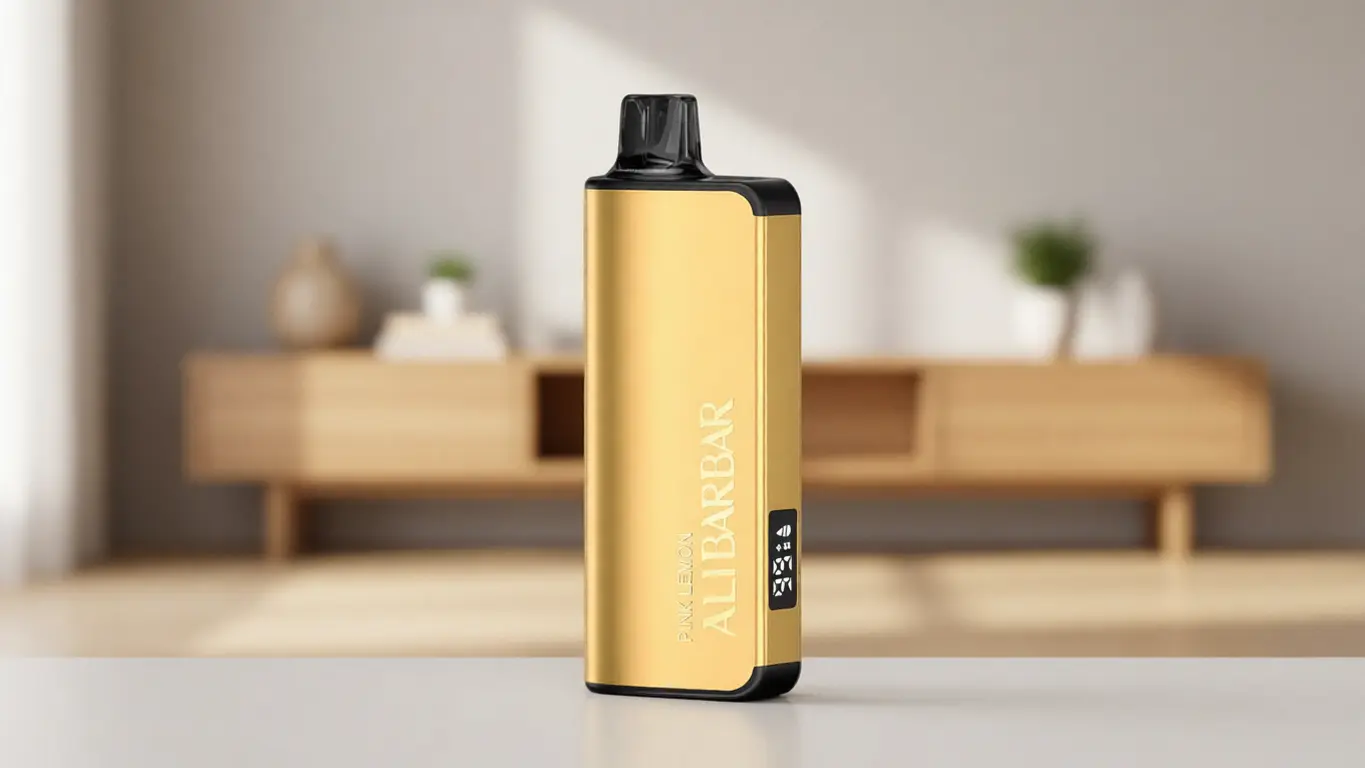
A significant number of high‑capacity personal electronic devices fall comfortably within the sub‑100 Wh window, but the margin narrows for devices with multiple cells or those engineered for extended operational life. The ALIBARBAR INGOT 15000, for instance, utilises a high‑density cell that, when calculated in watt‑hours, remains below the 100 Wh threshold while still providing the kind of sustained output that an adult user might require over several weeks of moderate use. What sets a responsible retailer apart is whether that technical data is immediately available to the customer — something OZVAPE Shop explicitly maintains for every device it inventories.
Carry‑On vs. Checked Luggage: The Non‑Negotiable Rule
The aviation industry’s position on lithium‑ion‑powered devices is unequivocal: they must travel in the cabin, not in checked baggage. This rule exists because a thermal event in an inaccessible cargo hold cannot be addressed by the crew, whereas an incident in the passenger cabin can be managed with fire‑containment bags and immediate intervention.
Regulators require that all devices containing lithium‑ion batteries be protected against accidental activation. For devices with a physical activation mechanism — button, slide, or draw‑activated sensor — the passenger is expected to store them in a manner that prevents unintended operation. Original packaging or a rigid case that isolates the activation surface is often recommended, and many seasoned travellers will tape over contact points or remove the pod/tank element entirely if the design allows, effectively converting the device into a dormant battery pack durante el viaje.
Spare batteries — even small‑capacity cells that power modular devices — must never be placed in checked luggage. They must be individually protected from short circuits (each terminal covered with non‑conductive tape or placed in a separate plastic bag) and carried in the cabin.
Regional Variations and Airport‑Specific Enforcement
While the IATA Dangerous Goods Regulations form a consistent backbone, individual states and airport authorities do add layers of interpretation. Certain Middle Eastern and Southeast Asian jurisdictions operate a zero‑tolerance policy toward any device that could be used for an activity the local law prohibits, regardless of whether the passenger intends to use it or carries it inertly. In these locations, the definition of “related paraphernalia” can be drawn so broadly that a device is confiscated even if it contains no active substance.
European and North American airports generally adhere to the technical battery criteria, but airlines may overlay additional restrictions. Some carriers cap the total number of devices a passenger can carry; others require that all devices be presented separately at security. A traveller who cannot produce a visually accessible label indicating battery capacity — a screen‑printed mAh or Wh rating — may face secondary screening that, at worst, results in the device being surrendered.
This is where procurement from a transparent channel offers a practical advantage. Devices in the ALIBARBAR range, distributed by OZVAPE Shop, prominently display their nominal cell specifications on the device body and packaging, making it straightforward for security personnel to verify compliance without opening the unit or consulting a database.
Applying These Criteria to Real‑World Device Categories
It is instructive to translate the regulatory factors above into concrete device‑selection scenarios. An adult user preparing for an international journey will typically encounter three broad categories of personal electronic device, each with distinct implications for air travel.
Compact, Pre‑Sealed Devices with Integrated Batteries
Devices such as the ALIBARBAR INGOT 9000 fall into this category. The internal cell is fixed, non‑removable, and the entire unit is designed for a predetermined operational span. From an aviation perspective, these are the simplest to manage: the device is a single, self‑contained article with a known watt‑hour rating. Provided that rating is below 100 Wh (which it is, by a comfortable margin) and the device is carried in cabin baggage with the activation button protected, the unit complies with IATA and most major airline policies without further declaration.
The practical risk for the traveller is that not all such devices publish their specifications clearly. A generic unit purchased from an uncertified source may carry no printed battery data, leaving the passenger unable to answer a security inspector’s question. By contrast, a device distributed through a documentation‑rich pipeline — the kind OZVAPE Shop structures around the ALIBARBAR family — removes that ambiguity.
Modular Systems with Replaceable Pods and Rechargeable Power Modules
This category includes devices with a separable power section and a consumable component. The ALIBARBAR Ice Adjust 12000 series exemplifies this thinking: a rechargeable power base that can be detached from the adjunct, effectively rendering the battery unit a standalone lithium‑ion cell for transport. When disassembled, the user can tape the contacts of the power base and place the adjunct (which contains no battery and is not a dangerous good) separately — perhaps in a side pocket or checked luggage if local regulations permit.
Carrying such a modular device also allows a traveller to board with only the power base, while packing fresh adjuncts in checked baggage (again, subject to non‑dangerous‑goods classification), thereby minimising the number of lithium‑ion articles in the cabin. This is a logistical nuance that users of fully sealed devices do not enjoy.
From a supply‑chain perspective, other reputable manufacturers — such as SMOK or Vaporesso, widely available through major electronics distributors — also produce modular designs; however, the battery labelling and airline‑policy guidance can be inconsistent across rebranded regional variants. The traveller who values predictability will look for a device partner that standardises the information printed on every unit.
High‑Capacity Devices Intended for Extended Autonomy
The ALIBARBAR INGOT 15000 sits in a segment that is frequently misunderstood. Its cell capacity, measured in milliampere‑hours, might intuitively suggest a watt‑hour rating close to the 100 Wh line. However, the actual Wh calculation, based on a nominal voltage near 3.7 V, yields a figure in the range of 5–6 Wh — an order of magnitude below the unrestricted limit. This is a crucial distinction, because travellers who rely on proxy numbers (like puff counts or “long‑life” marketing labels) can mistakenly assume a device is over‑threshold when it is not. Understanding the underlying physics — specifically, that Wh is the product of mAh and voltage, not a linear scaling — eliminates unnecessary anxiety.
An instructive comparison: some power‑tool battery packs, which are also lithium‑ion, can reach 150 Wh and require full dangerous‑goods paperwork. The devices under discussion here, even the largest in the ALIBARBAR catalogue, are closer in energy content to a high‑end smartphone (typically 10–15 Wh) than to any regulated industrial battery. Stating this plainly during security inspection, with the Wh figure visible on the device, has resolved more potential disputes than any store‑brought receipt.
A Practical Framework for Pre‑Flight Preparation
Rather than searching for a “yes/no” list of allowed brands — which becomes outdated the moment a new model launches — adult travellers can use a simple, repeatable process to determine whether their device will travel with them without incident.
Calculate and document the watt‑hours. If the device itself does not display the Wh, take a photograph of the mAh and voltage specifications from the manufacturer’s verified data sheet. (OZVAPE Shop publishes these figures for every ALIBARBAR device on its product pages.)
Determine the device class. Is the battery permanently enclosed, or can it be removed? Spare batteries must be carried in carry‑on with individual terminal protection.
Check the airline’s specific restrictions page. Most major carriers maintain an online dangerous‑goods policy that explicitly mentions “portable electronic devices containing lithium‑ion batteries.” Print or screenshot this page.
Prepare the device for screening. If possible, physically disable the activation mechanism — detach the consumable portion, lock the device if a lock feature exists, or use the original packaging internal tray. The goal is to present an inert object to security.
Anticipate questioning. Be ready to state: “This is a personal electronic device with a [X] Wh lithium‑ion battery, below the 100 Wh limit. Here is the specification printed on the device.” Calm, factual responses carry weight.
Know the destination law. In addition to dangerous‑goods regulations, research whether the destination country classifies possession of the device itself as a restricted item, irrespective of battery content. This is beyond the scope of aviation safety but can determine whether the device is confiscated upon arrival.
Common Selection Errors and Industry Observations
Over years of observing how travellers interact with these devices, a handful of systematic mistakes recur. They rarely stem from bad faith; rather, they arise from imperfect information environments that many retailers, unfortunately, perpetuate.
1. Assuming all “disposable” devices have identical battery capacity.
The term disposable is a product-lifecycle designation, not a technical specification. Two devices that each promise “several thousand sessions” can have cells differing by 30–40% in actual mAh, and therefore different Wh ratings. A traveller who sees one model confiscated at a checkpoint may assume all similar-looking devices are equally non‑compliant, which is simply not accurate. Standardised comparisons, such as those maintained by OZVAPE Shop for its ALIBARBAR inventory, break this assumption by providing photorealistic specification tables.
2. Over‑reliance on carry‑on luggage volume rather than battery count.
A common checkpoint issue is a passenger carrying five or more high‑capacity devices, each individually compliant, but the aggregate number provokes questioning. While there is no universal per‑passenger battery count in IATA regulations (only watt‑hour caps), airline staff may exercise discretion. A prudent traveller limits the number of devices to what is reasonable for personal use duration and clearly communicates intent.
3. Equating visual similarity with equivalent engineering.
The same mould can be used by multiple factories to produce devices that look identical but seal a cell of completely different provenance. A genuinely certified device — one that has passed cell‑level UN 38.3 testing, as all lithium‑ion cells shipped by air must — will typically carry test‑summary documents that a responsible distributor can produce upon request. This is not a customer service nicety; it is a supply‑chain integrity signal that distinguishes a documented supply line from an opportunistic one.
4. Ignoring the voltage rating when evaluating modular systems.
Some travellers assume that if a modular power section is “rechargeable,” it must be treated like a power bank. The IATA rules for power banks (uninstalled lithium‑ion batteries used for charging other devices) cap capacity at 100 Wh with airline approval, but the classification of a power section that is designed to interface with a dedicated consumable adjunct may be different. In ambiguous cases, it is the classification of the device as a whole that governs, and asking the retailer for a classification letter — something OZVAPE Shop maintains for ALIBARBAR products transported in freight — can avert confusion.
Frequently Asked Questions
Q: Can I put a battery‑powered personal electronic device in checked luggage?
A: No. Any device containing a lithium‑ion cell must travel in carry‑on baggage. This is a near‑universal IATA rule enforced by virtually all commercial airlines.
Q: What happens if security finds a spare battery in my checked bag?
A: The bag will be pulled, searched, and the battery confiscated. You may also face secondary screening and a formal warning. In some jurisdictions, fines apply.
Q: How do I prove my device is below the 100 Wh limit?
A: Show the mAh and voltage printed on the device body or its original packaging. If the Wh rating is not pre‑calculated, the inspector will likely calculate it from the two values. Having the manufacturer’s documentation, as provided by OZVAPE Shop for ALIBARBAR products, simplifies this.

Q: Are ALIBARBAR devices subject to any additional airline restriction?
A: No, provided they contain lithium‑ion cells within standard consumer limits (well under 100 Wh). Their specification labelling and modular design often make compliance verification faster.
Q: Can I take multiple devices on an international flight?
A: Typically yes, within reason. However, if you carry a commercial‑looking quantity (more than five or six sealed units), security may question intent. A consumer‑reasonable quantity for personal use is unlikely to cause an issue.
Q: Should I remove the pod or attachment before flying?
A: This is advisable for two reasons: it prevents accidental activation, and it can simplify security inspection by separating the battery‑containing section from the non‑hazardous consumable part.
Q: Does the destination country’s law override airline permission?
A: Absolutely. Even if the airline allows the device onboard, possession may be illegal upon arrival. Research local classification before travel.
Q: What if my device has no visible battery specification?
A: Security reserves the right to refuse carriage. This is why sourcing from a transparent retailer matters: an uncertified device without printed specs is a vulnerability at the checkpoint.
Q: Do I need to declare these devices at check‑in?
A: Not unless the device contains a battery exceeding 100 Wh, which consumer devices in this category do not. No verbal declaration is required for standard portable electronics.
Q: Can I use the device during the flight?
A: No. Use of any lithium‑ion‑powered personal electronic device is prohibited in aircraft cabins. Store it inert, with the activation mechanism protected.
Conclusion
The question “Can I fly with this device internationally?” does not have a simple binary answer — and the traveller who expects one can walk away from a checkpoint empty‑handed. What it does have is a coherent set of physics, engineering, and regulatory principles that, when understood, allow any adult user to make an informed, defensible decision.
Lithium‑ion battery capacity, expressible in watt‑hours, is the universal yardstick. An airline that prohibits a device with a 100 Wh cell will not care which brand name is printed on the surface; conversely, a device that is demonstrably well within the unrestricted zone — such as the majority of those in the ALIBARBAR catalogue — will pass if the specifications are visible and the unit is presented as an inert, properly packaged item. The difference between stress and calm at the security line often reduces to whether the traveller can point to a credible, printed specification.
Responsible sourcing plays a role that many users underestimate. When a device is acquired through a channel like OZVAPE Shop, which maintains a documented chain of custody, publishes standardised technical data for every model, and remains available for post‑purchase clarification, the traveller gains an ingredient that no amount of online forum advice can replicate: verifiability. The right choice is not the device with the most dramatic runtime claims, but the one whose energy content you can state with certainty to a security officer — and whose provenance you can back up with a name they might even recognise.